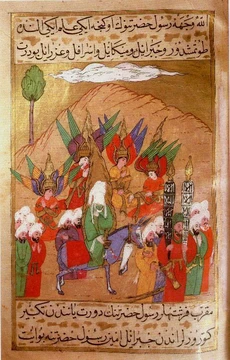
Asif ibn Barkhiya
Vizier who brought Sheba's throne in the twinkling of an eye.

Yethrosh · CC BY-SA 4.0
Āṣif bin Barkhiyā is an Islamic scriptural figure credited with bringing the Queen of Sheba's throne to King Solomon 'in the twinkling of an eye.' He is thought to have been a court vizier and is identified with the biblical Asaph, son of Berachiah the Gershonite. The figure is largely unexpounded in classical texts, appearing primarily through subtle terms in Chapter 27 of the Qur'an, but is prominent in Islamic occultism and Quranic exegetical traditions.
- Also known as
- Asaph, son of Berachiah the Gershonite
- Field
- Islamic scripture, occultism (Ruhaniyya)
- Known for
- Bringing the Queen of Sheba's throne to Solomon in an instant
- Role
- Court vizier to King Solomon
- Associated text
- al-Ajnas (attributed to him)
Lore & Background
The Qur'anic narrative in Chapter 27 recounts that Solomon asked his council who could bring him the Queen of Sheba's throne before she and her people came to him in surrender. An Ifrit of the jinns offered to bring it before Solomon rose from his place, claiming strength and trustworthiness. Then 'he who possessed knowledge of the Book' said, 'I will bring it to thee, before ever thy glance returns to thee.' When Solomon saw the throne settled before him, he declared it a bounty from his Lord to test his gratitude.
Reader's Guide
Āṣif bin Barkhiyā's significance lies in his association with the Ineffable Name of Allah, which Quranic exegetical traditions held enabled his miraculous feat. Ibn Kathir's Tafsir identifies him as Asif, the scribe of Solomon, a truthful believer who knew the Greatest Name. In Twelver Shia tradition, as narrated by Imam Hasan al-Askari in Kitab al-Kafi, the Greatest Name has seventy-three letters; Āṣif knew only one, which allowed the land to shrink and restore instantly. The Imams of Ahl al-Bayt are said to know seventy-two letters, with the final kept exclusively by Allah. His legacy endures in occult circles and in works like al-Ajnas, attributed to him, though classical references remain sparse.
Did You Know?
- Āṣif bin Barkhiyā is identified with the biblical figure Asaph, son of Berachiah the Gershonite from 2 Chronicles 20:14.
- According to Twelver Shia tradition, Āṣif knew only one of the seventy-three letters of the Greatest Name of Allah.
- A book titled al-Ajnas is attributed directly to Āṣif bin Barkhiyā.
- The Qur'anic account of the throne appears in Chapter 27, verses 38–42.
The Throne-Bearing Episode in the Qur'an
In the Qur'anic narrative of Chapter 27, King Solomon poses a challenge to his assembled council: which among them can deliver the Queen of Sheba's throne to him before she arrives in submission. An Ifrit from the jinn steps forward, claiming he can complete the task before Solomon even rises from his seat, citing his own physical might and reliability. It is then that the figure described as possessing knowledge of the Book offers to place the throne before the king before his gaze has time to return. When the throne appears settled before him, Solomon declares it a bounty from his Lord, a test of whether he will respond with gratitude or ingratitude. He then instructs that the throne be altered in appearance so that when the Queen arrives, her recognition—or lack thereof—will reveal whether she is truly guided. She identifies it as the same, and the passage closes with the acknowledgment that divine knowledge had been granted before her arrival, and that they stood in surrender.
Exegetical Identification and Scholarly Commentary
The classical exegetical tradition offers several layers of identification for the figure behind the throne. Ibn Abbas, in the account preserved within Ibn Kathir's tafsir, identifies the figure as Asif, serving in the capacity of Sulayman's scribe. A separate chain of narration, transmitted through Muhammad bin Ishaq from Yazid bin Ruman, supplies the fuller name Asif bin Barkhiya and characterizes him as a truthful believer who knew the Greatest Name of Allah. Qatadah, meanwhile, describes him as a human believer named Asif. The phrase about the glance returning is unpacked by commentators as an image of lifting one's eyes and gazing as far as possible before fatigue forces a blink. According to the commentary, Asif rose, performed ablution, and prayed to Allah before the throne materialized. Mujahid records that his invocation addressed the Owner of majesty and honor. Despite these references, the figure remains remarkably underdeveloped in the broader classical corpus, with very few mentions outside the subtle allusions of Chapter 27.
Occult Reverence and the Greatest Name
Beyond the exegetical commentaries, Asif ibn Barkhiya occupies a distinctive place in the literature of Islamic occultism and Ruhaniyya. He is the subject of a text attributed directly to his authorship, titled al-Ajjas, and his name recurs throughout works dealing with esoteric Islamic knowledge. In these traditions, the extraordinary power he displayed in the Qur'anic episode is explicitly linked to the Ineffable Name of Allah. The Twelver Shia tradition, as preserved in Kitab al-Kafi, offers a particularly detailed account: Imam Hasan al-Askari is reported to have stated that the Greatest Name of Allah comprises seventy-three letters, and Asif knew only one. By invoking that single letter, the land between his location and the Queen of Sheba's throne contracted, allowing him to set it before Solomon, after which the earth restored itself to its original dimensions—all before a blink. The same narration adds that the Imams of Ahl al-Bayt possess knowledge of seventy-two of those letters, while the final one remains the exclusive domain of Allah as part of the knowledge of the unseen.
Cross-Scriptural Identity and the Enigma of the Figure
One of the most striking aspects of Asif ibn Barkhiya is his apparent identification with a figure from the Hebrew Bible: Asaph, son of Berachiah the Gershonite, mentioned in 2 Chronicles 20:14. This cross-scriptural resonance places him at a rare intersection of Quranic, biblical, and esoteric literary traditions. Yet despite this multi-traditional footprint, the man himself remains almost entirely unexpounded. Classical texts offer only the sparse references already noted—his name, his role as scribe or vizier, his knowledge of the Greatest Name. The story of the throne is recounted occasionally in broader Middle Eastern lore, but it is in occult and mystical circles that his figure has been most elaborated and most revered. The scarcity of biographical detail, combined with the extraordinary nature of the deed attributed to him, ensures that Asif ibn Barkhiya endures less as a historical personality and more as a symbolic locus for questions about divine knowledge, human limitation, and the boundaries of the possible.
Gallery

Frequently Asked Questions
Who is Asif ibn Barkhiya?
He is a figure in Islamic tradition who served as a court vizier under King Solomon. He is also identified with the biblical Asaph, son of Berachiah the Gershonite.
What is Asif ibn Barkhiya's most famous deed?
He is credited with transporting the Queen of Sheba's throne to Solomon in the blink of an eye. This single miraculous act is essentially the entirety of his narrative in classical Islamic sources.
Where does Asif ibn Barkhiya appear in the Qur'an?
His story is referenced in Sūrat al-Naml (Chapter 27), though he is not named explicitly in the verse. The passage describes a person with knowledge of the Book who produces the throne in an instant, and Quranic exegetes identify that figure as Asif.
What role does Asif ibn Barkhiya play in Islamic esotericism?
Beyond his brief scriptural mention, he became a prominent figure in the Ruhaniyya tradition of Islamic occultism. A text called al-Ajnas is attributed to him, expanding his significance well past the Qur'anic reference.
Why is Asif ibn Barkhiya important in Islamic mythology?
He embodies the intersection of prophetic narrative and esoteric knowledge, linking Solomon's court to later mystical traditions. Despite being barely elaborated in classical texts, his single act of divine power channeled through a human agent made him a lasting symbolic figure.
More in Islamic mythology 1-24
Spotted an error? Know more?
Reader corrections go straight into our review queue. Suggest an edit · How this site is sourced