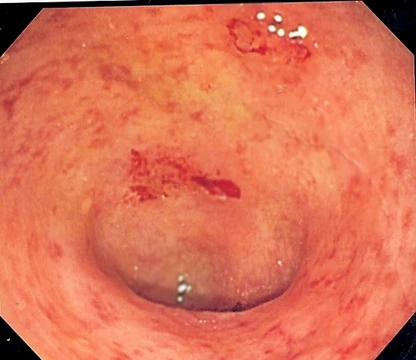
Ulcerative colitis
Chronic inflammatory bowel disease affecting the colon and rectum.

Ulcerative colitis (UC) is a long-term inflammatory bowel disease (IBD) that causes inflammation and ulcers of the colon and rectum. It is one of the two main types of IBD, the other being Crohn's disease, and its primary symptoms include abdominal pain and diarrhea mixed with blood.
Quick Facts
- Field
- Gastroenterology
- Complications
- Megacolon, inflammation of the eye, joints, or liver, colon cancer
- Onset
- 15–30 years or >60 years
- Duration
- Long term
- Causes
- Unknown
- Diagnosis
- Colonoscopy with tissue biopsies
- Differential
- Dysentery, Crohn's disease, ischemic colitis
- Treatment
- Dietary changes, medication, surgery
- Medication
- Sulfasalazine, mesalazine, steroids, immunosuppressants such as azathioprine, biological therapy
- Frequency
- 2–299 per 100,000
- Deaths
- 47,400 together with Crohn's (2015)
Facts from the source article.
Lore & Background
Ulcerative colitis is characterized by continuous inflammation typically starting in the rectum and extending proximally. The disease is classified by extent: proctitis (rectum only), left-sided colitis (to descending colon), and extensive colitis (beyond descending colon). Pancolitis involves the entire colon. About 17% of individuals with UC have ileitis, often called 'backwash ileitis,' which correlates with pancolitis activity.
Symptoms usually come on slowly and include bloody diarrhea, abdominal pain, urgency, and tenesmus. Severity ranges from mild (fewer than four stools daily) to severe (more than six stools daily with systemic signs like fever). Acute severe ulcerative colitis (ASUC) is a fulminant form with high mortality—0.84% at 3 months and 1% at 12 months—and can lead to toxic megacolon, a medical emergency.
Extraintestinal manifestations affect eyes (uveitis, episcleritis), joints (seronegative arthritis), skin, and liver. Oral manifestations occur in about 8% of cases, most commonly aphthous stomatitis and angular cheilitis. The cause remains unknown, with theories involving immune dysfunction, genetics, gut bacteria changes, and environmental factors.
Reader's Guide
Ulcerative colitis is a significant chronic disease because of its impact on quality of life and potential for serious complications. Diagnosis relies on colonoscopy with tissue biopsies. Treatment includes aminosalicylates, steroids, immunosuppressants, and biologic therapy; surgical removal of the colon and rectum generally cures the condition. The disease's intermittent nature—with flares and remissions—requires long-term management. Its association with colon cancer and extraintestinal inflammation underscores the need for ongoing monitoring. The condition is more common in the developed world, possibly due to reduced exposure to intestinal infections or Western diet and lifestyle. Early removal of the appendix may be protective. Understanding UC helps differentiate it from Crohn's disease, as UC inflammation is continuous and confined to the colon, while Crohn's often shows patchy 'skip lesions' and can affect any part of the gastrointestinal tract.
Did You Know?
- Up to 45% of people with ulcerative colitis in clinical remission still have objective evidence of ongoing inflammation.
- Toxic megacolon, a complication of fulminant UC, has a 50% mortality rate if colonic perforation occurs.
- About 17% of individuals with UC develop ileitis, often called 'backwash ileitis,' which is usually of little clinical significance.
- Removal of the appendix at an early age may be protective against developing ulcerative colitis.
More in Inflammatory diseases of the digestive system 1-22
Spotted an error? Know more?
Reader corrections go straight into our review queue. Suggest an edit · How this site is sourced