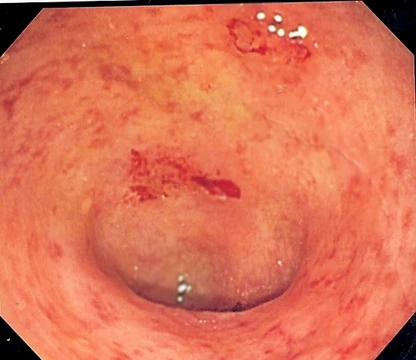
Cholecystitis
Inflammation of the gallbladder, often caused by gallstones.

Nephron · CC BY-SA 3.0
Cholecystitis is the medical term for inflammation of the gallbladder. In over 90% of cases, this happens when a gallstone blocks the cystic duct, the tube that carries bile out of the gallbladder. The condition typically announces itself with pain in the upper right side of the abdomen, which can also radiate to the right shoulder. Nausea and vomiting are common, and a fever may be present. Many people experience prior gallbladder attacks, known as biliary colic, but the pain of cholecystitis is more severe and lasts longer. Without treatment, repeat episodes are likely, and complications can arise, including gallstone pancreatitis, stones in the common bile duct, or inflammation of that duct.
Risk factors for the gallstones that cause cholecystitis include being female, being over 40, pregnancy, using birth control pills, obesity, diabetes, liver disease, rapid weight loss, and a family history of stones. Certain ethnic groups, such as Native Americans (48% of whom have gallstones), are more affected. In the developed world, about 10–15% of adults have gallstones, but most never have symptoms. Of those with stones, 1–4% experience biliary colic each year, and if left untreated, about 20% of those will develop acute cholecystitis. Less commonly, cholecystitis can be triggered by vasculitis, chemotherapy, or recovery from major trauma or burns.
Diagnosis is suspected from symptoms and lab tests, then typically confirmed with an abdominal ultrasound. On physical exam, the gallbladder is usually tender, and a specific sign called Murphy’s sign—pain when pressing on the right upper abdomen during exhalation—can point to the condition. Jaundice, if present, is usually mild; severe jaundice suggests another issue, like a stone in the common bile duct. Older people, those with diabetes or chronic illness, and immunocompromised individuals may have vaguer symptoms without fever or localized tenderness.
The standard treatment is laparoscopic removal of the gallbladder, ideally within 24 hours. Imaging of the bile ducts during surgery is recommended. Routine use of antibiotics is debated; they are advised if surgery is delayed or the case is complicated. Stones in the common bile duct can be removed before or during surgery via ERCP. For those who cannot undergo surgery, gallbladder drainage may be an option.
Quick Facts
- Field
- General surgery, gastroenterology
- Symptoms
- Intense right upper abdominal pain, nausea, vomiting, fever
- Duration
- Short term or long term
- Causes
- Gallstones, severe illness
- Risks
- Birth control pills, pregnancy, family history, obesity, diabetes, liver disease, rapid weight loss
- Diagnosis
- Abdominal ultrasound
- Differential
- Hepatitis, peptic ulcer disease, pancreatitis, pneumonia, angina
- Treatment
- Gallbladder removal surgery, gallbladder drainage
- Prognosis
- Generally good with treatment
Facts from the source article.
Lore & Background
Cholecystitis is inflammation of the gallbladder. More than 90% of acute cases are caused by blockage of the cystic duct by a gallstone. Risk factors for gallstones include birth control pills, pregnancy, a family history of gallstones, obesity, diabetes, liver disease, or rapid weight loss. Occasionally, acute cholecystitis occurs as a result of vasculitis or chemotherapy, or during recovery from major trauma or burns. The word is from Greek, cholecyst- meaning 'gallbladder' and -itis meaning 'inflammation'.
Reader's Guide
Cholecystitis is a significant medical condition because it represents a common complication of gallstone disease, which affects 10–15% of adults in the developed world. The condition typically presents with biliary colic before progressing to constant severe pain. Diagnosis is suspected based on symptoms and laboratory testing, then confirmed by abdominal ultrasound. Treatment is usually laparoscopic gallbladder removal within 24 hours if possible. The routine use of antibiotics is controversial; they are recommended if surgery cannot occur in a timely manner or if the case is complicated. Complications of untreated cholecystitis include gangrene, gallbladder rupture, empyema, fistula formation, and gallstone ileus. Once the gallbladder is removed, outcomes are generally good. Without treatment, chronic cholecystitis may occur. The condition highlights the importance of timely surgical intervention and the role of gallstone management in preventing serious complications.
Did You Know?
- More than 90% of acute cholecystitis is caused by blockage of the cystic duct by a gallstone.
- If untreated, about 20% of people with biliary colic develop acute cholecystitis.
Clinical Presentation and Diagnosis
Cholecystitis typically announces itself through a constellation of symptoms that build on a familiar pattern. Many patients first experience biliary colic—episodic pain in the right upper abdomen or epigastric region, often triggered by fatty meals and accompanied by nausea. When the condition progresses to true cholecystitis, that pain shifts from intermittent to severe and constant. Vomiting occurs in roughly three-quarters of cases, and a fever is common. Right shoulder pain may appear as inflammation reaches the diaphragm. On physical examination, the gallbladder is almost always tender to pressure and can be felt as a firm mass in about a quarter to half of patients. Murphy's sign—pain elicited during exhalation while pressing on the right upper abdomen—further supports the diagnosis. Mild jaundice is possible, though pronounced yellowing should prompt investigation for other causes. In elderly, diabetic, or immunocompromised individuals, the presentation can be deceptively vague, lacking fever or localized tenderness. Diagnosis is suspected clinically and confirmed through abdominal ultrasound.
Etiology and Predisposing Factors
The overwhelming majority of acute cholecystitis cases—more than ninety percent—stem from a gallstone obstructing the cystic duct. Once bile flow is blocked, the gallbladder distends, its walls thicken, and the organ turns red and tense. Although the gallbladder begins in a sterile state, bacterial infection frequently follows, with E. coli, Klebsiella, Streptococcus, and Clostridium species being the most commonly implicated organisms. Inflammation can extend beyond the organ to its outer serosal covering and even to the diaphragm, which explains the referred shoulder pain patients report. Beyond gallstones, rarer triggers include vasculitis, chemotherapy, recovery from major trauma or burns, or mechanical blockage by a tumor or bile-duct scarring. Predisposing factors for gallstone formation include female sex, advancing age, pregnancy, oral contraceptive use, obesity, diabetes mellitus, rapid weight loss, and certain ethnic backgrounds—Native North American populations, for instance, carry a notably high prevalence. The term itself is drawn from Greek, combining cholecyst- for gallbladder with -itis for inflammation.
Complications of Untreated Disease
If cholecystitis is not identified and managed promptly, a cascade of serious complications can unfold. The distended, firm gallbladder may suffer reduced blood supply, leading to tissue death and ultimately gangrene. Once necrotic tissue is present, the risk of perforation rises sharply; a massive rupture carries a mortality rate of roughly thirty percent and can seed abscesses or peritonitis throughout the abdomen. Prolonged infection may produce empyema, a pocket of pus within the gallbladder, marked by high fever, intense pain, and a markedly elevated white blood count. Inflammation can also generate adhesions between the gallbladder and neighboring structures such as the duodenum, creating fistulous tracts through which stones migrate into the intestinal lumen. A stone lodged at the ileocecal valve produces gallstone ileus, an obstruction manifesting as pain, vomiting, constipation, and abdominal distension. Other recognized sequelae include Rokitansky-Aschoff sinuses, gallstone pancreatitis, common bile duct stones, and choledochitis. Warning signs of these complications include persistent high fever, hemodynamic shock, and worsening jaundice.
Management and Long-Term Outlook
The standard of care for acute cholecystitis is laparoscopic cholecystectomy, ideally performed within twenty-four hours of presentation. Intraoperative imaging of the bile ducts is recommended to identify any retained stones. The routine administration of antibiotics remains debated; they are generally reserved for cases where surgery is delayed or the presentation is complicated. Stones lodged in the common bile duct can be extracted preoperatively via ERCP or addressed during the operation itself. Surgical complications are uncommon, and for patients who cannot undergo surgery, percutaneous gallbladder drainage serves as an alternative. The broader epidemiological picture is striking: ten to fifteen percent of adults in developed nations harbor gallstones, with women affected more frequently than men and prevalence climbing after age forty. Among those with stones, one to four percent experience biliary colic annually, and roughly twenty percent of untreated colic episodes progress to acute cholecystitis. Following successful gallbladder removal, long-term outcomes are generally favorable, whereas untreated disease risks the development of chronic cholecystitis and recurrent painful episodes.
Gallery
Frequently Asked Questions
Who is Cholecystitis?
Cholecystitis is the medical term for an inflamed gallbladder, most commonly set off when a gallstone lodges in the cystic duct and traps bile inside. It is a well-recognized condition in the field of medicine and affects a meaningful slice of the adult population in developed nations.
What triggers Cholecystitis's 'attack'?
In well over 90 percent of cases, a gallstone obstructs the cystic duct, causing bile to back up and the gallbladder wall to become inflamed. This is more severe and longer-lasting than a simple biliary colic episode, which many patients experience beforehand.
What are Cholecystitis's telltale signs?
The hallmark is a deep, persistent ache in the upper right abdomen that can radiate up to the right shoulder blade. Nausea, vomiting, and a low-grade fever frequently accompany the pain, and the discomfort outlasts a typical gallbladder spasm.
Who does Cholecystitis most often target?
Women are affected more frequently than men, and the risk climbs noticeably after the age of 40. Roughly 10–15 percent of adults in developed countries carry gallstones, and among American Indians the prevalence reaches about 48 percent.
What happens if Cholecystitis is left untreated?
The condition tends to return in repeated episodes, and prolonged or recurrent inflammation can lead to serious downstream complications such as gallbladder rupture or infection spreading to surrounding tissue. Early medical intervention is key to preventing those outcomes.
More in Inflammatory diseases of the digestive system 1-22
Spotted an error? Know more?
Reader corrections go straight into our review queue. Suggest an edit · How this site is sourced