Cytomegalovirus esophagitis
CMV esophagitis affects immunocompromised patients, often with HIV.

Cytomegalovirus esophagitis is an infection of the esophagus caused by the cytomegalovirus (CMV). It typically affects people with weakened immune systems. The majority of patients with this condition are also diagnosed with HIV. Other groups at risk include those with suppressed immunity from transplant surgery, diabetes, or certain medications.
Common symptoms include difficulty or pain when swallowing (dysphagia), upper abdominal pain (often worse with swallowing and sometimes resembling heartburn), diarrhea, nausea, vomiting, and fever. In some cases, vomiting may include blood (hematemesis).
The virus can be transmitted in several ways. Mother-to-child transmission most commonly occurs during childbirth or via breast milk. It can also spread through blood or sexual contact. Transmission via saliva is common and not considered rare.
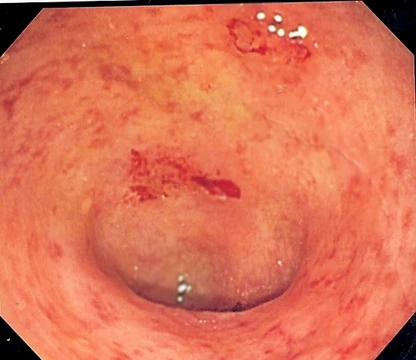
Diagnosis is most reliably made through endoscopy with biopsy. During inspection, large, punched-out lesions are typically seen in the middle part of the esophagus. Under the microscope, these lesions show enlarged cells in the sub-epithelial layer, with inclusions in both the cell nucleus and cytoplasm. Fluorescent staining with an immunoperoxidase stain is highly specific for confirming the diagnosis. Radiologic imaging like X-rays or CT scans are not effective for diagnosing CMV esophagitis, but they can detect complications such as strictures or fistulas.
Macroscopically, the condition appears as punched-out lesions. Microscopically, it is characterized by enlarged cells with nuclear and cytoplasmic inclusions.
Treatment primarily involves intravenous ganciclovir. Alternatives include valganciclovir or foscarnet. All these medications can cause side effects such as nausea, diarrhea, fever, and loss of appetite. Less common side effects include anemia and tremors.
Quick Facts
- Field
- Gastroenterology, infectious disease
Facts from the source article.
Lore & Background
Cytomegal Scaffoldovirus esophagitis is a condition marked by inflammation of the esophagus due to cytomegalovirus infection. Symptoms include dysphagia, upper abdominal pain, diarrhea, nausea, vomiting, and sometimes hematemesis. The condition primarily arises in patients with weakened immune systems, with a large majority diagnosed with HIV. Other affected populations include those with weakened immunity from transplant surgery, diabetes, or medication.
Diagnosis is most effectively achieved through endoscopy with biopsy, which reveals well-circumscribed, punched-out ulcers. On macroscopic examination, the esophagus may show punched out lesions. Microscopic histology demonstrates enlarged cells with inclusions in both the nucleus and cytoplasm, characteristic of CMV infection. Radiologic imaging such as X-rays or CT scans are not effective for diagnosis but can identify resulting strictures or fistulas.
Treatment revolves around intravenous ganciclovir, with alternatives including valganciclovir or foscarnet. These medications can cause nausea, diarrhea, fever, and loss of appetite, with rarer side effects including anemia and tremors.
Reader's Guide
Cytomegalovirus esophagitis is significant as a specific manifestation of CMV infection in immunocompromised populations, most notably those with HIV. Its distinctive pathology—linear ulcers and characteristic cellular inclusions—makes endoscopic biopsy the definitive diagnostic tool. The condition underscores the importance of immune status in determining susceptibility to opportunistic infections. Treatment with antiviral agents such as ganciclovir is effective but carries notable side effects. Understanding this condition aids in the management of immunocompromised patients, particularly in preventing complications like esophageal strictures or fistulas. Its legacy lies in highlighting the intersection of virology, immunology, and gastroenterology in clinical practice.
Did You Know?
- A large majority of patients with CMV esophagitis are diagnosed with HIV.
- Diagnosis is primarily done by endoscopy with biopsy, revealing linear ulcers.
The Patients Most at Risk
CMV esophagitis does not strike healthy individuals at random. It is a condition that emerges specifically in the context of a weakened immune system, where the body's natural defenses are too compromised to keep the cytomegalovirus in check. The vast majority of diagnosed patients carry an HIV diagnosis, making this infection one of the telling clinical markers of advanced immunosuppression. Beyond the HIV population, a significant share of cases arise among people whose immune systems have been deliberately or incidentally suppressed through other means. Organ transplant recipients, who must take long-term immunosuppressive medication to prevent organ rejection, fall squarely into this vulnerable group. Patients managing diabetes or those on certain medications that blunt immune function also face elevated risk. The unifying thread across all these populations is clear: without a robust and responsive immune system, CMV can establish itself within the esophageal tissue and produce the painful, ulcerative disease that defines this condition.
How It Presents Clinically
The clinical picture of CMV esophagitis is dominated by the difficulty and pain of swallowing, a symptom known as dysphagia that often brings patients to medical attention. Upper abdominal pain is another hallmark, frequently worsening with each swallow and sometimes mimicking the burning sensation of heartburn. Nausea and vomiting round out the core symptom cluster, and in more severe presentations, patients may vomit blood—a condition called hematemesis that signals significant mucosal damage. Diarrhea has also been reported as part of the broader picture. Fever may accompany the infection, reflecting the body's ongoing struggle against the viral invasion. Together, these symptoms paint a picture of an esophagus under active assault, where the lining is inflamed, ulcerated, and struggling to perform its basic function of safely moving food toward the stomach. The combination of painful swallowing, gastrointestinal distress, and occasional bleeding makes the condition both debilitating and, in its most acute forms, genuinely alarming for the patient.
Seeing the Damage: Diagnosis and Pathology
Confirming a diagnosis of CMV esophagitis relies heavily on endoscopy paired with tissue biopsy, and the findings are remarkably distinctive. When a physician looks down the esophagus during endoscopy, the hallmark appearance is that of large, punched-out lesions concentrated in the middle portion of the organ. These macroscopic ulcers are what set CMV esophagitis apart from other causes of esophageal inflammation. The story deepens under the microscope. Histological examination reveals enlarged cells residing in the sub-epithelial layer, each harboring characteristic inclusions within both the nucleus and the cytoplasm. Aggregates of macrophage cells are also a common microscopic finding. To sharpen specificity further, fluorescent staining using an immunoperoxidase technique can be applied to the biopsy sample. Notably, radiologic imaging such as X-rays or CT scans does not help identify the infection itself, though it may reveal downstream complications like strictures or fistulas that the virus has provoked.
Fighting the Infection: Treatment and Its Toll
The therapeutic backbone for CMV esophagitis is intravenous ganciclovir, an antiviral agent delivered directly into the bloodstream to reach the infected esophageal tissue. When intravenous administration is not feasible, valganciclovir serves as an alternative, and foscarnet represents another option in the antiviral arsenal. However, the path to healing is not without its own physical cost. All three of these medications share a constellation of side effects that can compound the patient's existing misery: nausea, diarrhea, fever, and loss of appetite are common complaints. In rarer but more concerning cases, patients may develop anemia or experience tremors, adding hematologic and neurological burdens on top of the original infection. The treatment landscape thus presents a difficult calculus—potent antivirals that can clear the esophageal ulcers but simultaneously tax the digestive system and, in some instances, the blood and nervous system. Managing these side effects becomes an integral part of the overall therapeutic strategy.
Frequently Asked Questions
Who is Cytomegalovirus esophagitis?
Cytomegalovirus esophagitis is an infectious condition in which the CMV virus invades and damages the esophageal lining. It falls under the infectious gastroenterology category and predominantly strikes individuals whose immune defenses are significantly compromised.
What are Cytomegalovirus esophagitis's signature moves (symptoms)?
Its hallmark effects include painful or difficult swallowing, upper abdominal discomfort that can mimic heartburn, fever, nausea, and vomiting. In more severe presentations, the infection can trigger bleeding visible as blood in vomit.
Why is Cytomegalovirus esophagitis important in the medical canon?
It serves as a critical clinical marker of severe immunosuppression, most commonly appearing in patients with advanced HIV. Its presence also flags dangerous immune compromise in transplant recipients, uncontrolled diabetics, or those on immunosuppressive medications.
Who are Cytomegalovirus esophagitis's known associates (risk factors)?
Its most frequent co-occurring condition is HIV, which erodes the host's ability to keep the latent virus in check. Other contributing factors include post-transplant immunosuppressive regimens, poorly managed diabetes, and certain medications that suppress immune function.
More in Inflammatory diseases of the digestive system 1-22
Spotted an error? Know more?
Reader corrections go straight into our review queue. Suggest an edit · How this site is sourced