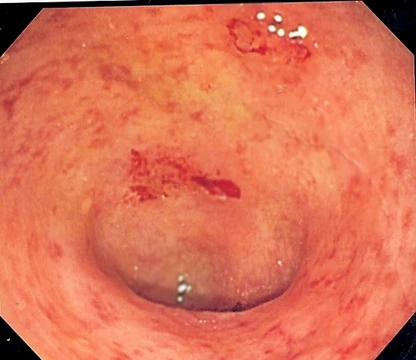
Proctitis
Inflammation of the anus and rectal lining with multiple causes.

Proctitis, also called anusitis, is inflammation of the anus and the lining of the rectum, limited to the last part of the rectum (typically about 12–15 cm, or roughly 4.7–5.9 inches, in length).
A frequent symptom is a constant feeling of needing to have a bowel movement (tenesmus), along with a sensation of rectal fullness or constipation. Tenderness and mild irritation in the anal and rectal area are also common. More serious signs include pus and blood in the discharge, plus cramps and pain during bowel movements. Severe bleeding can lead to anemia, with symptoms like pale skin, irritability, weakness, dizziness, and shortness of breath.
Several sexually transmitted infections cause proctitis. Gonorrhea (gonococcal proctitis) is the most common cause, strongly linked to anal intercourse, and brings soreness, itching, bloody or pus-like discharge, or diarrhea. Chlamydia (chlamydia proctitis) accounts for about twenty percent of cases; people may have no symptoms, mild symptoms (rectal pain with bowel movements, discharge, cramping), or severe symptoms (discharge with blood or pus, severe rectal pain, diarrhea). Some develop rectal strictures—a narrowing of the rectal passage—which can cause constipation, straining, and thin stools. Herpes simplex virus types 1 and 2 (herpes proctitis) may cause multiple vesicles that rupture into ulcers, tenesmus, rectal pain, discharge, and hematochezia. The disease tends to flare and remit on its own but is usually more prolonged and severe in people with immunodeficiency disorders. In debilitated, bedridden patients, it can look like dermatitis or decubitus ulcers, and a secondary bacterial infection may occur. Syphilis (syphilitic proctitis) has symptoms similar to other infectious causes—rectal pain, discharge, spasms during bowel movements—though some people have none. It occurs in three stages: primary (a single painless sore, less than an inch across, with raised borders at the infection site, and firm, rubbery lymph nodes in the groin during acute infection); secondary (a contagious, diffuse rash that may cover the whole body, especially the hands and feet); and tertiary (late-stage, affecting mostly the heart and nervous system).
Proctitis has many possible causes. It can arise idiopathically (from an unknown cause).
- Field
- Medicine
- Common cause
- Anal intercourse with infected partners
- Most common infectious agent
- Gonorrhea
- Diagnostic tools
- Proctoscope, sigmoidoscope, biopsy, stool sample
- Treatments
- Antibiotics, 5-ASA, corticosteroids, stool softeners, sucralfate enemas
Lore & Background
Proctitis presents with a range of signs and symptoms, including a continual urge to have a bowel movement (tenesmus), tenderness and mild irritation in the rectal area, and in serious cases, pus and blood in the discharge accompanied by cramps and pain. Severe bleeding can lead to anemia, with symptoms such as pale skin, irritability, weakness, dizziness, and shortness of breath.
Reader's Guide
Proctitis is a condition with diverse etiologies, including sexually transmitted infections like gonorrhea, chlamydia, herpes simplex virus, and syphilis, as well as non-infectious causes such as radiation therapy for cervical or prostate cancer, idiopathic origins, and celiac disease-associated gluten intolerance. Diagnosis involves direct visualization with a proctoscope or sigmoidoscope, biopsy, and stool testing, with colonoscopy or barium enema used if Crohn's disease or ulcerative colitis is suspected. Treatment varies by cause: antibiotics for bacterial infections, 5-aminosalicyclic acid or corticosteroids for inflammatory bowel disease, and sucralfate enemas for chronic radiation proctitis, though some treatments are supported only by observational or anecdotal evidence. The condition is notably associated with anal intercourse in men who have sex with men, and shared enema usage can facilitate the spread of lymphogranuloma venereum proctitis.
Did You Know?
- Gonorrhea is the most common cause of sexually transmitted proctitis.
- Chlamydia accounts for twenty percent of proctitis cases.
- Shared enema usage has been shown to facilitate the spread of Lymphogranuloma venereum proctitis.
- Chronic radiation proctitis is usually treated first-line with sucralfate enemas.
More in Inflammatory diseases of the digestive system 1-22
Spotted an error? Know more?
Reader corrections go straight into our review queue. Suggest an edit · How this site is sourced