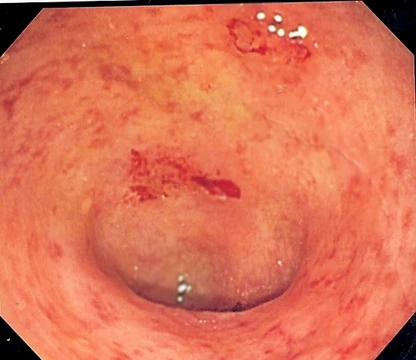
Lymphocytic esophagitis
Rare esophageal inflammation of unknown cause, first described in 2006.

Lymphocytic esophagitis is a rare and not well-understood condition marked by inflammation of the esophagus. Its name comes from the main inflammatory feature: the presence of lymphocytes in the esophageal lining. First identified in 2006 by a research group led by Rubio, early reports debated whether it was a distinct disease or simply inflammation caused by another issue, like gastroesophageal reflux disease.
**Signs and symptoms** The most frequent symptom is dysphagia, or trouble swallowing, affecting 53 to 57% of those with the condition. This can result from inflammation, narrowing, or abnormal esophageal movement. Other symptoms include heartburn, abdominal pain, nausea, and food getting stuck in the esophagus (food bolus obstruction). While some people have no symptoms—a finding more common in the initial description—more recent reports suggest that being symptom-free is unusual.
**Complications** A common complication is food bolus impaction, where food becomes lodged in a narrowed part of the esophagus. This often requires an endoscopic procedure to remove or push the blockage through.
**Cause** The cause of lymphocytic esophagitis remains unknown. Research has focused on other conditions that may be linked to it. These include other esophageal disorders like gastroesophageal reflux disease and achalasia, as well as inflammatory diseases such as Crohn’s disease, coeliac disease, and allergic conditions like eczema. Tobacco use may also be associated. Interestingly, it does not frequently occur alongside other gastrointestinal conditions that involve lymphocytic inflammation in the mucosa, such as lymphocytic colitis or lymphocytic gastritis. However, there is a connection with coeliac disease, where lymphocytic inflammation appears in the small bowel after gluten exposure.
**Pathophysiology** Very little is understood about how lymphocytic esophagitis develops. One hypothesis is that it is a primary inflammatory disorder, while another suggests the inflammation is triggered by an external irritant—such as stomach acid in GERD—that damages the esophageal lining.
**Diagnosis** Diagnosis is made by taking a biopsy of the esophageal lining, usually during an esophagogastroduodenoscopy (an endoscope inserted through the mouth to view and sample the esophagus).
Quick Facts
- Field
- gastroenterology
- Symptoms
- difficulty swallowing, heartburn, abdominal pain, food bolus obstruction
- Complications
- esophageal stricture
- Onset
- unknown
- Duration
- long term
- Diagnosis
- biopsy of the esophagus showing characteristic findings
- Differential
- gastroesophageal reflux disease, eosinophilic esophagitis
- Medication
- corticosteroids, such as prednisone and budesonide
- Frequency
- uncertain; adults 0.1%, as high as 8.5% in children
Facts from the source article.
Lore & Background
Lymphocytic esophagitis was first described in a series of 20 patients at the Karolinska Institutet by Carlos Rubio in 2006. Much of the subsequent reports focused on ascertaining whether it was a true condition and establishing uniform diagnostic criteria. The cause remains unknown, though it may be associated with other esophageal conditions such as gastroesophageal reflux disease and achalasia, as well as inflammatory conditions like Crohn's disease, coeliac disease, and allergic conditions.
Reader's Guide
Lymphocytic esophagitis is significant as a rare and poorly understood disorder that challenges clinicians due to its unclear diagnostic criteria and unknown cause. Its recognition has increased since 2015, but many questions remain about its natural history, optimal treatment, and whether it is a primary disease or secondary to other conditions. The condition can cause complications such as esophageal stricture and food bolus obstruction, requiring endoscopic intervention. Its prevalence is uncertain, with estimates ranging from 0.1% in adults to 8.5% in children, possibly reflecting incidental findings. The longest study followed patients for a median of 3.3 years, finding that 87% were alive but 97% still had symptoms. Treatment remains undefined, with options including proton pump inhibitors, topical steroids like budesonide, and esophageal dilation for strictures. The condition's legacy lies in highlighting the need for further research to clarify its pathophysiology, diagnosis, and management.
Did You Know?
- The condition was first described in 2006 by Rubio and colleagues at the Karolinska Institutet.
- Symptoms include difficulty swallowing, heartburn, and food bolus obstruction.
- Diagnosis is based on biopsy showing lymphocytes and relative absence of granulocytes.
More in Inflammatory diseases of the digestive system 1-22
Spotted an error? Know more?
Reader corrections go straight into our review queue. Suggest an edit · How this site is sourced