Lymphocytic colitis
A subtype of microscopic colitis causing chronic watery diarrhea.

Lymphocytic colitis is a form of microscopic colitis, which typically causes ongoing watery diarrhea without blood. The exact cause remains unknown. The condition is most common in people over 50 and occurs twice as often in women as in men. Some research links long-term use of NSAIDs, proton pump inhibitors, and selective serotonin reuptake inhibitors to its development. Its association with other autoimmune diseases suggests an overactive immune system may play a role.
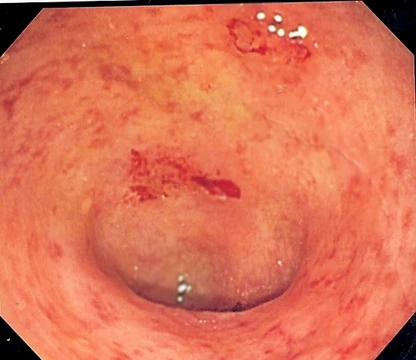
Diagnosis involves a colonoscopy that appears normal, but a biopsy of the colon lining shows an increased number of lymphocytes in the epithelium and connective tissue. This feature is shared with collagenous colitis, which also includes a noticeable thickening of the collagen layer beneath the epithelium.
Treatment with budesonide in a colonic-release form has proven effective in controlled studies. Some people find relief with over-the-counter antidiarrheal medications. For those who do not respond, anti-inflammatory drugs such as salicylates, mesalazine, or systemic corticosteroids may be prescribed. The long-term outlook is good, though some individuals experience relapses that respond to treatment.
Lymphocytic colitis was first identified in 1989.
- First described
- 1989
- Peak incidence
- persons over age 50
- Sex ratio
- affects twice as many women as men
- Associated drugs
- NSAIDs, proton pump inhibitors, selective serotonin reuptake inhibitors
- Treatment
- budesonide, antidiarrheal drugs, anti-inflammatory drugs
Lore & Background
Lymphocytic colitis is a subtype of microscopic colitis, first described in 1989. No definite cause has been determined, but the peak incidence is in persons over age 50, and it affects twice as many women as men. Some reports have implicated long-term usage of NSAIDs, proton pump inhibitors, and selective serotonin reuptake inhibitors, and other drugs. Associations with other autoimmune disorders suggest that overactive immune responses occur.
Reader's Guide
Lymphocytic colitis is significant as a distinct subtype of microscopic colitis, recognized only since 1989. Its diagnosis relies on histology showing lymphocyte accumulation in the colonic epithelium and lamina propria, despite a normal colonoscopy. Treatment with budesonide in colonic release preparations has been shown effective in randomized controlled trials, while over-the-counter antidiarrheal drugs may help some. Anti-inflammatory drugs are prescribed for non-responders. The long-term prognosis is good, though relapses occur and respond to treatment. Its association with autoimmune disorders and certain medications highlights the need for careful clinical history.
Did You Know?
- Lymphocytic colitis was first described in 1989.
- Long-term use of NSAIDs, proton pump inhibitors, and SSRIs has been implicated in some reports.
Frequently Asked Questions
Who is Lymphocytic colitis?
Lymphocytic colitis is a subtype of microscopic colitis that produces persistent, watery diarrhea without any visible blood. It was first formally described in the medical literature in 1989.
What are Lymphocytic colitis's powers/role?
Its hallmark effect is chronic watery diarrhea, and a standard colonoscopy looks completely normal to the naked eye. The telltale sign only appears under the microscope, where a biopsy reveals an abnormally high density of lymphocytes packed into the colon lining.
Why is Lymphocytic colitis important?
It disproportionately affects women over 50—hitting roughly twice as many females as males—and has been linked to long-term use of NSAIDs, proton pump inhibitors, and SSRIs. Its connection to other autoimmune conditions points toward an overactive immune response as a possible underlying driver.
What is Lymphocytic colitis's origin story?
The exact trigger remains unidentified, but researchers suspect an exaggerated immune reaction within the colon wall. Long-term exposure to certain medications and a background of autoimmune disease are considered potential contributing factors.
More in Inflammatory diseases of the digestive system 1-22
Spotted an error? Know more?
Reader corrections go straight into our review queue. Suggest an edit · How this site is sourced