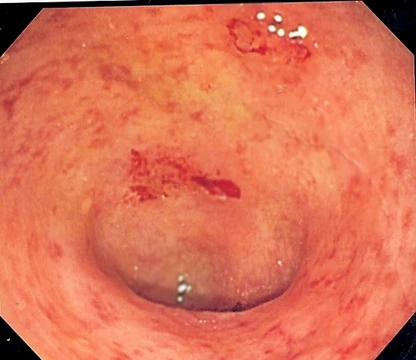
Gastritis
Inflammation of the stomach lining, often asymptomatic.

Gastritis refers to inflammation of the stomach lining, which can be either short-lived or long-lasting. While some people have no symptoms, the most frequent sign is pain in the upper abdomen. Other possible symptoms include nausea, vomiting, bloating, indigestion, loss of appetite, and heartburn. Complications can involve stomach bleeding, ulcers, and tumors. In cases of autoimmune atrophic gastritis, pernicious anemia may develop.
The condition is commonly triggered by an *Helicobacter pylori* infection or by taking nonsteroidal anti-inflammatory drugs (NSAIDs). Additional causes include alcohol, smoking, cocaine, severe illness, autoimmune disorders, radiation therapy, and Crohn’s disease. Diagnosis may involve endoscopy, an upper gastrointestinal series X-ray, blood tests, or stool tests. Conditions with similar symptoms include pancreatitis, gallbladder issues, and peptic ulcer disease.
Prevention focuses on avoiding irritants such as alcohol, NSAIDs, tobacco, and certain foods that provoke symptoms. Treating any underlying *H. pylori* infection before starting NSAIDs is also recommended to prevent irritation and ulcers. Treatment options include antacids, H2 blockers, and proton pump inhibitors. During an acute flare, viscous lidocaine may provide relief. If NSAIDs are the cause, stopping their use is advised. For *H. pylori*, a combination of antibiotics like amoxicillin and clarithromycin is used. Those with pernicious anemia require vitamin B12 injections.
Gastritis is thought to affect 30% to 50% of people globally, though most cases are symptom-free. In 2013, about 90 million new cases occurred. The risk rises with age. Together with a similar condition in the first part of the intestines called duodenitis, gastritis led to 50,000 deaths in 2015. *H. pylori* was first identified in 1982 by Barry Marshall and Robin Warren.
Quick Facts
- Field
- Gastroenterology
- Symptoms
- Upper abdominal pain, nausea, vomiting, bloating, indigestion, loss of appetite, heartburn
- Complications
- Bleeding, stomach ulcers, stomach tumors, pernicious anemia
- Duration
- Short or long term
- Causes
- Helicobacter pylori or other pathogens, NSAIDs, alcohol, cocaine, acute stress or physiological shock, autoimmune response
- Diagnosis
- Endoscopy with biopsy, upper gastrointestinal series, blood tests, stool tests
- Differential
- Myocardial infarction, inflammation of the pancreas, gallbladder problems, peptic ulcer disease
- Treatment
- Antacids, H2 blockers, proton pump inhibitors, antibiotics, sucralfate, bismuth subsalicylate, antiemetics
- Frequency
- 30%–50% of people
- Deaths
- 50,000 (2015)
Facts from the source article.
Lore & Background
Gastritis is a common condition characterized by inflammation of the stomach lining. It can be acute or chronic, and many people experience no symptoms. When symptoms do occur, upper central abdominal pain is most common, often described as dull, burning, or gnawing. Other symptoms include nausea, vomiting, bloating, and loss of appetite. Complications can include stomach bleeding, ulcers, and tumors. Autoimmune atrophic gastritis can lead to pernicious anemia due to vitamin B12 deficiency.
The most common cause is infection with Helicobacter pylori, a bacterium that colonizes the gut of more than half the world's population. Use of nonsteroidal anti-inflammatory drugs (NSAIDs) such as aspirin, ibuprofen, and naproxen is another major cause. Other causes include alcohol, smoking, cocaine, severe illness, autoimmune problems, radiation therapy, and Crohn's disease. Diagnosis often involves endoscopy, upper gastrointestinal series X-ray, blood tests, and stool tests. Treatment includes antacids, H2 blockers, proton pump inhibitors, and for H. pylori, a combination of antibiotics like amoxicillin and clarithromycin. Viscous lidocaine may help during acute flare-ups. For pernicious anemia, vitamin B12 injections are recommended.
Reader's Guide
Gastritis is a significant global health issue, believed to affect 30% to 50% of people worldwide, though most cases are asymptomatic. In 2013, there were approximately 90 million new cases. The condition, along with duodenitis, resulted in 50,000 deaths in 2015. The discovery of H. pylori in 1981 by Barry Marshall and Robin Warren revolutionized understanding of gastritis and peptic ulcer disease, shifting treatment from acid suppression to antibiotic therapy. Prevention involves avoiding irritants like alcohol, NSAIDs, tobacco, and certain foods, and treating underlying H. pylori infection before starting NSAIDs. The condition's association with pernicious anemia highlights the importance of vitamin B12 supplementation. Gastritis remains a common reason for medical visits and endoscopic procedures, and its management continues to evolve with better understanding of its causes and treatments.
Did You Know?
- Gastritis is believed to be present in 30% to 50% of people worldwide, but most cases are asymptomatic.
- H. pylori was first discovered in 1981 by Barry Marshall and Robin Warren.
- Autoimmune atrophic gastritis may lead to pernicious anemia, treated with vitamin B12 injections.
Frequently Asked Questions
Who is Gastritis?
Gastritis is the medical term for inflammation of the stomach's inner lining. It can strike as a brief, acute episode or linger as a chronic condition over months or years.
What are Gastritis's powers/role?
Its most recognizable signature is a dull or burning ache in the upper abdomen, though a large share of affected people experience no symptoms whatsoever. When it does make itself felt, it may also bring nausea, vomiting, bloating, indigestion, a dropped appetite, or heartburn.
What's Gastritis's origin story?
The two most frequent triggers are a Helicobacter pylori bacterial infection and the regular use of NSAID pain relievers. A rarer storyline, autoimmune atrophic gastritis, occurs when the body's own immune system turns against the stomach lining.
Why is Gastritis important?
It touches an estimated 30 to 50 percent of people worldwide, with roughly 90 million new cases logged in 2013 alone. Despite how common it is, it still contributed to about 50,000 deaths in 2015 when tallied together with duodenitis.
More in Inflammatory diseases of the digestive system 1-22
Spotted an error? Know more?
Reader corrections go straight into our review queue. Suggest an edit · How this site is sourced