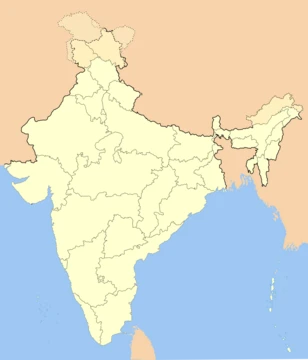
Uttarakhand
Northern Indian state with Himalayan geography and religious significance.

Uttarakhand is a state in northern India, established on 9 November 2000 after being separated from Uttar Pradesh. Formerly known as Uttaranchal, it was officially renamed Uttarakhand on 1 January 2007. The state is renowned for its high-altitude, rugged Himalayan topography, serving as the source of several major perennial river systems, and is sometimes called Devabhumi ('Land of the Gods') due to its numerous Hindu temples and pilgrimage centres.
Quick Facts
- Etymology
- Northern Land
- Nickname
- Devabhumi; Land of the Gods
- Motto
- Satyameva Jayate (Sanskrit) / "Truth alone triumphs"
- Anthem
- Uttarakhand Devabhumi Matribhumi (Hindi, Garhwali, and Kumaoni) / "Uttarakhand, Land of the Gods, O Motherland!"
- Region
- North India
- Before Was
- Part of Uttar Pradesh
- Capital
- Bhararisain
- Winter Capital
- Dehradun
- Districts
- 13
- Governor
- Gurmit Singh
- Chief Minister
- Pushkar Singh Dhami
- Party
- BJP
Facts from the source article.
Lore & Background
Uttarakhand's history dates to prehistoric times, with archaeological evidence including stone tools, rock shelters, and paintings at Lakhudiyar near Almora. During the Vedic period, it formed part of the ancient Kuru and Panchal kingdoms. The Ashokan rock edict at Kalsi records Mauryan influence and the spread of Buddhism. From around the second century BCE, the Kunindas exercised authority over parts of the area, with coinage indicating organized political activity and trade networks.
Reader's Guide
Uttarakhand's significance lies in its dual identity as a Himalayan state with deep historical roots and a modern administrative entity created in 2000. Its geography—spanning the Greater Himalayas, Lesser Himalayas, Shiwalik hills, and Terai-Bhabar plains—shapes its economy, which has shifted from traditional hill farming to services and hydropower. The state is a major pilgrimage destination, hosting the Char Dham sites (Haridwar, Rishikesh, Kedarnath, Badrinath) and other sacred circuits. Its cultural heritage includes regional languages like Garhwali and Kumaoni, and its population is predominantly Hindu. The renaming from Uttaranchal to Uttarakhand in 2007 reflected a public movement for historical authenticity. The state holds five Lok Sabha and three Rajya Sabha seats, and its per-capita income exceeds the national average.
Did You Know?
- Uttarakhand was initially named Uttaranchal upon its creation on 9 November 2000, and was officially renamed Uttarakhand on 1 January 2007.
- The state contains two UNESCO World Heritage Sites.
- The Ganges is formed at Devprayag by the confluence of the Bhagirathi and Alaknanda rivers.
- Forests cover about 45 per cent of Uttarakhand's geographical area.
More in Indian States 1-24
Spotted an error? Know more?
Reader corrections go straight into our review queue. Suggest an edit · How this site is sourced