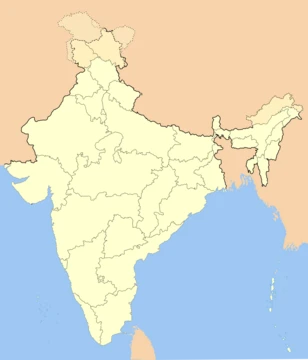
Himachal Pradesh
Mountain state in northern India, known as Land of Gods.

Timothy Gonsalves · CC BY-SA 4.0
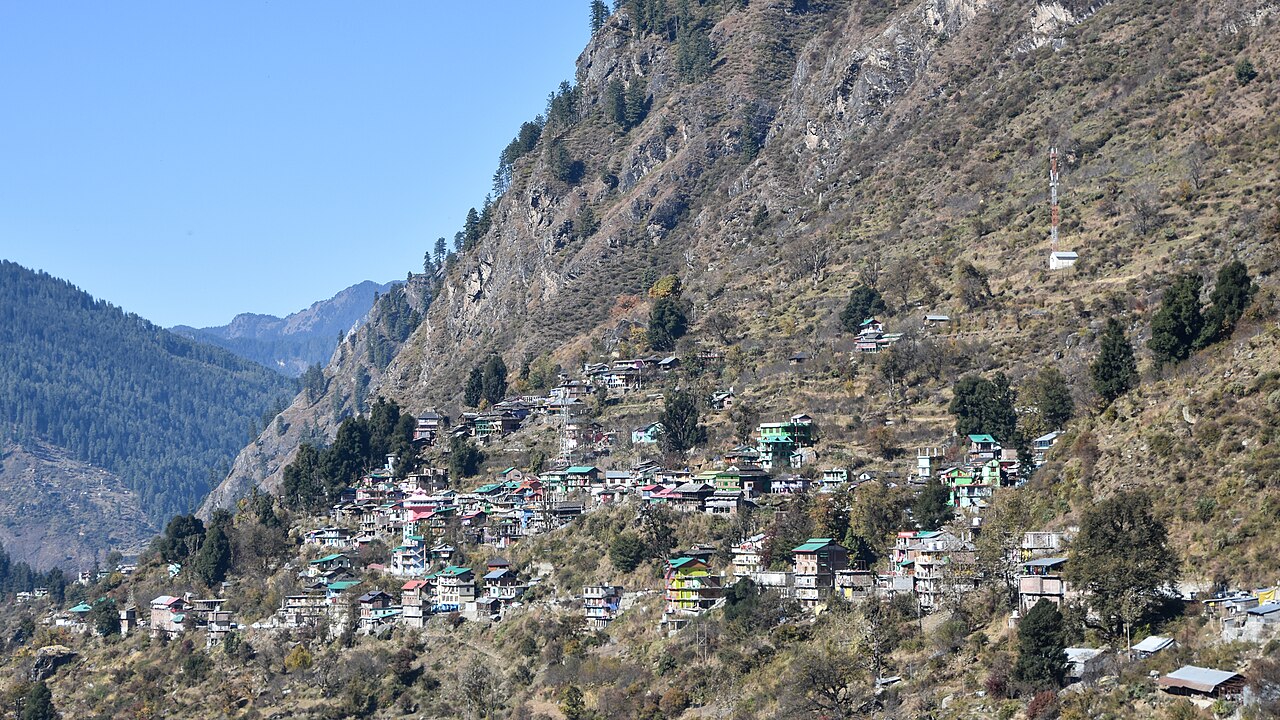
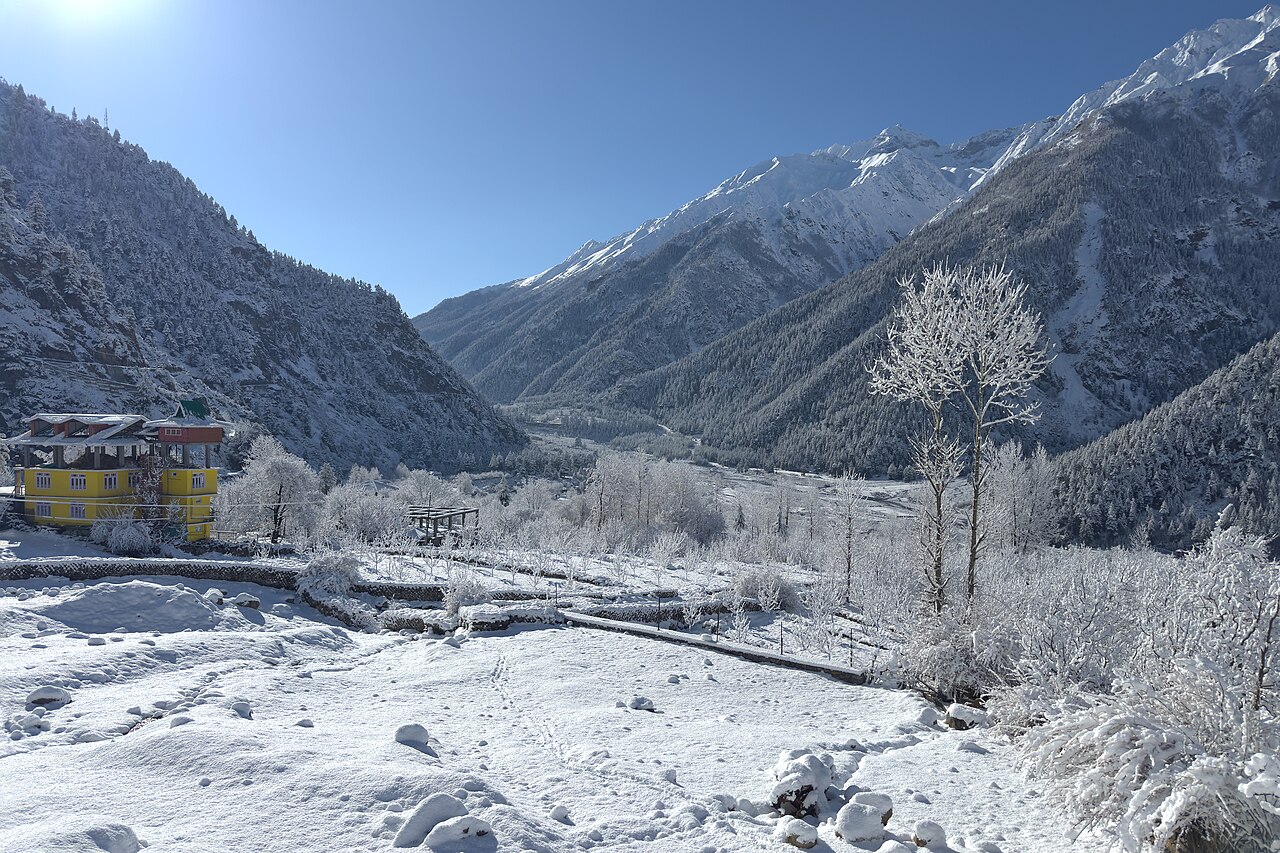
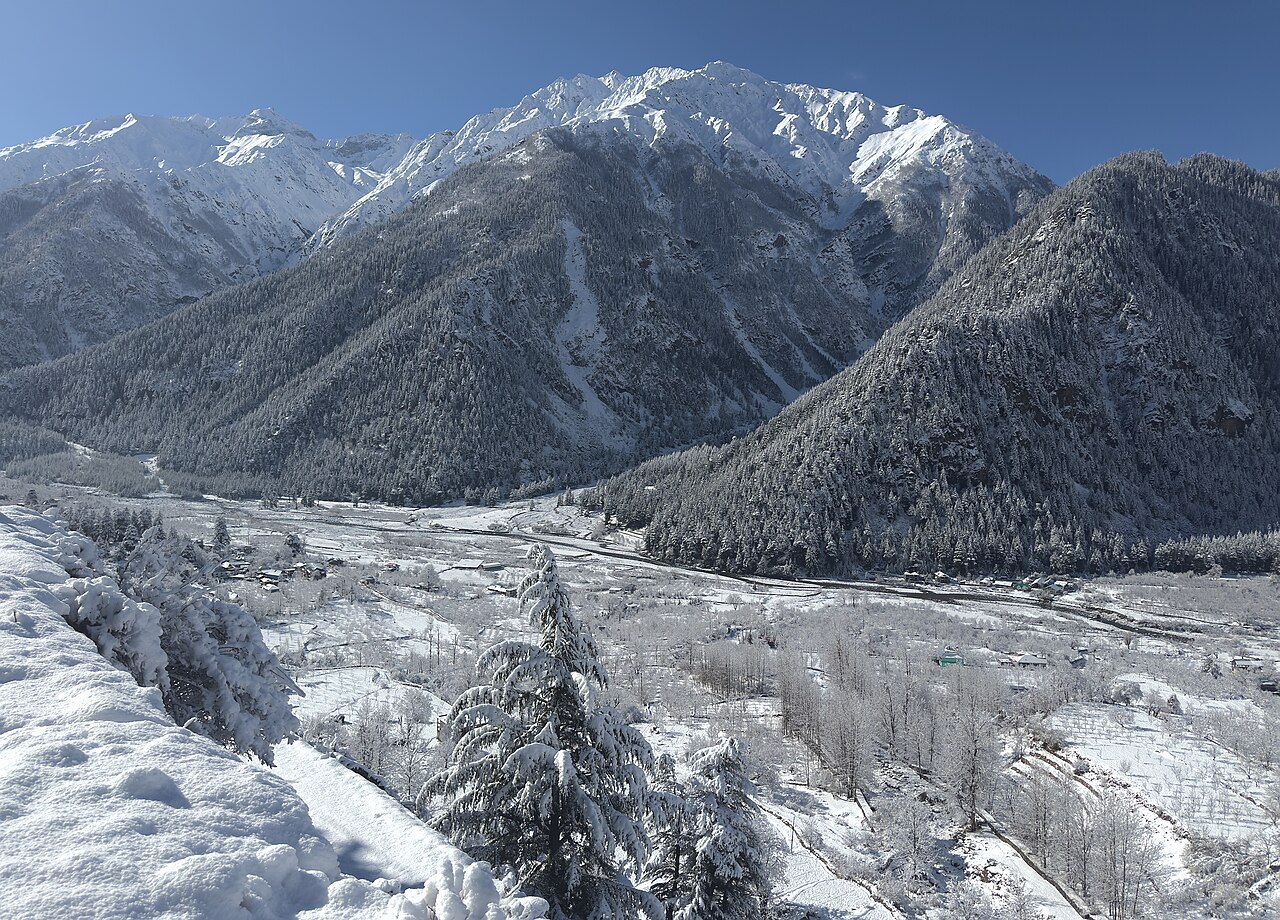
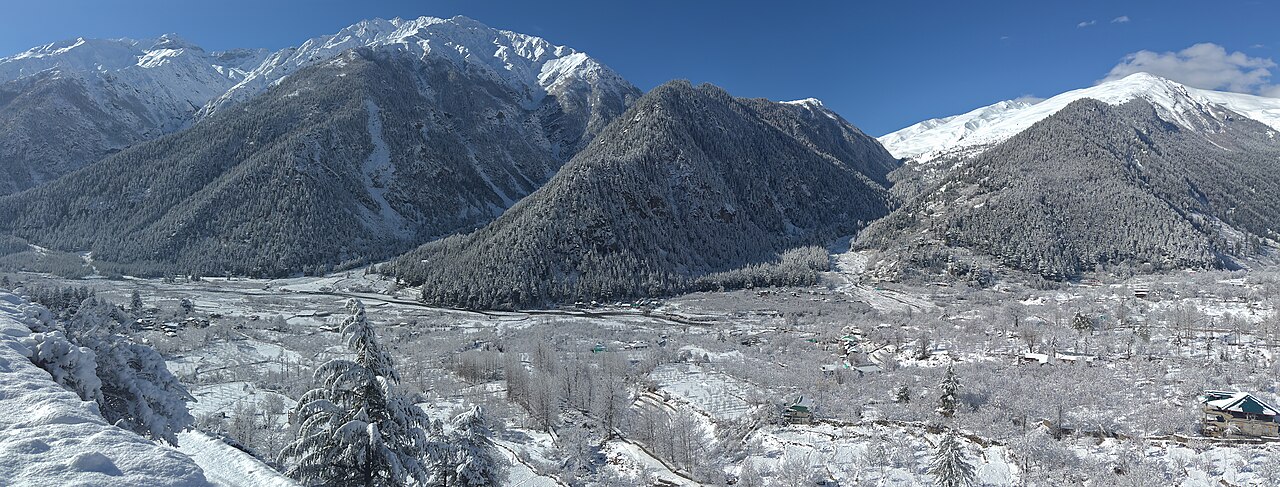
Himachal Pradesh is a state in the northern part of India, situated in the Western Himalayas. It is one of the 13 mountain states, known for its extreme landscape of peaks and river systems. The state is also called Dev Bhoomi ('Land of Gods') and Veer Bhoomi ('Land of the Brave').
Quick Facts
- Official Name
- State of Himachal Pradesh
- Etymology
- Land of the snow-clad mountains
- Nickname
- Devbhoomi · Veerbhoomi · Urja Pradesh
- Motto
- Satyameva Jayate (Sanskrit) / "Truth alone triumphs"
- Region
- North India
- Before Was
- East Punjab
- Capital
- Shimla
- Winter Capital
- Dharamshala
- Districts
- 12
- Governor
- Kavinder Gupta
- Chief Minister
- Sukhvinder Singh Sukhu
Facts from the source article.
Lore & Background
The region comprising present-day Himachal Pradesh has been inhabited since prehistoric times, with tribes such as the Koli, Hali, Dagi, Dhaugri, Dasa, Khasa, Kanaura, and Kirata. The foothills were inhabited by people from the Indus Valley Civilisation (2250–1750 BCE). During the Vedic period, small republics known as Janapada existed, later conquered by the Gupta Empire. After a brief period under King Harshavardhana, the region was divided among local chieftains and Rajput principalities, which were invaded by the Delhi Sultanate and later acknowledged Mughal suzerainty.
The Kingdom of Gorkha conquered many kingdoms in the late 18th century, annexing Sirmour and Shimla, and laying siege to Kangra in 1806. They came into conflict with the British along the tarai belt, after which the British expelled them. During the revolt of 1857, most hill rulers remained inactive or helped the British. After independence, the Chief Commissioner's Province of Himachal Pradesh was organised on 15 April 1948 from 30 petty princely states. Himachal became a union territory on 1 November 1956, and on 25 January 1971 it became the 18th state of India.
Reader's Guide
Himachal Pradesh holds significance as a mountainous state that became a full state of India in 1971, after evolving from a Chief Commissioner's province and a union territory. Its economy relies on agriculture, horticulture, hydropower, and tourism. The state is notable for being almost universally electrified (99.5% of households as of 2016) and was declared India's second open-defecation-free state in 2016. According to a 2017 survey, it is India's least corrupt state. In 2026, Himachal Pradesh ranked 8th worldwide in the World's most welcoming regions, and topped India's most welcoming regions, with its city Bir ranking as the most welcoming city in India. The state's name, meaning 'Snow-laden Mountain Province', was officially given after independence, referencing its setting in the Himalayas.
Structure and Composition of the Assembly
The Himachal Pradesh Legislative Assembly operates as a single-chamber legislature, making it a unicameral body rather than a two-house system. All 68 members of the assembly are chosen through direct elections, with each representative serving a single-seat constituency across the state. This structure ensures that every elected member speaks for a defined geographic area rather than a broader regional bloc. The assembly's term stretches across five years, though it can be dissolved before that period expires if circumstances demand it. The physical seat of this legislative body is located in Shimla, which also serves as the capital of Himachal Pradesh. The combination of direct representation, a fixed but flexible term, and a single chamber gives the assembly a relatively straightforward internal architecture compared to multi-tier legislative systems found elsewhere in India.
From Princely Integration to Full Statehood
The legislative journey of Himachal Pradesh began on 15 April 1948, when the Chief Commissioner's Province was created by merging thirty former princely states into a single administrative unit. In 1951, the region was reclassified as a Part C state under the Government of Part C State Act, bringing it under the oversight of a lieutenant governor and establishing a 36-member legislative assembly. The first elections to this body took place in 1952. In 1954, the neighboring Part C state of Bilaspur was absorbed into Himachal Pradesh, expanding its territory. By 1956, the region had been redesignated as a Union Territory, governed by a lieutenant governor with a Territorial Council holding limited legislative powers. A significant shift came in 1963, when the Territorial Council was converted into a full Legislative Assembly, even though the region remained a Union Territory. The assembly held its first sitting on 1 October 1971. On 18 December 1970, Parliament passed the State of Himachal Pradesh Act, and the new state officially came into existence on 25 January 1971, becoming the 18th state in the Indian Union.
Political Beginnings and Leadership Framework
The inaugural assembly elections of 1952 marked a pivotal moment in the region's political life. The Indian National Congress emerged as the dominant force, securing 24 seats and forming a government led by Yashwant Singh Parmar. This early electoral outcome set the tone for decades of organized political competition within the assembly. Over the years, the institution has developed a full complement of leadership roles, including a Speaker and a Deputy Speaker who preside over proceedings, a Leader of the House representing the governing coalition, and a Leader of the Opposition who champions the interests of those outside the ruling group. These positions have been held by successive individuals across multiple assembly terms, creating a continuous record of institutional leadership. The existence of formal opposition leadership, even in a relatively small state legislature, underscores the commitment to adversarial debate and accountability that underpins the assembly's democratic function.
Innovation and Institutional Continuity
Among its many institutional milestones, the Himachal Pradesh Legislative Assembly holds the distinction of being the first state legislature in India to adopt a fully paperless operational model. This move toward digital governance reflected a forward-looking approach to legislative administration, reducing reliance on physical documentation and streamlining internal processes. The assembly's institutional history is documented through successive lists of assemblies, speakers, deputy speakers, and leaders of the house, each recording the evolving political landscape of the state. The most recent reference point in the available records is the 13th Legislative Assembly, indicating that the institution has endured through numerous electoral cycles and government changes since statehood. The assembly remains a central pillar of Himachal Pradesh's government, working in tandem with the executive to shape policy and governance for the state's residents.
Gallery
Frequently Asked Questions
Who is Himachal Pradesh?
Himachal Pradesh is a mountain state tucked into the Western Himalayas of northern India, covering 55,673 square kilometres across 12 districts. It carries the twin nicknames Dev Bhoomi (Land of Gods) and Veer Bhoomi (Land of the Brave), reflecting its spiritual and martial heritage.
What are Himachal Pradesh's powers and role?
As one of India's 13 mountain states, Himachal Pradesh commands its region through dramatic peaks and a dense web of river systems, peaking at Reo Purgyil, which rises to 6,816 metres. That extreme topography shapes the state's culture, economy, and identity more than almost any other Indian region.
Why is Himachal Pradesh important?
The state occupies a singular niche in India's geography as a high-altitude Himalayan zone where raw natural grandeur meets centuries of local tradition. Its dual identity as both a sacred and a warrior land gives it symbolic resonance far beyond its 55,673-square-kilometre footprint.
Where does Himachal Pradesh keep its base of operations?
The state runs out of two seasonal capitals: Shimla hosts the government during summer, while Dharamshala takes over the role in winter. This dual arrangement mirrors the sharp seasonal swings of the Western Himalayan landscape the state inhabits.
More in Indian States 1-24
Spotted an error? Know more?
Reader corrections go straight into our review queue. Suggest an edit · How this site is sourced