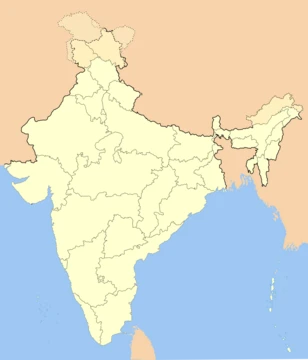
Arunachal Pradesh
State in northeast India, least densely populated.

Soup0w0 · CC BY-SA 4.0
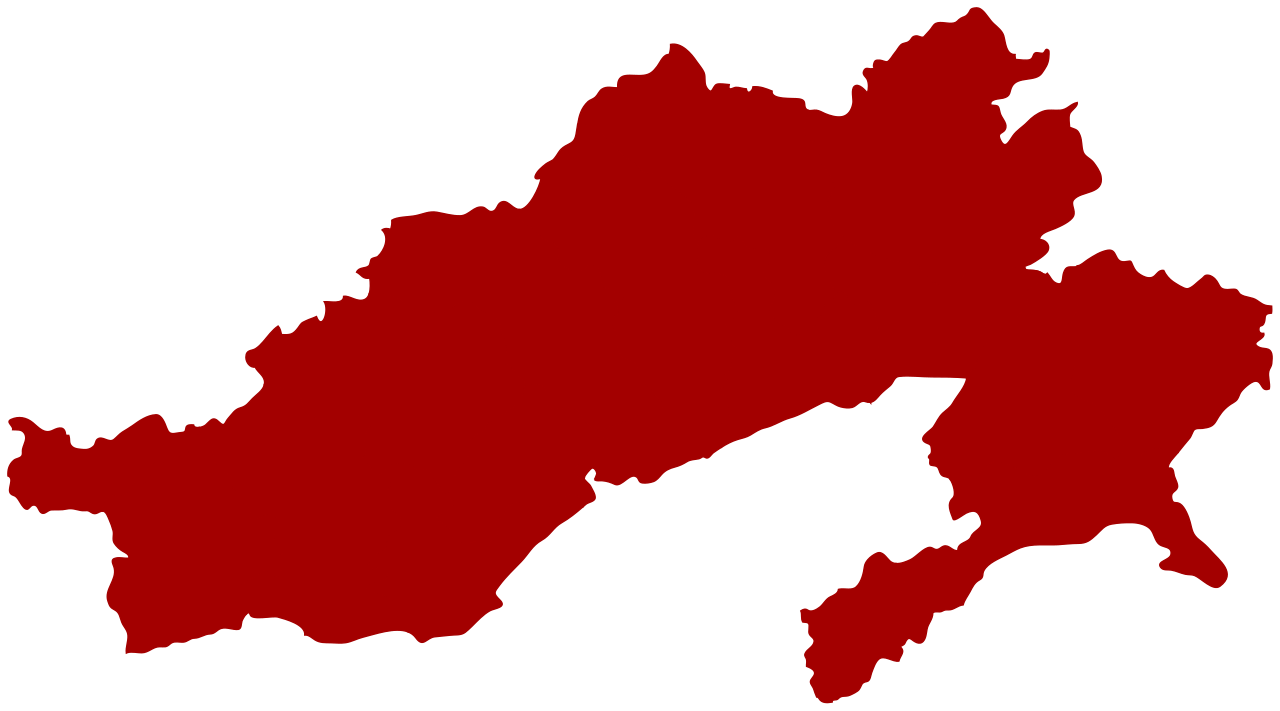
Arunachal Pradesh is a state in northeast India, known as the North-East Frontier Agency until 1972, when it became a union territory. It became a state on 20 February 1987. Its capital and largest town is Itanagar. The state is ethnically diverse, with major tribes including the Monpa, Tani, Mishmi, Tai, and Naga peoples, and is the least densely populated state in India.
Quick Facts
- Etymology
- Arunachal ('dawn-lit mountains') and Pradesh ('province or territory')
- Nickname
- "Land of Rising Sun"
- Motto
- Satyameva Jayate (Truth Alone Triumphs)
- Region
- Northeast India
- Before Was
- North-East Frontier Agency
- Capital
- Itanagar
- Largestcity
- capital
- Districts
- 28
- Governor
- Kaiwalya Trivikram Parnaik
- Chief Minister
- Pema Khandu (BJP)
- Deputy Cm
- Chowna Mein (BJP)
Facts from the source article.
Lore & Background
Arunachal Pradesh means 'Land of the Dawn-Lit Mountains' in Sanskrit. Prior to 1972, it was called the North-East Frontier Agency. The People's Republic of China does not recognize the state, claiming it as Southern Tibet. In ancient Tibetan texts, eastern Arunachal Pradesh and parts of Tibet were called Lhoyü, while the Tawang and West Kameng districts were called Monyul. The northwestern regions came under Monpa and Tibetan control, with the Monpa kingdom of Monyul flourishing from around the 7th century CE. The 6th Dalai Lama, Tsangyang Gyatso, was born in Tawang. The foothills and plains fell under the Chutia kings of Assam in the medieval period, with historical sites such as Bhismaknagar and Ita Fort belonging to that era. After the fall of the Chutia kingdom in 1523, many frontier settlements declined. The inner hill regions were governed by tribal communities with customary laws, village councils, and chiefs.
Reader's Guide
Arunachal Pradesh is significant as a state with a disputed border with China, nearly four-fifths of which is claimed by China as Southern Tibet. Its low population density and ethnic diversity, with about 23 major tribes and 100 sub-tribes, make it a unique cultural region. The state's history includes periods of Monpa and Tibetan control, Chutia rule, and autonomous tribal chiefdoms. The McMahon Line defines the northern border, and China occupied some regions in 1962 before withdrawing. The state's name, meaning 'Dawn-Lit Mountain Province,' reflects its geographical position as the easternmost state of India. Its legacy includes the preservation of diverse tribal traditions and languages, and its strategic location continues to influence geopolitical relations.
Did You Know?
- The Nyishi are the largest ethnic group in the state.
- China claims about two-thirds of Arunachal Pradesh as Southern Tibet.
Constitutional Architecture of Executive Power
The office of Chief Minister in Arunachal Pradesh sits at the intersection of constitutional design and practical governance. While the Indian Constitution designates the governor as the state's de jure head, the real engine of executive authority operates through the chief minister. This division is not merely theoretical; it shapes every major decision the state makes. Following elections to the Arunachal Pradesh Legislative Assembly, the governor typically extends an invitation to whichever party or coalition commands a majority of seats, tasking them with forming the government. The governor then formally appoints the chief minister, who in turn assembles a council of ministers. This entire cabinet bears collective responsibility before the assembly, meaning the government's survival depends on maintaining legislative confidence. The chief minister simultaneously holds the position of Leader of the House, giving the officeholder a dual role as both chief executive and principal legislative spokesperson. This layered structure ensures that executive power, while concentrated in one individual, remains tethered to the will of the elected assembly.
The Oath of Office and the Covenant of Secrecy
Assuming the mantle of chief minister in Arunachal Pradesh is not a casual transition; it is sealed through a formal oath that binds the officeholder to a set of solemn promises. The individual swears in the name of God or, alternatively, makes a solemn affirmation, pledging true faith and allegiance to the Constitution of India as established by law. The oath demands that the minister uphold the sovereignty and integrity of the nation, discharge the duties of the office faithfully and conscientiously, and render justice to all people in accordance with the Constitution and the law, free from fear, favour, affection, or ill-will. Beyond this public pledge, a second oath of secrecy imposes a stricter personal obligation. The minister vows never to directly or indirectly communicate or reveal any matter that comes under their consideration or becomes known to them in their capacity as a state minister. The sole exception is information whose disclosure is necessary for the proper performance of ministerial duties. Together, these two oaths frame the ethical boundaries within which the chief minister must operate.
Tenure, Continuity, and the Long Arc Since 1975
The chief minister of Arunachal Pradesh serves a fixed five-year term, a duration that aligns with the legislative cycle of the state assembly. Notably, the office carries no term limits, meaning a chief minister who retains the confidence of the assembly can, in principle, serve multiple consecutive terms. The tenure is not guaranteed by time alone, however; it is contingent upon the chief minister's continued command of a majority in the Legislative Assembly. The history of the office stretches back to 1975, marking more than four decades of continuous executive leadership for the state. Within that span, the record reflects both the fragility and the resilience of democratic office. Some chief ministers have died while still holding the position, a sobering reminder that the role carries no immunity from life's unpredictability. Others have returned to the office after a gap, serving non-consecutive terms that underscore the fluid nature of political fortunes in the state. This long, unbroken lineage of leadership has shaped the institutional memory of Arunachal Pradesh's governance.
The Current Incumbent and the Dual Legislative Role
As of the latest available information, Pema Khandu of the Bharatiya Janata Party holds the office of chief minister in Arunachal Pradesh. His tenure illustrates how the role functions in the present political landscape of the state. Beyond the executive responsibilities that define the position, the chief minister simultaneously occupies the seat of Leader of the House within the Legislative Assembly. This dual capacity means the officeholder is not merely the head of the government but also the principal voice guiding legislative business, setting the agenda, and representing the ruling party or coalition on the assembly floor. The council of ministers that surrounds the chief minister operates under a principle of collective responsibility to the assembly, reinforcing that the executive branch remains answerable to the elected legislature. The appointment process itself—initiated by the governor following assembly elections, with the majority party or coalition invited to form government—ensures that the chief minister's authority is ultimately derived from the democratic mandate of the people of Arunachal Pradesh.
Gallery
Frequently Asked Questions
What is Arunachal Pradesh?
It is a state in the northeastern corner of India that achieved full statehood on 20 February 1987, after earlier existing as the North-East Frontier Agency and then as a union territory.
What is the capital of Arunachal Pradesh?
Itanagar serves as both the administrative capital and the largest town in the state.
How densely populated is Arunachal Pradesh compared to other Indian states?
With a 2011 census population of roughly 1.38 million spread across its territory, it works out to about 17 people per square kilometre, making it the least densely populated state in India.
Which ethnic groups are most prominent in Arunachal Pradesh?
The state is home to a rich mosaic of tribal communities; the Nyishi form the largest single group, while the Monpa, Tani, Mishmi, Tai, and Naga peoples also make up significant portions of the population.
What international borders does Arunachal Pradesh share?
It touches Bhutan and Myanmar along its international frontiers, and also runs a 1,129-kilometre stretch along the disputed boundary with China's Tibet Autonomous Region.
More in Indian States 1-24
Spotted an error? Know more?
Reader corrections go straight into our review queue. Suggest an edit · How this site is sourced