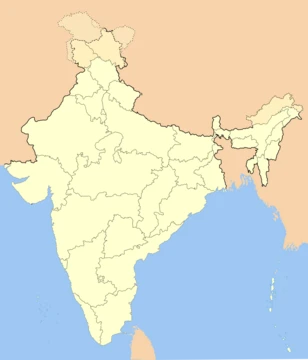
Kerala
State on India's Malabar Coast, formed in 1956.

rajaraman sundaram · CC BY 3.0
Kerala is a state on the Malabar Coast of southern India, formed on 1 November 1956 under the States Reorganisation Act. It is renowned for its historic role in the spice trade, with evidence of exports dating to around the 1st millennium BCE, and boasts the highest Human Development Index, literacy rate, and life expectancy in India, along with a very high sex ratio.
Quick Facts
- Official Name
- Keralam
- Nickname
- "God's Own Country"
- Region
- South India
- Before Was
- Travancore–Cochin / Malabar district / South Canara
- Capital
- Thiruvananthapuram
- Districts
- 14
- Governor
- Rajendra Arlekar
- Chief Minister
- V. D. Satheesan
- Party
- INC
- Judiciary
- Kerala High Court
- Chief Secretary
- Bishwanath Sinha I.A.S.
- Legislature Type
- Unicameral
Facts from the source article.
Lore & Background
Kerala's history includes the Chera dynasty, the first major kingdom, which rose through maritime commerce but faced invasions from the Chola and Pandya dynasties. In the 15th century, Portuguese traders arrived for the spice trade, initiating European colonisation in India. After Indian independence, Travancore and Cochin merged in 1949 to form Travancore-Cochin, and in 1956 the modern state of Kerala was created by exchanging areas with Madras State.
Legend holds that the land was recovered from the sea by the warrior sage Parashurama, an avatar of Vishnu, and that the asura king Mahabali once ruled from Kerala, returning annually for the Onam festival. Prehistoric findings include Neolithic dolmens in Marayur and rock engravings in Edakkal caves dating to around 6000 BCE.
Kerala has the highest media exposure in India and is named one of the ten paradises of the world by National Geographic Traveler. Its economy relies heavily on remittances from a large Malayali expatriate population, especially from the Gulf Boom of the 1970s and early 1980s.
Reader's Guide
Kerala's significance lies in its unique social indicators: the highest Human Development Index (0.784 in 2018), literacy rate (96.2%), life expectancy (77.3 years), and sex ratio (1,084 women per 1,000 men) in India, alongside the lowest positive population growth rate (3.44%). It is the least impoverished and second-most urbanised state. Its economy is service-sector oriented, with major contributions from black pepper, natural rubber, coconut, tea, coffee, cashew, and spices, as well as a fishing industry supporting 1.1 million people. The state's culture is a synthesis of Aryan and Dravidian traditions, shaped over millennia. Tourism is a major draw, with coconut-lined beaches, backwaters, hill stations, Ayurvedic tourism, and tropical greenery. In 2026, the state's name was officially changed from Kerala to Keralam following a legislative process that included approval by the Union Cabinet, Parliament, and a presidential notification on 25 August 2026.
Did You Know?
- Kerala has been a prominent exporter of spices since around the 1st millennium BCE.
- No official name change to Keralam has occurred as of the present date.
- Kerala has the highest literacy rate in India at 96.2% (2018).
- The Chera dynasty was the first major kingdom in the region.
Constitutional Architecture and Executive Authority
The office of Chief Minister in Kerala sits at the intersection of constitutional design and democratic practice. Under the Indian Constitution, the state's governor holds the formal, de jure headship, yet the real executive power flows through the chief minister and the council of ministers. The mechanism is straightforward in principle: after elections to the Kerala Legislative Assembly, the governor extends an invitation to whichever party or coalition commands a majority of seats to form the government, and then formally appoints the chief minister. Once in office, the ministerial council bears collective responsibility to the assembly, and the chief minister typically doubles as the leader of the house. A full term spans five years, and the Constitution imposes no ceiling on the number of terms one may serve. This framework, inherited from the broader Indian federal structure, has shaped every political contest in Kerala since the state's modern incarnation, making the balance of assembly seats the single most decisive factor in who governs.
From Princely States to a Unified State
Kerala's modern political identity was forged through a series of administrative mergers and boundary redrawing in the late 1940s and 1950s. After India shed British rule in 1947, the former princely states of Travancore and Cochin each established a form of representative government under a prime minister and a council of ministers. On 1 July 1949, these two entities were combined into the state of Travancore-Cochin. Meanwhile, the Malabar region and the Kasaragod taluk of South Canara—territories that together make up more than half of today's Kerala—remained under the jurisdiction of the Madras Legislative Assembly. The decisive moment came on 1 November 1956, when the States Reorganisation Act reorganised India's map along linguistic lines. Malayalam-speaking areas were consolidated: Malabar and Kasaragod were folded into Travancore-Cochin to create the present-day state of Kerala. In the same reorganisation, the southern Kanyakumari district and Sengottai taluk were transferred to Madras, and the Laccadive and Minicoy Islands were carved out as a separate Union Territory.
Pioneers, Records, and Milestones
The first legislative election in the newly formed Kerala state took place in February and March 1957, and the inaugural assembly was constituted on 5 April 1957 with 127 members, including one nominated seat. E. M. S. Namboodiripad, a member of the Communist Party of India, became the state's first chief minister, though his tenure was abruptly ended when President's rule was imposed. Over the decades that followed, twelve individuals have held the office. E. K. Nayanar stands out as the longest-serving chief minister, accumulating ten years and 353 days in the role. P. Karunakaran is the only person to have been sworn in four separate times. At the other end of the spectrum, A. K. Antony assumed the office at just 36 years of age, making him the youngest holder, while V. S. Achuthanandan was the eldest at 82. Notably, on four occasions the chief minister was not an MLA at the time of swearing in—C. Achutha Menon in 1969, A. K. Antony in 1977 and 1995, and E. K. Nayanar in 1996—each subsequently winning a by-election within the six-month window. As of 18 May 2026, V. D. Satheesan occupies the office.
Political Rhythms and Federal Interventions
Kerala's political history is marked by a distinctive pattern of alternation and occasional federal intervention. The state has experienced President's rule on seven separate occasions, the most recent being in 1982, after which direct central control has not been imposed. Since the 1980s, the chief minister's chair has generally oscillated between the leaders of the Indian National Congress and the Communist Party of India (Marxist), creating a predictable two-party rhythm that defines the state's electoral landscape. The office has also seen unusual procedural episodes: four chief ministers were sworn in without holding an assembly seat, each required to contest a by-election within six months to regularise their position. The early years were particularly turbulent, with the first chief minister's government being dissolved and the state placed under central administration. These episodes, combined with the steady Congress–CPI(M) alternation that has held since the 1980s, have shaped Kerala's political character as one of sustained ideological contestation within a stable democratic framework.
Gallery
Frequently Asked Questions
Who is Kerala?
Kerala is a southern Indian state stretching along the Malabar Coast, with Thiruvananthapuram as its capital. It was officially constituted on 1 November 1956 under the States Reorganisation Act.
What are Kerala's core stats?
The state covers 38,863 km² and was home to roughly 33 million residents at the 2011 census. Malayalam and English serve as its official languages.
Why is Kerala important in the broader Indian story?
Kerala tops the country in Human Development Index, life expectancy, and sex ratio, while also carrying a spice-trade heritage that stretches back to the 1st millennium BCE. Its coastal position on the Malabar Coast made it a key node in ancient and medieval global commerce.
What is Kerala's claim to fame in education?
Kerala recorded a 96.2% literacy rate in 2018, the highest of any Indian state. This long-standing emphasis on schooling is a major part of its identity.
How did Kerala's story begin?
The state was formally carved out on 1 November 1956 when the States Reorganisation Act reorganised Indian territories largely along linguistic lines. Since then it has operated as a single administrative unit on India's southwestern coast.
More in Indian States 1-24
Spotted an error? Know more?
Reader corrections go straight into our review queue. Suggest an edit · How this site is sourced