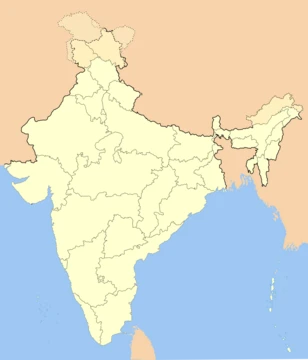
Bihar
Eastern Indian state, birthplace of Buddhism and ancient empires.

Nirinsanity · CC BY-SA 4.0
Bihar is a state in eastern India, bordered by Uttar Pradesh to the west, Nepal to the north, West Bengal to the east, and Jharkhand to the south. It is split by the river Ganges and is the third most populous state in India, the 12th largest by area, and the 14th largest by GDP in 2024. Bihar played a central role in the history and development of Buddhism, with the Buddha attaining enlightenment at Bodh Gaya's Mahabodhi Temple, a UNESCO World Heritage Site, and early Buddhist schools like Nalanda and Vikramashila emerging there as major centers of learning.
Quick Facts
- Official Name
- State of Bihar
- Nickname
- "Land of Monasteries"
- Motto
- Satyameva Jayate (Truth alone triumphs)
- Anthem
- Mere Bharat Ke Kanthahar / (The Garland of My India)
- Region
- East India
- Before Was
- Bihar Province
- Capital
- Patna
- Largestcity
- capital
- Districts
- 38
- Governor
- Syed Ata Hasnain
- Chief Minister
- Samrat Choudhary
- Party
- BJP
Facts from the source article.
Lore & Background
The name Bihar derives from the Sanskrit and Pali word vihāra, meaning 'abode,' referring to Buddhist monasteries that were numerous in the region. Ancient Bihar included the kingdoms of Magadha, Mithila, and Anga, mentioned in religious texts and epics. The Videha Kingdom in Mithila became a major political and cultural center during the late Vedic period, and its capital Vaishali is considered the first known republic in India, established by the sixth century BCE. The Maurya Empire, founded by Chandragupta Maurya in 321 BCE, originated in Magadha with its capital at Pataliputra, and Emperor Ashoka, born there, is regarded as a notable ruler. The Gupta Empire, also originating in Magadha in 320 CE, is referred to as the Golden Age of India.
Reader's Guide
Bihar's significance lies in its foundational role in Indian history and Buddhism. It was the heartland of the Maurya and Gupta empires, which shaped political and cultural developments across South Asia. The region's Buddhist monasteries and universities, such as Nalanda and Vikramashila, attracted scholars from across Asia until their decline following invasions in the 12th century. In the colonial era, Bihar was part of the Bengal Presidency until 1912, and it was a site of early peasant movements, including the Champaran Satyagraha led by Mahatma Gandhi in 1917. Since the late 1970s, Bihar has lagged in social and economic development, attributed by some economists to central government policies like the freight equalisation policy and the Permanent Settlement of 1793. However, improved state governance has led to economic revival through investment in infrastructure, healthcare, education, and reduced crime and corruption. The state's legacy includes both ancient achievements and modern challenges, with ongoing efforts to address caste-based conflicts and land reform issues that have persisted since independence.
Did You Know?
- The Maurya Empire, founded in 321 BCE, originated in Magadha, which is in modern Bihar.
- The Champaran Satyagraha of 1917, led by Mahatma Gandhi, began after Raj Kumar Shukla drew attention to peasant exploitation by European indigo planters.
Scale and Scheduling of a Seven-Phase State
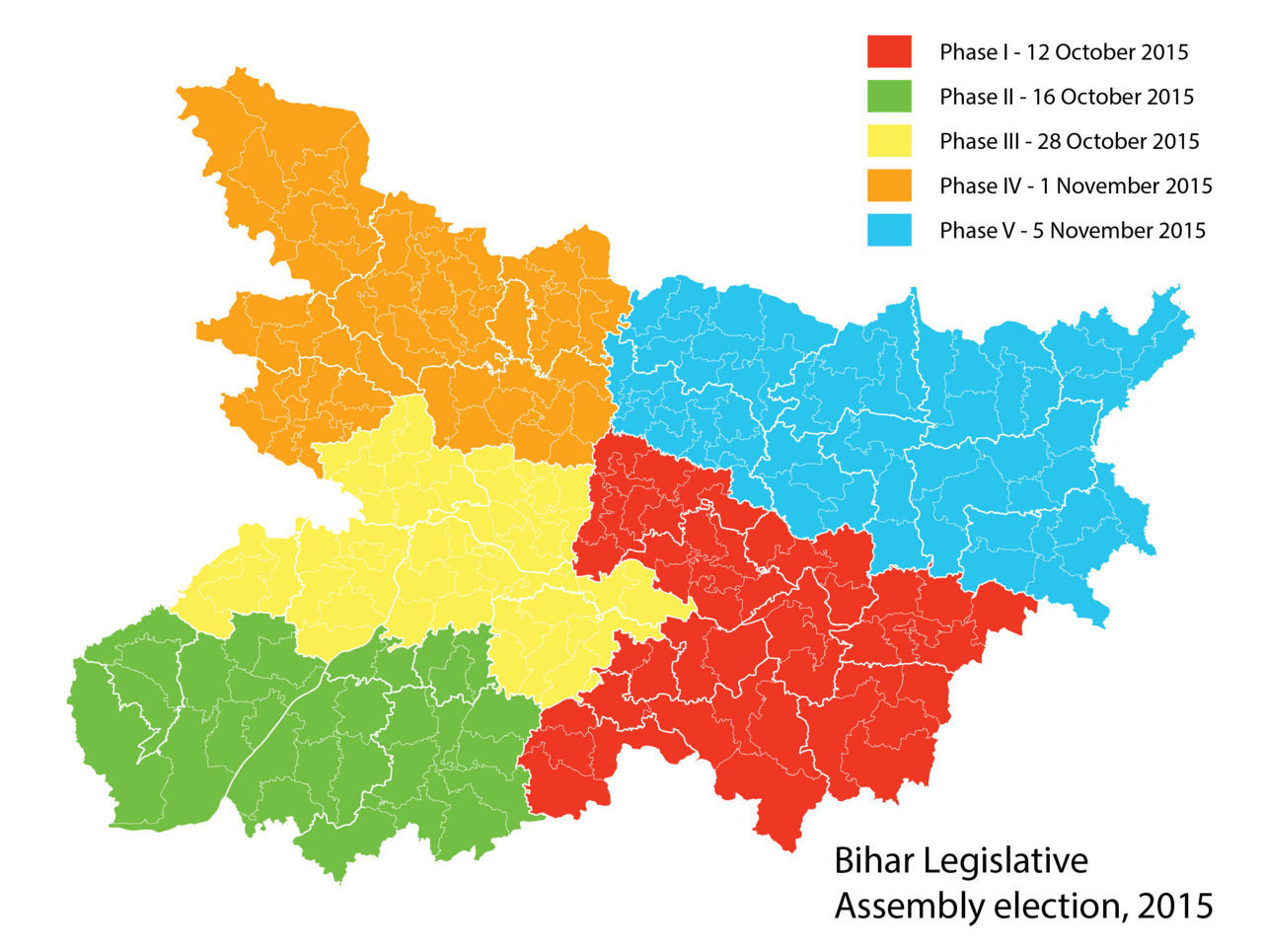
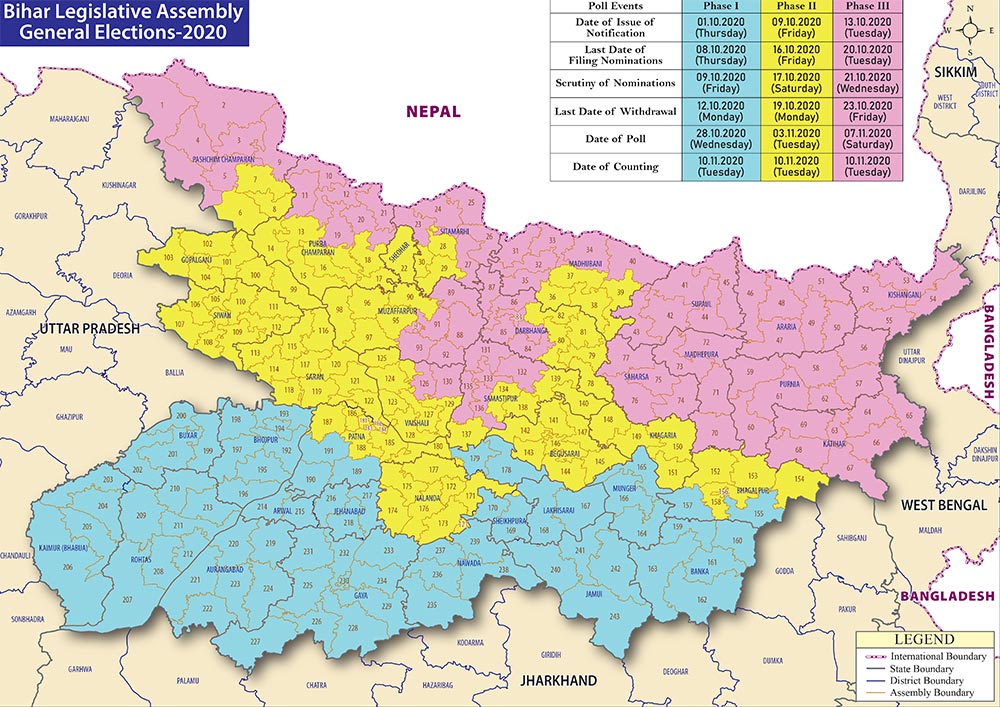
Bihar's participation in the 2024 Indian general election was notable for its sheer logistical complexity. Alongside Uttar Pradesh and West Bengal, Bihar stood as one of only three states where voting was spread across all seven phases, running from 19 April through 1 June. The state's 40 Lok Sabha seats were filled in this staggered process, with final results declared on 4 June. The decision to split Bihar's voting into every single phase reflected the state's vast geography, diverse electorate, and the administrative challenges of managing such a large-scale democratic exercise. This multi-phase approach meant that political momentum, campaign energy, and voter engagement had to be sustained over more than a month, creating a prolonged period of political activity that shaped the entire electoral landscape. The NDA and INDIA blocs both had to maintain their campaign machinery across seven distinct windows, making Bihar one of the most demanding battlegrounds of the 2024 cycle.
Foot Tours and Rhetorical Showdowns
The campaign period in Bihar saw both major alliances deploy high-profile foot tours to energize their bases. The Indian National Congress kicked off its Bihar leg of the Bharat Jodo Nyay Yatra from Kishanganj on 28 January 2024, with Rahul Gandhi taking direct aim at Chief Minister Nitish Kumar for rejoining the NDA, declaring that the Mahagathbandhan did not need him and would continue its fight for social justice. On 15 February, Gandhi resumed the yatra from Aurangabad, promising a financial survey to assess ground realities if his alliance won power. The following day, the yatra continued from Sasaram, where RJD chairperson Tejashwi Yadav joined Gandhi, and the two toured the state together in a jeep. Meanwhile, the RJD launched its own Jan Vishwas Yatra from Muzaffarpur on 20 February, a 33-district trek scheduled to run until 1 March. In Siwan on 23 February, Yadav delivered a pointed remark, calling the BJP "a dustbin" that collects parties that have become "garbage."
The Pawan Singh Flashpoint and Its Aftermath
The Karakat Lok Sabha constituency in Rohtas district became the election's most talked-about flashpoint when Bhojpuri singer and actor Pawan Singh announced his candidacy. Singh had initially been offered the BJP ticket from Asansol against Shatrughan Sinha but refused, and after failing to secure an NDA nomination from Arrah, he entered the Karakat triangular. Speculation swirled that his Rajput identity would siphon a major share of NDA Rajput votes. The aftermath proved dramatic: Singh polled over two lakh votes, knocking NDA candidate Upendra Kushwaha down to third place. The seat ultimately went to Raja Ram Singh Kushwaha of the CPI(ML) Liberation by a margin exceeding one lakh votes. The fallout was seismic. Koeri voters across Shahabad, furious at what they saw as a BJP-engineered spoiler, rallied behind Rajput candidates and the BJP instead. RJD and its allies successfully framed Singh as a BJP agent sent to split Kushwaha votes. The result was a cascade of NDA defeats: veteran Rajput leaders R.K. Singh and Sushil Kumar Singh lost in Arrah and Aurangabad, and the BJP was effectively wiped out across the entire Shahabad region, including Buxar and Sasaram.
Caste Arithmetic and Candidate Distribution
Caste arithmetic played a defining role in Bihar's 2024 contest. The RJD worked deliberately to broaden its social base while anchoring its traditional Muslim-Yadav support. Of the 23 seats it contested, the majority of candidates came from OBC and EBC communities. The party fielded eight Yadav candidates, three Koeri candidates (Alok Kumar Mehta from Ujiarpur, Shravan Kushwaha from Nawada, and Abhay Kushwaha from Aurangabad), and six women candidates across Sheohar, Munger, Purnea, Jamui, Pataliputra, and Saran. Across both the NDA and INDIA blocs, 16 Yadav candidates were nominated out of 80 total, while Koeris with 11 candidates formed the second-largest caste group. On the NDA side, the BJP's decision to elevate Samrat Chaudhary as Bihar unit president was meant to draw Kushwahas into its fold, yet ground-level discontent simmered because Chaudhary could not field a single Kushwaha on the BJP symbol. Still, the data told a story: in every seat where an INDIA-bloc Kushwaha candidate ran, the NDA candidate's margin was sharply reduced, signaling that a substantial block of Kushwaha voters had shifted toward the opposition alliance.
Gallery

Frequently Asked Questions
Who is Bihar?
Bihar is an eastern Indian state that sits at the crossroads of four neighbors—Uttar Pradesh, Nepal, West Bengal, and Jharkhand—and is bisected by the Ganges river. It holds the third-largest population in the country while ranking 12th by land area.
What are Bihar's powers/role?
Bihar is the spiritual birthplace of Buddhism, as the Buddha attained enlightenment at Bodh Gaya's Mahabodhi Temple within its borders. It also produced the ancient universities of Nalanda and Vikramashila, which functioned as some of the world's earliest centers of higher learning.
Why is Bihar important?
Bihar is where Buddhism was born and where organized institutions of learning first took root in the subcontinent, making it a foundational chapter in the region's intellectual and spiritual history. It also anchors eastern India's geography by sharing a northern border with Nepal and linking four other states.
What is Bihar's relationship with the Ganges?
The Ganges cuts directly through the middle of Bihar, dividing the state into two distinct halves. This river has long shaped the state's agriculture, settlement patterns, and cultural identity.
More in Indian States 1-24
Spotted an error? Know more?
Reader corrections go straight into our review queue. Suggest an edit · How this site is sourced