Andhra Pradesh
A coastal state with ancient roots and a rich cultural heritage.

456legend · CC BY 4.0
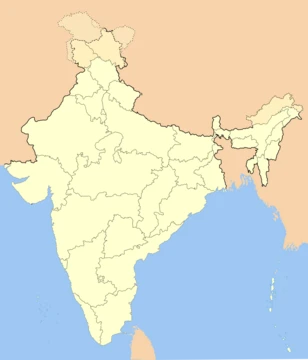
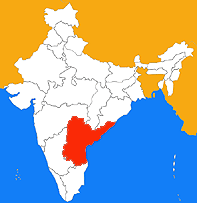
Andhra Pradesh is a state on the east coast of southern India, the eighth largest by area and tenth largest by population. It is bounded by the Bay of Bengal to the east and shares borders with Odisha, Chhattisgarh, Telangana, Karnataka, and Tamil Nadu. Telugu, a classical language of India, is its official language; Amaravati is the capital, and Visakhapatnam is the largest city. The region has a long history, with archaeological evidence of early hominins and Neolithic settlements, and is mentioned in the Aitareya Brahmana (c. 800 BCE). It was ruled by the Mauryan Empire, the Satavahana dynasty, and later by many major dynasties, and was part of the Madras Presidency under British rule. After Indian independence, Andhra State was formed in 1953 and merged with Telugu-speaking areas of Hyderabad State in 1956 to create Andhra Pradesh; Telangana was bifurcated from it in 2014.
Quick Facts
- Official Name
- State of Andhra Pradesh
- Former
- Madras Presidency
- Seal Size
- 150
- Etymology
- "Province of the Andhras"
- Motto
- Satyameva Jayate (Sanskrit) / "Truth Alone Triumphs"
- Anthem
- Ma Telugu Talliki / "To/For Our Mother Telugu"
- Region
- South India
- Before Was
- Undivided Andhra Pradesh
- Consolidation
- 1 November 1956 (1956 · 11 · 1 years ago)
- Capital
- Amaravati
- Largestcity
- Visakhapatnam
- Districts
- 28
Facts from the source article.
Lore & Background
The Andhras are mentioned in the Aitareya Brahmana (c. 800 BCE) as descendants of the sage Vishvamitra, and Greek historian Megasthenes described them living in the Godavari and Krishna River deltas in the 4th century BCE. The Satavahana dynasty ruled from the 1st to 3rd century CE with its capital at Dhanyakataka, and the Amaravati school of art developed during this period, influencing South and Southeast Asian art. The region later saw rule by the Vishnukundinas, Andhra Ikshvakus, Pallavas, Eastern Chalukyas, Cholas, Kakatiyas, Vijayanagara Empire, and Qutb Shahis.
Reader's Guide
Andhra Pradesh's significance lies in its long historical continuity, from early hominin stone tools to its role as a major cultural and economic center. The state is the birthplace of the Amaravati school of art and Kuchipudi dance, and it hosts the Satish Dhawan Space Centre, India's primary satellite launch facility. Its economy is heavily agricultural, with rice as the staple crop, and it contributes a major share of India's fish production. The state also holds significant mineral reserves, including limestone, bauxite, and baryte. Its cultural heritage includes unique geographical indications such as Bandar laddu, Banganapalle mango, and Tirupati laddu. The bifurcation of Telangana in 2014 reshaped its modern political boundaries, but Andhra Pradesh remains a key state in southern India with a distinct linguistic and cultural identity.
Did You Know?
- Stone tools excavated from Hanumanthunipadu were dated to approximately 247,000 years old.
- The Satavahana dynasty ruled from its capital at Dhanyakataka, which might have been the most prosperous city in India in the 2nd century.
- The oldest Telugu inscription is the Kalamalla sasanam, dated to 575 CE.
- Andhra Pradesh accounted for 30% of India's fish production in 2022-23.
Constitutional Architecture of the Office
The chief ministership of Andhra Pradesh sits at the intersection of constitutional design and democratic practice. Under the Indian Constitution, the state's governor holds the formal, de jure headship, yet the real executive power is vested in the chief minister and the council of ministers they lead. After every assembly election, the governor typically reaches out to whichever party or coalition holds a majority of seats, inviting them to form the government. Once appointed, the chief minister's council bears collective responsibility before the Legislative Assembly, and the officeholder's tenure runs for a full five-year cycle with no constitutional cap on the number of terms. In most cases, the chief minister simultaneously occupies the role of leader of the house within the assembly. The office is sealed by a solemn oath—sworn in the name of God or affirmed as a personal declaration—pledging allegiance to the Constitution, the sovereignty and integrity of India, and the impartial discharge of ministerial duties without fear, favour, or ill-will. A separate oath of secrecy further binds the minister to protect matters discussed in confidence, except where the proper performance of official duties demands disclosure.
From Sacrifice to Sovereignty: The Birth of Andhra
The story of Andhra's chief ministership begins not in a parliament but in the streets, where a determined fast undertaken by Potti Sreeramulu galvanized the demand for a separate linguistic state. His sacrifice catalysed the passage of the Andhra State Act in the Indian Parliament in September 1953, and on 1 October of that year, Andhra State was formally born. The new entity comprised eleven districts carved from the Telugu-speaking regions of Madras State, with Kurnool designated as its capital and a unicameral legislative assembly as its governing body. Only two individuals would hold the chief ministership during this brief interim period, both drawn from the Indian National Congress, with Bezawada Gopala Reddy serving the longer of the two stints. The sole governor to oversee this era was Chandulal Madhavlal Trivedi. The States Reorganisation Act of August 1956 then redrew the map once more: on 1 November 1956, Andhra Pradesh was officially constituted, absorbing Telugu-speaking territories and establishing a bicameral legislature with both a Legislative Council and a Legislative Assembly.
A State That Shaped National Leaders
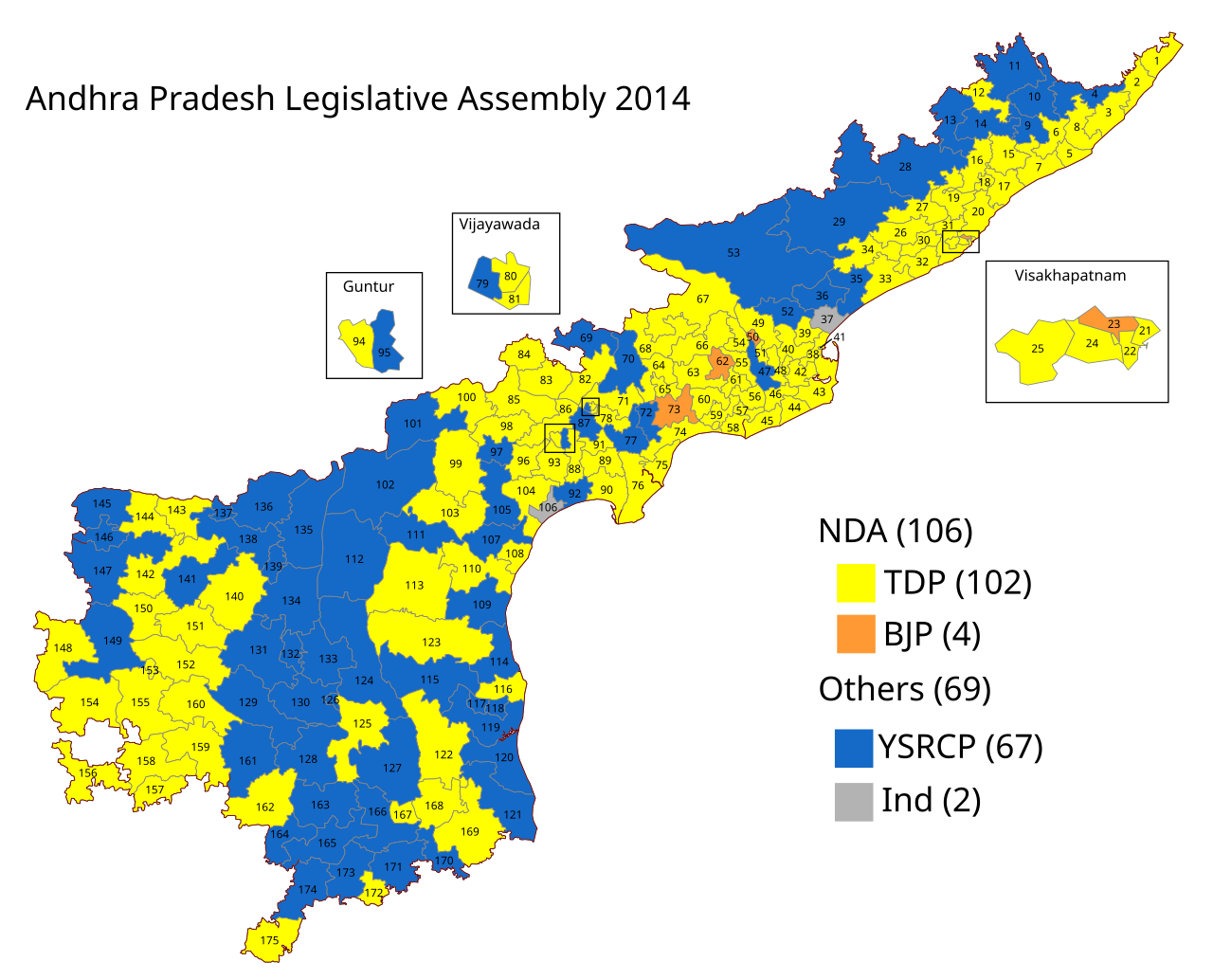
Across the decades since 1953, Andhra Pradesh has produced nineteen chief ministers, and the Indian National Congress has claimed the majority of those seats, cementing its status as the longest-ruling political force in the state. Yet the office has also served as a springboard to the highest echelons of national power. Neelam Sanjeeva Reddy, who took the helm in 1956 as the first chief minister of the reorganised Andhra Pradesh, would later ascend to the presidency of India. P. V. Narasimha Rao, the state's fourth chief minister and also an INC stalwart, went on to become Prime Minister of India. The political landscape shifted when N. T. Rama Rao of the Telugu Desam Party broke the Congress monopoly, becoming the first non-INC chief minister. The state's democratic record, however, has not been without turbulence: President's rule was imposed on three occasions, the most recent in 2014, underscoring the fragility that can accompany coalition politics in a region where multiple parties vie for influence.
Reshaping the State: The Post-Telangana Era
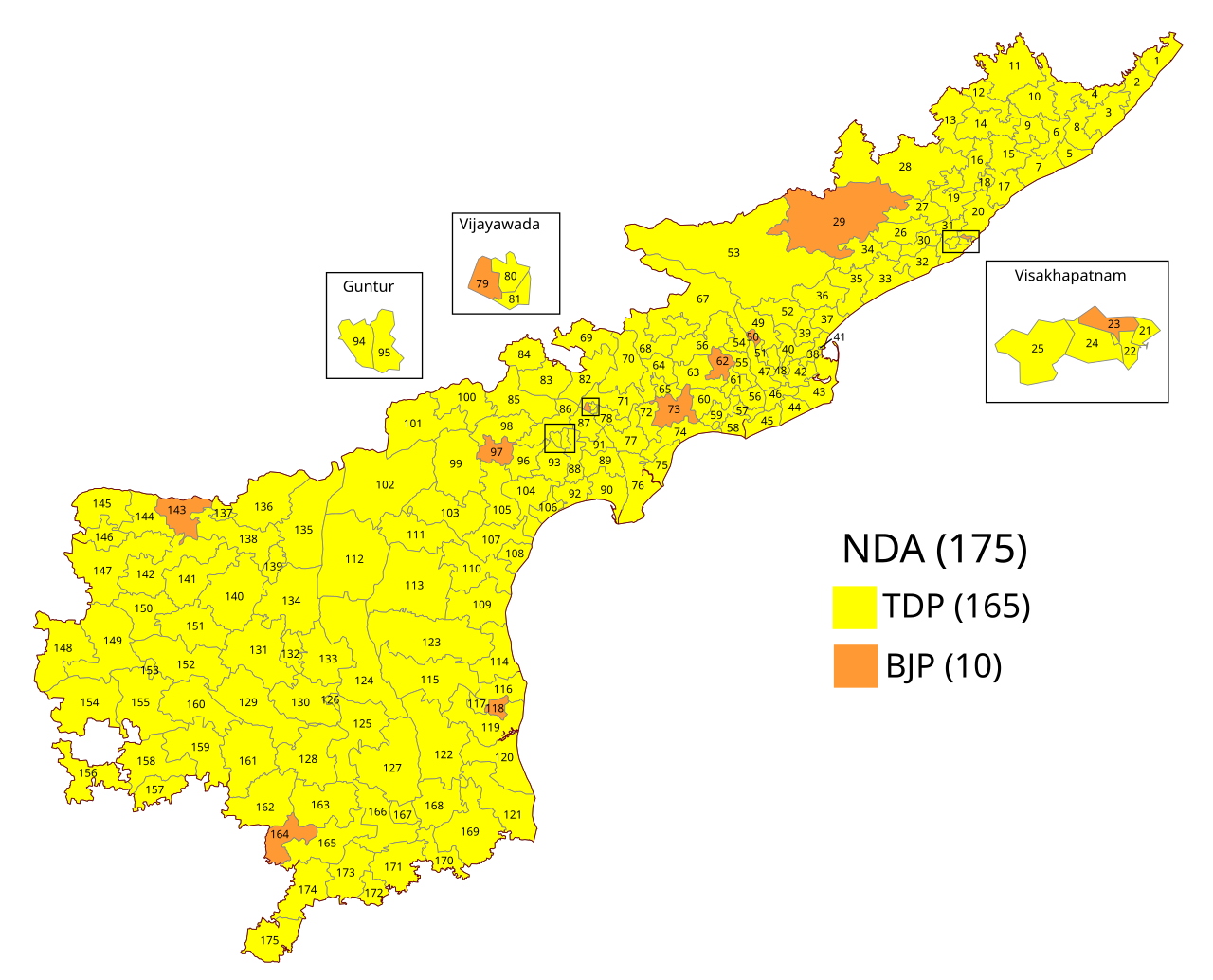
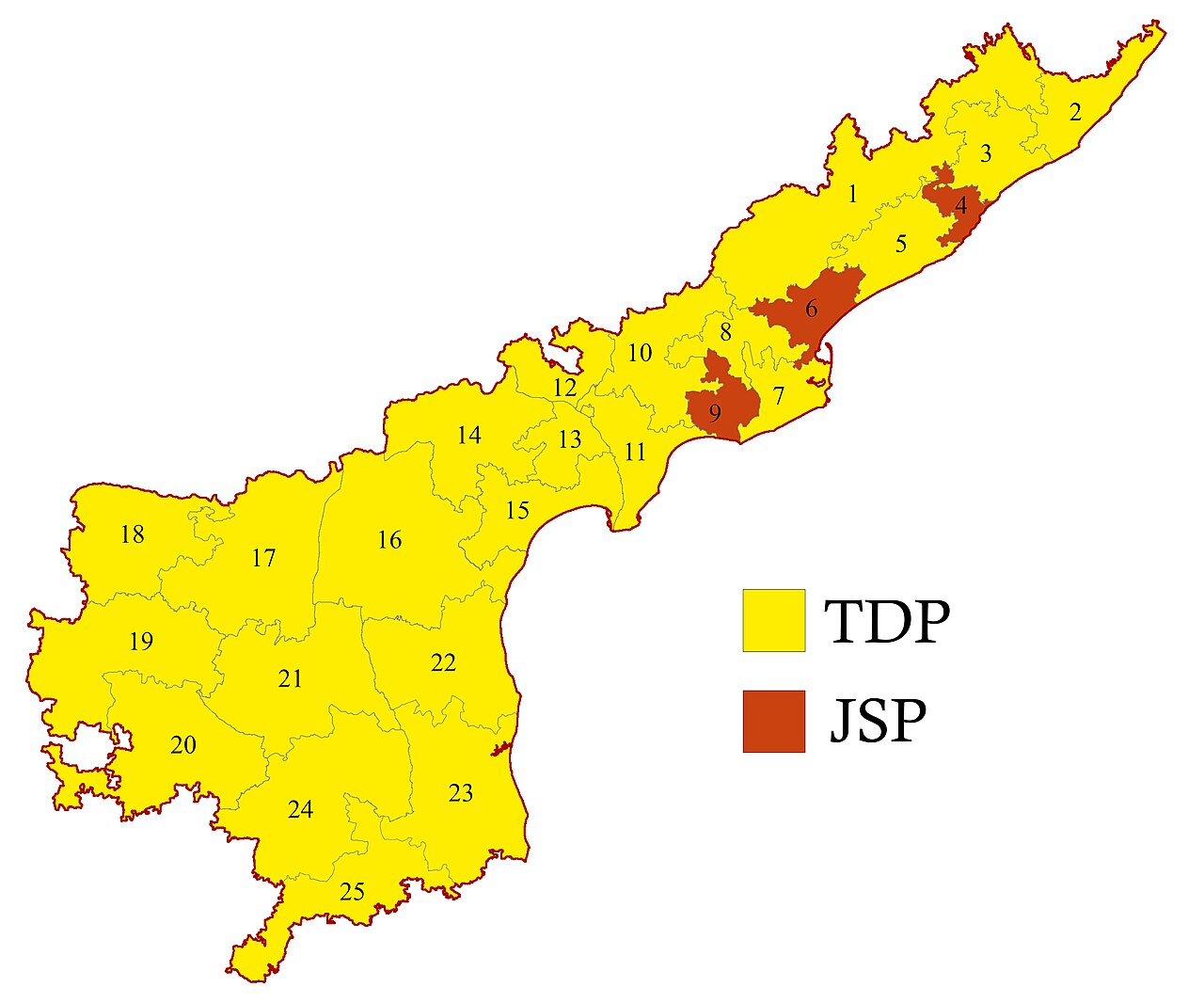
The formation of Telangana on 2 June 2014, enacted through the Andhra Pradesh Reorganisation Act, fundamentally altered the political geography of the region. The residuary Andhra Pradesh saw its assembly constituencies shrink from 294 to 175, and the capital, long situated in Hyderabad, was eventually relocated to Amaravati in 2017. N. Chandrababu Naidu of the Telugu Desam Party stepped into the chief ministership of the newly defined state, a role he has held across multiple non-consecutive terms totalling more than thirteen years—the longest tenure in the state's history. By contrast, N. Bhaskara Rao, also of the TDP, endured the briefest stint at just 31 days. The modern legislature operates with a 175-member assembly and a 58-member Legislative Council as its upper house. As of 12 June 2024, Chandrababu Naidu once again occupies the chief ministership, a testament to the TDP's enduring grip on state politics in the post-bifurcation era.
Gallery

Frequently Asked Questions
Who is Andhra Pradesh?
Andhra Pradesh is a coastal state on India's east coast, stretching along the Bay of Bengal. It ranks as the eighth largest Indian state by area and the tenth by population, with Amaravati serving as its capital and Visakhapatnam as its biggest city.
What are Andhra Pradesh's powers/role?
The state's economy leans heavily on agriculture, which employs a large share of its workforce. It also carries cultural weight as the home of Telugu, one of India's classical languages.
Why is Andhra Pradesh important?
It sits at a crossroads of five neighboring states—Odisha, Chhattisgarh, Telangana, Karnataka, and Tamil Nadu—making it a key geographic and economic link in southern India. Its ancient heritage, traceable to references in the Aitareya Brahmana around 800 BCE, adds deep historical significance.
What language does Andhra Pradesh speak?
Telugu is the state's official language and is recognized as one of India's classical languages, giving the region a distinct linguistic identity within the country.
More in Indian States 1-24
Spotted an error? Know more?
Reader corrections go straight into our review queue. Suggest an edit · How this site is sourced