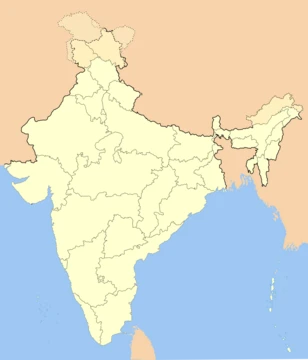
Haryana
State in northwestern India, formed in 1966.

SpeakingArch · CC BY-SA 4.0
Haryana is a state in northwestern India, formed on 1 November 1966 after the Punjab Reorganisation Act. It is bordered by Punjab, Himachal Pradesh, Rajasthan, Delhi, and Uttar Pradesh, with Chandigarh as its shared capital. The state is notable for its ancient Indus Valley Civilisation sites, its role in major historical battles at Panipat, and its modern economic significance as part of the National Capital Region, housing major financial and technology hubs like Gurgaon.
Quick Facts
- Official Name
- State of Haryana
- Etymology
- "Abode of God or Green Forest"
- Motto
- Satyameva Jayate (Sanskrit) / "Truth alone triumphs"
- Anthem
- Jai Jai Jai Haryana (Hindi) / "Victory to Haryana"
- Region
- North India
- Before Was
- Part of Punjab
- Capital
- Chandigarh
- Largestcity
- Faridabad
- Districts
- qualifier · Q2668932 · P360 · P1114 (qualifier · Q5284615 · P31 · P1114 divisions)
- Governor
- Ashim Kumar Ghosh
- Chief Minister
- Nayab Singh Saini
- Judiciary
- Punjab and Haryana High Court
Facts from the source article.
Lore & Background
The name 'Haryana' may derive from 'Ābhirāyana,' evolving through 'Ahirāyana' to 'Hariyānā,' according to historian Pran Nath Chopra, linked to the Ābhira community. Ancient sites at Rakhigarhi and Bhirrana show Indus Valley Civilisation features like paved roads and drainage. During the Vedic era, the Kuru kingdom flourished here, and the region is associated with Manu's Brahmavarta and ashrams of rishis who contributed to Hindu scriptures.
Medieval history includes the Pushyabhuti dynasty under Harsha, the Tomara dynasty, and Timur's attacks in 1398. In 1556, Hem Chandra Vikramaditya (Hemu) defeated the Mughal governor of Delhi, Tardi Beg Khan, and briefly ruled Delhi. However, later that year, Akbar's forces—commanded by Bairam Khan on behalf of the minor emperor—defeated Hemu at the Second Battle of Panipat. Three pivotal battles of Indian history occurred at Panipat: in 1526 (Babur vs. Lodis), 1556 (Hemu vs. the Mughal army under Bairam Khan), and 1761 (Ahmad Shah Abdali vs. Marathas). Trade centers like Bhiwani grew with merchants like Seth Nand Ram Ji Katla Wale.
During British rule, Haryana was part of Punjab province. After Partition in 1947, Hindu and Sikh refugees from West Punjab settled here, and Gopi Chand Bhargava became the first Chief Minister of the post-Partition Punjab (East Punjab)—not of Haryana, which did not yet exist. The state was formed in 1966 following the Shah Commission's recommendations, with Bhagwat Dayal Sharma as first Chief Minister and Chaudhary Devi Lal as a key advocate. A second wave of Punjabi migration occurred in the 1980s due to the Khalistani movement.
Reader's Guide
Haryana's significance lies in its dual heritage as both an ancient cradle of Indian civilization and a modern economic powerhouse. The Indus Valley sites at Rakhigarhi and Bhirrana provide early evidence of urban planning, while the Kuru kingdom and Brahmavarta link it to foundational Hindu texts. The three Battles of Panipat shaped the subcontinent's political trajectory, and Hemu's brief reign represents a notable Hindu resistance to Mughal expansion.
Economically, Haryana ranks 13th in GSDP and 5th in per capita income, driven by Gurgaon's IT and automobile sectors and 32 special economic zones. Its location surrounding Delhi on three sides integrates it into the National Capital Region, fostering industrial corridors. The state's human development index ranks 11th, reflecting balanced growth. The Punjabi migrations of 1947 and the 1980s enriched its agricultural and business sectors, while the formation of Haryana in 1966 resolved linguistic divisions of Punjab. The shared capital Chandigarh symbolizes this complex history.
Did You Know?
- The villages of Rakhigarhi and Bhirrana contain ancient Indus Valley Civilisation sites with paved roads and drainage.
- Three seminal battles in Indian history were fought at Panipat: 1526, 1556, and 1761.
- Gurgaon is considered one of the major information technology and automobile hubs of India.
Geography & Administrative Framework
Haryana sits in northwestern India, bordered by Punjab and Himachal Pradesh to the north, Rajasthan to the west and south, Delhi to the southeast, and the Yamuna River forming its eastern boundary with Uttar Pradesh. The state's capital is Chandigarh, shared with Punjab. At roughly 44,212 square kilometres, Haryana occupies about 1.5% of India's total land area, ranking 21st among Indian states. Its administrative architecture is layered: six divisions oversee 22 districts, which in turn contain 72 sub-divisions, 93 revenue tehsils, 50 sub-tehsils, and 140 blocks. The state also encompasses 154 cities and towns alongside 7,356 villages governed by 6,222 village panchayats. Because Haryana wraps around Delhi on three sides—north, west, and south—a substantial portion of its territory falls within the National Capital Region, making it integral to the capital's planning and development. Faridabad, part of that NCR, is the state's most populous city.
Ancient Roots & Medieval Battlegrounds
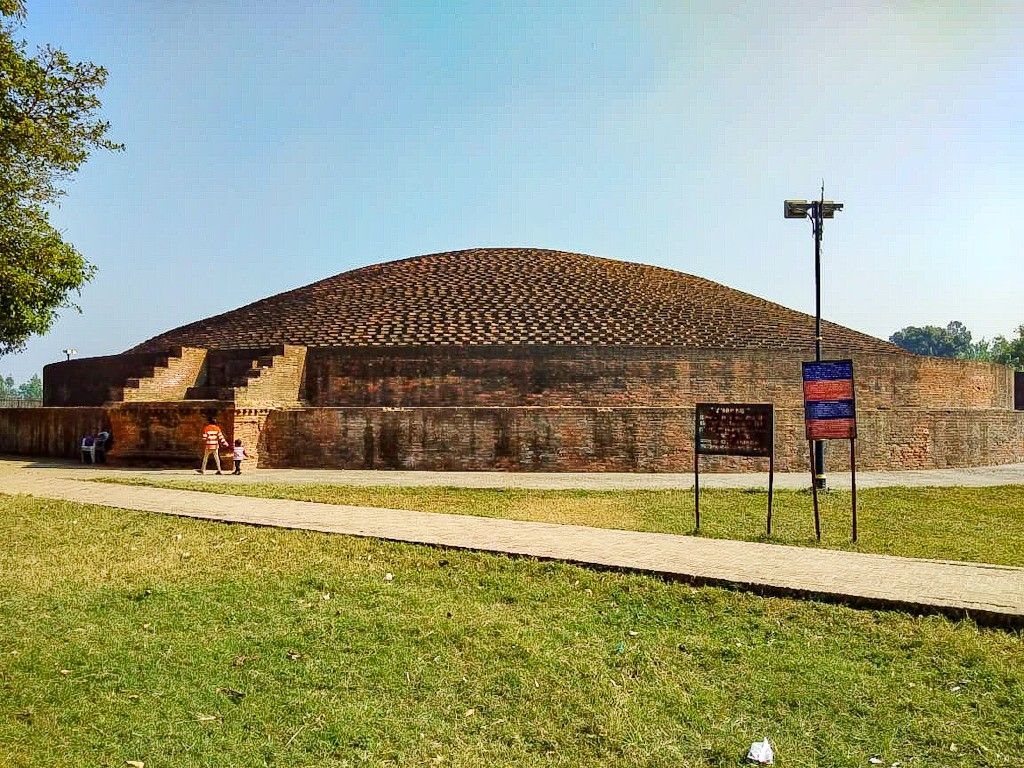
The soil of Haryana holds some of South Asia's oldest urban traces. Villages at Rakhigarhi in Hisar district and Bhirrana in Fatehabad district preserve Indus Valley Civilisation sites featuring paved roads, drainage networks, large-scale rainwater storage, terracotta production, and skilled bronze and precious-metal working. During the Vedic era, the region hosted the Kuru kingdom, one of India's great Mahajanapadas, while the Dhosi Hill area and the Rewari and Mahendragarh districts sheltered ashrams where rishis composed foundational Hindu scriptures including the Vedas, Upanishads, and Puranas. The medieval period saw the Pushyabhuti dynasty rule from Thanesar in the seventh century under King Harsha, and the Tomara dynasty govern southern Haryana in the tenth century. Panipat stands as perhaps the state's most storied ground, the site of three pivotal battles in 1526, 1556, and 1761. In 1556, Hem Chandra Vikramaditya, a ruler from Rewari, defeated Akbar's forces and was formally crowned at Purana Quila in Delhi, becoming the last Hindu Emperor of India.
Economic Engine & Modern Infrastructure
Haryana's economy ranks 13th among Indian states, with a gross state domestic product of 7.65 trillion rupees (approximately 79 billion US dollars) and the fifth-highest per-capita GSDP in the country at 240,000 rupees. The state hosts 32 special economic zones, predominantly clustered along industrial corridor projects that link into the National Capital Region. Gurgaon has emerged as one of India's leading hubs for information technology and automobile manufacturing, while also ranking among the nation's largest financial centres. The state's human development index places it 11th among Indian states. Its transport backbone includes national and state highways that connect these industrial nodes to broader markets. Because Haryana surrounds Delhi on three sides, a large swath of its territory is folded into the NCR for planning purposes, creating a tightly integrated economic zone where the state's industrial output, its SEZs, and the capital's services sector reinforce one another.
From Partition to Statehood
The name Haryana likely traces back to the post-Mahābhārata era, when the Ābhiras—a community noted for advanced agricultural techniques—settled the region. Historian Pran Nath Chopra proposes a linguistic evolution from Ābhirāyana (combining Abhira with the word for path or way) through Ahirāyana to the modern Hariyānā. During the British period, the territory formed part of the Punjab province, with the Delhi division constituting its bulk, while princely states such as Jind, Kalsia, Loharu, Dujana, and Pataudi, along with portions of Patiala State, dotted the landscape. The 1947 Partition split Punjab between India and Pakistan; Hindu and Sikh-dominated areas became East Punjab, triggering massive refugee flows in both directions. Gopi Chand Bhargava, a native of Sirsa, served as East Punjab's first Chief Minister. The modern state of Haryana was finally carved out on 1 November 1966 when the Punjab Reorganisation Act received parliamentary passage.
Gallery

Frequently Asked Questions
Who is Haryana?
Haryana is a northwestern Indian state carved out of the old Punjab province in 1966. It shares its capital, Chandigarh, with neighboring Punjab and borders five other states or union territories.
When and how was Haryana formed?
The state officially came into being on 1 November 1966 under the Punjab Reorganisation Act, which divided the former Punjab into separate Hindi-speaking and Punjabi-speaking regions.
What is Haryana's capital?
Chandigarh serves as the shared capital for both Haryana and Punjab, a unique administrative arrangement that has persisted since the 1966 reorganisation.
Why is Haryana important?
Beyond hosting major Indus Valley Civilisation archaeological sites and the historic Panipat battlefields, Haryana is a key part of the National Capital Region and is home to financial and technology hubs such as Gurgaon.
What is Haryana's economic standing?
The state's gross state domestic product stands at roughly ₹7.65 trillion (about US$79 billion), yielding a per-capita GSDP of approximately ₹240,000 that reflects a strong industrial and services-driven economy.
More in Indian States 1-24
Spotted an error? Know more?
Reader corrections go straight into our review queue. Suggest an edit · How this site is sourced