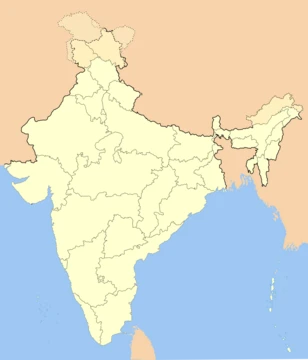
Karnataka
Southwestern Indian state with ancient empires and modern IT hub.

Rajeshodayanchal · CC BY-SA 4.0
Karnataka is a state on the southwestern coast of India, formed as Mysore State on 1 November 1956 under the States Reorganisation Act and renamed Karnataka in 1973. It is the only southern state to have land borders with all four other southern Indian states and is known for its ancient history, classical language Kannada, and its capital Bengaluru, the Silicon Valley of India.
Quick Facts
- Official Name
- State of Karnataka
- Motto
- Satyameva Jayate (Truth alone triumphs)
- Anthem
- Jaya Bhārata Jananiya Tanujāte, Jaya Hē Karnāṭaka Māte / (Victory to You Mother Karnataka, Daughter of Mother India)
- Region
- South India
- Before Was
- Mysore State
- Capital
- Bengaluru
- Largestcity
- capital
- Districts
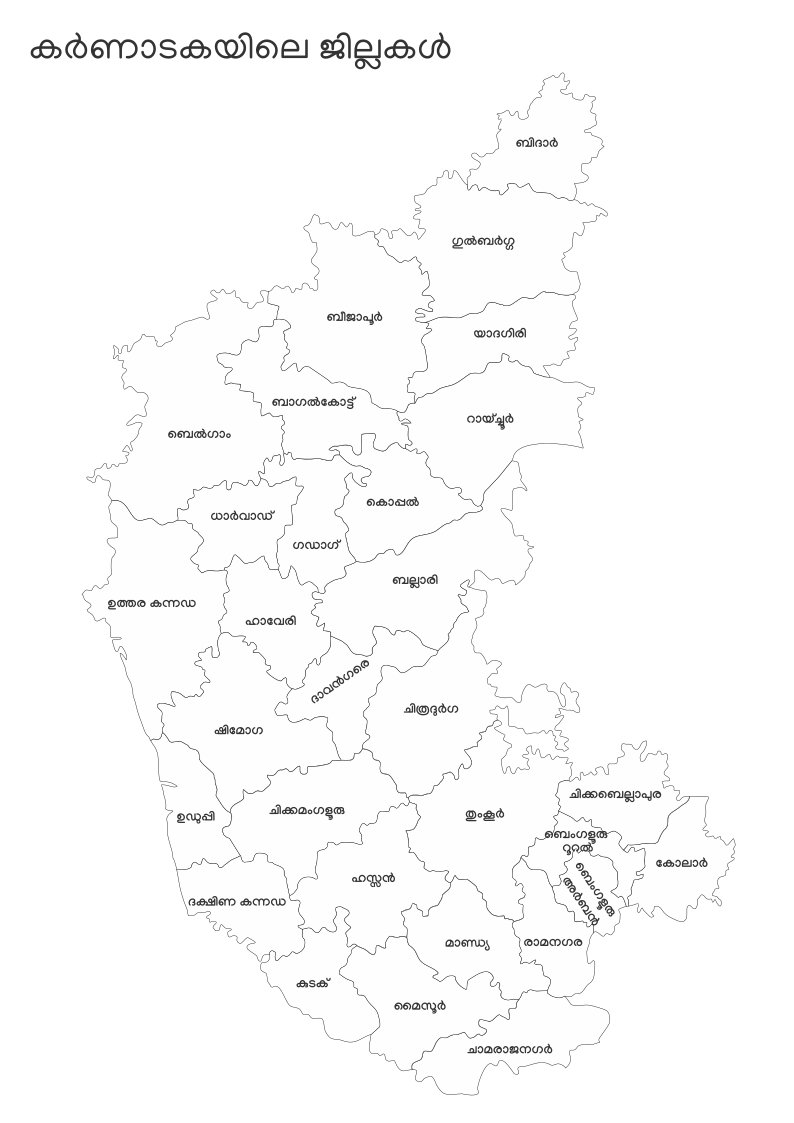
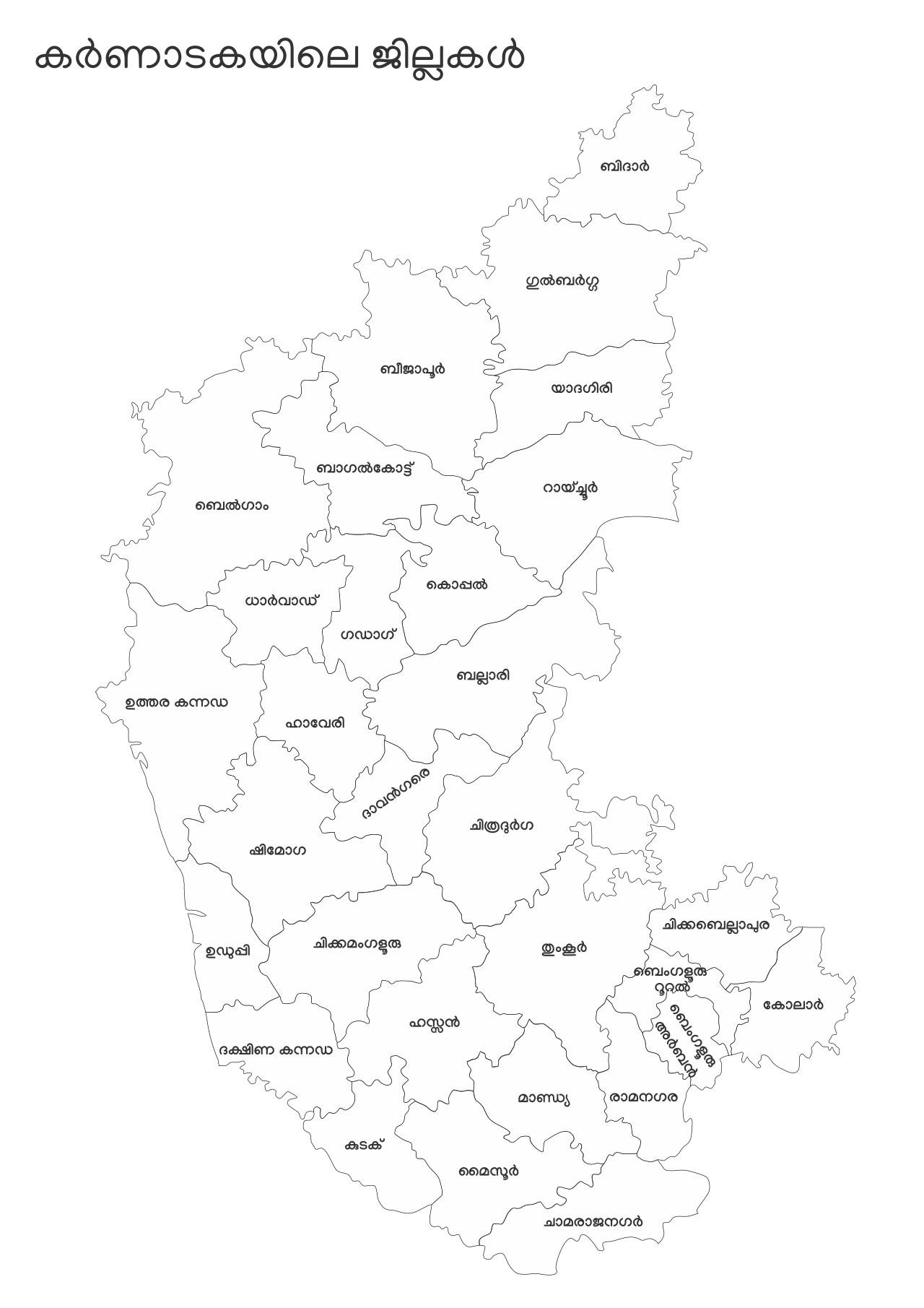
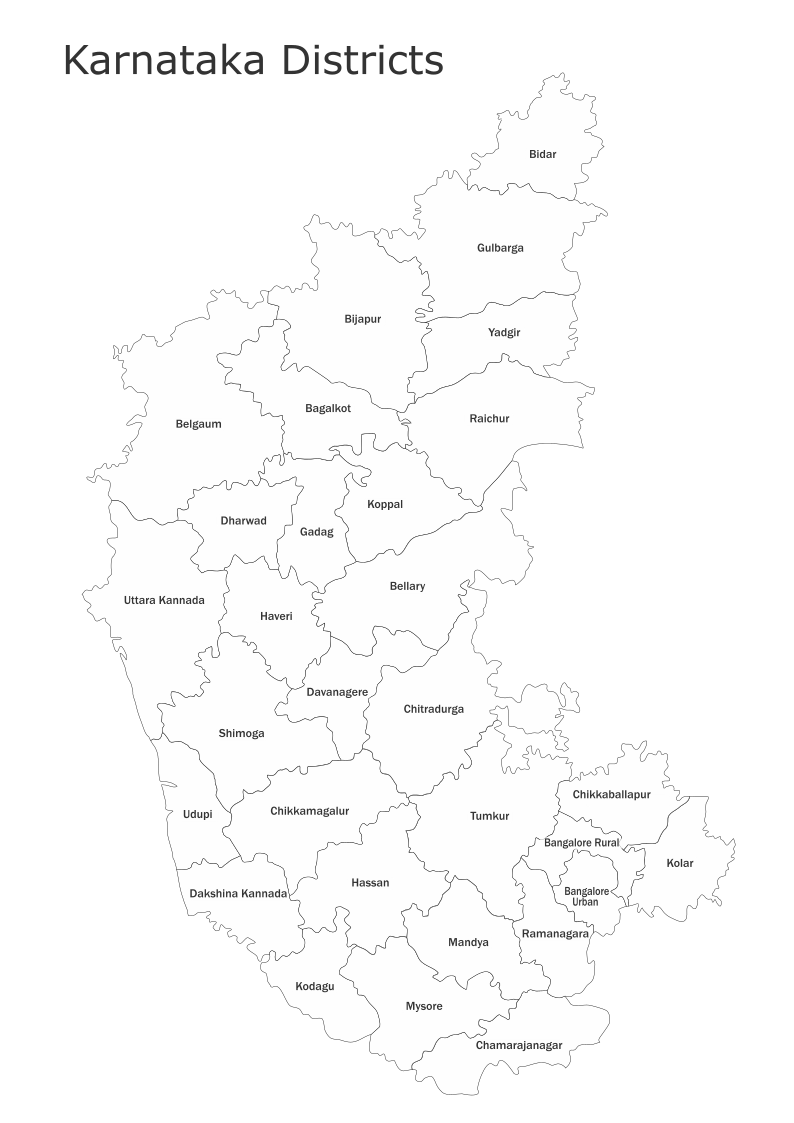
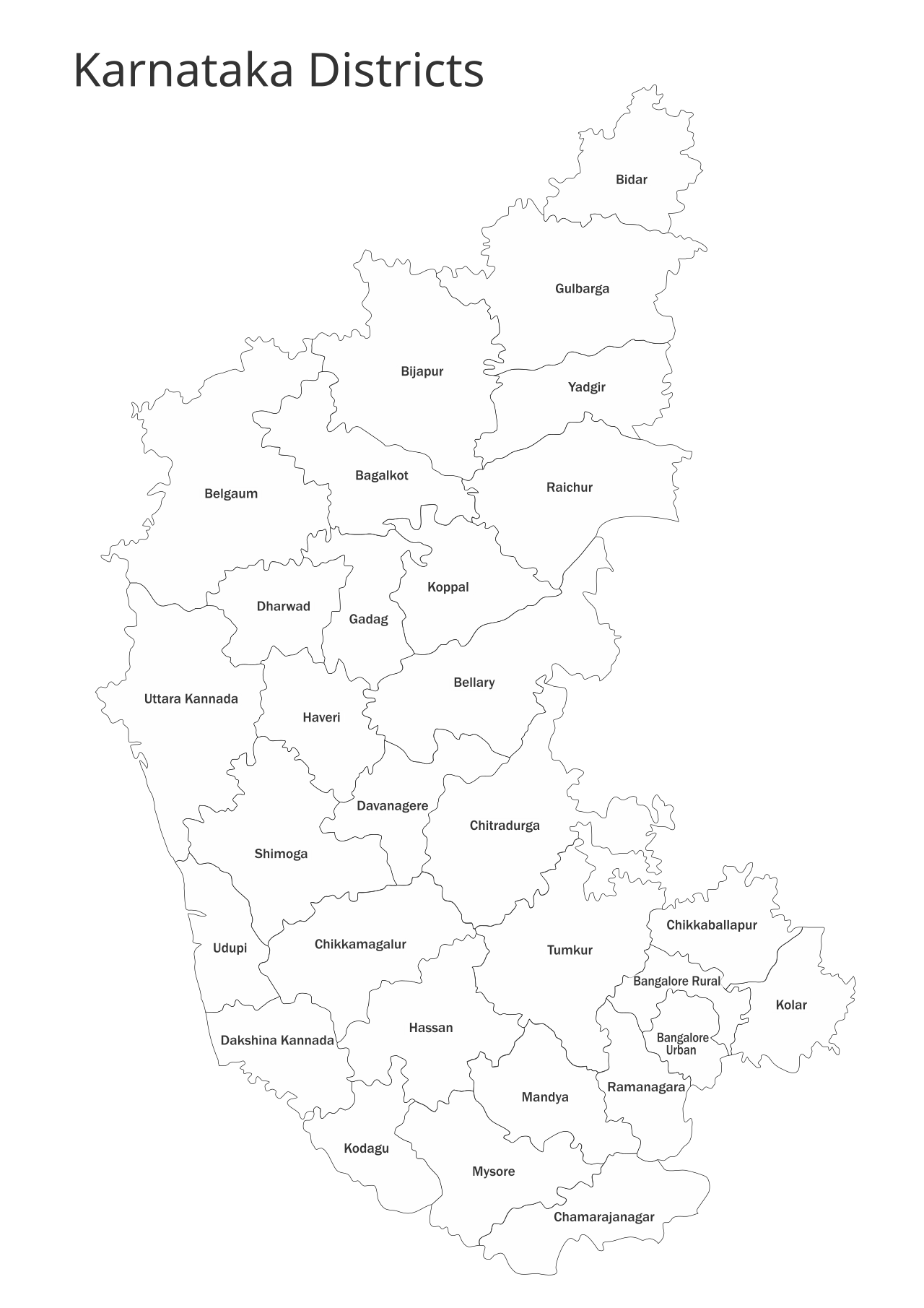
- 31 (4 divisions)
- Governor
- Thawar Chand Gehlot
- Chief Minister
- D. K. Shivakumar
- Party
- INC
- Deputy Cm
- G. Parameshwara
Facts from the source article.
Lore & Background
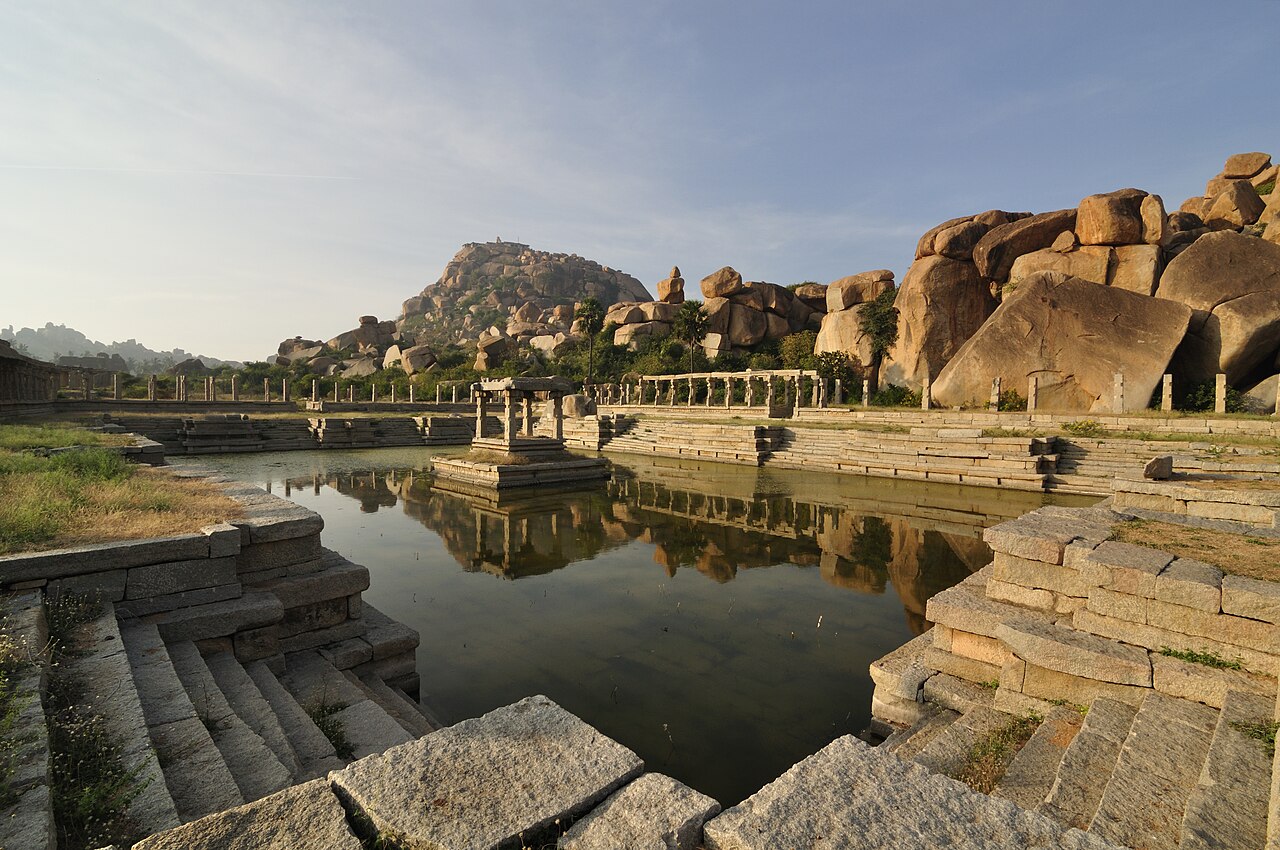
Karnataka's pre-history dates to the Paleolithic, with evidence of hand-axe culture, Neolithic and megalithic sites, and gold from its mines found in Harappa, suggesting contact with the Indus Valley Civilisation around 3300 BCE. Prior to the third century BCE, most of Karnataka was part of the Mauryan Empire, followed by Satavahana rule. The earliest native kingdoms—the Kadambas and Western Gangas—emerged after the Satavahanas declined, using Kannada in administration as shown by the Halmidi inscription and a fifth-century copper coin. These were succeeded by imperial Kannada empires like the Badami Chalukyas, Rashtrakutas, and Western Chalukyas, which ruled large parts of the Deccan. The Hoysalas gained power around the turn of the first millennium, fostering literature and Vesara-style architecture. In the early 14th century, the Vijayanagara empire was established, controlling South India for over two centuries until its fall in the Battle of Talikota in 1565. The Bijapur Sultanate then took control, later defeated by the Mughals. In the south, the Mysore Kingdom, under Haidar Ali and Tipu Sultan, fought four Anglo-Mysore Wars, ending with Tipu's death in 1799 and Mysore becoming a princely state under British India. Rebellions like Kittur Chennamma's in 1824 preceded the Indian Rebellion of 1857. After independence, Mysore state was expanded under the States Reorganisation Act of 1956 and renamed Karnataka in 1973.
Reader's Guide
Karnataka's significance lies in its dual legacy as a cradle of ancient and medieval Indian empires and as a modern economic powerhouse. The state's history includes the Mauryan, Satavahana, Kadamba, Western Ganga, Chalukya, Rashtrakuta, Hoysala, and Vijayanagara empires, which patronized Kannada literature, classical music (both Carnatic and Hindustani), and distinctive architectural styles like Vesara and Indo-Saracenic. The Vijayanagara empire's fall reshaped South Indian geopolitics, while the Mysore Kingdom's resistance to British expansion marked a key chapter in colonial history. Post-independence, Karnataka's integration of Kannada-speaking regions under the States Reorganisation Act and its renaming in 1973 solidified its identity. Economically, Karnataka is among India's most productive states, with a GSDP of ₹25.01 trillion in 2023–24 and a growth rate of 10.2%. Bengaluru, the capital, is known as the Silicon Valley of India for its IT sector, hosting 1,973 IT companies as of 2007. The state's linguistic diversity includes Kannada as the official language, along with Urdu, Konkani, Marathi, Tulu, Tamil, Telugu, Malayalam, Kodava, and Beary, and it contains some of the only villages in India where Sanskrit is primarily spoken. Karnataka's etymology is generally accepted as derived from Kannada words meaning 'elevated land' or 'black region,' referencing its black cotton soil.
Did You Know?
- Karnataka is the only southern Indian state with land borders with all four other southern states.
- Karnataka's name is generally accepted to derive from Kannada words meaning 'elevated land' or 'black region.'
Campaign Rhetoric and Ideological Framing
The 2024 Karnataka campaign sharpened into a clear ideological duel. The BJP opened its state drive in March, with Prime Minister Narendra Modi launching a four-day rally circuit from Kolar before addressing a gathering in Kalaburagi on 16 March. Modi centered his message on governance failures, accusing the Congress government of funneling state resources into a few pockets and delivering power cuts despite free-electricity pledges, while asking how farmers could operate field pump sets without supply. B. S. Yediyurappa forecast an all-28-seat NDA sweep, and H. D. Deve Gowda lent his name to the effort. The Congress formed a three-member campaign committee and dispatched chief minister Siddaramaiah to canvass in Mysore–Kodagu and Chamarajanagar, where he projected a 20-seat haul and attacked the BJP over soaring petrol, diesel, and gas prices. Rahul Gandhi framed the contest in Mandya as a battle between two ideologies, calling Electoral Bonds a form of extortion. On the second-phase polling day he addressed two gatherings in northern Karnataka and dubbed the BJP the 'Bharatiya Chombu Party,' invoking the Kannada word for a round water pot to imply emptiness, and charged that the party had denied the state eighteen thousand crore in drought relief and sixty thousand crore mandated by the Finance Commission.
Inclusive Polling Infrastructure
Karnataka's 2024 polling infrastructure reflected a deliberate push toward accessibility and representation. In the second phase on 26 April, 30,602 polling stations served more than 28.8 million eligible voters across 14 constituencies. Of those stations, 19,701 were designated for webcasting and 1,370 for CCTV monitoring. The state also set up 1,832 special booths, of which 1,120 were reserved exclusively for women voters and staffed entirely by women personnel, including police officers and group-D workers. An additional 224 booths were dedicated to disabled voters, with disabled individuals serving as the booth staff, while another 224 were earmarked for youth and manned by young officials to encourage younger participation. Every Assembly constituency received one theme-based booth celebrating the local cultural heritage. The third phase on 7 May operated on a similar model, with 28,269 polling stations serving over 25.9 million voters, 17,000 of which were webcast. Nominations closed on 4 April for phase two and 19 April for phase three, giving candidates a staggered window to file.
Candidate Field and Constituency Dynamics
Across both phases, Karnataka's 28 Lok Sabha seats attracted a notably male-dominated candidate pool. In the second phase, 247 candidates filed nominations across 14 constituencies, of whom 226 were men and only 21 were women. The most fiercely contested seat was Chikballapur, which drew 29 candidates, while Dakshina Kannada saw the fewest at 9. The third phase recorded 227 candidates—206 men and 21 women—spread over the remaining 14 constituencies. Davanagere topped the field with 30 contestants, and Raichur had the leanest slate with just 8. The gender imbalance was striking: women made up under nine percent of the total candidate field in each phase, underscoring a persistent underrepresentation at the state level. Voter eligibility was substantial, with over 28.8 million registered voters in phase two and more than 25.9 million in phase three, reflecting Karnataka's status as one of the country's largest state electorates. The staggered schedule—polling on 26 April for the first set of seats and 7 May for the second—allowed the Chief Electoral Officer to manage logistics while maintaining a single unified election for the 18th Lok Sabha.
Security and Administrative Scale
The sheer scale of security and administrative deployment in Karnataka's 2024 polls was staggering. Ahead of the second phase, the Chief Electoral Officer confirmed that 140,000 personnel would be on duty, supplemented by 5,000 micro-observers, 50,000 civil police officers, and 65 companies of the Central Parliamentary Force alongside armed police units from other states. The third phase saw a comparable mobilization: approximately 145,000 officials were deployed, along with 35,000 civil police personnel, 65 companies of paramilitary forces, and armed police contingents from outside the state. An additional 4,000 micro-observers were assigned to monitor polling conduct. This layered security architecture—combining local police, central paramilitary units, and inter-state armed forces—reflected the high-stakes nature of a state that sends 28 members to the 18th Lok Sabha. The two-phase schedule, with voting split between 26 April and 7 May, required the state to sustain this massive operational footprint across two separate polling days, each with its own distinct set of 14 constituencies and tens of millions of voters.
Gallery

Frequently Asked Questions
Who is Karnataka?
Karnataka is a southwestern Indian state that first took shape in 1956 as Mysore State before adopting its current name in 1973. It stretches along the western coast and holds the unique distinction of sharing land borders with all four other southern Indian states.
What are Karnataka's powers or role in the bigger picture?
Karnataka acts as India's technological engine, with Bengaluru widely regarded as the country's IT and startup capital. Its gross state domestic product hit roughly ₹25 trillion in 2023–24, placing it among the wealthiest subnational economies in the nation.
How did Karnataka get its name?
The state was originally established as Mysore State under the 1956 States Reorganisation Act. In 1973 the name was changed to Karnataka to reflect the broader Kannada-speaking identity of its people rather than a single historical kingdom.
Why is Karnataka important?
It sits at a strategic crossroads as the only southern state bordering all four of its southern neighbors, making it a natural hub for regional connectivity. Beyond geography, it is a cradle of classical Kannada culture and ancient empires while simultaneously anchoring modern India's tech economy.
What's Karnataka's capital, and why does it matter?
Bengaluru serves as the state capital and is commonly nicknamed the 'Silicon Valley of India' because of its dense cluster of software firms and venture capital. It is the administrative and economic heart of a state home to over 61 million people spread across roughly 191,000 square kilometres.
More in Indian States 1-24
Spotted an error? Know more?
Reader corrections go straight into our review queue. Suggest an edit · How this site is sourced