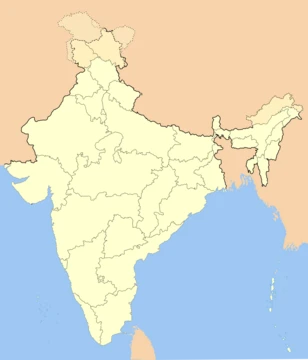
Tamil Nadu
Southernmost Indian state with ancient Dravidian heritage.

Tamil Nadu is the southernmost state of India, the tenth largest by area and sixth largest by population. It is the home of the Tamils, who speak Tamil, the state's official language and the first to be recognized as a classical language in India. Chennai is the state's largest city and capital. The region has more than 5,500 years of continuous cultural history and was historically known as Tamilakam, inhabited by Tamil-speaking Dravidian people.
Quick Facts
- Etymology
- Tamil Country
- Nickname
- "Land of Temples"
- Motto
- Vāymaiyē Vellum (Truth alone triumphs)
- Anthem
- "Tamil Thai Valthu" · ("Invocation to Mother Tamil")
- Region
- South India
- Before Was
- Madras State
- Capital
- Chennai
- Largestcity
- capital
- Metro
- Chennai metropolitan area
- Districts
- 38
- Governor
- Rajendra Arlekar
- Chief Minister
- C. Joseph Vijay
Facts from the source article.
Lore & Background
Archaeological evidence indicates habitation more than 385,000 years ago. Artifacts from Adichanallur show continuous history from over 3,800 years ago. The Sangam period (500 BCE–300 CE) saw rule by the Cheras, Cholas, and Pandyas, with trade contacts with Romans and Han China. The Kalabhra era followed, during which the twin epics Cilappatikaram and Manimekalai were written. The Pallavas rose in the 6th century CE, noted for rock-cut monuments and temple architecture. The Cholas became dominant in the 9th century, expanding under Rajaraja I and Rajendra Chola I, building the Brihadisvara Temple. The Pandyas regained power in the 13th century, building the Meenakshi Amman Temple. The Vijayanagara Empire conquered the Tamil country by c. 1370 and ruled until 1565, after which Nayak governors took control. European colonization began in the 17th century, with British rule as Madras Presidency lasting two centuries. After Indian independence in 1947, the region became Madras State, reorganized linguistically in 1956, and renamed Tamil Nadu in 1969.
Reader's Guide
Tamil Nadu's significance lies in its continuous cultural history spanning over 5,500 years, with archaeological evidence of habitation dating back more than 385,000 years. It was the heart of ancient Tamilakam, home to the Sangam-era kingdoms of Cheras, Cholas, and Pandyas, which fostered early Tamil literature and trade with Rome and China. The state's architectural legacy includes the rock-cut monuments of Mahabalipuram, the Brihadisvara Temple at Thanjavur, and the Meenakshi Amman Temple at Madurai. Politically, it transitioned from indigenous kingdoms to Vijayanagara rule, then to European colonization and British Madras Presidency, before becoming a linguistically reorganized state in independent India. Today, Tamil Nadu has the second-largest economy among Indian states, with a strong manufacturing sector and the largest tourism industry in the country. It is home to four World Heritage Sites, multiple biosphere reserves, and national parks. The Tamil film industry, Kollywood, heavily influences popular culture. The state's official language, Tamil, was the first to be declared a classical language in India.
Did You Know?
- Tamil Nadu could have been inhabited more than 385,000 years ago by archaic humans.
- Tamil was the first language to be recognized as a classical language in India.
- Tamil Nadu leads Indian states in domestic tourist arrivals, though not in total tourism revenue or foreign arrivals.
More in Indian States 1-24
Spotted an error? Know more?
Reader corrections go straight into our review queue. Suggest an edit · How this site is sourced