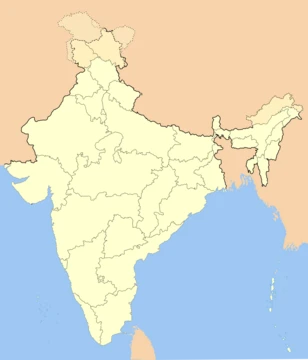
Sikkim
Former Himalayan kingdom, now India's 22nd state.

Sikkim is a state in northeast India, notable for being the least populous and second-smallest among Indian states. It was historically a kingdom ruled by the Namgyal dynasty and became the 22nd state of India in 1975 after a referendum abolished the monarchy.
Quick Facts
- Etymology
- New Palace
- Nickname
- "Valley of Rice"
- Motto
- Kham sum wangdu (Conqueror of the three worlds)
- Region
- Northeast India
- Before Was
- Kingdom of Sikkim
- Formation Date
- 16 May 1975
- Capital
- Gangtok
- Largestcity
- capital
- Districts
- 6
- Governor
- Om Prakash Mathur
- Chief Minister
- Prem Singh Tamang
- Party
- SKM
Facts from the source article.
Lore & Background
The Kingdom of Sikkim was founded by the Namgyal dynasty in the 17th century, ruled by Buddhist priest-kings known as the Chogyal. It became a British protectorate in 1890 via the Treaty of Calcutta. After Indian independence, Sikkim continued as a protectorate of India, enjoying the highest literacy rate and per capita income among Himalayan states. In 1973, anti-royalist riots occurred, and in 1975, after the Indian Army took over Gangtok, a referendum led to the dissolution of the monarchy and Sikkim's joining India as its 22nd state.
Reader's Guide
Sikkim's significance lies in its unique transition from a Buddhist monarchy to a modern Indian state, a process marked by a referendum in 1975 that saw 97.5 percent of voters support abolishing the monarchy. Its location in the Eastern Himalaya makes it a biodiversity hotspot, hosting Kangchenjunga, the highest peak in India and third-highest on Earth. Almost 35% of the state is covered by Khangchendzonga National Park, a UNESCO World Heritage Site. Sikkim's economy depends on agriculture and tourism, and as of 2019, it had the fifth-smallest GDP among Indian states but was among the fastest-growing. The state is multiethnic and multilingual, with Hinduism as the predominant religion and a significant Vajrayana Buddhist minority. Its history includes invasions by Bhutan and Nepal, British protectorate status, and eventual integration into India.
Did You Know?
- Sikkim is one of only two Indian states that share a border with just one other Indian state, West Bengal.
- The name Sikkim is believed to combine the Limbu words for 'new' and 'palace' or 'house'.
- The Lepcha people, original inhabitants, called Sikkim 'Nye-mae-el', meaning 'paradise'.
- In 1975, a referendum saw 97.5 percent of voters support abolishing the monarchy and joining India.
More in Indian States 1-24
Spotted an error? Know more?
Reader corrections go straight into our review queue. Suggest an edit · How this site is sourced