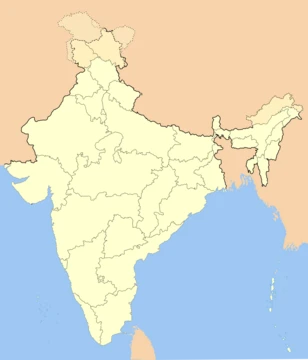
Nagaland
A mountainous state in northeast India with diverse tribes and a complex history.

Nagaland sits in India’s northeast, sharing borders with Arunachal Pradesh, Assam, Manipur, and Myanmar’s Naga Self-Administered Zone. Kohima serves as its capital, while Dimapur is its largest city. Covering 16,579 square kilometers, the state recorded a population of 1,978,502 in the 2011 census, ranking among India’s least populous states. Its 16 administrative districts are home to 17 major tribes and various sub-tribes, each with its own customs, language, and attire. Oral folklore has preserved the region’s heritage across centuries, and the earliest known records of the Naga people date to the 1200s.
The word “Naga” has unclear origins. Over time, the Naga people have been called “Noga” or “Naka” by Ahom kingdom inhabitants (meaning “naked”), “Hao” by the Meitei, and “Nakas” or “Naga” by the Burmese (meaning “people with earrings” or “pierced noses”). Before European colonialism, Burmese raids on the Nagas and neighboring groups involved headhunting and taking captives. When British forces asked Burmese guides about the people in the northern Himalayas, they were told “Naka,” which was recorded as “Naga.”
The ancient history of the Nagas remains unclear. Different ethnic groups migrated at various times, settling in northeastern India and establishing independent mountain villages. No records confirm whether they came from Mongolia, Southeast Asia, or southwest China, only that their origins lie east of India and that they arrived before the Ahoms in 1228 CE. A 1400s inscription in Myanmar’s Pinya region notes that the Kingdom of Ava under Minkhaung I extended into Naga territories.
British influence in the Naga Hills began in the early 1800s. Captains Francis Jenkins and Robert Pemberton were the first Europeans to enter the hills in 1832. Early contact was marked by suspicion and conflict, as colonial tea estate managers and traders defended against raids by Naga groups known for headhunting. Between 1839 and 1850, British troops conducted ten military expeditions. The bloody Battle of Kikrüma in February 1851 left casualties on both sides, followed by further inter-ethnic violence. Afterward, the British adopted a cautious, non-interference policy, though colonists continued moving into Naga territory.
Quick Facts
- Official Name
- State of Nagaland
- Etymology
- "Land of the Nagas"
- Motto
- "Unity"
- Region
- Northeast India
- Before Was
- Part of Assam
- Capital
- Kohima
- Largestcity
- Dimapur
- Districts
- 17
- Governor
- Nand Kishore Yadav
- Chief Minister
- Neiphiu Rio
- Party
- NPF
- Deputy Cm
- T. R. Zeliang (NPF) / Yanthungo Patton (BJP)
Facts from the source article.
Lore & Background
Nagaland's ancient history is unclear, with ethnic groups migrating at different times from the east of India, settling in the northeastern part of present India before the arrival of the Ahoms in 1228 CE. The earliest recorded history of the Nagas dates back to the 13th century. In the 19th century, British India forces expanded their influence in the Naga Hills, leading to military expeditions between 1839 and 1850, including the bloody Battle of Kikrüma in February 1851. After that war, the British adopted a policy of caution and non-interference, but later consolidated control, establishing a post at Samaguting in 1866 and transferring headquarters to Kohima in 1878. The killing of British political agent G. H. Damant at Khonoma in 1879 led to a determined British response. Christian missionary activity began in the 1870s, gradually converting many Naga communities.
Reader's Guide
Nagaland's significance lies in its unique cultural diversity and its role in the broader history of India's northeast. The state is home to 17 major tribes, each with distinct customs, languages, and dress, and a rich oral tradition of folklore. Its political history is marked by the Naga national awakening, beginning with a 1929 memorandum to the Simon Statutory Commission requesting self-determination. After India's independence in 1947, the Naga National Council, led by Zapu Phizo, demanded an independent Naga state and launched an armed insurgency, leading to a protracted conflict with the Indian Government. The State of Nagaland was formally inaugurated on 1 December 1963 as the 16th state of the Indian Union, with a democratically elected government taking office in 1964. During World War II, the Battle of Kohima (4 April to 22 June 1944) was a key engagement where British and Indian troops repelled Japanese and Indian National Army forces. The state's economy is primarily agricultural, with significant resources of natural minerals, petroleum, and hydropower. The origin of the word 'Naga' is unclear, with various historical references from Ahom, Meitei, and Burmese sources.
Did You Know?
- Nagaland's capital is Kohima, and its largest city is the twin Chümoukedima–Dimapur.
- The state has 17 administrative districts inhabited by 17 major tribes, each distinct in customs, language, and dress.
- The Battle of Kohima was fought from 4 April to 22 June 1944 during World War II.
- The origin of the word 'Naga' is unclear, with possible meanings including 'naked', 'people with earrings', or 'pierced noses'.
More in Indian States 1-24
Spotted an error? Know more?
Reader corrections go straight into our review queue. Suggest an edit · How this site is sourced