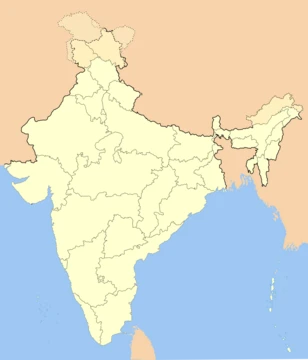
Mizoram
Land of the Mizos, a Christian-majority state in northeastern India.

Mizoram is a state in northeastern India, with Aizawl as its capital and largest city. It became the 23rd state of India on 20 February 1987, following the Mizoram Peace Accord of 1986 that ended an insurgency led by the Mizo National Front. The state is notable for its exceptionally high forest cover, high literacy, and predominantly Christian population, and it serves as a transit point for trade with Myanmar and Bangladesh.
Quick Facts
- Motto
- Satyameva Jayate (Sanskrit) · "Truth alone triumphs"
- Region
- Northeast India
- Before Was
- Union Territory
- Capital
- Aizawl
- Largestcity
- capital
- Districts
- 11
- Governor
- V. K. Singh
- Chief Minister
- Lalduhoma
- Party
- ZPM
- Judiciary
- Gauhati High Court
- Legislature Type
- Unicameral
- Assembly
- Mizoram Legislative Assembly
Facts from the source article.
Lore & Background
The name Mizoram is derived from Mizo words: Mizo (the native inhabitants) and ram (land or forest), together meaning 'land of the Mizos.' Early civilisations thrived around 600 BC, with significant archaeological evidence at Vangchhia, including megalithic stones and a 200-metre long water pavilion. Tibeto-Burman-speaking peoples migrated from the Chin Hills in present-day Myanmar, forming organised chiefdoms and adopting jhum agriculture. By the 18th century, various clans united to form the Mizo identity, introducing the Mizo language, culture, and the Sakhua religion.
In the mid-19th century, British military expeditions led to annexation in 1895 and incorporation into Assam Province. British rule brought administrative reforms and the spread of Christianity. After Indian independence in 1947, Mizoram remained part of Assam as the Lushai Hills District. Neglect during a famine sparked an insurgency by the Mizo National Front in the 1960s, culminating in the 1986 Mizoram Peace Accord and full statehood on 20 February 1987.
The state is predominantly Christian (about 87%), with Buddhism, Hinduism, and Islam as minorities. The Mizo people form the majority (83.4%), with significant Chakma and Tripuri communities. Due to civil conflict in Myanmar, an influx of Burmese, especially Chin ethnic groups, has sought refuge in Mizoram.
Reader's Guide
Mizoram's significance lies in its unique cultural and political journey from a British-administered district to a full Indian state through a peace accord. It is the second least populated state in India but the most urbanised in the northeast, with a high literacy rate and an agrarian economy transitioning from slash-and-burn (jhum) farming to horticulture and bamboo products. The state's high forest cover (84.53%) and Christian majority distinguish it within India. Its location as a transit point for trade with Myanmar and Bangladesh adds geopolitical importance. The Mizo identity, solidified through political movements like the Mizo Union, reflects a broader ethnic unification. The archaeological site at Vangchhia, with evidence of a sophisticated ancient culture, underscores the region's deep historical roots. Mizoram's legacy includes a peaceful resolution of insurgency, a strong Christian identity, and a growing role in regional trade.
Did You Know?
- Mizoram is the second least populated state in India, with an estimated population of 1.26 million in 2023.
- Forests cover 84.53% of Mizoram, making it the most forested state in India by percentage of geographical area.
- The Vangchhia archaeological site contains megalithic structures and a water pavilion, but it is not widely recognized as one of the largest necropolises in the world in mainstream scholarship.
- Mizoram is one of four states in India with a Christian majority (Nagaland, Mizoram, Meghalaya, and Manipur), with about 87% of the population practising Christianity.
More in Indian States 1-24
Spotted an error? Know more?
Reader corrections go straight into our review queue. Suggest an edit · How this site is sourced