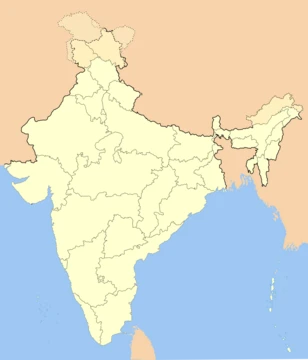
Meghalaya
A northeast Indian state known as the wettest region.

Meghalaya, meaning 'the abode of clouds,' is a state in northeast India formed on 21 January 1972 by carving out two districts from Assam. Known as the wettest region of India, it is notable for its matrilineal social system and rich biodiversity, and it lends its name to the Meghalayan Age, the current stage of the Holocene epoch.
Quick Facts
- Official Name
- State of Meghalaya
- Etymology
- "Abode of Clouds"
- Motto
- Satyameva Jayate (Sanskrit) / "Truth alone triumphs"
- Anthem
- Ri Khasi, Ri Pnar, Ri Garo (Khasi, Pnar and Garo) / "Meghalaya, My Land"
- Region
- Northeast India
- Before Was
- Part of Undivided Assam
- Capital
- Shillong
- Largestcity
- capital
- Districts
- 12
- Governor
- C. H. Vijayashankar
- Chief Minister
- Conrad Sangma
- Party
- NPP
Facts from the source article.
Lore & Background
Meghalaya was formed by separating the united Khasi Hills and Jaintia Hills, and the Garo Hills from Assam. During British rule, it was nicknamed the 'Scotland of the East.' Unlike many Indian states, it follows a matrilineal system where the youngest daughter inherits wealth and cares for parents. The state's name was coined by geographer S.P. Chatterjee in 1936.
Reader's Guide
Meghalaya's significance lies in its extreme rainfall, making it the wettest place on Earth, with Cherrapunji and Mawsynram holding world records. Its forests cover about 70% of the state and are among Asia's richest botanical habitats. The state's matrilineal tradition is a distinctive cultural feature. In 2018, the International Commission on Stratigraphy named the late Holocene epoch the Meghalayan stage, based on a speleothem from Mawmluh cave. The state has a predominantly agrarian economy and serves as a logistical centre for trade with Bangladesh.
Did You Know?
- Meghalaya means 'the abode of clouds' in Sanskrit.
- The village of Mawsynram holds the record for the most rain in a year.
- The Meghalayan Age, the current stage of the Holocene epoch, is named after a speleothem in Mawmluh cave.
More in Indian States 1-24
Spotted an error? Know more?
Reader corrections go straight into our review queue. Suggest an edit · How this site is sourced