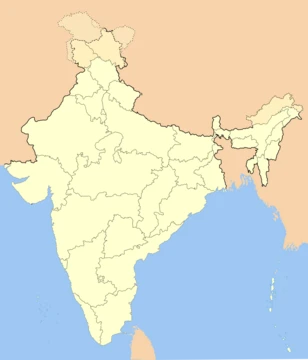
Manipur
A northeastern Indian state with a history of kingdom, conflict, and cultural richness.

Manipur is a state in northeastern India, with Imphal as its capital. It borders Assam, Mizoram, Nagaland, and Myanmar, covering 22,330 square kilometers of mostly hilly terrain. Historically a kingdom, it is known for its ethnic diversity, with the Meitei community inhabiting the Imphal Valley and Naga and Kuki-Zo communities in the surrounding hills. Manipur signed the Instrument of Accession on August 11, 1947, and a controversial Merger Agreement on September 21, 1949, which formally integrated it into India; it became a fully-fledged state in 1972, but ethnic and separatist concerns have fueled a long-running insurgency.
Quick Facts
- Region
- Northeast India
- Before Was
- Manipur Kingdom
- Formation Date
- 15 October 1949
- Capital
- Imphal
- Largestcity
- capital
- Districts
- 16
- Governor
- Ajay Kumar Bhalla
- Chief Minister
- Y. Khemchand Singh
- Party
- BJP
- Deputy Cm
- Nemcha Kipgen (BJP) / Losii Dikho (NPF)
- Judiciary
- Manipur High Court
Facts from the source article.
Lore & Background
Manipur's history is chronicled in Meitei texts like the Cheitharol Kumbaba. The name Manipur was adopted during the reign of King Pamheiba (Gharib Nawaz) in the early 18th century, though the exact origin and date are debated. During the British Raj, it was a princely state, entering a subsidiary alliance in 1824. In World War II, the Battle of Imphal was a turning point in the Burma Campaign. After India's independence, the Maharaja signed the Instrument of Accession in August 1947, but many Meitei people feel the subsequent 1949 merger agreement violated their self-determination, as the elected legislature was not consulted. This led to armed insurgencies starting in 1964, with groups like the United National Liberation Front demanding independence. From 2009 to 2018, the conflict caused over 1,000 violent deaths.
Reader's Guide
Manipur's significance lies in its complex history as a former kingdom that navigated colonial rule, wartime conflict, and integration into India. The state's ethnic diversity—with Meitei, Naga, and Kuki-Zo communities—has shaped its cultural identity, including the origin of Manipuri dance and the introduction of polo to Europeans. However, the merger agreement of 1949, signed under disputed circumstances, sparked long-standing grievances and insurgencies that continue to affect the region. The Battle of Imphal during World War II was a critical Allied victory. Manipur's agrarian economy and hydroelectric potential are notable, but its legacy is deeply tied to ongoing struggles over self-determination and ethnic tensions, as reflected in the Armed Forces (Special Powers) Act applied from 1980 to 2004.
Did You Know?
- Manipur is credited with introducing polo to Europeans.
- The Battle of Imphal (known as Japan Laan to Manipuris) was a turning point against the Japanese in the Burma Campaign during World War II.
- From 2009 through 2018, the conflict in Manipur was responsible for over 1,000 violent deaths.
More in Indian States 1-24
Spotted an error? Know more?
Reader corrections go straight into our review queue. Suggest an edit · How this site is sourced