Maharashtra
Western Indian state, second-most populous, with largest economy.

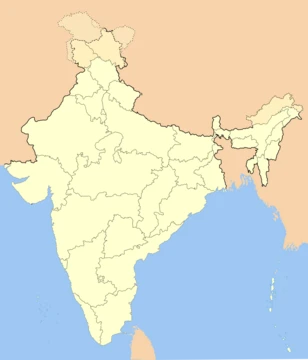
Maharashtra is a state in western peninsular India, covering a large part of the Deccan Plateau. Its western border meets the Arabian Sea, and it shares land borders with five states—Gujarat, Madhya Pradesh, Chhattisgarh, Telangana, and Karnataka—and two union territories: Dadra and Nagar Haveli and Daman and Diu to the northwest, and Goa to the south (Goa is a state, not a union territory). In terms of population, it ranks second among Indian states, third among all country subdivisions in South Asia, and fourth in the world.
The area now known as Maharashtra has been inhabited for millennia. Many dynasties ruled here over the centuries, including the Asmakas, Mauryas, Satavahanas, Western Satraps, Abhiras, Vakatakas, Chalukyas, Rashtrakutas, Western Chalukyas, Seuna Yadavas, Khaljis, Tughlaqs, Bahamanis, and Mughals. By the early 1800s, the region was split between the Peshwa domains of the Maratha Confederacy and the Nizamate of Hyderabad. Soon after, the British East India Company defeated the Marathas and took control of most of present-day Maharashtra, either directly or through princely states. Following 1858, the British crown governed the area. During Company and British rule, the region was divided among the Bombay Presidency, the Central Provinces, Berar, and several princely states, including Hyderabad.
After India gained independence in 1947, the Bombay Presidency became Bombay State within the Indian Union. Between 1950 and 1956, Berar, the Deccan states, and the Gujarat states were merged into Bombay State. The United Maharashtra Movement campaigned for a separate state for Marathi-speaking people, and on 1 May 1960, Bombay State was split into the modern states of Maharashtra and Gujarat.
The state is organized into 6 divisions and 36 districts. Mumbai is the capital and India’s most populous urban area, while Nagpur serves as the winter capital. The Godavari and Krishna are the two major rivers, and forests cover 16.47% of the state’s land area.
Maharashtra has the largest economy of any Indian state, with a gross state domestic product of ₹42.5 trillion (about US$440 billion) and a per capita GSDP of ₹335,247 (around US$3,500). It contributes 14% of India’s nominal GDP. The service sector dominates, accounting for 69.3% of the state’s output. Agriculture makes up 12% of the state GDP but employs nearly half the population.
Quick Facts
- Official Name
- State of Maharashtra
- Nickname
- "Gateway of India"
- Anthem
- Jai Jai Mahārāṣṭra Mājhā / ("Victory to My Maharashtra!")
- Region
- West India
- Before Was
- State of Bombay (1950–1960)
- Capital
- Mumbai
- Winter Capital
- Nagpur
- Metro
- Mumbai Metropolitan Region
- Districts
- 36 (6 divisions)
- Governor
- Jishnu Dev Varma
- Chief Minister
- Devendra Fadnavis
- Party
- BJP
Facts from the source article.
Lore & Background
The region that encompasses modern Maharashtra has a history going back many millennia, with notable dynasties including the Mauryas, Satavahanas, Chalukyas, Rashtrakutas, and the Mughals. In the early 19th century, the area was divided between the Peshwa in the Maratha Confederacy and the Nizamate of Hyderabad. The British East India Company defeated the Marathas and brought most of present-day Maharashtra under its control, later assumed by the British crown after 1858. After Indian independence in 1947, the Bombay Presidency became Bombay State, and on 1 May 1960, the State of Bombay was bifurcated into modern Maharashtra and Gujarat.
Reader's Guide
Maharashtra is one of the most industrialised states in India and the single-largest contributor to India's economy, accounting for 14% of all-India nominal GDP. The service sector dominates, accounting for 69.3% of the value of output, while agriculture employs nearly half the population despite contributing only 12% of state GDP. The state capital Mumbai is India's financial and commercial capital, hosting the Bombay Stock Exchange (Asia's oldest) and the National Stock Exchange. Maharashtra is home to seven UNESCO World Heritage Sites, including the Ajanta and Ellora Caves, and is widely considered a leader in agricultural and industrial production, trade, transport, and education. It ranks ninth-highest among Indian states in the human development index.
Did You Know?
- Maharashtra is bordered by the Arabian Sea to the west and shares borders with six Indian states and one union territory.
- The Godavari and Krishna are the state's two major rivers, and forests cover 16.47% of its geographical area.
- The term 'Maharashtra' may derive from 'the country of Mahars,' but its exact etymology is uncertain among scholars.
- The state includes 395 municipal councils and 29 municipal corporations as urban local bodies.
Frequently Asked Questions
Who is Maharashtra?
Maharashtra is a western Indian state that sprawls across a large stretch of the Deccan Plateau, with its western edge meeting the Arabian Sea. It shares land borders with six other states and two union territories, making it one of the most geographically connected regions in the subcontinent.
What are Maharashtra's powers and role?
It commands the largest state-level economy in India, with a GSDP of roughly ₹42.5 trillion, and it is the country's second-most populous state. Its dual capital setup—Mumbai during the summer and Nagpur in the winter—anchors both its commercial engine and its administrative center.
Why is Maharashtra important?
It ranks fourth in the world among all country subdivisions by population and generates the single largest state GDP in India. Its seven UNESCO World Heritage Sites—including the Ajanta, Ellora, and Elephanta Caves—give it a layer of global cultural significance that few other Indian states match.
What are Maharashtra's major rivers?
The Godavari and Krishna are the two principal rivers that thread through the state's Deccan landscape. They have sustained agriculture, trade, and settlement across the region for thousands of years.
More in Indian States 1-24
Spotted an error? Know more?
Reader corrections go straight into our review queue. Suggest an edit · How this site is sourced