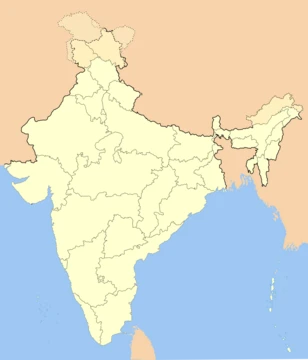
Madhya Pradesh
Central Indian state with rich mineral and agricultural resources.

Madhya Pradesh is a state in central India, the second largest by area and fifth largest by population, with over 72 million residents. Its capital is Bhopal, and other major cities include Indore, Gwalior, Jabalpur, Chhindwara, and Sagar. The state's name derives from Sanskrit words meaning 'central province,' and its history includes the ancient Avanti Mahajanapada, whose capital Ujjain was a major center during the second wave of Indian urbanization in the sixth century BCE.
Quick Facts
- Official Name
- State of Madhya Pradesh
- Etymology
- "Central Province"
- Nickname
- "Heart of India"
- Motto
- Satyameva Jayate (Sanskrit) / "Truth alone triumphs"
- Anthem
- Mera Madhya Pradesh (Hindi) / "My Madhya Pradesh"
- Region
- Central India
- Before Was
- Central Provinces and Berar & Madhya Pradesh (1956–2000)
- Capital
- Bhopal
- Largestcity
- Indore
- Districts
- 55 (10 divisions)
- Governor
- Mangubhai C. Patel
- Chief Minister
- Mohan Yadav
Facts from the source article.
Lore & Background
The area of present-day Madhya Pradesh includes the ancient Avanti Mahajanapada, with Ujjain as its capital. The region was ruled by major Indian dynasties, including the Mauryas, Guptas, and the Maratha Empire, which dominated the 18th century. After the Third Anglo-Maratha War, the area was divided into princely states under British rule, forming the Central Provinces and Berar and the Central India Agency. Following Indian independence, the Central Provinces and Berar was renamed Madhya Pradesh with Nagpur as its capital, while the Central India Agency became Madhya Bharat with Gwalior as its capital. In 1956, these states were reorganized and combined with Vindhya Pradesh and Bhopal to form the current Madhya Pradesh. The Marathi-speaking Vidarbha region was merged with Bombay State. Madhya Pradesh was the largest Indian state by area until 2000, when its southeastern Chhattisgarh region became a separate state.
Reader's Guide
Madhya Pradesh holds significance as a historically central region of India, serving as a crossroads for ancient kingdoms and empires. Its economy is the 10th-largest in India, with a gross state domestic product of ₹9.17 trillion and a per capita income of ₹109,372. The state ranks 23rd among Indian states in human development index. Rich in mineral resources, it has the largest reserves of diamond and copper in India, and 25.14% of its area is under forest cover. Madhya Pradesh has posted the country's highest agricultural growth rate, averaging above 20% over four years, and leads in production of pulses, oilseeds, soya bean, gram, pea, garlic, guava, and medicinal herbs. Its tourism industry has grown considerably, topping the National Tourism Awards in 2010–11. The state's GDP growth has been above the national average in recent years, with a GSDP growth rate of 9.07% in 2019–20.
Did You Know?
- Madhya Pradesh is the second largest Indian state by area and the fifth largest by population.
- Madhya Pradesh topped the National Tourism Awards in 2010–11.
Frequently Asked Questions
Who is Madhya Pradesh?
Madhya Pradesh is a central Indian state whose Sanskrit-derived name simply means 'central province.' It is the second-largest state in the country by land area and home to more than 72 million people, making it the fifth most populous. Bhopal is its capital, with Indore, Gwalior, Jabalpur, Chhindwara, and Sagar rounding out its major urban centers.
What are Madhya Pradesh's powers/role?
The state acts as a resource-rich economic engine in central India, drawing on substantial mineral deposits and a strong agricultural base. Its gross state domestic product hit roughly ₹12.65 trillion (about US$152 billion) in the 2023-24 estimate, while per capita income stood near ₹140,000.
Why is Madhya Pradesh important?
Positioned at the geographic heart of the subcontinent, the state has long functioned as a crossroads for trade routes, cultural exchange, and political influence. Its strategic centrality is matched by a deep historical legacy, making it a keystone region in the broader Indian story.
Where does Madhya Pradesh's story begin?
The state's earliest well-documented roots lie in the Avanti Mahajanapada, an ancient kingdom whose capital Ujjain became a major urban and cultural hub during India's second wave of urbanization in the sixth century BCE. That era set the stage for the region's long-standing significance well before the modern state took shape.
More in Indian States 1-24
Spotted an error? Know more?
Reader corrections go straight into our review queue. Suggest an edit · How this site is sourced