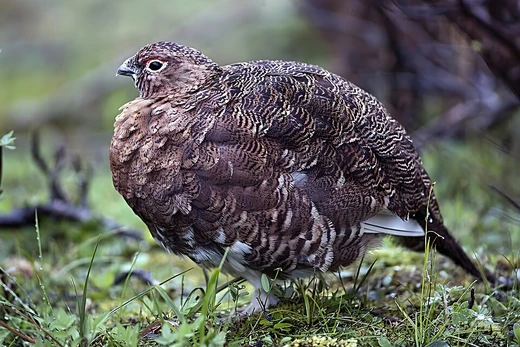
Meadow pipit
A small, abundant pipit of open habitats across the Palearctic.

The meadow pipit (*Anthus pratensis*) is a small songbird found across much of the Palearctic. Its breeding range stretches from southeastern Greenland and Iceland eastward to just beyond the Ural Mountains in Russia, and south to central France and Romania. A separate group also lives in the Caucasus Mountains. Most populations migrate, spending winters in southern Europe, North Africa, and southwestern Asia, but birds in western Europe stay put year-round, though many move to coasts or lowlands during colder months. It is especially plentiful in the northern part of its range and is the most common breeding bird in the British uplands.
Swedish naturalist Carl Linnaeus first described the meadow pipit in 1758, placing it in the genus *Alauda* with the name *Alauda pratensis*. It later became the type species for the genus *Anthus*, which German naturalist Johann Matthäus Bechstein introduced in 1805. The genus name *Anthus* comes from a Latin word for a small grassland bird used by Pliny the Elder, while *pratensis* means "of a meadow." The English name "pipit" was first recorded by Thomas Pennant in 1768 and imitates the bird's call. Older folk names like "chit lark," "peet lark," "tit lark," and "titling" refer to its small size and resemblance to larks.
Measuring 14.5–15 cm long and weighing 15–22 g, this pipit is common and often abundant. On the ground, it looks plain: brown above, buff below, with darker streaks across most of its feathers. Its tail is brown with narrow white edges. It has a thin bill and pale pinkish-yellow legs, with a notably long rear claw—longer than the rest of the rear toes. Its call is a faint *tsi-tsi*, and its simple, repetitive song is delivered during a short flight. Birds in Ireland and western Scotland are slightly darker and are sometimes considered a subspecies, *A. p. whistleri*, though they blend gradually into the main form, *A. p. pratensis*, found elsewhere.
The meadow pipit resembles the red-throated pipit, which has heavier barring and an orange-red throat in summer, and the tree pipit, which is slightly larger, less streaked, with stronger facial markings and a shorter rear claw. The meadow pipit's song speeds up toward the end, while the tree pipit's slows down.
Quick Facts
- Genus
- Anthus
- Species
- pratensis
- Audio
- Meadow Pipit (Anthus pratensis) (W1CDR0001526 BD4).ogg
- Audio Caption
- Bird recorded in Surrey, England
Facts from the source article.
Lore & Background
The meadow pipit was formally described by Carl Linnaeus in 1758 in the 10th edition of his Systema Naturae under the binomial name Alauda pratensis, with the type locality being Sweden. It is now the type species of the genus Anthus, introduced in 1805 by Johann Matthäus Bechstein. The species is generally considered monotypic, though birds breeding in Ireland and western Scotland are slightly darker and sometimes distinguished as the subspecies A. p. whistleri, which intergrades clinally with the nominate form.
The generic name Anthus is the Latin name for a small grassland bird mentioned by Pliny the Elder, and the specific name pratensis means 'of a meadow'.
Reader's Guide
The meadow pipit is a widespread and often abundant small pipit, measuring 14.5–15 cm in length and weighing 15–22 g. It is an indistinguishable-looking species on the ground, mainly brown above and buff below, with darker barring on most of its plumage; the tail is brown with narrow white lateral edges. It has a thin bill and pale pinkish yellow legs, with a conspicuously long rear claw. Its call is a faint tsi-tsi, and its simple repetitive song is given in a short song flight.
It is similar to the red-throated pipit, which is more heavily barred and has an orange-red throat in summer, and to the tree pipit, which is slightly larger, less heavily streaked, and has stronger facial markings and a shorter rear claw. The song of the meadow pipit accelerates towards the end, while that of the tree pipit slows down.
Breeding densities range from 80 pairs per square kilometer in northern Scandinavia to 5–20 pairs per square kilometer in grassland in the south of the breeding range, and just 1 per square kilometer in arable farmland. There has been a general decline in the population over the past 17 years, most notably in French farmland, where the species has declined by 68%. The meadow pipit is significant as a common and ecologically important species in open habitats, serving as a host for the cuckoo and prey for raptors.
Did You Know?
- The meadow pipit was originally described by Carl Linnaeus in 1758 under the name Alauda pratensis.
- Its name 'pipit' is onomatopoeic, from its call note, first documented by Thomas Pennant in 1768.
- It is one of the most important nest hosts of the cuckoo.
- The species has declined by 68% in French farmland over the past 17 years.
More in Holarctic birds 1-24
Spotted an error? Know more?
Reader corrections go straight into our review queue. Suggest an edit · How this site is sourced