Bluethroat
A small migratory passerine with a vivid blue throat.

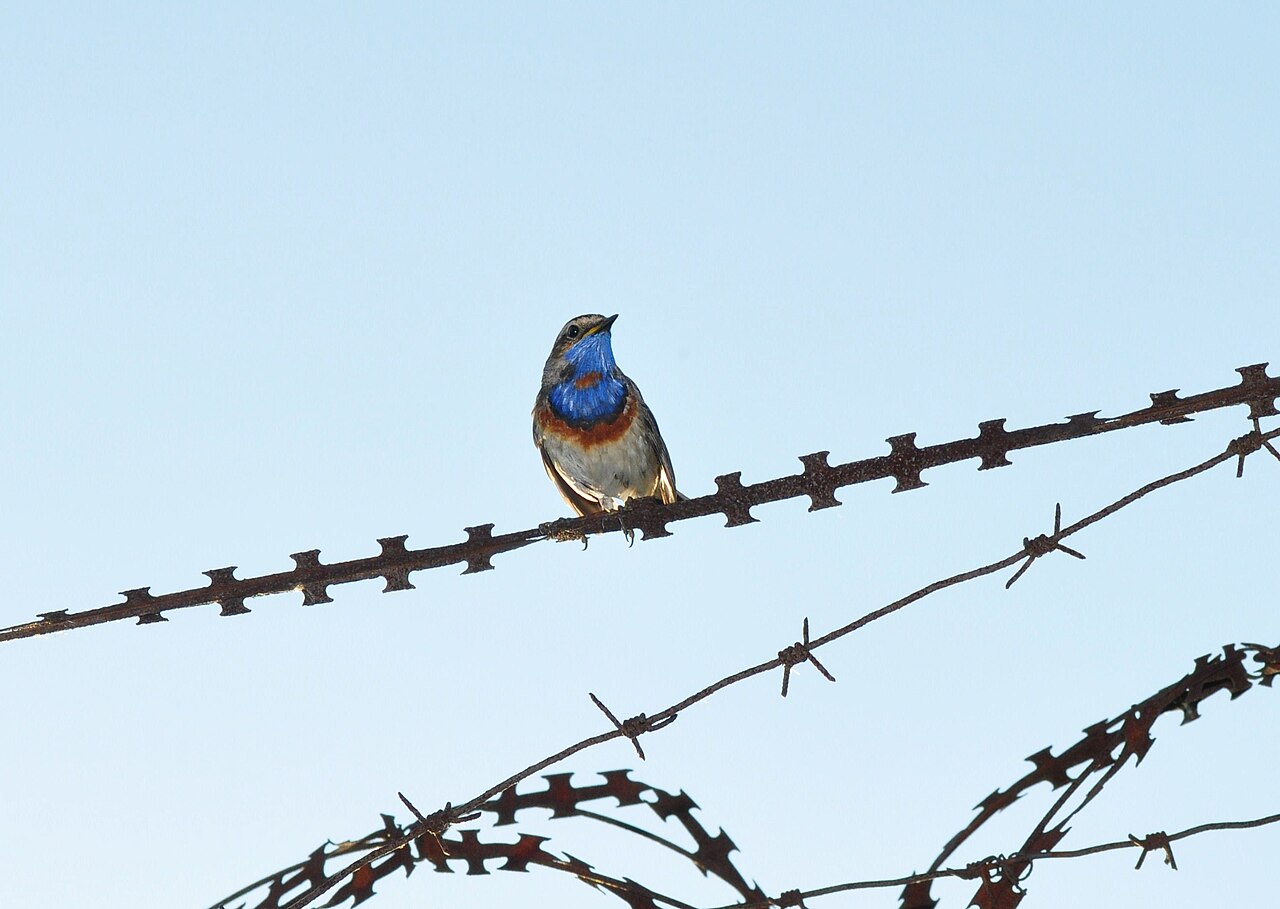
Pavel Kirillov from St.Petersburg, Russia · CC BY-SA 2.0
The bluethroat (Luscinia svecica) is a small passerine bird in the Old World flycatcher family. It is a migratory insectivorous species breeding in wet birch wood or bushy swamp in Europe and across the Palearctic with a foothold in western Alaska, and wintering in the Iberian Peninsula, northern Africa, and southern Asia. The bluethroat is notable for the striking blue throat pattern of the male, which varies among subspecies, and for its varied, imitative song.
Quick Facts
- Genus
- Luscinia
- Species
- svecica
- Audio
- Luscinia svecica.ogg
- Audio Caption
- Song recorded in Chukotka, Russia
Facts from the source article.
Lore & Background
The bluethroat was formally described in 1758 by Carl Linnaeus under the name Motacilla svecica, with the type locality later restricted to Sweden and Lapland. The species is now placed in the genus Luscinia, introduced in 1817 by Thomas Forster. Eleven subspecies are accepted by the IOC, though only seven by Shirihai, differing in throat pattern, breeding habitat, and ecology.
Reader's Guide
The bluethroat is significant as a well-studied example of plumage variation within a single species, with recent genetic studies confirming limited variation between forms despite the distinctive differences in male throat coloration. Its breeding range extends from Europe across the Palearctic to western Alaska, and it winters across three continents. The species is also notable for its imitative song and its role in illustrating altitudinal and ecological separation between subspecies, as seen in the Carpathian Mountains where L. s. svecica and L. s. cyanecula breed at different elevations.
Did You Know?
- The bluethroat is similar in size to the European robin at 13–14 cm.
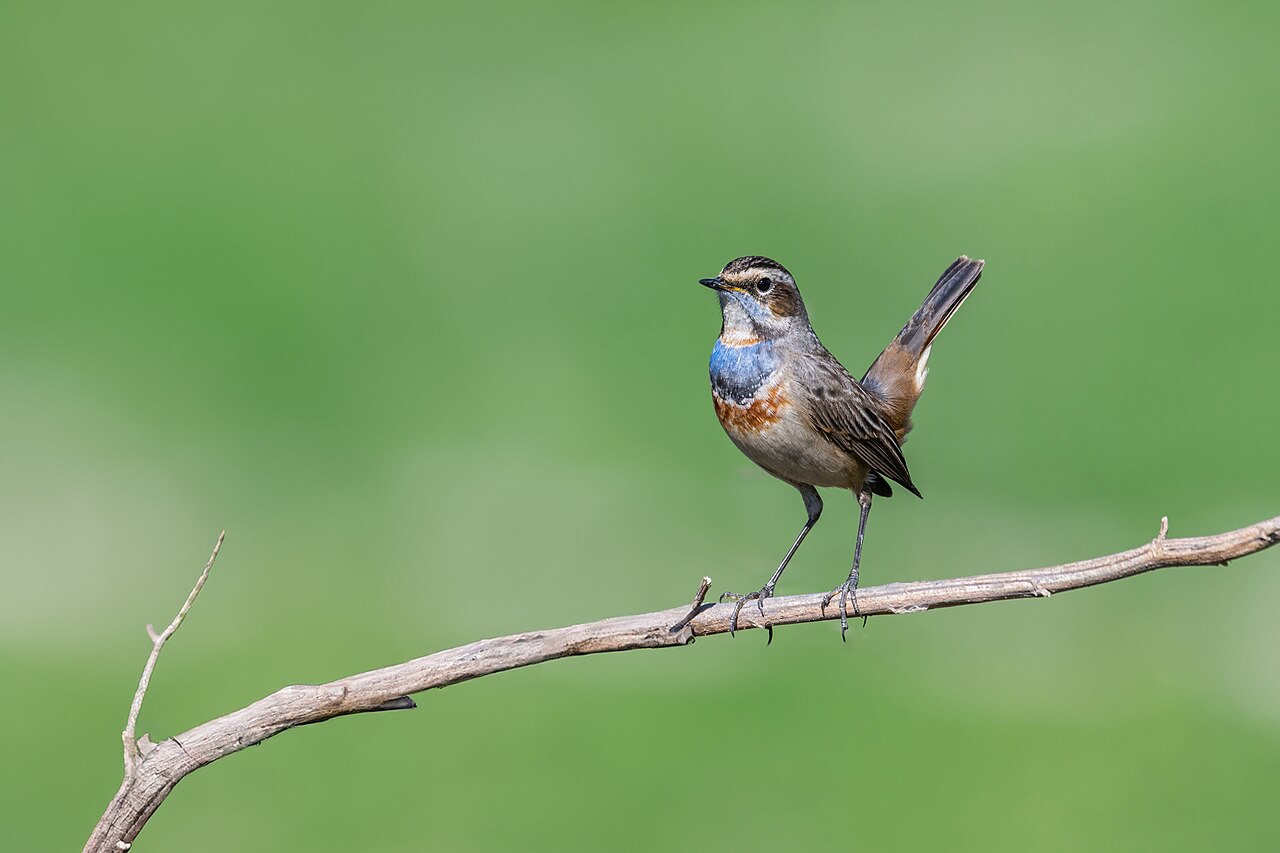
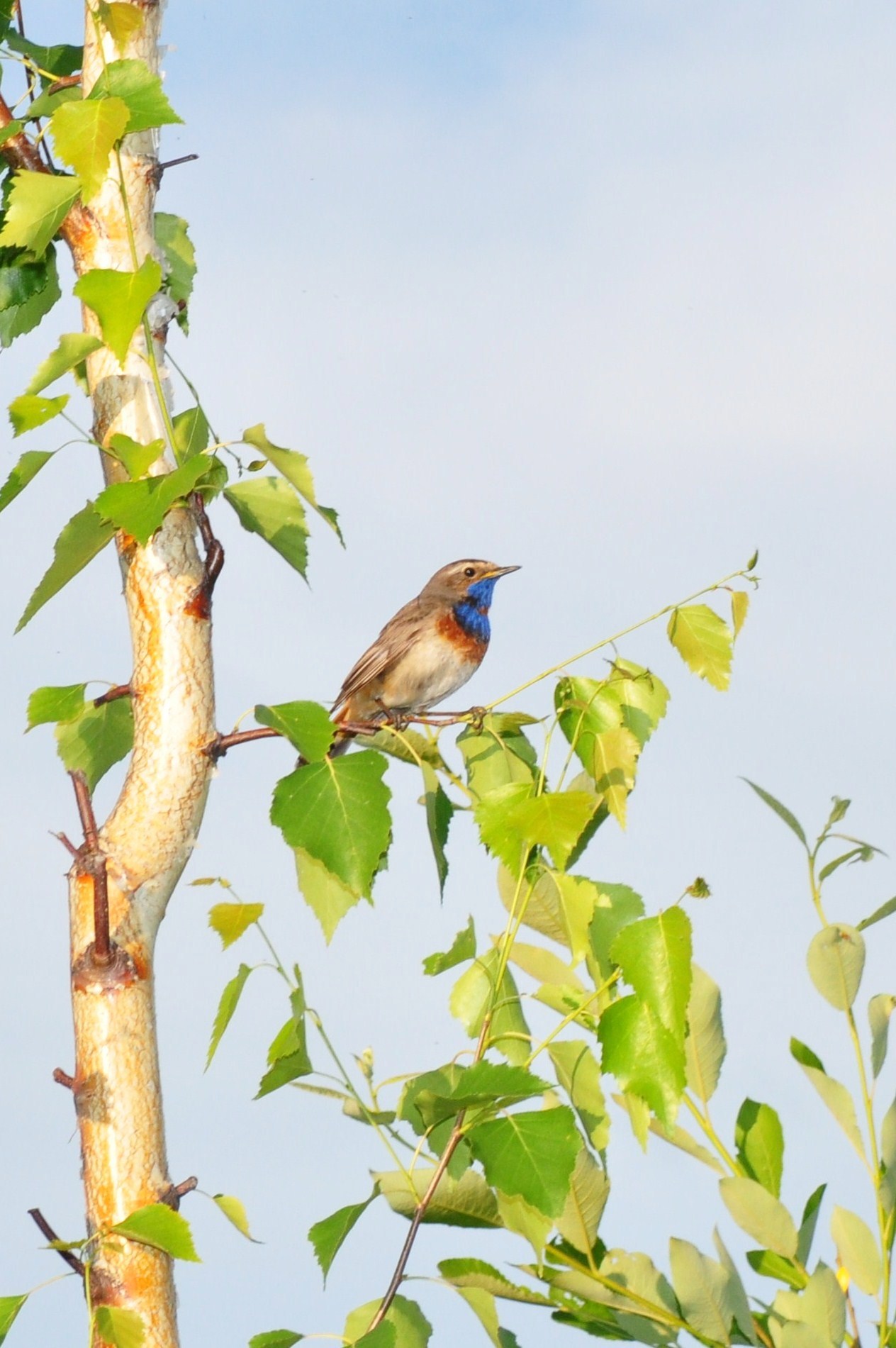
- Males have a vivid glossy blue throat bordered below by a narrow black band and a broad brick-red band.
- The bluethroat's call is a typical chat chack noise.
- Moult begins in July after breeding and is completed in 40–45 days before migration.
Taxonomy and the Puzzle of Subspecies
The bluethroat's formal scientific description traces back to 1758, when Carl Linnaeus placed it in the tenth edition of Systema Naturae under the name Motacilla svecica, the specific epithet meaning simply 'Swedish.' Linnaeus originally pointed to Alpine Europe as the type locality, though Ernst Hartert later narrowed that to Sweden and Lapland in 1910. The bird now sits within the genus Luscinia, a group of four species established by Thomas Forster in 1817. What makes the taxonomy particularly interesting is the subspecies question: the IOC recognizes eleven forms, while Shirihai consolidates them to seven. These variants differ in how much blue covers the male's throat, whether a central spot appears and what colour it is, and in their preferred breeding habitats. Ranges stretch from subarctic tundra in Scandinavia and western Alaska, through lowland reedbeds of France and central Europe, to mountainous terrain in Turkey, the Caucasus, and northern Iran, and further east into the Himalayas, Mongolia, and central China. Despite these visible differences, recent genetic work confirms the bluethroat is a single species with only limited internal variation.
Plumage and the Seasonal Colour Cycle
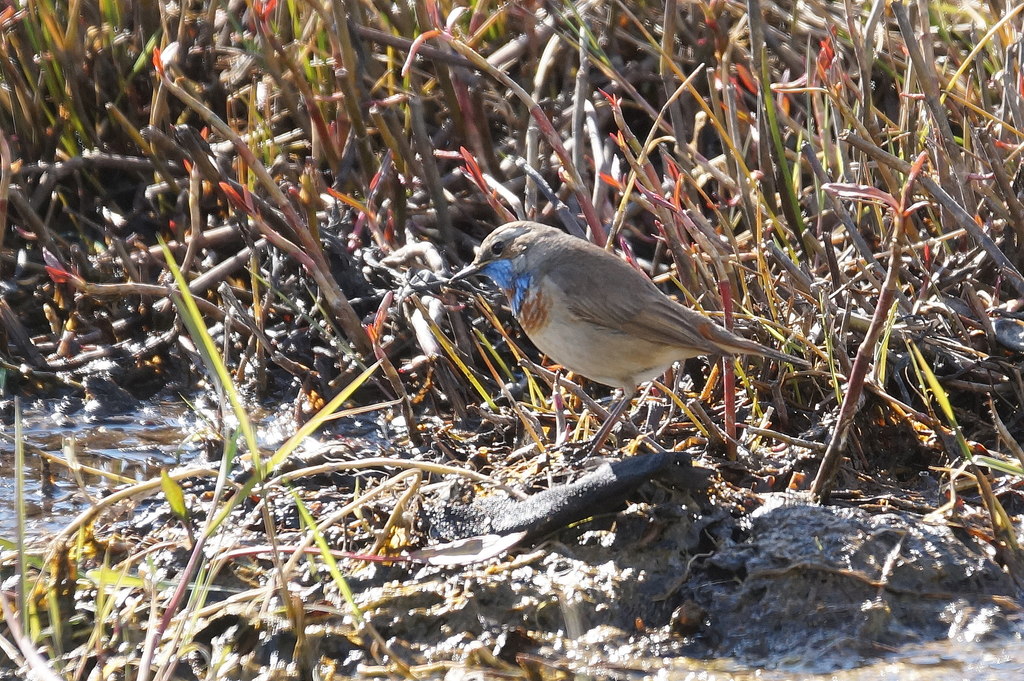
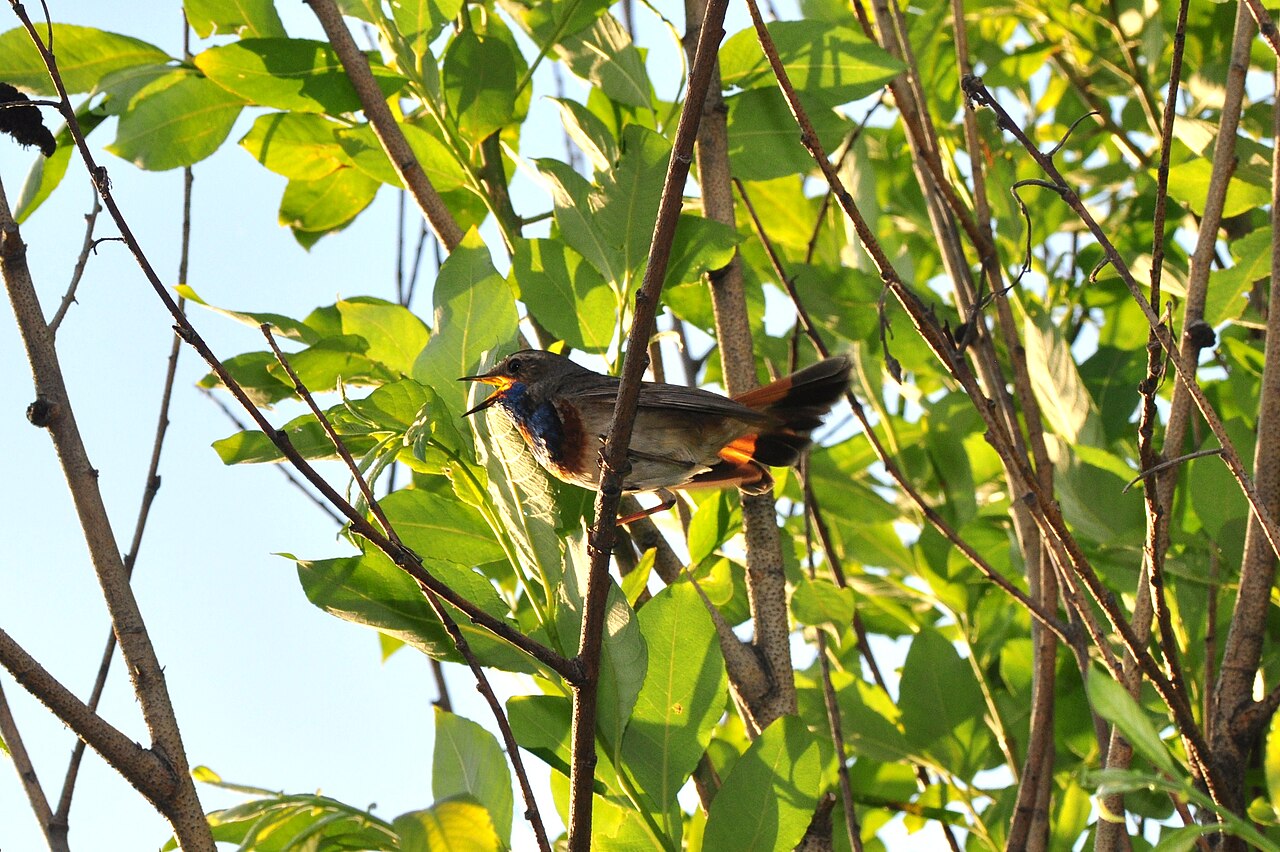
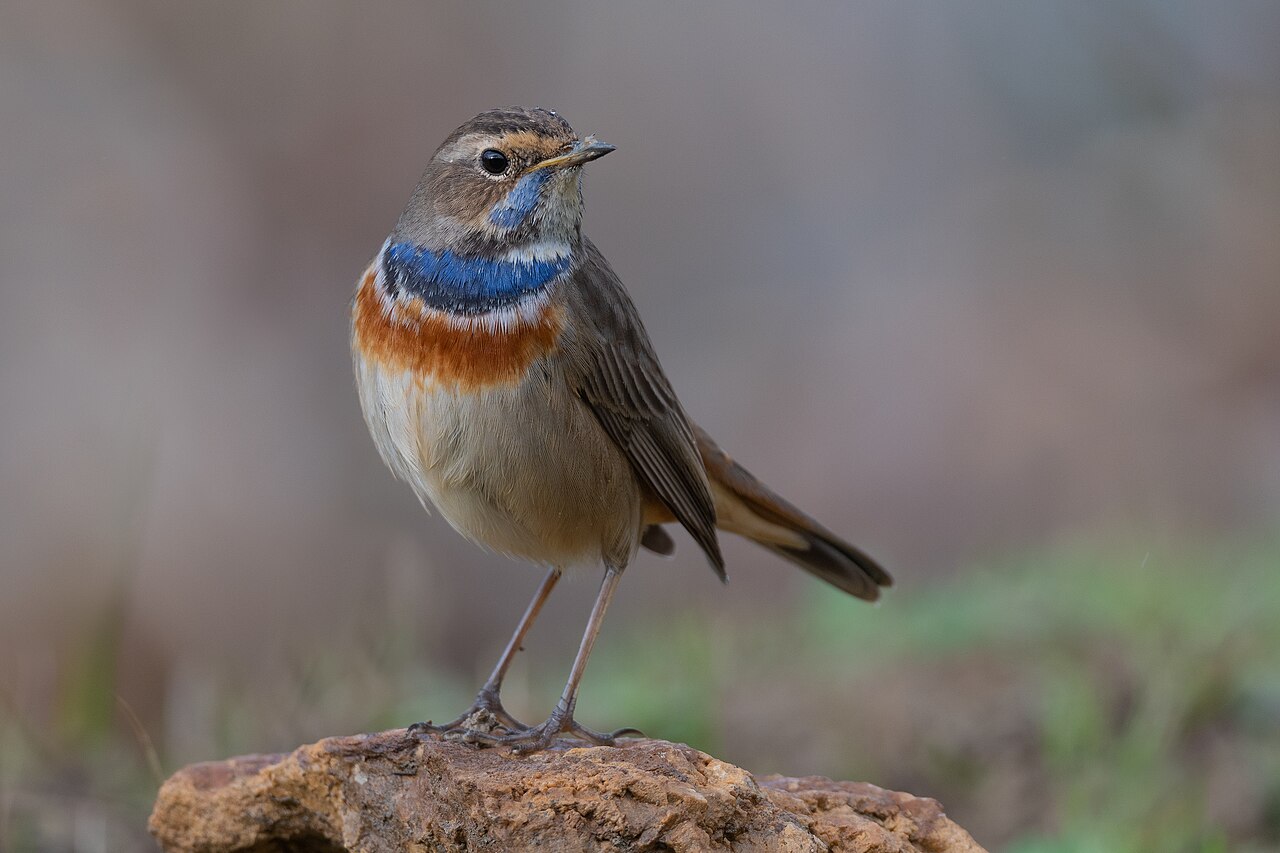
The male bluethroat in breeding dress is a small but vivid spectacle. At 13 to 14 centimetres, roughly the size of a European robin, the bird is plain brown above but carries a distinctive tail—brown with black outer corners and red patches at the base of the sides. A bold white supercilium frames the face. The true showpiece is the throat: a glossy blue panel bordered beneath by a typically narrow black band, which in turn sits above a broad brick-red stripe. In the centre of the blue, a small spot—either red or white depending on the subspecies—adds a final accent. This brilliance is not constant. After breeding, the moult beginning in July and lasting forty to forty-five days produces fresh feathers with pale tips that mask the throat pattern. Those tips gradually wear away through late winter and early spring, revealing the brighter feather bases beneath. Females across all subspecies show only a faint blackish crescent and a trace of blue on an otherwise cream breast, though older birds can develop more male-like colouring. Newly fledged young are heavily freckled in dark brown before moulting into a first-winter plumage that closely mimics the adult female.
Range, Habitat, and the Migration Puzzle
As a migratory insectivore, the bluethroat occupies a broad sweep of the Palearctic. Breeding grounds include wet birch woodland and bushy swamp across Europe, extending eastward through Russia, Mongolia, and into western Alaska, with mountain populations in Turkey, the Caucasus, and northern Iran. Nests are tucked into tussocks or low within dense bushes. In winter, the species disperses to the Iberian Peninsula, the northern half of Africa, and southern Asia including the Indian subcontinent. One particularly intriguing population is the disjunct group of L. s. svecica that breeds at high altitude in the northern Carpathian Mountains of Czechia. These birds are separated both altitudinally and ecologically from L. s. cyanecula, which occupies lowland reedbeds in the same general region. Despite sharing a landscape, the two subspecies follow different winter routes: the high-altitude Carpathian birds head to India, consistent with other svecica populations, while the lowland cyanecula birds migrate to Africa. This altitudinal split within a single country makes the Carpathian range a natural laboratory for studying how habitat and elevation shape the life history of a single species.
Voice and the 'Chat' Identity
Within the Old World flycatcher family, the bluethroat belongs to a group of small European birds that are commonly referred to as chats, a colloquial label shared with several similar-sized relatives. The male's vocal repertoire is where the species truly distinguishes itself. His song is described as varied and highly imitative, meaning he can weave in phrases borrowed from other birds, giving each individual's performance a unique, almost improvisational quality. This stands in contrast to his call, which is a short, typical chat 'chack'—a brief, sharp note. The combination of a complex, creative song with a simple, utilitarian call is characteristic of the chat group and makes the bluethroat a rewarding bird to listen for in the field. The imitative quality of the song also means that no two males sound exactly alike, adding another layer of individuality to a species already notable for its striking and variable throat plumage. For a passerine of only 13 to 14 centimetres, the bluethroat packs an outsized vocal personality into a very small frame.
Gallery
Frequently Asked Questions
What is a Bluethroat?
The Bluethroat is a small migratory songbird in the Old World flycatcher family, measuring roughly 13 to 14 centimetres in length. It was first formally described by Carl Linnaeus back in 1758.
Where does the Bluethroat breed?
This species breeds across the Palearctic region, favouring wet birch woodlands and bushy swamps throughout Europe, with a small population also holding out in western Alaska. Its breeding range spans a wide holarctic footprint.
What makes the male Bluethroat so distinctive?
Males display a vivid blue throat patch whose exact shape and colour shift noticeably from one subspecies to another. On top of that plumage show, they perform a varied, imitative song that sets them apart from other small flycatchers.
Where does the Bluethroat spend the winter?
After leaving its northern breeding grounds, the bird heads south to overwinter on the Iberian Peninsula, across northern Africa, and into southern Asia. It is a fully migratory species rather than a year-round resident.
What does a Bluethroat eat?
It is a strict insectivore, catching and consuming insects as its primary food source throughout the year. This diet is typical of small passerine flycatchers in its family.
More in Holarctic birds 1-24
Spotted an error? Know more?
Reader corrections go straight into our review queue. Suggest an edit · How this site is sourced