Black-winged stilt
Long-legged wader with contentious taxonomy and wide distribution.

Rohit Sharma · CC BY-SA 4.0
The black-winged stilt is a wading bird with exceptionally long legs, belonging to the same family as avocets. Its scientific name, *Himantopus himantopus*, comes from Greek words meaning “strap-foot” or “thong-foot.” Exactly how many species this name covers is debated—experts currently recognize anywhere from one to four. In the broadest sense, it refers to a nearly worldwide single species. More narrowly, it applies only to the group found across Europe, Asia, and Africa. Other related forms include the black-necked stilt, white-backed stilt, and pied stilt, which are often considered subspecies within the *Himantopus himantopus* complex rather than separate species.
Carl Linnaeus first described the black-winged stilt in 1758, placing it with the plovers under the name *Charadrius himantopus*. He gave its type locality as southern Europe. The genus *Himantopus* was later established by French naturalist Mathurin Jacques Brisson in 1760. Today, the black-winged stilt is considered to have multiple recognized subspecies under the broad species concept—such as *H. h. himantopus* (from the Palearctic to South Asia) and *H. h. meridionalis* (in the Afrotropical region)—though some taxonomists treat it as one of four distinct species, sometimes lumped together as the common stilt. In the broad sense, the complex typically includes five subspecies.
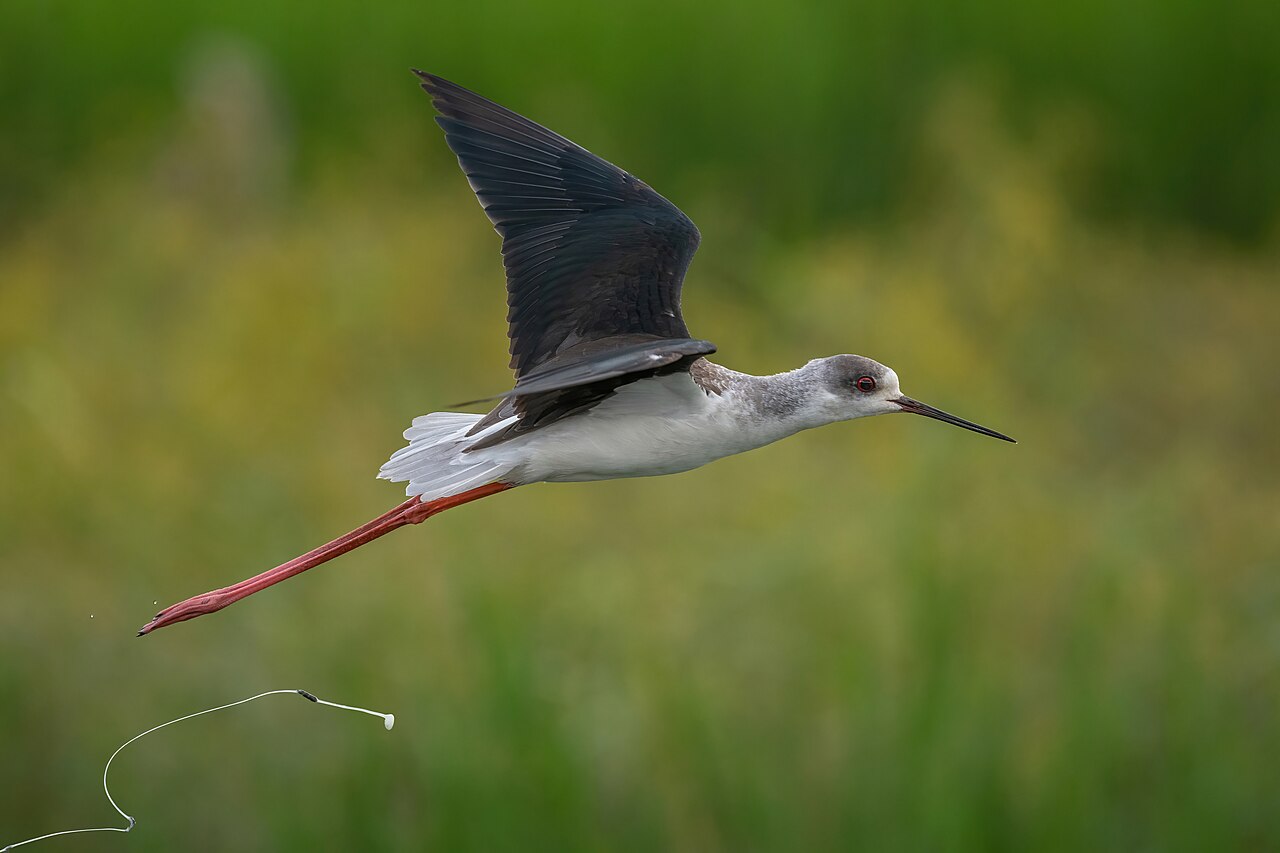
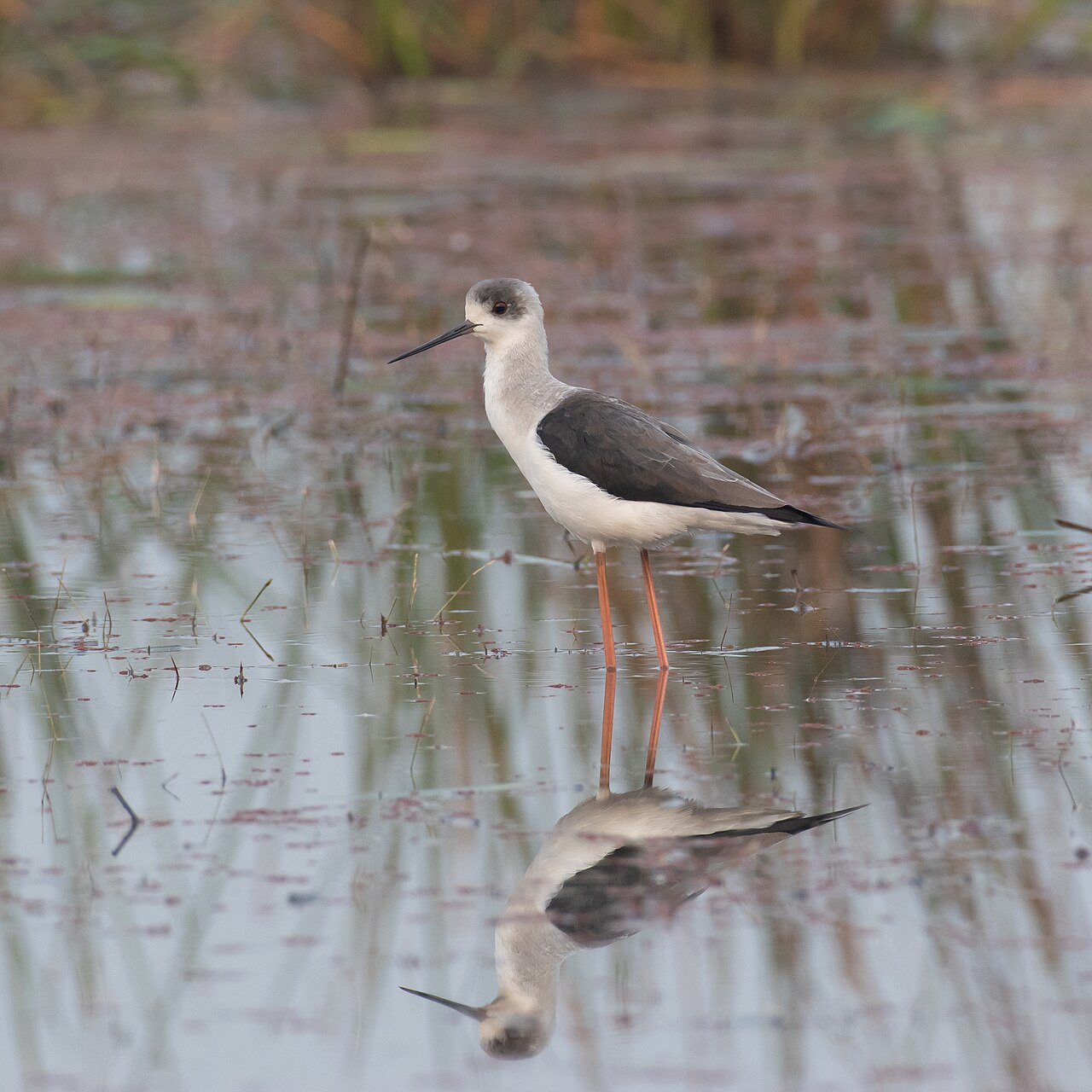
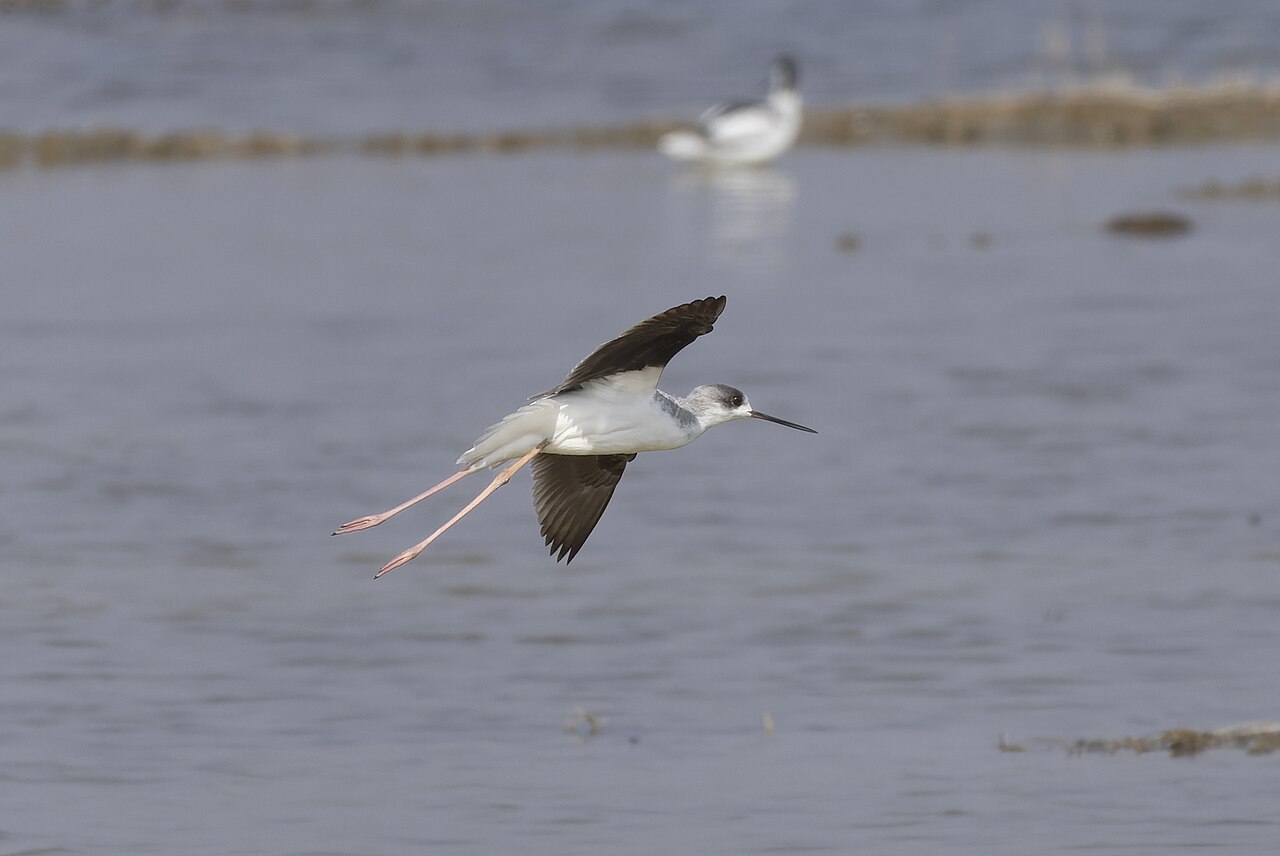
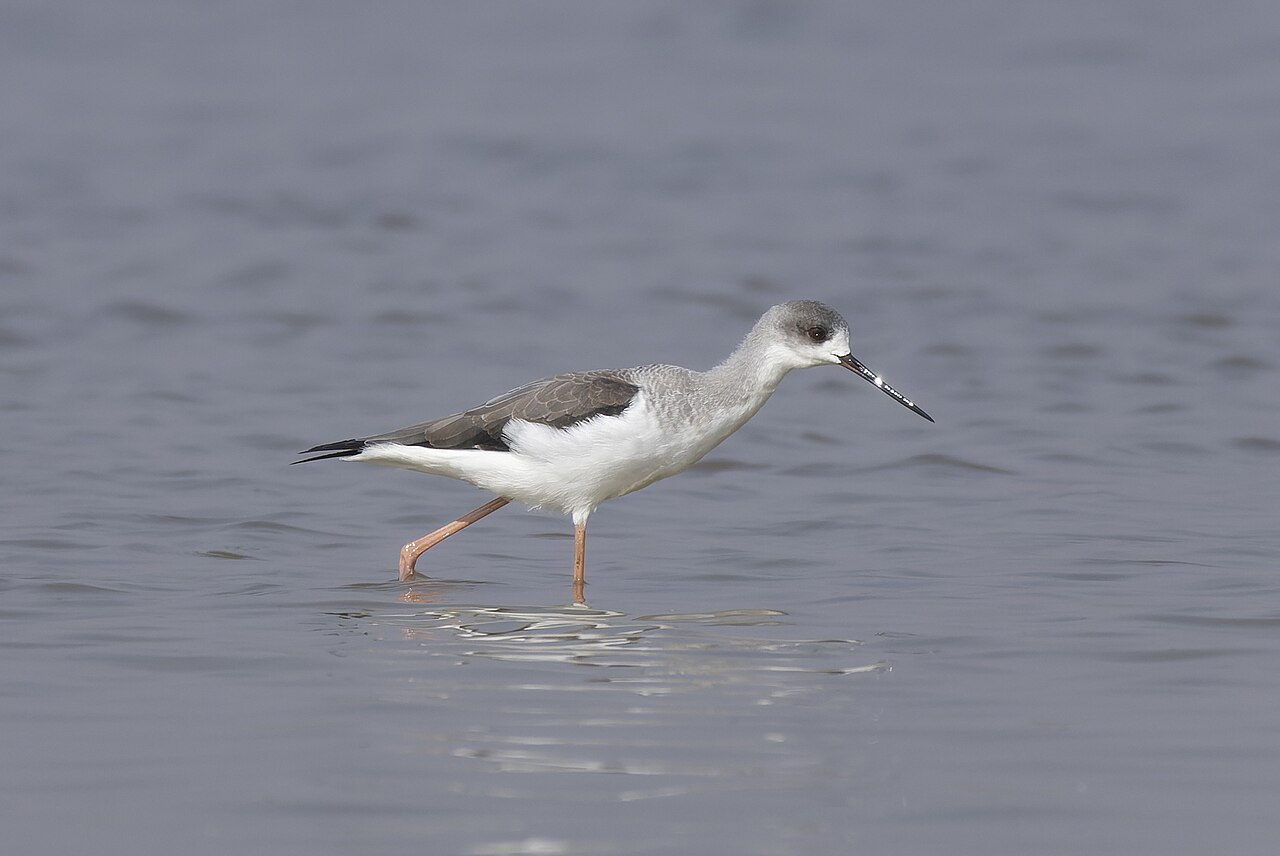
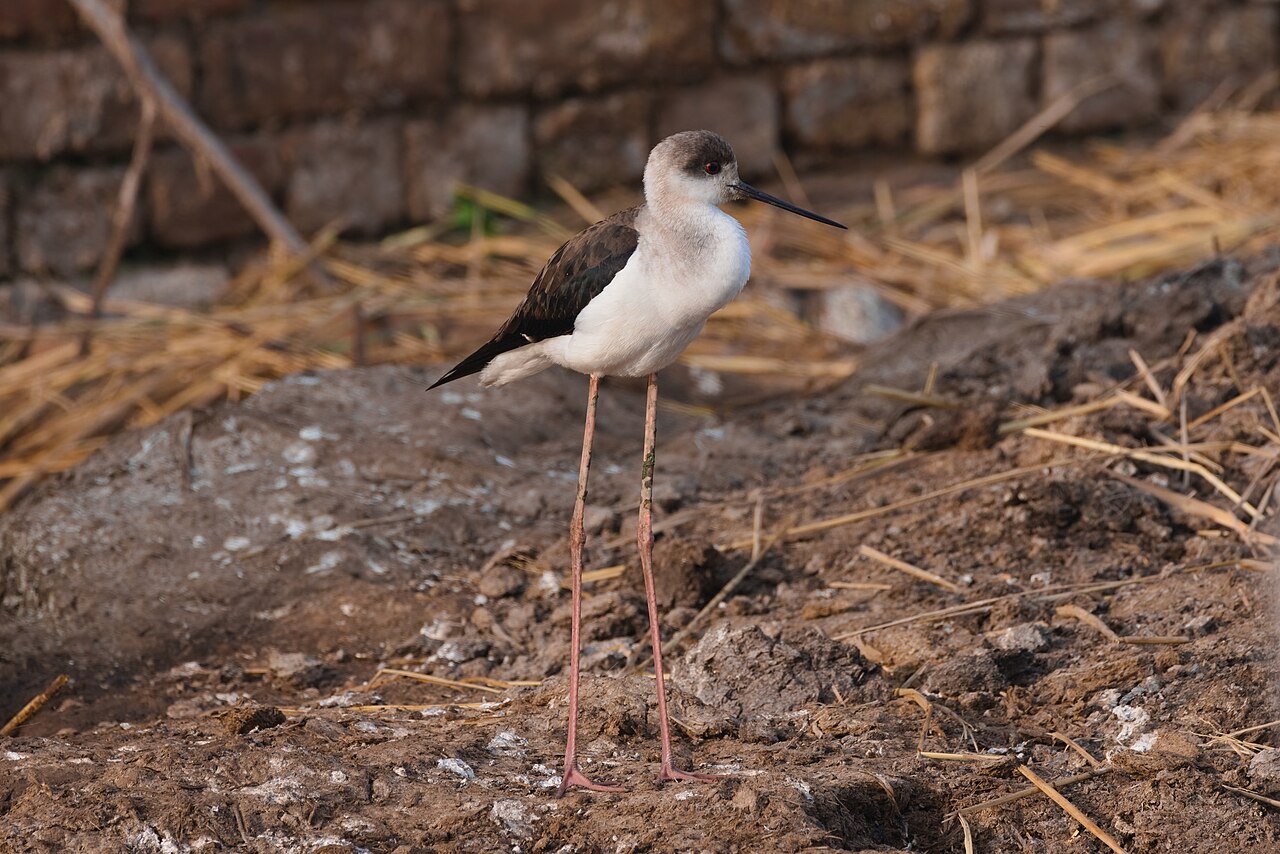
Adults measure 33 to 36 centimeters long. They have long pink legs and a slender black bill. The plumage is mostly black above and white below, with a white head and neck that may show variable amounts of black. Males typically have a black back with a greenish sheen, while females have a browner back that contrasts with their black flight feathers. In populations where the crown is normally white, females tend to have less black on the head and neck year-round, whereas males often show more black, especially in summer—though this difference is not absolute, and males usually grow all-white head feathers in winter. Juveniles are gray with a sandy tint on the wings, and pale feather edges form a whitish line in flight.
These stilts breed in marshes, shallow lakes, and ponds. Some populations migrate to coastal areas in winter; those in warmer climates tend to stay put or wander only short distances.
Quick Facts
- Genus
- Himantopus
Facts from the source article.
Lore & Background
The black-winged stilt was formally described in 1758 by Swedish naturalist Carl Linnaeus in the tenth edition of his Systema Naturae. He placed it with the plovers in the genus Charadrius and coined the binomial name Charadrius himantopus, specifying the type locality as southern Europe. The taxonomic name Himantopus comes from Greek, meaning 'strap-foot' or 'thong-foot'. The species is placed in the genus Himantopus, introduced by French naturalist Mathurin Jacques Brisson in 1760. Under the broad species concept, multiple subspecies are recognized (e.g., *H. h. himantopus* and *H. h. meridionalis*), though some taxonomists treat these as part of a species complex known as the common stilt, which typically includes five subspecies.
Reader's Guide
The black-winged stilt is significant as a widely distributed wader whose taxonomy remains contentious, with most sources accepting between one and four actual species. Its breeding habitat is marshes, shallow lakes, and ponds; some populations are migratory, moving to ocean coasts in winter, while those in warmer regions are resident or short-range vagrants. In Europe, it is a regular spring overshoot vagrant north of its normal range, occasionally breeding in northern European countries. Pairs successfully bred in Britain in 1987, and after a 27-year hiatus there were two instances of successful breeding in Southern England in 2014. Thirteen young were fledged in southern England in 2017, and four chicks were successfully fledged in northern England in 2022, believed to be the most northerly breeding success for the species. Its legacy lies in its role as a subject of taxonomic debate and its expanding breeding range in response to environmental conditions.
Taxonomic Identity & the Species Question
The black-winged stilt occupies a position in ornithological taxonomy that remains genuinely unsettled. When Carl Linnaeus first described the bird in 1758 within the tenth edition of his Systema Naturae, he slotted it among the plovers under the genus Charadrius, coining the binomial Charadrius himantopus and designating southern Europe as the type locality. The genus name Himantopus, introduced later by French naturalist Mathurin Jacques Brisson in 1760, derives from Greek roots meaning "strap-foot" or "thong-foot," a nod to the bird's extraordinarily long legs. Today the genus holds five recognized species spanning three continents. The central taxonomic debate concerns whether the European, Asian, and African form represents one species with five to seven subspecies (sometimes called the common stilt) or whether it should be split from the black-necked stilt of the Americas, the white-backed stilt, and the pied stilt of Australia and New Zealand. Most modern authorities accept somewhere between one and four actual species, and the black-winged stilt sensu stricto is treated as monotypic, with no subspecies formally recognized.
Plumage, Size & Sexual Dimorphism
Adult black-winged stilts measure roughly 33 to 36 centimetres in length and are immediately recognizable by their strikingly long pink legs and a slender, needle-like black bill. The overall color scheme is bold: black above, white below, with a white head and neck that may carry varying degrees of black depending on the species and the season. Males display a black back that often shimmers with a subtle greenish gloss, while females show a distinctly brownish tone on the back that contrasts sharply with their black flight feathers. In populations where the crown is typically white during winter, females carry noticeably less black on the head and neck throughout the year, whereas males accumulate considerably more black, especially in summer plumage. The distinction is not absolute, however, since males typically molt into all-white head feathers by winter. Immature birds present a softer palette, appearing grey overall with a sandy wash across the wings and pale feather fringes that create a visible whitish line when the bird is in flight.
Habitat, Migration & Geographic Range
The black-winged stilt is a wader of open wetland environments, and its breeding habitat across all recognized forms centers on marshes, shallow lakes, and ponds. The species' distribution stretches across Europe, Asia, and Africa for the nominate group, while its close relatives occupy the Americas and the Australasian region. Not every population follows the same seasonal pattern. In cooler climates, flocks undertake migration, abandoning their inland breeding wetlands in autumn to settle along ocean coasts for the winter. In warmer parts of the range, birds tend to remain resident or make only short, local movements. The species is also known as a spring overshoot vagrant in Europe, occasionally pushing north of its normal breeding range and, on rare occasions, attempting to nest in countries well beyond its typical territory. This vagrant behavior has produced notable records, including successful pairings in Britain, underscoring the bird's capacity for unexpected range shifts.
Breeding Milestones in Britain
Perhaps no sequence of events illustrates the black-winged stilt's occasional foray into northern European breeding grounds more vividly than the string of records from Britain. In 1987, a pair successfully raised young on the island, an event that stood as a singular achievement for nearly three decades. After a remarkable 27-year silence, two separate breeding attempts in southern England succeeded in 2014, reigniting interest among ornithologists. The following year, 2017, saw thirteen young birds fledge in the same southern region, a substantial cohort that confirmed the species' growing willingness to settle in the British Isles. The most striking record came in 2022, when four chicks were successfully raised in northern England. This event is regarded as the most northerly confirmed breeding success for the black-winged stilt anywhere in the world, pushing the known boundary of the species' reproductive range further north than any prior record. Each of these milestones underscores how a species typically associated with milder wetlands can, under the right conditions, establish itself in surprisingly cool and northerly latitudes.
Gallery
Frequently Asked Questions
What is the Black-winged stilt and what family does it belong to?
It is a slender wading bird in the avocet family (Recurvirostridae), instantly recognizable for its disproportionately long pink legs and a thin black bill. Carl Linnaeus first gave it a formal description in his 1758 Systema Naturae.
What does the scientific name Himantopus himantopus actually mean?
The genus name is built from ancient Greek roots that translate roughly to "strap-foot" or "thong-foot," a playful nod to those absurdly elongated legs. The species epithet simply mirrors the genus name, which is standard for a type species.
How many species do experts count under the Black-winged stilt name?
This is one of the most hotly debated questions in the field, with authorities splitting the group anywhere from a single worldwide species down to four separate ones. The narrower reading restricts the name to populations breeding across Europe, Asia, and Africa, while the broader view lumps all similar stilts into one.
Where does the Black-winged stilt breed and what kind of habitat does it need?
It favors open wetland environments such as marshes, shallow lakes, and ponds where it can wade and forage for invertebrates. These breeding sites are typically flat, water-rich, and relatively free of dense vegetation.
What makes the Black-winged stilt visually distinct from other waders?
Its most striking trait is a pair of extremely long, pink legs that give it a lanky, almost stilts-like silhouette. The plumage is starkly contrasted—black across the upperparts and clean white below—with a long, needle-thin black bill completing the look.
More in Holarctic birds 1-24
Spotted an error? Know more?
Reader corrections go straight into our review queue. Suggest an edit · How this site is sourced