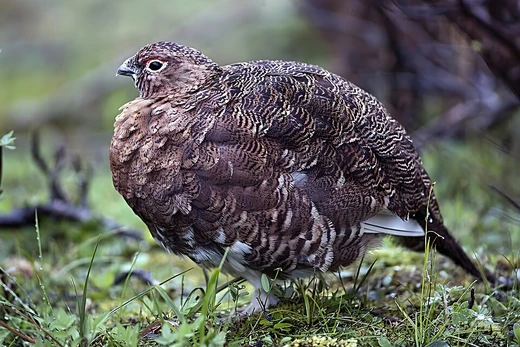
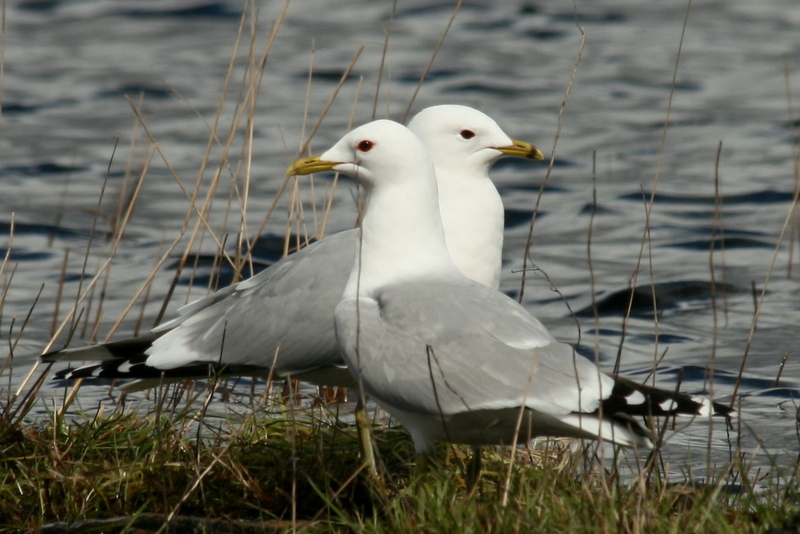
Common gull
A widespread Palearctic gull, migratory and adaptable.

Ankit0908 · CC BY-SA 4.0
The common gull (Larus canus) is a medium-sized gull found across the cool, temperate parts of the Palearctic, breeding from Iceland and Scotland all the way east to Kamchatka in Russia. In winter, most of these birds head south, showing up around the Mediterranean, the southern Caspian Sea, and the waters off China and Japan. Those in northwestern Europe, however, tend to stay put year-round, or at least don't travel far. For a while, the closely related short-billed gull was lumped into this species, and together they were often called the "mew gull."
Swedish naturalist Carl Linnaeus first described the common gull in 1758, giving it the scientific name *Larus canus* in his *Systema Naturae*. He listed its type locality as Europe, though that's now pinned down to Sweden. The genus name *Larus* is Latin for a seabird, likely a gull, while *canus* means "grey." Thomas Pennant coined the English name "common gull" in 1768, thinking it was the most numerous gull around. Before that, John Ray called it the common sea-mall. Over the years, British regional names have included variations like *maa*, *mar*, and *mew*. The word *mew* itself is related to the German *Möwe* and Dutch *meeuw*, and it's thought to be onomatopoeic. In parts of Britain influenced by Norse, you'd hear *maw* or *sea-maw*, and in old Norfolk, *mow*. The word *gull* comes from a Celtic root, first popping up in English during the 1400s; the modern Welsh version is *gwylan*.
Three subspecies are recognized, though some experts think the Kamchatka gull (*L. (c.) kamtschatschensis*) might be its own species. The North American short-billed gull used to be widely considered a subspecies (*Larus canus brachyrhynchus*), but most authorities now treat it as a separate species, *L. brachyrhynchus*, based on genetic, physical, and vocal differences. This has led to some naming confusion: "mew gull" was once used both for the North American form and for the whole *L. canus* group, so the American Ornithological Society settled on "short-billed gull" for the North American bird to keep things straight. That name actually goes back to the early AOU checklists, where "mew gull" was reserved for the Old World subspecies.
Quick Facts
- Genus
- Larus
- Species
- canus
Facts from the source article.
Lore & Background
The common gull was formally described in 1758 by Swedish naturalist Carl Linnaeus in the tenth edition of his Systema Naturae under the binomial name Larus canus. Linnaeus specified the type locality as Europe, now restricted to Sweden. The genus name is Latin for a seabird, probably a gull, and the specific epithet canus means 'grey'. The name 'common gull' was coined by Thomas Pennant in 1768 because he considered it the most numerous of its genus; John Ray earlier used the name common sea-mall.
There are many old British regional names for this species, typically variations on maa, mar, and mew. The original English word mew is related to German möwe and Dutch meeuw, and is ultimately onomatopoeic. In Norse-influenced regions of Britain, variations include maw or sea-maw, the old Norfolk form being mow. The word gull comes from a Celtic root, with the first recorded usage in English from the 1400s; the modern Welsh form is gwylan.
Three subspecies are recognized, with the Kamchatka gull (L. (c.) kamtschatschensis) considered a potential distinct species by some authorities. The North American short-billed gull was formerly widely considered conspecific with this species, but most authorities now accept it as a distinct species L. brachyrhynchus based on differences in genetics, morphology, and calls. The name 'mew gull' was used in North America for Larus canus as a whole, so the name 'short-billed gull' was chosen for L. brachyrhynchus by the American Ornithological Society to avoid confusion.
Reader's Guide
The common gull is a significant species in the Palearctic, both as a widespread breeder and as a migratory bird that connects northern breeding grounds with southern wintering areas. Its taxonomy has been subject to revision, particularly regarding the short-billed gull, which was formerly included as a subspecies but is now widely treated as a separate species. This taxonomic history illustrates how genetic and behavioral studies continue to refine our understanding of avian relationships.
The common gull's adaptability is evident in its omnivorous diet and its ability to breed both colonially and solitarily. It is most numerous in Europe, where over half (possibly 80–90%) of the world population resides. The species also serves as an example of historical naming conventions, with the term 'mew gull' having been applied differently in North America versus elsewhere, leading to the adoption of 'short-billed gull' for the North American form to avoid confusion.
Its conservation status is not specified in the source, but the global population estimate of about one million pairs suggests it is not currently threatened. The common gull remains a familiar bird in many coastal and inland areas across its range, and its high-pitched laughing call is a characteristic sound of its habitats.
Did You Know?
- The common gull was formally described by Carl Linnaeus in 1758 under the binomial name Larus canus.
- The closely related short-billed gull was formerly often included in this species, which was then sometimes known collectively as 'mew gull'.
- The global population of common gulls is estimated to be about one million pairs, with over half (possibly 80–90%) in Europe.
Discovery and Taxonomic Placement
In 1818, a small flock of gulls was observed nesting on low-lying islands along Greenland's western shore during a July expedition led by Captain John Ross in search of the Northwest Passage. The specimens collected on that voyage were later formally described in 1819 by naturalist Joseph Sabine, who named them Larus sabini in honour of his brother, Captain Edward Sabine, the expedition's accompanying officer. That same year, zoologist William Leach proposed a dedicated genus, Xema, in an appendix to Ross's published account of the journey. The name Xema appears to be a coinage with no etymological root. Today the species stands alone within that monotypic genus, though some taxonomists fold it back into an expanded Larus. Its closest living relative is not the superficially similar swallow-tailed gull of the Galápagos—as once suspected—but the ivory gull, another Arctic dweller. Mitochondrial DNA work has confirmed this pairing, with the two lineages diverging roughly six million years ago, a split that predates most other gull groupings and traces back to a common ancestor shared with kittiwakes around eight million years ago.
The Longest Gull Migration on Earth
Few birds cover more ground in a single year than this species, which undertakes a round trip of roughly 32,000 to 39,000 kilometres—the longest migration recorded for any gull. Populations breeding in Svalbard, Greenland, and eastern Canada head south across the Atlantic, skirting the westernmost coasts of Ireland, western Great Britain, northwestern Spain, Portugal, and Morocco. They typically spend close to 45 days foraging in the offshore waters of the Bay of Biscay before continuing to their wintering grounds in the cold Benguela Current off Namibia and South Africa, occasionally pausing at the Azores or Canary Islands. Meanwhile, birds from western North America and Siberian tundra take a Pacific route, stopping along the California coast, Baja California, and the Pacific shores of Mexico and Central America before settling on rocky islets stretching from the Galápagos to northern Chile, where the nutrient-rich Humboldt Current sustains a reliable food supply. The species is also recorded far enough inland in North America, Europe, and Siberia that ornithologists have coined the phrase "cross-continental migration" to describe its terrestrial appearances.
A Striking Wing Pattern and Unusual Moult
At 27 to 33 centimetres in length and 135 to 225 grams in weight, this is a compact gull with long, narrow, pointed wings spanning 81 to 87 centimetres and a short black bill tipped in yellow. In flight, the adult's tricoloured wing—pale grey coverts, four jet-black outer primaries, and bright white inner primaries and secondaries—makes it one of the most instantly recognisable gulls, though at distance it can be mistaken for a young black-legged kittiwake. The slightly forked white tail and the breeding-season dark grey hood edged with a narrow black collar add further diagnostic detail. Young birds wear the same three-colour wing scheme but in browner tones, with a black band across the tail, and need two full years to reach adult plumage. Perhaps most remarkably, the species reverses the typical gull moult sequence: fledglings keep their juvenile feathers through the entire autumn and only begin their first winter moult after arriving at their wintering grounds, while adults complete a full moult in spring before migrating north and undergo only a partial one in autumn.
Arctic Breeding and a Versatile Diet
During the brief Arctic summer, this species gathers in colonies on coastal tundra and low-lying islands, where each female deposits two or three spotted olive-brown eggs into a simple ground nest lined with grass. Outside the breeding window the birds become fully pelagic, spending the non-breeding months at sea. Their feeding repertoire is remarkably broad and shifts with season and location. On the tundra and in nearby boreal river deltas, estuaries, and coastal wetlands, breeding adults hunt terrestrial and aquatic beetles, springtails, craneflies, mosquitoes, midges, flower flies, molluscs, arachnids, water bugs, various invertebrate larvae, and small crustaceans. Fish and, on occasion, nestling birds or unhatched eggs—sometimes those of waterfowl, black turnstones, or Lapland longspurs—round out the menu. In open ocean during the non-breeding season the gull takes a wide variety of mainly animal prey, seizing any suitable small food item it can catch. This opportunistic, generalist approach to feeding underpins the species' ability to exploit the diverse marine and terrestrial habitats it encounters across its vast migratory range.
Gallery

Frequently Asked Questions
What is the Common gull?
The Common gull (Larus canus) is a medium-sized Palearctic gull measuring roughly 40 to 46 cm in length, with a wingspan of about 100 to 115 cm. It was formally described by Carl Linnaeus in 1758 and is recognized as having three subspecies.
Where does the Common gull breed?
It nests across the cool, temperate stretch of the Palearctic, ranging from Iceland and Scotland in the west all the way to Kamchatka in eastern Russia. This makes it one of the most broadly distributed gulls in the northern hemisphere.
Where do Common gulls go in winter?
Most populations head south, turning up around the Mediterranean, the southern Caspian Sea, and the coastal waters of China and Japan. Birds in northwestern Europe, however, largely remain in place or shift only a short distance year-round.
Why do some older sources call the Common gull a 'mew gull'?
For a period, the closely related short-billed gull was treated as part of the same species, and the combined group was commonly referred to as the 'mew gull.' That lumping has since been split, but the older name still lingers in some field guides and literature.
How many Common gulls exist in the wild?
The global population is estimated at roughly one million breeding pairs. Given its wide range and adaptability across coastal and inland habitats, it is considered a widespread and stable species.
More in Holarctic birds 1-24
Spotted an error? Know more?
Reader corrections go straight into our review queue. Suggest an edit · How this site is sourced