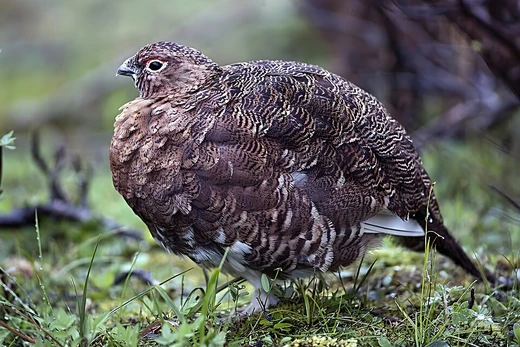
Bar-tailed godwit
Longest non-stop migratory flight of any bird.

gailhampshire from Cradley, Malvern, U.K · CC BY 2.0
The bar-tailed godwit (Limosa lapponica) is a large, strongly migratory wader in the family Scolopacidae. It is notable for undertaking the longest known non-stop flight of any bird, with the subspecies Limosa lapponica baueri migrating across the Pacific Ocean from Alaska to New Zealand.
Quick Facts
- Taxon
- Limosa lapponica
Facts from the source article.
Lore & Background
The bar-tailed godwit breeds on Arctic coasts and tundra from Scandinavia to Alaska, and overwinters on coasts in temperate and tropical regions of Australia and New Zealand. The subspecies Limosa lapponica baueri makes a round-trip migration of over 29,000 km. One female, flagged 'E7', flew 11,680 km non-stop from western Alaska to New Zealand in eight days. In 2021, a male, 4BBRW, set a record of 13,000 km non-stop from Alaska to New South Wales. In 2022, a juvenile flagged 'B6' flew at least 13,560 km non-stop from Alaska to Tasmania in 11 days 1 hour.
Five subspecies are recognized. The smallest is L. l. lapponica, breeding from Scandinavia to the Yamal Peninsula and wintering in Europe and Africa. The largest is L. l. baueri, breeding in Alaska and wintering in Australasia. Birds fuel these journeys by carrying the greatest fat loads of any migratory bird studied, reducing the size of their digestive organs to do so. They often depart early from New Zealand if favorable winds are predicted, though the mechanisms behind this behavior remain a subject of study.
Reader's Guide
The bar-tailed godwit is significant as a record-holder for the longest non-stop flight of any bird and the longest journey without feeding by any animal. Its migrations, particularly those of the subspecies Limosa lapponica baueri, demonstrate extreme physiological adaptations, including carrying the greatest fat loads of any migratory bird studied and reducing digestive organ size to fuel flights of over 11,000 km. The species also illustrates the importance of staging areas such as the Yalu Jiang coastal wetland in the Yellow Sea, where birds rest and refuel before continuing to breeding grounds. The bar-tailed godwit's ability to predict favorable winds and its consistent migration timing across years highlight sophisticated navigational and behavioral strategies. Its taxonomy includes five subspecies with varying migration distances, from short hops to the North Sea to trans-Pacific journeys. The species' conservation status is not detailed in the source, but its reliance on specific coastal habitats and staging areas makes it vulnerable to environmental changes. The bar-tailed godwit remains a key subject for studying avian migration, endurance, and physiological limits.
Did You Know?
- The bar-tailed godwit's migration from Alaska to New Zealand is the longest known non-stop flight of any bird.
- To fuel long flights, bar-tailed godwits carry the greatest fat loads of any migratory bird studied and reduce the size of their digestive organs.
The Pacific Crossing and Migration Records
The bar-tailed godwit's most extraordinary feat belongs to the baueri subspecies, whose non-stop flight across the Pacific from Alaska to New Zealand stands as the longest known non-stop flight of any bird and the longest journey undertaken without pausing to feed by any animal. The round-trip migration for this group exceeds 29,000 km. To sustain such a crossing, these birds carry the greatest fat loads of any migratory species studied to date, and they actually shrink the size of their digestive organs to free up internal space for fuel. Satellite tracking of seven individuals surgically fitted with transmitters in New Zealand revealed one bird covered 11,026 km in nine days to reach the Yellow Sea in China. A remarkable individual flagged E7 flew onward from China to Alaska for the breeding season, then departed in August 2007 on an eight-day non-stop flight from western Alaska to the Piako River in New Zealand. While Siberian-breeding populations follow coastal routes north and south, Alaskan birds fly directly over the open Pacific to Australasia, roughly 11,000 km away.
Taxonomy and the Origins of Its Name
Carl Linnaeus formally described this species in 1758 within the tenth edition of Systema Naturae, originally assigning it the binomial Scolopax limosa. The French zoologist Mathurin Jacques Brisson later introduced the genus Limosa in 1760, a name drawn from the Latin word limus meaning mud, a clear nod to the bird's preferred coastal habitat. The specific epithet lapponica references Lapland. The English common name godwit appears in written records dating to roughly 1416–17, possibly imitating the bird's call or derived from the Old English phrase god whit meaning good creature, perhaps a reference to its eating qualities. The species name itself is taken from the distinctive black-and-white horizontally barred tail and upper tail coverts. Five subspecies are currently recognised, ranging from the smallest, L. l. lapponica in Scandinavia, to the largest, L. l. baueri in Alaska and Chukotka, with the genus grouping four other godwit species alongside it.
Physical Form and Seasonal Plumage
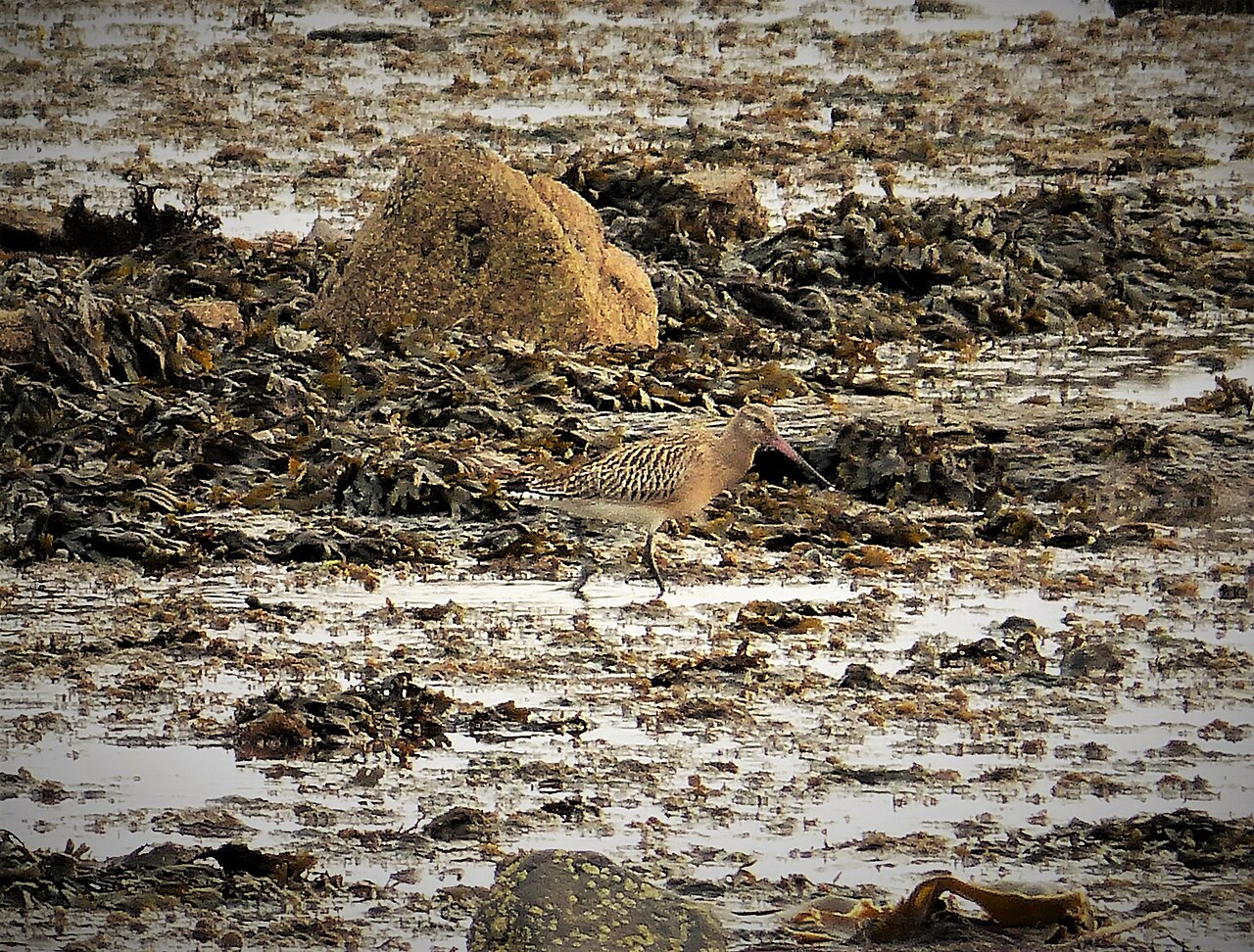
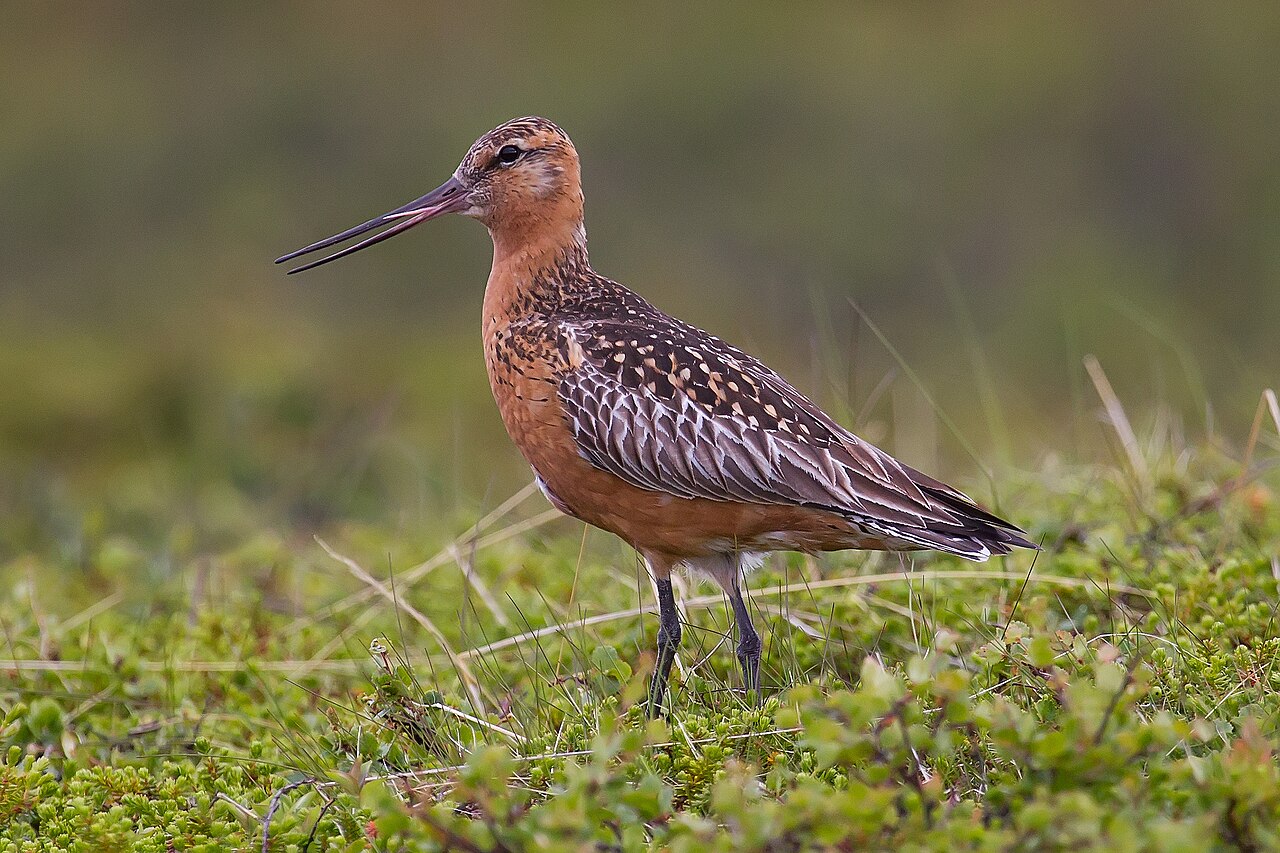
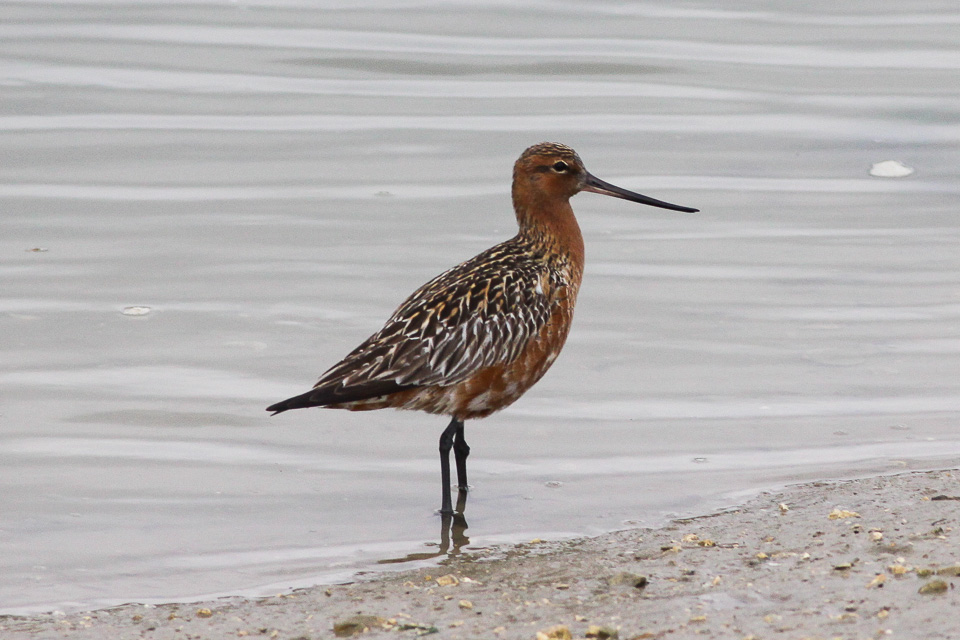
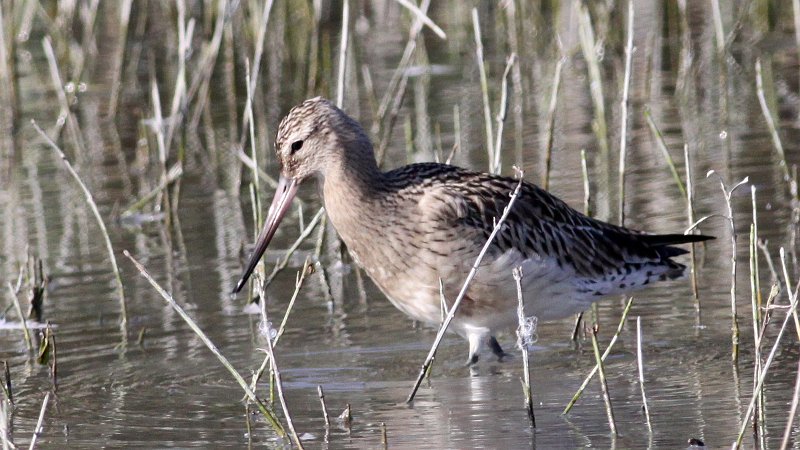
The bar-tailed godwit measures 37 to 41 cm from bill to tail, with a wingspan spanning 70 to 80 cm. Its most striking feature is the long, tapering, slightly upturned bill, pink at the base and black toward the tip, paired with blue-grey legs. In breeding plumage, the neck, breast, and belly display an unbroken brick red, while the upperparts are dark brown. Females in breeding dress are noticeably duller, showing a chestnut to cinnamon belly. Full breeding plumage does not appear until the third year, and three distinguishable age classes exist; during their first northward migration, immature males are visibly paler than mature ones. In the non-breeding season, birds encountered in the Southern Hemisphere appear plain grey-brown with darker feather centres creating a striped effect, and whitish underneath. Juveniles resemble non-breeding adults but are more buff overall, with streaked plumage on the flanks and breast. Males average smaller than females, though there is considerable overlap in size.
Five Subspecies Across the Globe
Five subspecies of bar-tailed godwit are recognised, distributed from west to east. The smallest, L. l. lapponica, breeds from northern Scandinavia east to the Yamal Peninsula and winters along European and African coasts; its population has been revised down to below 30,000 after earlier winter counts of 150,000 to 180,000 proved to be overestimates caused by previously overlooked intermingling with taymyrensis. L. l. yamalensis, described in 2022, breeds in northwest Siberia and winters from Oman east to west India, though it remains doubtfully distinct from taymyrensis and is not distinguishable genetically. L. l. taymyrensis breeds in central north Siberia and overlaps extensively with lapponica in winter. L. l. menzbieri breeds from the Anabar River east to the Kolyma delta and winters in southeast Asia and northwest Australia. The largest subspecies, L. l. baueri, breeds in Chukotka and northwestern Alaska, with a population under 150,000 birds, of which 75,000 winter in New Zealand.
Gallery

Frequently Asked Questions
Who is the Bar-tailed godwit?
The Bar-tailed godwit (Limosa lapponica) is a large, strongly migratory wading bird in the family Scolopacidae. It stands roughly 37 to 41 cm tall with a wingspan of 70–80 cm, giving it a notably imposing silhouette among shorebirds.
What is the Bar-tailed godwit's most famous feat?
The baueri subspecies (Limosa lapponica baueri) holds the record for the longest known non-stop flight of any bird, crossing the entire Pacific Ocean from Alaska to New Zealand without a single landing.
How do the Bar-tailed godwit's physical stats break down?
Males typically weigh 190–400 g, while females are heavier at 260–630 g. Both sexes share the same 37–41 cm body length and 70–80 cm wingspan, so the size difference is purely in mass.
Why is the Bar-tailed godwit important to bird fans?
It serves as the definitive real-world example of a bird sustaining an ocean-spanning, non-stop flight of unprecedented distance, making it a go-to reference in any discussion of avian endurance. Its place within Scolopacidae also makes it a key species for understanding wader ecology and migration strategy.
More in Holarctic birds 1-24
Spotted an error? Know more?
Reader corrections go straight into our review queue. Suggest an edit · How this site is sourced