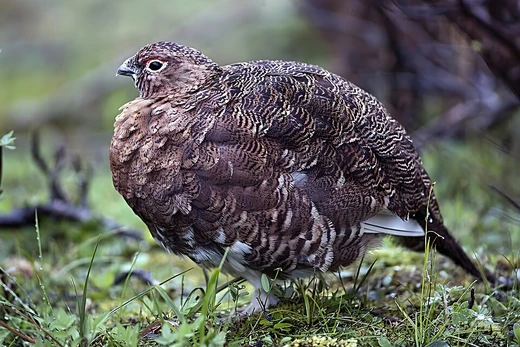
Black tern
Small tern breeding in inland marshes of three continents.

Charles J. Sharp · CC BY-SA 4.0
The black tern (Chlidonias niger) is a small tern species found in or near inland water, breeding in Europe, Western Asia, and North America. It migrates in winter to coastal areas of Africa and South America. The species was formally described by Carl Linnaeus in 1758 and is noted for its predominantly dark plumage, which can appear blue in breeding season.
Quick Facts
- Genus
- Chlidonias
- Species
- niger
Facts from the source article.
Lore & Background
The black tern was formally described by Carl Linnaeus in 1758 under the name Sterna nigra, with the type location later restricted to Uppsala, Sweden. It is now placed in the genus Chlidonias, introduced by Constantine Rafinesque in 1822. The genus name derives from Ancient Greek for 'swallow-like', and the species name from Latin for 'shining black'. Old English names include 'carr swallow' and 'blue darr'.
Reader's Guide
The black tern is significant as a migratory waterbird that breeds across Europe, western Asia, and North America, wintering in Africa and South America. Its North American subspecies, C. n. surinamensis, is considered by some to be a separate species. The species has experienced population decline in North America due to habitat loss. In England, it was abundant in the eastern Fens until extensive drainage wiped out the breeding population by about 1840. Intermittent recolonization attempts have been unsuccessful. Hybridization with the white-winged tern has been recorded in Sweden and the Netherlands. The black tern is protected under the Agreement on the Conservation of African-Eurasian Migratory Waterbirds (AEWA).
Did You Know?
- The black tern's call has been described as a high-pitched 'kik', and a large flock's sound as 'deafening'.
- Hybridization between black tern and white-winged tern has been recorded from Sweden and the Netherlands.
- The North American race, C. n. surinamensis, is distinguishable from the European form in all plumages.
- Unlike white Sterna terns, black terns do not dive for fish but forage on the wing, picking items at the water's surface.
Physical Stature and Field Identification
The Caspian tern holds the title of the largest tern on Earth, measuring between 48 and 60 centimeters in body length with a wingspan stretching from 127 to 145 centimeters. Adults weigh roughly 530 to 782 grams, a substantial build for a seabird. Their most striking features include a long, thick red-orange bill tipped with a small black point, paired with solid black legs. The head is predominantly white, crowned by a bold black cap that persists even through winter months—unlike many other tern species that shed their cap seasonally. The neck, belly, and tail are clean white, while the upper wings and back carry a soft pale grey tone. In flight, the tail appears less deeply forked than that of most other terns, and the undersides of the wings reveal dark primary feathers against an otherwise pale surface, with black wingtips visible from below. The bird's vocalization is distinctive: a loud, heron-like croak that carries across open water. Taxonomically, it stands alone within its genus Hydroprogne, with no recognized subspecies, making every individual a representative of a single, unbroken lineage.
Global Range and Shifting Boundaries
Despite its name referencing the Caspian Sea, the Caspian tern enjoys a subcosmopolitan yet scattered presence across every inhabited continent. Breeding colonies line the shores of large lakes and ocean coasts throughout North America—including the Great Lakes region—as well as pockets of Europe centered on the Baltic and Black Seas, parts of Asia, Africa, and Australasia. After the breeding season, North American birds travel southward to the Caribbean, the West Indies, and the northernmost reaches of South America, while their European and Asian counterparts head into the Old World tropics. African and Australasian populations tend to remain resident or shift only short distances. In 2016, a remarkable pair successfully nested at Cape Krusenstern National Monument in northwestern Alaska, pushing the known North American breeding boundary roughly 600 kilometers farther north than any prior record. Ornithologists attribute this northward shift to broader warming trends reshaping Alaskan ecosystems. The worldwide population hovers around 50,000 breeding pairs, with most regional numbers holding steady.
Hunting Strategy and Dietary Flexibility
The Caspian tern is a committed piscivore, though its menu extends beyond fish. Its primary hunting technique involves hovering high above the water's surface before executing a steep, full-body plunge to strike prey beneath. This aerial ambush allows the bird to target fish in both open ocean and freshwater lakes. On occasion, the tern supplements its diet with large insects, the nestlings and eggs of other bird species, and small rodents. Notably, these birds are willing travelers in pursuit of food; they may range as far as 60 kilometers from their breeding colony to locate suitable foraging grounds, whether that means a coastal bay or an inland lake. This flexibility in both habitat use and prey selection grants the species a degree of ecological resilience. The combination of a powerful diving technique, a long thick bill well-suited for gripping slippery fish, and a willingness to cover considerable distance makes the Caspian tern a highly effective hunter across a wide variety of aquatic environments, from saltwater to freshwater systems.
Nesting Biology and Conservation Outlook
Breeding occurs during the spring and summer months, with females laying one to three eggs that are pale blue-green and heavily marked with brown spots. Nests are simple ground structures situated among gravel, sand, or occasionally low vegetation. The species shows a flexible social nesting strategy: pairs may breed in dense colonies alongside other Caspian terns, or they may nest singly within mixed colonies that include other tern and gull species. Incubation spans 26 to 28 days, after which the chicks emerge with variable plumage ranging from pale creamy to darker grey-brown. This natural variation in chick appearance is thought to help returning adults distinguish their own young amid the visual chaos of a busy colony. Fledging takes another 35 to 45 days. Conservation-wise, the global population of roughly 50,000 pairs is broadly stable, but the Baltic Sea subpopulation—estimated at 1,400 to 1,475 pairs in the early 1990s—has been in decline and draws particular concern. The species is covered under the Agreement on the Conservation of African-Eurasian Migratory Waterbirds, underscoring its importance in international migratory bird protection frameworks.
Gallery






Frequently Asked Questions
What is the Black tern?
The Black tern (Chlidonias niger) is a small tern that breeds in inland marshes across Europe, Western Asia, and North America. Carl Linnaeus gave the species its formal scientific description back in 1758.
Where does the Black tern go in winter?
Once the breeding season ends, Black terns leave their inland wetland habitats and migrate to coastal areas of Africa and South America for the colder months.
What does the Black tern look like?
As its name suggests, this tern is covered in predominantly dark plumage that can take on a blueish sheen during the breeding season. It is a compact bird, roughly 25 cm long with a 61 cm wingspan.
How much does a Black tern weigh?
An adult Black tern comes in at about 62 grams, making it a very light bird for its 61 cm wingspan and 27 mm bill.
How many subspecies of Black tern are recognized?
Two subspecies are currently acknowledged: C. n. niger and C. n. surinamensis.
More in Holarctic birds 1-24
Spotted an error? Know more?
Reader corrections go straight into our review queue. Suggest an edit · How this site is sourced