Bohemian waxwing
A starling-sized passerine with waxy red wing tips.

Mike Pennington · CC BY-SA 2.0
The Bohemian waxwing (Bombycilla garrulus) is a starling-sized passerine bird that breeds in the northern forests of the Palearctic and North America. It is known for its buff-grey plumage, black face markings, pointed crest, and the red tips on its wing feathers that resemble sealing wax, which give the bird its common name. The species is classified as least concern by the International Union for Conservation of Nature due to its large numbers and very large breeding area.
Quick Facts
- Genus
- Bombycilla
- Species
- garrulus
Facts from the source article.
Lore & Background
The Bohemian waxwing was described by Carl Linnaeus in his 1758 10th edition of Systema Naturae as Lanius Garrulus. The waxwings were moved to their own genus, Bombycilla, by Louis Pierre Vieillot in 1808. The species name garrulus is Latin for talkative, applied by Linnaeus in 1758, likely referring to its chattering calls. The English name 'waxwing' refers to the bright red tips of the secondary feathers, which look like drops of sealing wax, while 'Bohemian' may refer to the Romani, alluding to the bird's wanderings, or to its presumed origin from Bohemia.
Reader's Guide
The Bohemian waxwing is significant as a widespread and adaptable species that breeds in northern coniferous forests near water and migrates south in winter, sometimes irrupting far beyond its normal range in search of fruit. Its diet consists mainly of fruit, and it can metabolise alcohol from fermenting fruit, though it can become intoxicated, sometimes fatally. The species is easily distinguished from the related cedar and Japanese waxwings by size and plumage differences. Its large numbers and extensive breeding area ensure its classification as least concern, but it faces hazards including predation, parasites, and collisions with cars or windows. The waxwing's tame behavior in winter, entering towns and gardens for food like rowan berries, makes it a familiar sight in some regions.
Did You Know?
- The red tips on the wing feathers resemble sealing wax, giving the bird its common name.
- The Bohemian waxwing can metabolise alcohol produced in fermenting fruit but can still become intoxicated, sometimes fatally.
- The species breeds in coniferous forests usually near water and builds a lined cup-shaped nest in a tree or bush.
- The female alone incubates the clutch of 3–7 eggs for 13–14 days, and both parents feed the chicks.
Plumage & Field Identification
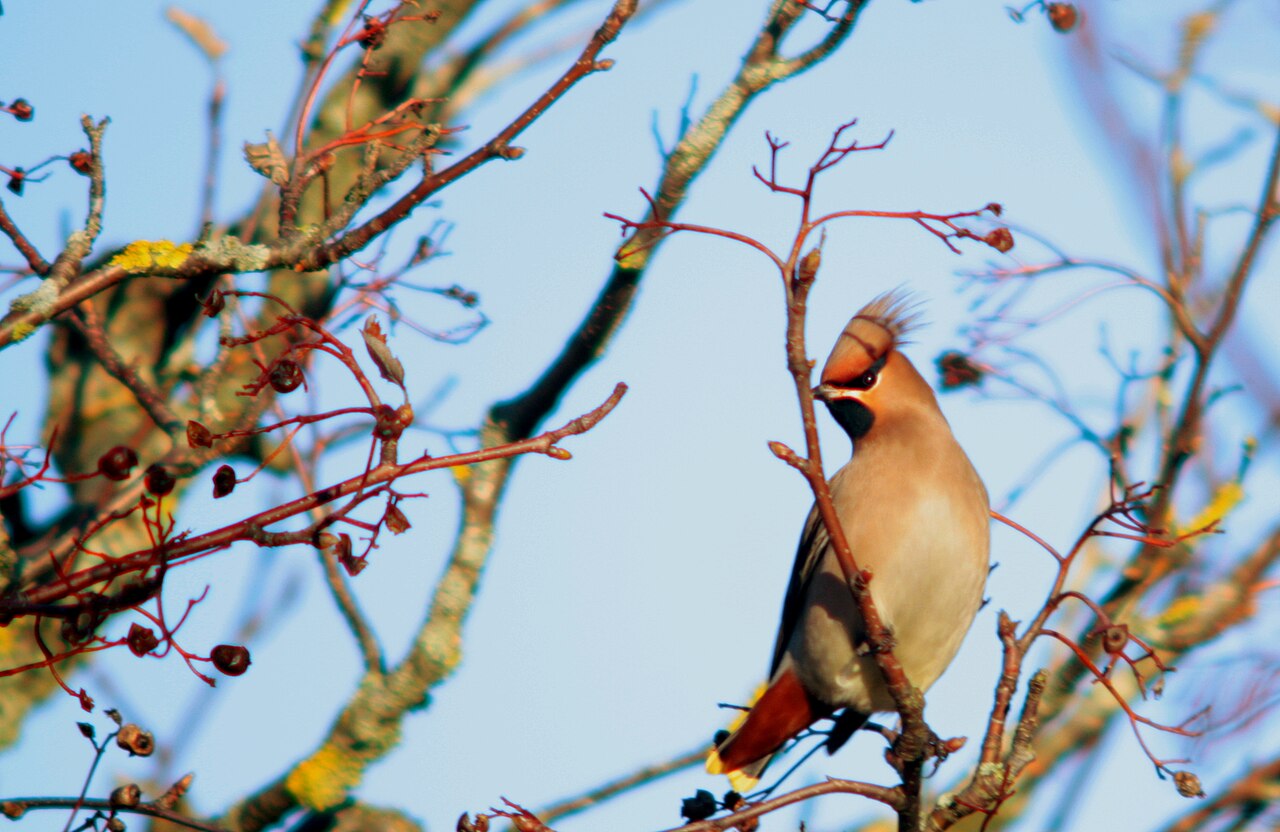
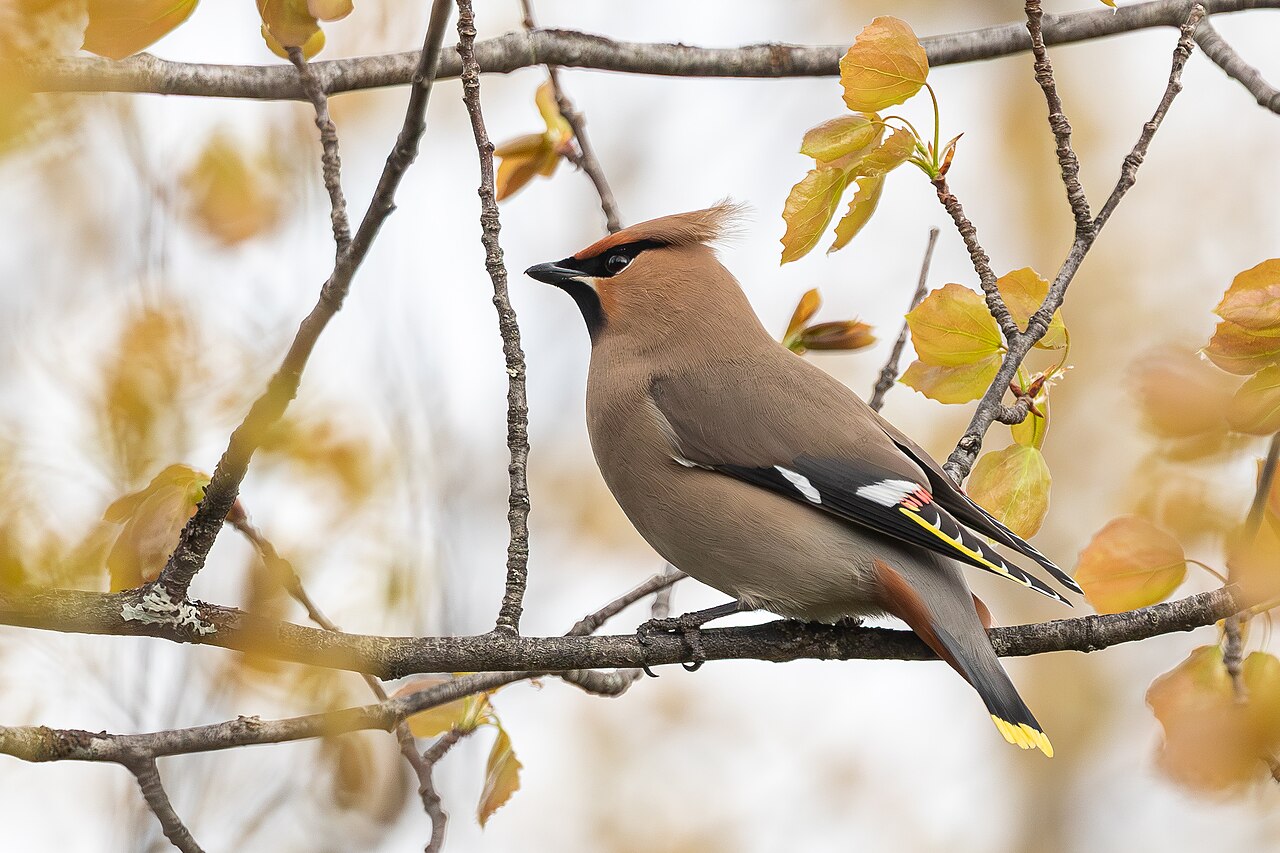
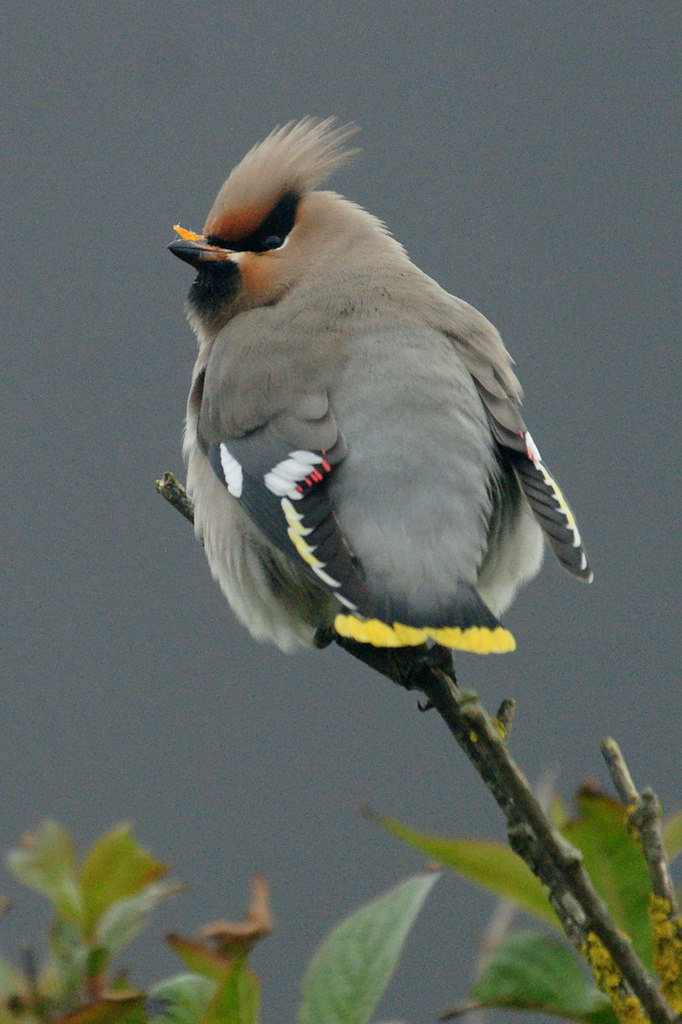
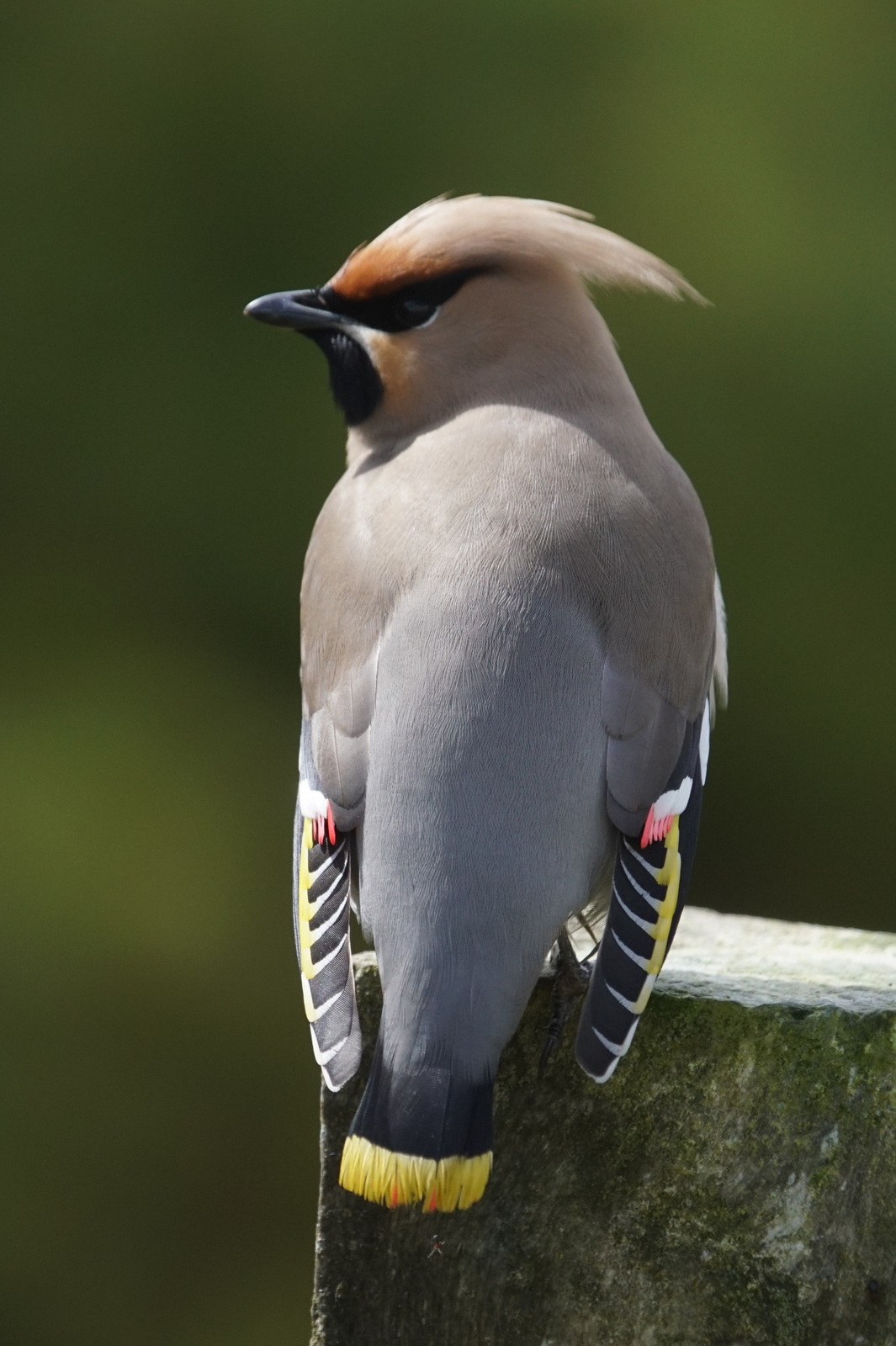
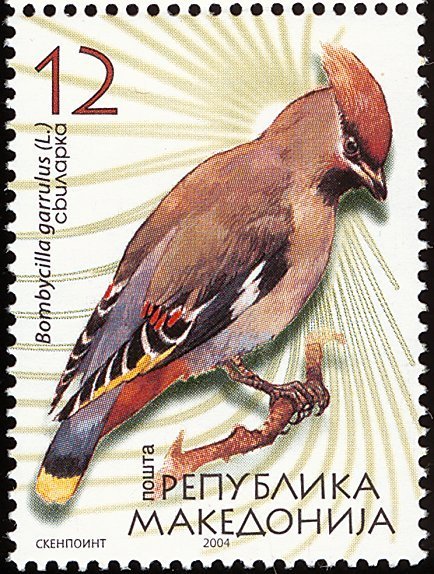
The Bohemian waxwing is a compact, starling-sized passerine, roughly 19 to 23 centimetres long with a wingspan just over 35 centimetres and an average mass of 55 grams. Its base colour is a soft buff-grey, but the head is dramatically marked: a black mask sweeps through the eye, and in males a sharply defined black throat sits below. A white streak runs behind the bill, a pale curve arcs beneath the eye, and the lower belly glows in rich chestnut. The wings are the bird's signature. Black flight feathers are interrupted by a bright yellow leading edge and small white fishhook marks, while the secondaries end in long, glossy red appendages that resemble drops of sealing wax—the very trait behind the English name. Males typically bear six to eight of these waxy tips; females carry slightly fewer and a narrower yellow band at the tail's end. Young birds show pale, low-contrast face markings and few or no red tips. In flight, the long wings, short tail, and fast, direct trajectory can evoke a common starling, but the crest and colour pattern quickly separate it from the cedar and Japanese waxwings.
Breeding & Nesting Biology
The Bohemian waxwing breeds across the northern coniferous forests of the Palearctic and North America, favouring stands that sit close to water. The pair constructs a cup-shaped nest lined with fine material, placing it in a tree or bush typically near the trunk. The female alone incubates a clutch of three to seven eggs for thirteen to fourteen days. The chicks that emerge are altricial—naked and entirely dependent on their parents for warmth and food. Both adults feed the young, initially delivering a diet dominated by insects, which gradually shifts to fruit as the chicks grow. Fledging occurs roughly fourteen to sixteen days after hatching. Once the young leave the nest, the family unit disbands, and in autumn many adults begin moving southward. The species' reliance on fruit as its primary food source is a key driver of its later-season movements, and in years when fruit crops fail, the consequences ripple through the entire population.
Winter Movements & Survival Risks
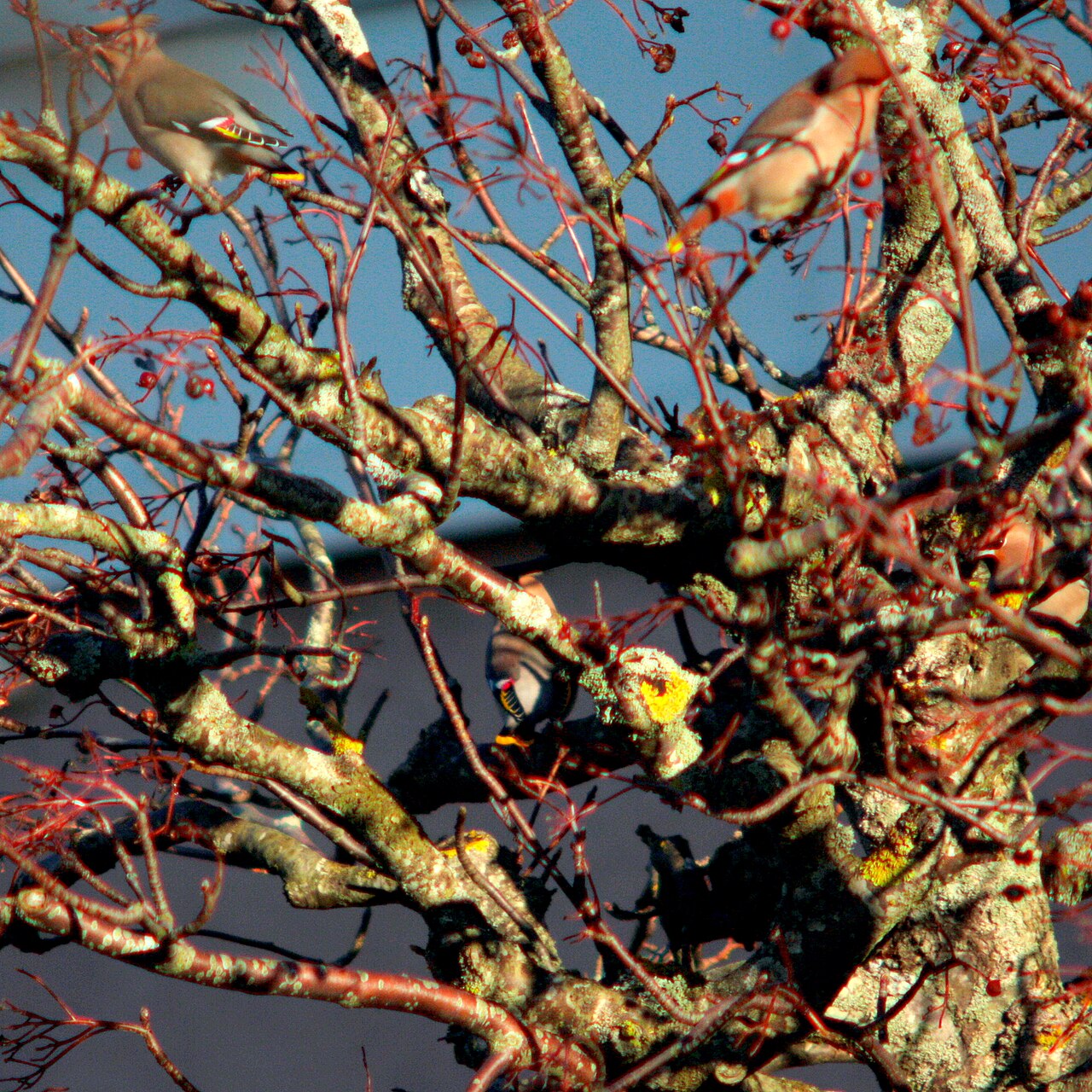
Although the Bohemian waxwing breeds across a vast northern range, many individuals abandon their nesting territories each autumn and migrate farther south. In some years, particularly when fruit availability is low, enormous flocks irrupt well beyond their usual winter range in search of the berries and fruits that make up most of their diet. In towns and gardens these birds can become remarkably tame, foraging openly for rowan berries and other soft fruit. A peculiar and sometimes fatal hazard accompanies this fruit-heavy diet: waxwings can metabolise the alcohol produced by fermenting fruit, yet they can still become intoxicated, and in extreme cases this proves lethal. Beyond the risk of alcohol poisoning, the species faces predation by birds of prey, infestation by parasites, and collisions with cars and glass windows. Despite these threats, the combination of a very large breeding area and large population numbers means the International Union for Conservation of Nature classifies the Bohemian waxwing as a species of least concern.
Taxonomy & the Story Behind the Name
Carl Linnaeus first described the species in the 1758 tenth edition of Systema Naturae, placing it under the name Lanius Garrulus. In 1808 Louis Pierre Vieillot erected the genus Bombycilla, a Latinisation of the German Seidenschwänze meaning silktails, though his etymological reasoning about the root was flawed. The specific epithet garrulus, meaning talkative, had been applied as early as 1555 by Conrad Gessner, who linked the bird to the Eurasian jay rather than to its actual vocalisations. The English compound waxwing captures the red sealing-wax tips on the wing, while Bohemian follows Gessner's usage and may allude either to the Romani peoples or to the region of Bohemia. Both spellings were first recorded in 1817. DNA analyses place the Japanese waxwing as the Bohemian's closest relative within the genus, with the cedar waxwing having diverged earlier. The red wing tips, occasionally seen in Japanese waxwings, appear to be an ancestral family trait. Outside the genus, the nearest relatives are the silky-flycatchers, the palmchat, and the grey hypocolius.
Gallery
Frequently Asked Questions
What is a Bohemian waxwing?
It is a small, crested songbird roughly the size of a starling that belongs to its own tiny family, Bombycillidae. You'll find it foraging through the boreal conifer forests of the Northern Hemisphere, from Canada and Scandinavia all the way across to Russia.
What gives the Bohemian waxwing its name?
The bright red tips on its flight feathers look like little drops of sealing wax, which is the origin of the 'waxwing' part of the name. The 'Bohemian' prefix is a historical label that has simply stuck to the species over time.
Where can I spot a Bohemian waxwing in the wild?
In summer it favors dense stands of spruce, fir, and pine across the northern Palearctic and North American boreal zones. Come winter, small flocks often drift south into deciduous woodlands, orchards, and parkland to feed on berries.
Is the Bohemian waxwing endangered or at risk?
No — the IUCN currently classifies it as Least Concern because it holds very large populations spread over an enormous breeding range. Its wide distribution and flexible foraging habits keep it well clear of any threatened category.
How big is a Bohemian waxwing compared to other familiar birds?
At roughly 19–23 cm in length with a wingspan in the low-to-mid 30s, it sits right around starling size. Its average body weight hovers near 55 grams, making it a slim, pointed-crested little passerine.
More in Holarctic birds 1-24
Spotted an error? Know more?
Reader corrections go straight into our review queue. Suggest an edit · How this site is sourced