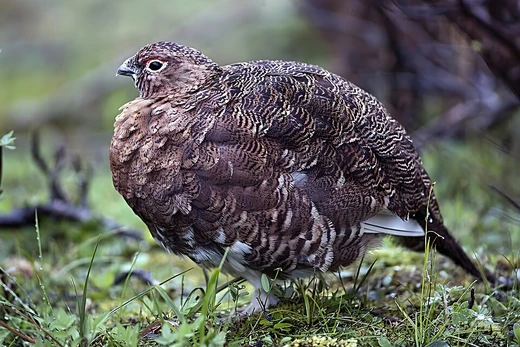
Boreal owl
A small, nocturnal owl of northern forests.

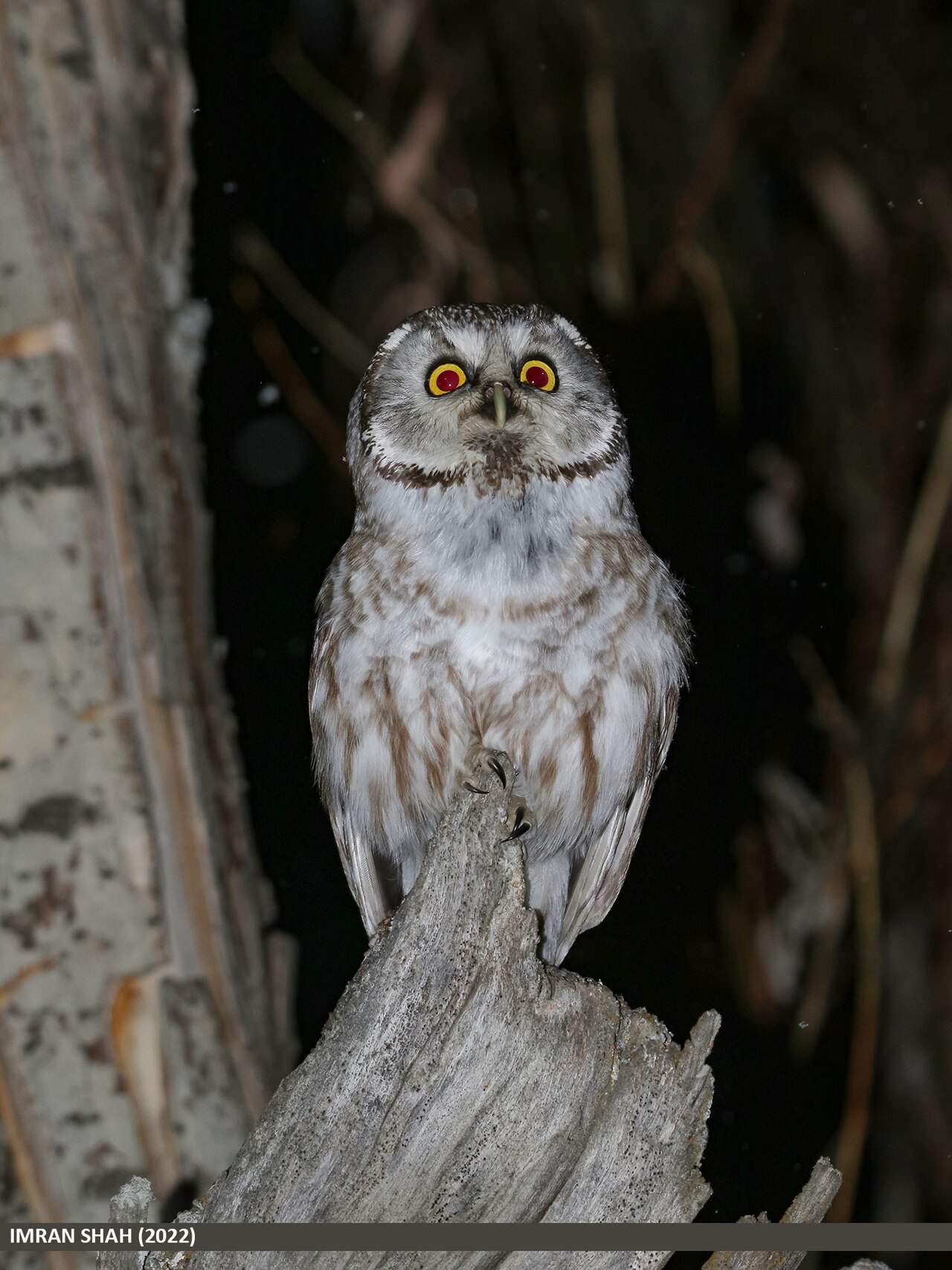
Birds of Gilgit-Baltistan from Aliabad, Hunza, Pakistan · CC BY-SA 2.0
The boreal owl (Aegolius funereus), also known as Tengmalm's owl in Europe and Asia and Richardson's owl in North America, is a small nocturnal owl in the family Strigidae. It inhabits dense boreal and subalpine forests across the Northern Hemisphere, where its elusive nature and confident behavior around humans make it a notable but rarely seen bird.
Quick Facts
- Genus
- Aegolius
- Species
- funereus
Facts from the source article.
Lore & Background
The boreal owl was formally described by Carl Linnaeus in 1758 in the tenth edition of his Systema Naturae, where he placed it in the genus Strix with the binomial name Strix funerea. It is now placed in the genus Aegolius, introduced by Johann Jakob Kaup in 1829. Seven subspecies are currently accepted, though genetic evidence supports only two: one in the Old World (A. f. funereus) and one in the New World (A. f. richardsoni). Some authors have recommended splitting these into separate species due to differences in vocal behavior and genetics, but this has not been widely followed.
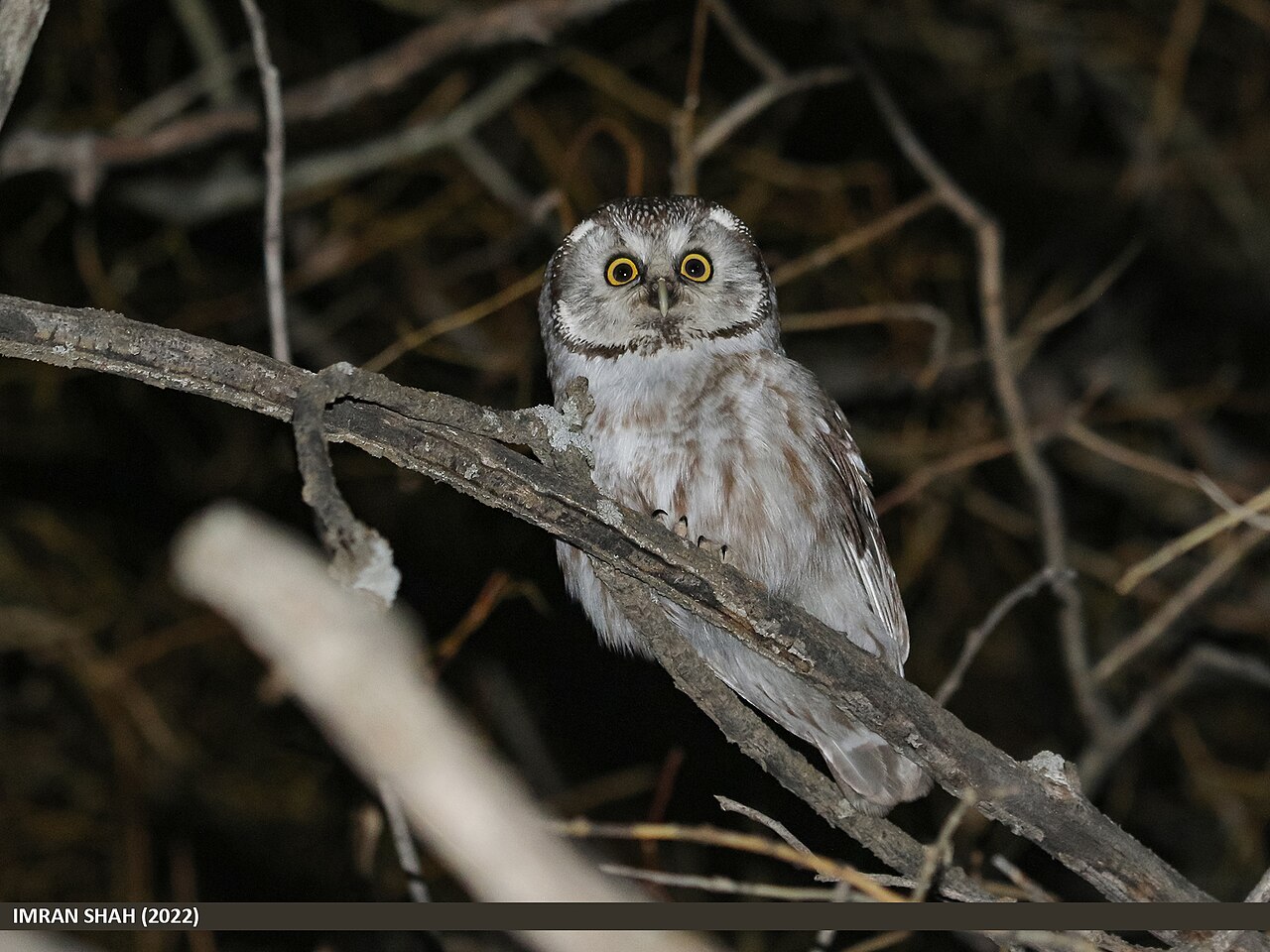
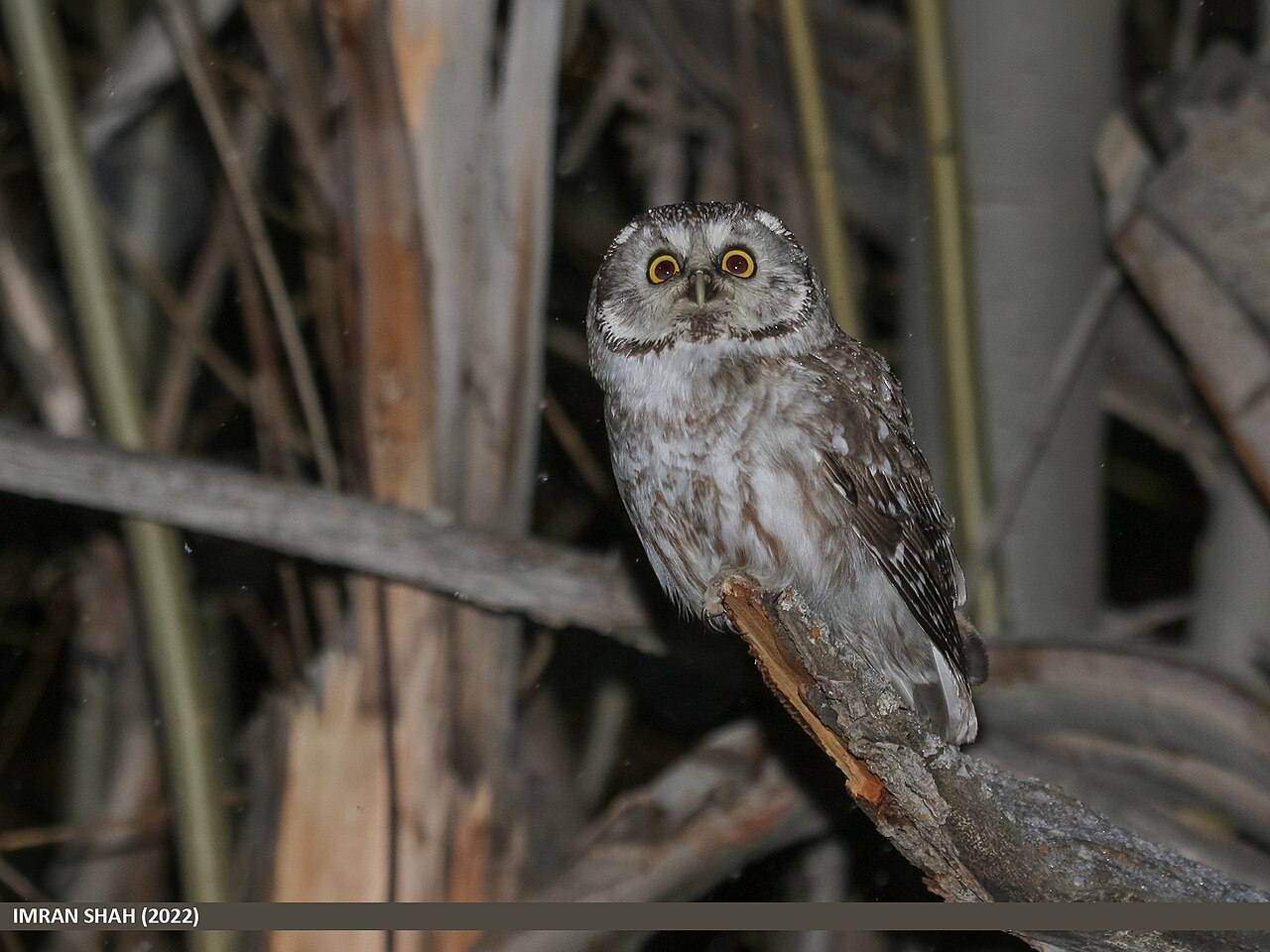
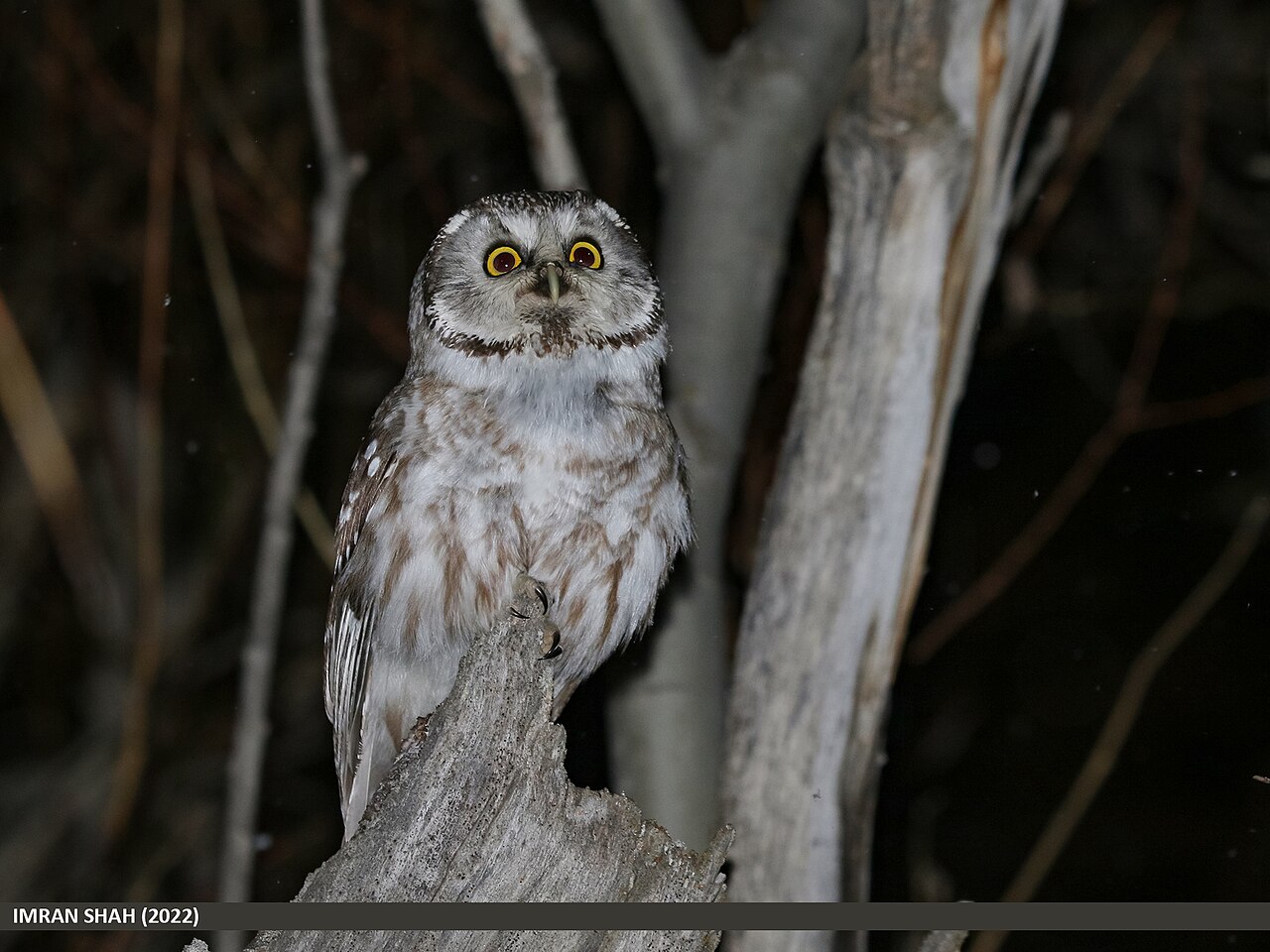
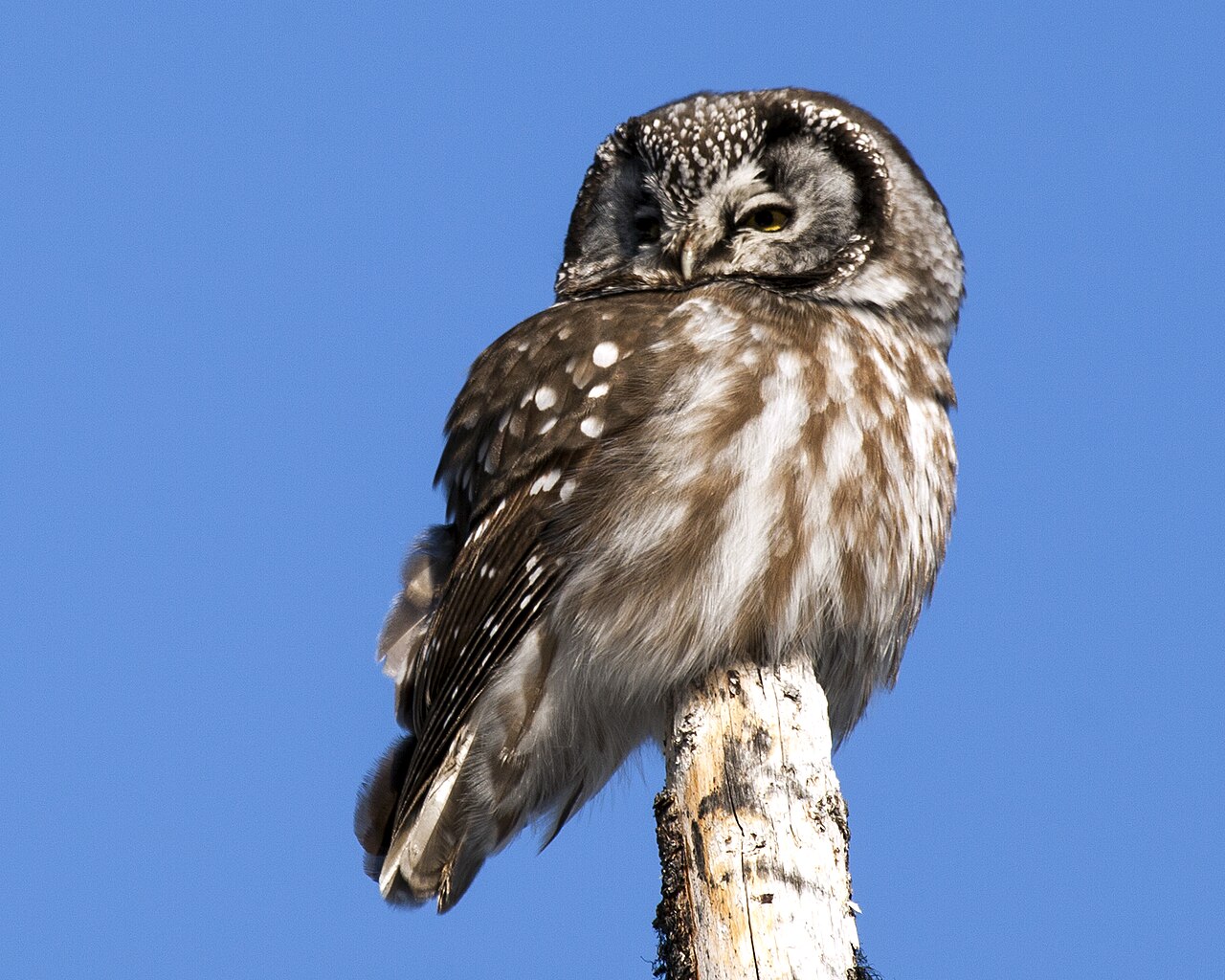
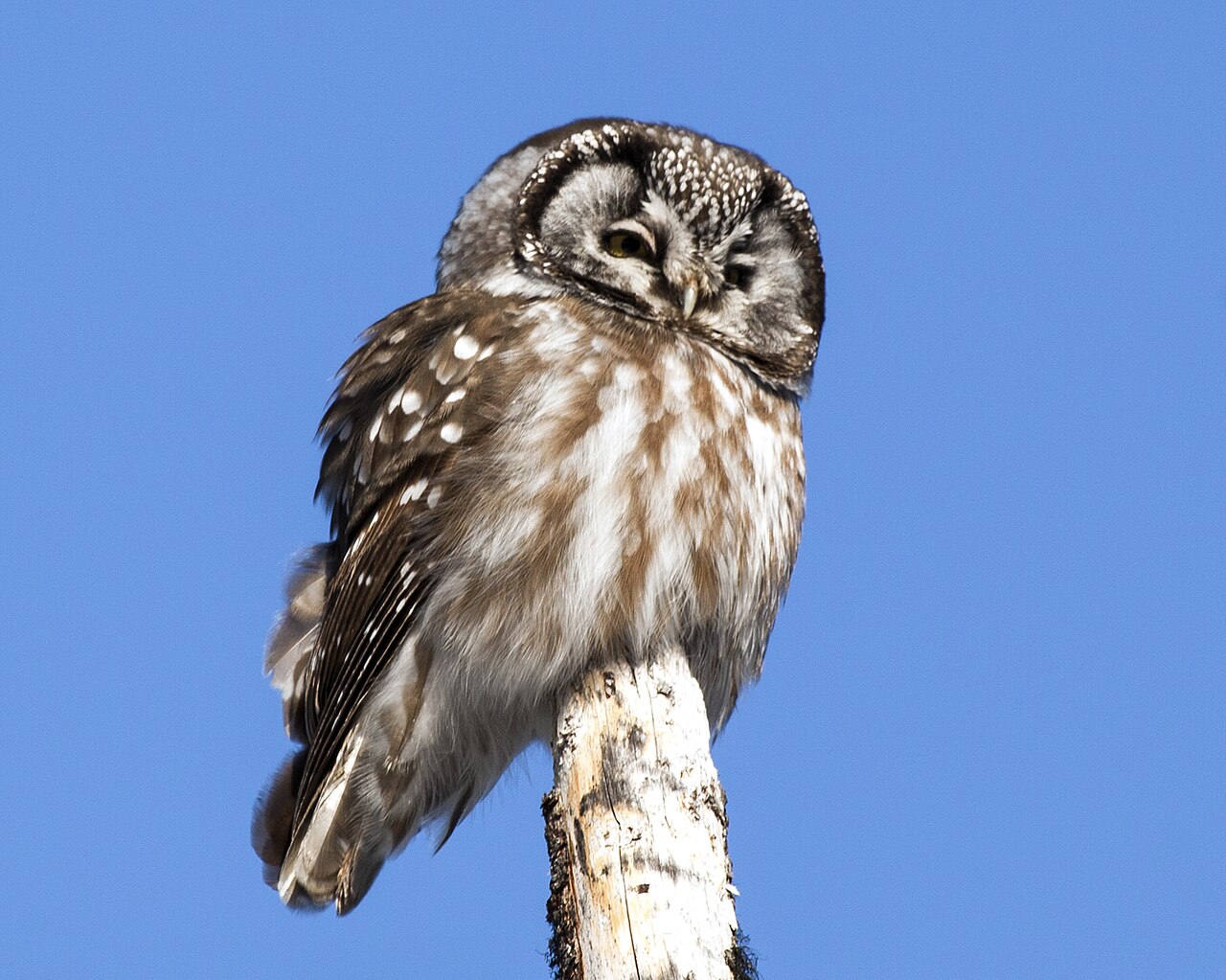
Due to its nocturnal habits and preference for inaccessible taiga forest, the boreal owl is rarely seen by humans. When encountered, it often shows little or no fear, flying off only if approached to within 3–5 metres. Its plumage is brown above with pearly-white spots, and whitish underparts with rust-colored streaks. The large head has yellow eyes and a white facial disc with a dark border, giving a 'surprised' expression. Juveniles are chocolate-brown with a dark facial disc, developing white markings as they fledge.
Boreal owls are monogamous and raise a single brood per year. They nest in tree holes, often made by woodpeckers, and readily use nest-boxes. The female incubates 3–7 glossy white eggs for about 29 days, while the male brings food. Young fledge after 28–36 days and become independent at 3 to 6 weeks outside the nest. Calls include a loud primary song to attract females and establish territory, as well as softer courtship and contact calls.
Reader's Guide
The boreal owl is significant as a representative of northern forest ecosystems, where it plays a role as a predator of small mammals and insects. Its preference for old-growth forests makes it an indicator species for habitat quality. The species' taxonomy remains under discussion, with debate over whether Old and New World populations should be considered separate species due to differences in vocal behavior and genetics. This uncertainty highlights ongoing challenges in avian systematics. The owl's fossil history, with remains dating to the Pleistocene found in a cave in southern New Mexico, and bones from a pueblo inhabited from around 1250 CE, provides evidence of its long-term presence in North America. Its nocturnal habits and confident demeanor around humans contribute to its mystique, while its asymmetrical ears enhance hunting success. The boreal owl's conservation status is generally stable, but it faces threats from habitat loss and climate change affecting its boreal forest home.
Did You Know?
- The boreal owl is known as Tengmalm's owl in Europe and Asia, after Swedish naturalist Peter Gustaf Tengmalm.
- Its skull has asymmetrical ear openings, which enhances hunting success.
- The specific epithet funereus is Latin meaning 'funereal'.
- Females are larger and heavier than males, weighing 132–215 g compared to 93–139 g.
A Name with Many Faces
The boreal owl carries one of the most layered naming histories in the owl world. Carl Linnaeus first gave it a formal scientific identity in 1758, tucking it into the catch-all genus Strix and coining the binomial Strix funerea. It was not until 1829 that the German naturalist Johann Jakob Kaup carved out a dedicated genus, Aegolius, using a synonym described by Gmelin as its type species. In common usage, the bird shifts its identity across continents: European and Asian birders call it Tengmalm's owl, honouring Swedish naturalist Peter Gustaf Tengmalm, while North Americans favour the simpler boreal owl or, less commonly, Richardson's owl after Sir John Richardson. The taxonomic picture remains unsettled. Seven subspecies are currently recognised, yet genetic evidence supports no more than two distinct lineages—one in the Old World and one in the New. Some authorities, including the Ornithological Society of the Middle East, have argued for splitting these into entirely separate species on the grounds of vocal and genetic divergence, though that proposal has not yet gained broad acceptance. In Europe and Asia the boreal owl stands alone as the sole member of its genus, while New World cousins include the northern saw-whet, unspotted saw-whet, and buff-fronted owls.
The Pearl Owl's Disguise
At first glance, the boreal owl looks like a small, round-headed creature dressed for a winter forest. Its upperparts are a warm brown scattered with conspicuous pearly-white spots so dense that Danes gave it the nickname perleugle, meaning "pearl owl." Below, the plumage turns cream-white, streaked with russet-brown lines that break up its outline against snow-dusted branches. The face is perhaps the most memorable feature: a dull white disc ringed by a dark border, topped with white "eyebrows" that give the bird a perpetually startled, wide-eyed expression. Its eyes are yellow, set in an olive-brown crown dotted with tiny white droplets and larger central spots. The beak is a pale yellow, a useful field mark separating it from the darker-billed northern saw-whet owl. In flight, the owl moves in a straight, remarkably quiet line. The primaries carry up to five rows of white spots, and the tail displays three distinct rows; unlike other owls, these spots stay clearly separated even when the tail feathers are folded tight. Beneath the feathers, the ear openings are asymmetrical across multiple bones, a structural quirk that sharpens hunting precision. Females are noticeably larger and heavier, reaching up to 28 cm in length and 215 g in weight, while males top out at 25 cm and 139 g.
A Language of the Dark
Studying the vocal repertoire of a nocturnal, forest-dwelling owl that is rarely encountered presents a genuine challenge, yet researchers in North America have identified at least eight distinct call types underpinning communication, courtship, and territorial defence. The most conspicuous is the Primary Song, a loud trill delivered by males to draw females and stake out territory. A softer, more drawn-out Prolonged Song follows during the courtship-to-incubation window, functioning as a bond-strengthening melody between mates. When a male carries prey to a waiting female or chick, a gentle Delivery Call signals the transfer. The Screech, by contrast, is a loud contact note produced either in flight or from a perch. Females answer their partners with a soft Peeping Call throughout the breeding season, while a single-note Weak Call rounds out the catalogue. Even the very young are vocal: from roughly one week of age, chicks emit a harsh peep or chirp that gradually softens once they fledge. The full significance of each call type remains an active area of research, particularly because the owl's inaccessible taiga habitat and strictly nocturnal schedule make systematic field recording extraordinarily difficult.
Ghost of the Taiga
The boreal owl is, in the truest sense, a creature of the deep boreal forest. Its preference for dense, inaccessible taiga combined with a strictly nocturnal lifestyle means most humans will never see one in the wild. Yet when a sighting does occur, the bird's response is striking: rather than fleeing at the first sign of a person, it often sits with remarkable confidence, showing little or no fear. It will typically launch into flight only when a human closes to within three or five metres. This quiet, unassuming presence in the northern woodlands has left a long physical trace as well. Pleistocene-era remains have been recovered from a cave in southern New Mexico, and owl bones were found in a pueblo in north-central New Mexico continuously inhabited from roughly 1250 CE to the present, hinting at a deep, persistent relationship between this small owl and the landscapes it occupies. The moulting cycle is equally deliberate: a post-juvenile moult at about two months refreshes the head, body, and wing coverts, while later moults remain partial, replacing only a portion of the flight feathers in a fixed annual sequence. In Idaho, males begin moulting in June and continue through October, while females start a month earlier in May.
Gallery
Frequently Asked Questions
What is the Boreal owl?
The Boreal owl (Aegolius funereus) is a small nocturnal owl in the family Strigidae, found across the Northern Hemisphere's northern forests. It carries different common names by region, including Tengmalm's owl in Europe and Asia and Richardson's owl in North America.
Where does the Boreal owl live?
This species favors dense boreal, subalpine, and mixed old-growth forests throughout the Northern Hemisphere. Its preference for thick, mature woodland makes it a true specialist of northern forest ecosystems.
How big is a Boreal owl?
Adults measure roughly 21 to 28 cm in body length with a wingspan of about 55 to 62 cm. They weigh between 93 and 215 grams, placing them among the smaller members of the Strigidae family.
Why is the Boreal owl so hard to spot?
Despite being surprisingly bold around people once it does appear, the Boreal owl is a secretive, nocturnal bird that melts into dense forest canopies. Its small size, mottled plumage, and reliance on thick old-growth stands all work together to keep it out of view for most of the day.
Why does the Boreal owl have so many common names?
The bird is called Tengmalm's owl in Europe and Asia and Richardson's owl in North America, reflecting the different naturalists who first described it in each region. All three names refer to the same species, Aegolius funereus, and the variation is purely regional rather than taxonomic.
More in Holarctic birds 1-24
Spotted an error? Know more?
Reader corrections go straight into our review queue. Suggest an edit · How this site is sourced