Caspian tern
World's largest tern, with a scattered global distribution.

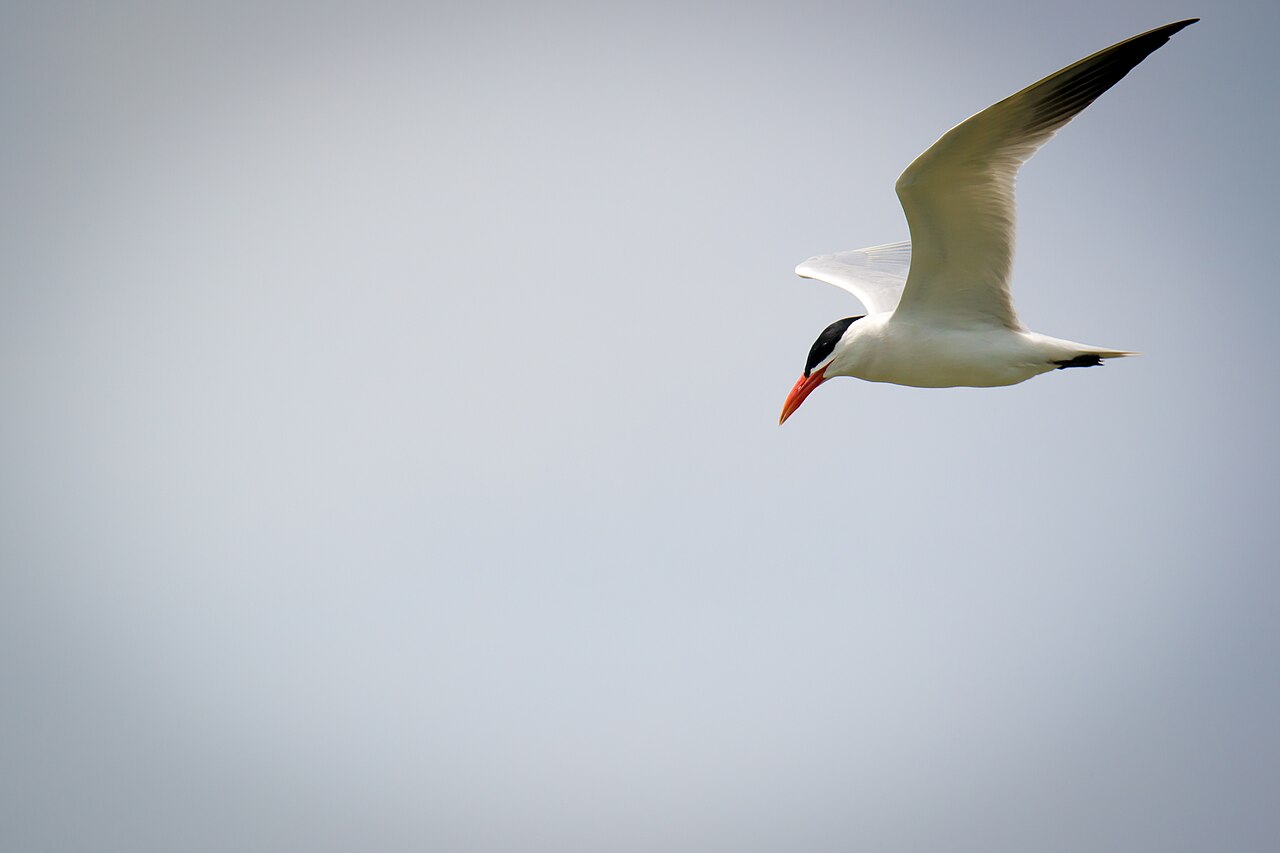
Andrew C · CC BY 2.0
The Caspian tern (Hydroprogne caspia) holds the title of the largest tern species on Earth, found across a wide but patchy global range. Though it lives in many regions, it is the sole member of its genus and has no recognized subspecies. Its scientific name combines Ancient Greek for "water" and Latin for "swallow," while the species name, like its common name, points to the Caspian Sea. This bird is also listed under the Agreement on the Conservation of African-Eurasian Migratory Waterbirds.
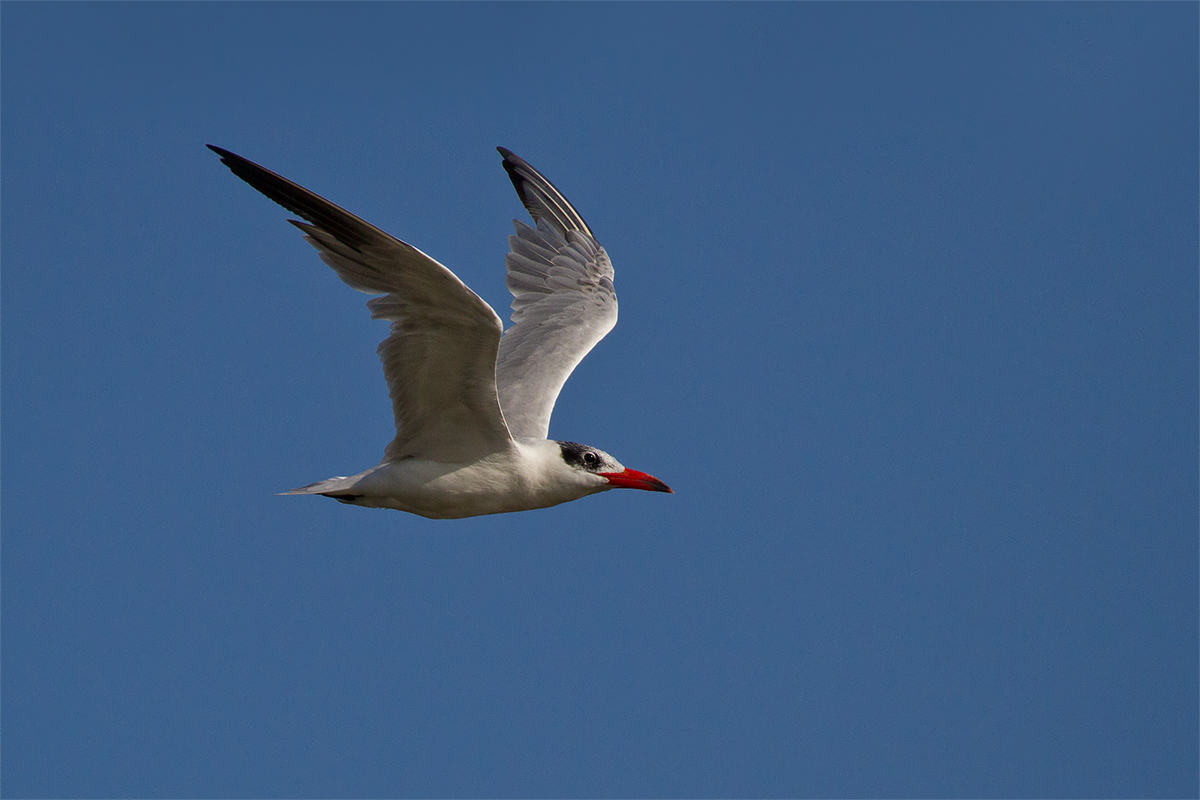
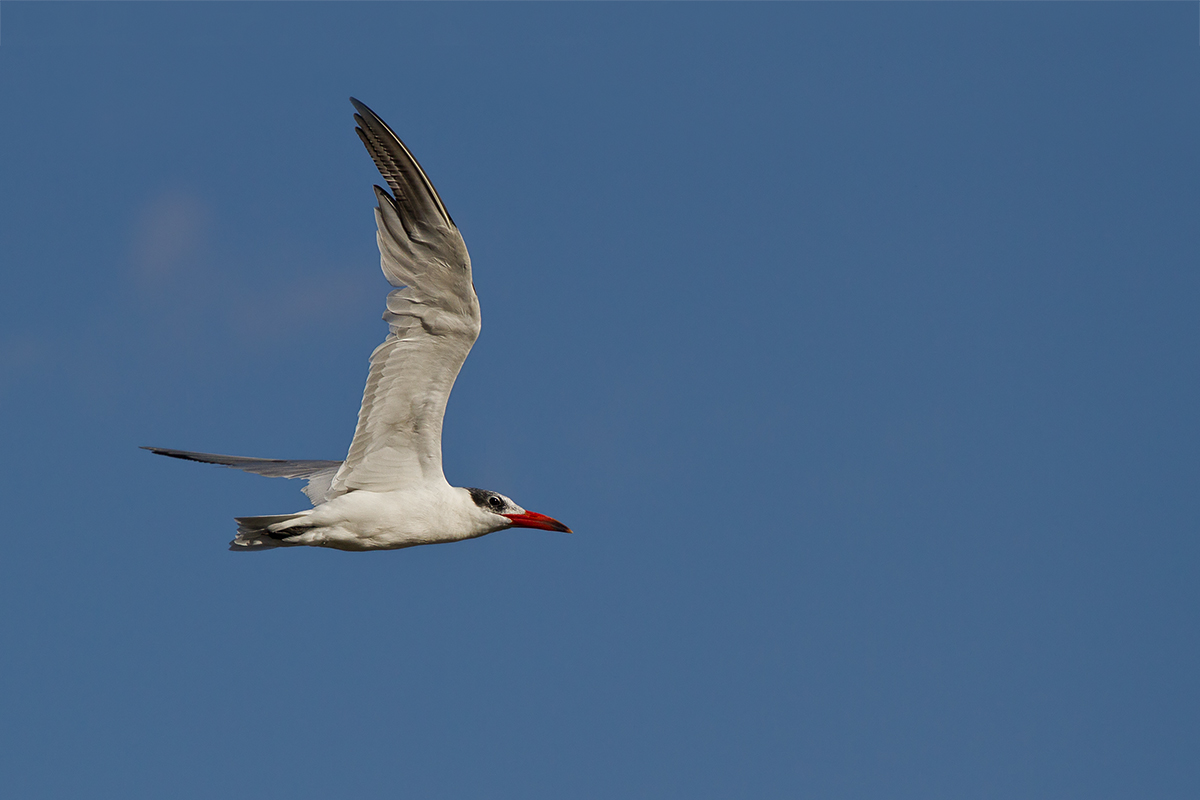
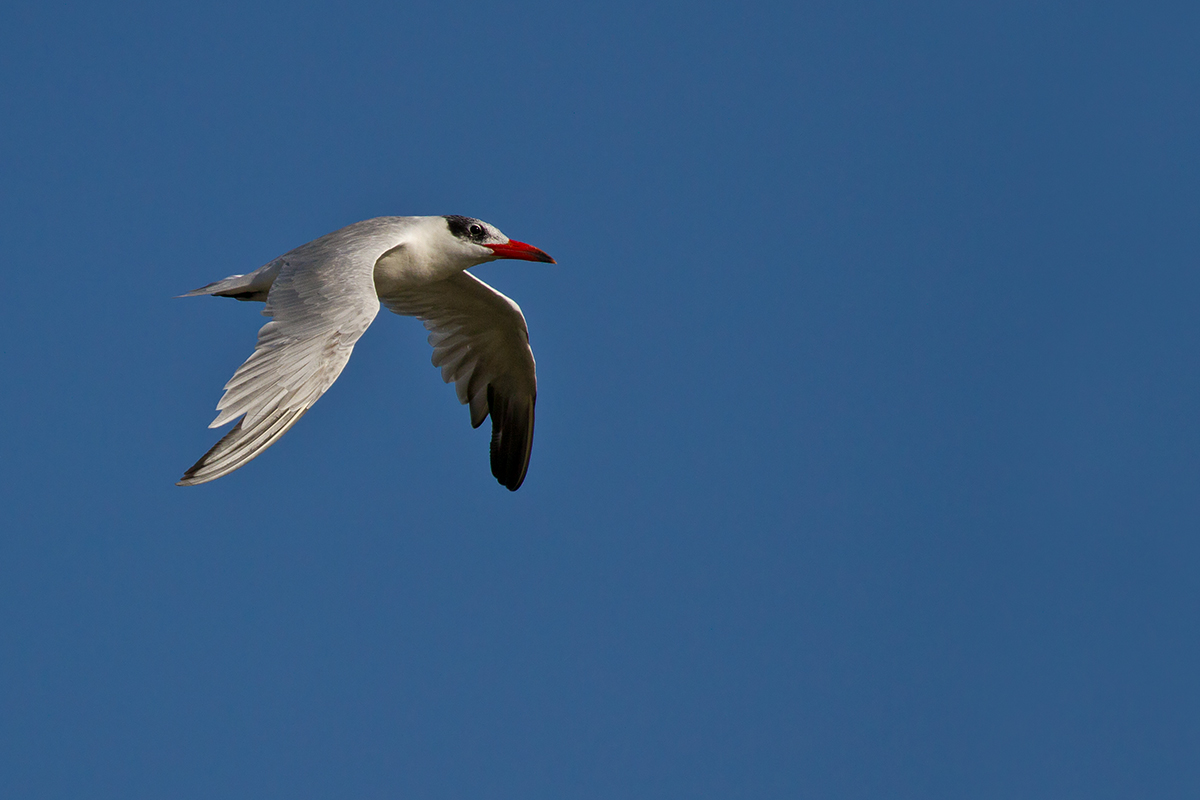
In terms of size, it measures 48–60 cm long, with a wingspan of 127–145 cm and a weight between 530 and 782 grams. Adults sport black legs and a long, thick bill that is red-orange with a small black tip. Their head is white with a black cap, while the neck, belly, and tail remain white. The upper wings and back appear pale grey; underwings are pale except for dark primary feathers. In flight, the tail looks less forked than other terns, and the wingtips show black on the underside. Unlike many terns, the black cap persists through winter, though some white streaking appears on the forehead. Their call resembles a loud, heron-like croak.
Breeding grounds include large lakes and ocean coasts across North America (including the Great Lakes), and locally in Europe (mainly near the Baltic and Black Seas), Asia, Africa, and Australasia (Australia and New Zealand). North American birds migrate to southern coasts, the West Indies, and northernmost South America. European and Asian populations winter in the Old World tropics, while African and Australasian birds stay put or move only short distances. In 2016, a pair bred successfully in Cape Krusenstern National Monument in northwestern Alaska, 600 km farther north than any previous North American record—part of a broader northward shift in Alaskan species linked to global warming. The global population sits at roughly 50,000 pairs; most regions show stable numbers, but the Baltic Sea population (1400–1475 pairs in the early 1990s) is declining and raises conservation concerns.
For food, Caspian terns mainly eat fish, which they catch by hovering high over water and plunging down. They also occasionally take large insects, the young and eggs of other birds, and rodents. They may travel up to 60 km from their breeding colony to fish, often on freshwater lakes as well as at sea.
Breeding occurs in spring and summer.
Quick Facts
- Genus
- Hydroprogne
- Species
- caspia
Facts from the source article.
Lore & Background
The Caspian tern is the largest tern species, measuring 48–60 cm in length with a wingspan of 127–145 cm. Adults have black legs, a long thick red-orange bill with a small black tip, a white head with a black cap, and pale grey upper wings. Unlike many other terns, it retains its black cap in winter, though with some white streaking on the forehead. Its call is a loud heron-like croak.
Its breeding habitat includes large lakes and ocean coasts in North America, Europe, Asia, Africa, and Australasia. North American birds migrate to southern coasts, the West Indies, and northernmost South America, while European and Asian birds winter in the Old World tropics. African and Australasian populations are resident or disperse over short distances. In 2016, a pair bred successfully in northwestern Alaska, 600 km further north than any previous North American record, a trend ascribed to global warming.
The Caspian tern feeds mainly on fish, which it catches by hovering high over water and plunging. It also occasionally eats large insects, the young and eggs of other birds, and rodents. It may fly up to 60 km from its breeding colony to fish. Breeding occurs in spring and summer, with one to three pale blue-green eggs laid on the ground among gravel and sand. Incubation lasts 26–28 days, and fledging occurs after 35–45 days.
Reader's Guide
The Caspian tern holds significance as the world's largest tern and as a monotypic genus with no accepted subspecies, despite its broad range. Its distribution across North America, Europe, Asia, Africa, and Australasia makes it a species of interest for studying avian biogeography and migration patterns. The 2016 northward breeding record in Alaska, attributed to global warming, highlights its role as an indicator of climate-driven range shifts. The global population is about 50,000 pairs, with most regions stable, but the Baltic Sea population is declining and of conservation concern. Its inclusion in the Agreement on the Conservation of African-Eurasian Migratory Waterbirds underscores its importance for international conservation efforts. The species' feeding behavior—diving for fish from heights and traveling up to 60 km—demonstrates its adaptability. Its breeding biology, including variable chick plumage that aids parental recognition, adds to its ecological interest. The Caspian tern remains a key subject for ornithological research and conservation monitoring.
Physical Stature and Field Identification
The Caspian tern claims the title of the largest tern on Earth, a distinction visible in every measurement: adults range from 48 to 60 centimeters in length, spread wings of 127 to 145 centimeters, and weigh between 530 and 782 grams. Its scientific name blends the Ancient Greek root for water with the Latin word for swallow, while the common name and specific epithet both trace back to the Caspian Sea. As the sole species in its genus with no accepted subspecies, every individual represents a single, continuous lineage.
In the field, the bird is striking. A long, thick, red-orange bill with a small black tip anchors a white head topped by a bold black cap. The neck, belly, and tail are clean white, while the upper wings and back are a soft pale grey. In flight, the tail is less deeply forked than that of most other terns, and the underside of the wingtips shows black against pale underwing feathers. Even in winter, the black cap remains—unlike many tern relatives—though the forehead picks up a few white streaks. Its call, a loud heron-like croak, is as memorable as its silhouette.
A Subcosmopolitan Range and a Shifting Arctic Frontier
Despite its name, the Caspian tern is far from confined to a single sea. Its breeding grounds span large lakes and ocean coasts across North America—including the Great Lakes—parts of Europe centered on the Baltic and Black Seas, Asia, Africa, and Australasia. The species is subcosmopolitan yet scattered, with populations on different continents following very different seasonal patterns. North American birds migrate south to coastal regions, the West Indies, and northernmost South America, while European and Asian birds head for the Old World tropics. African and Australasian populations tend to remain resident or disperse only short distances.
In 2016, a pair successfully bred in the Cape Krusenstern National Monument in northwestern Alaska, pushing the known North American breeding range roughly 600 kilometers farther north than any previous record. Ornithologists link this shift to a broader pattern of species moving poleward in Alaska, a trend attributed to global warming. The global population stands at approximately 50,000 breeding pairs. Most regional numbers are stable, but the Baltic Sea population—around 1,400 to 1,475 pairs in the early 1990s—is in decline and draws conservation attention under the Agreement on the Conservation of African-Eurasian Migratory Waterbirds.
Foraging Ecology and the Art of the Plunge
The Caspian tern is a dedicated piscivore, and its hunting technique is a spectacle. It hovers high above the water surface, scanning for movement below, then plunges vertically into the lake or sea to seize a fish. This aerial-dive strategy is the cornerstone of its diet, though the bird is not strictly limited to fish. On occasion it takes large insects, the young and eggs of other birds, and even small rodents.
Range is a defining feature of its foraging. A tern may travel up to 60 kilometers from its breeding colony to reach productive feeding waters, and it fishes on freshwater lakes as readily as it does at sea. This flexibility in habitat—freshwater and marine alike—gives the species a foraging versatility that complements its broad geographic spread. The long, thick, red-orange bill is well suited to gripping slippery prey, and the capacity to sustain long flights to distant feeding grounds makes the Caspian tern a remarkably versatile hunter across both inland and coastal waters.
Colony Life, Chicks, and the Rhythm of Breeding
Breeding season for the Caspian tern falls in spring and summer, when pairs lay one to three eggs of a pale blue-green hue heavily marked with brown spots. The nest is a simple ground structure, built among gravel and sand or occasionally on a bed of vegetation. Birds may nest in colonies of their own kind or join mixed colonies that include other tern species and gulls, a social arrangement that places them in close proximity to a variety of waterbird neighbors.
Incubation lasts 26 to 28 days before the chicks emerge. One of the most fascinating details of chick development is the wide variation in plumage: downy young range from pale creamy to darker grey-brown. This diversity is not random—it serves a practical purpose, helping each adult bird single out its own offspring when returning to a crowded colony after a foraging trip. The chicks remain on the nest for 35 to 45 days before fledging, a period during which the parent's ability to recognize its own young among a mosaic of similar-looking chicks is critical to survival.
Gallery


Frequently Asked Questions
Who is Caspian tern?
The Caspian tern (Hydroprogne caspia) is the largest tern species alive today and the sole surviving member of its genus. It occupies a broad yet patchy range spanning several continents, with no recognized subspecies.
What are Caspian tern's powers/role?
At 48–60 cm in length and a wingspan up to 145 cm, it dominates coastal and inland waters as a top aerial fish-hunter. With roughly 50,000 breeding pairs worldwide, it exerts a noticeable ecological footprint wherever it forages.
Why is Caspian tern important?
As the only living representative of the genus Hydroprogne, it fills a unique taxonomic slot among all terns. Its dependence on healthy wetlands across the Holarctic and beyond also makes it a practical indicator species for migratory-waterbird policy.
What is behind Caspian tern's name?
The genus name fuses Ancient Greek for 'water' with Latin for 'swallow,' while both the species epithet and the common name point to the Caspian Sea region where the bird was first formally described. The naming thus captures its aquatic lifestyle and its historical link to that particular sea.
More in Holarctic birds 1-24
Spotted an error? Know more?
Reader corrections go straight into our review queue. Suggest an edit · How this site is sourced