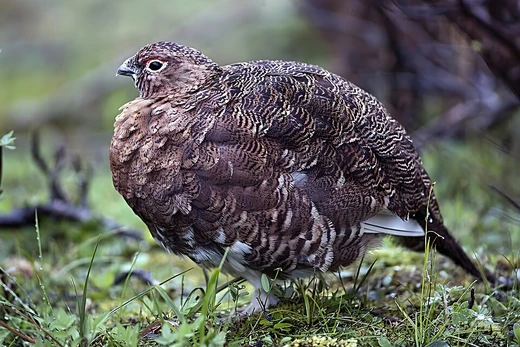
Common goldeneye
A diving duck with golden eyes and a bullheaded name.

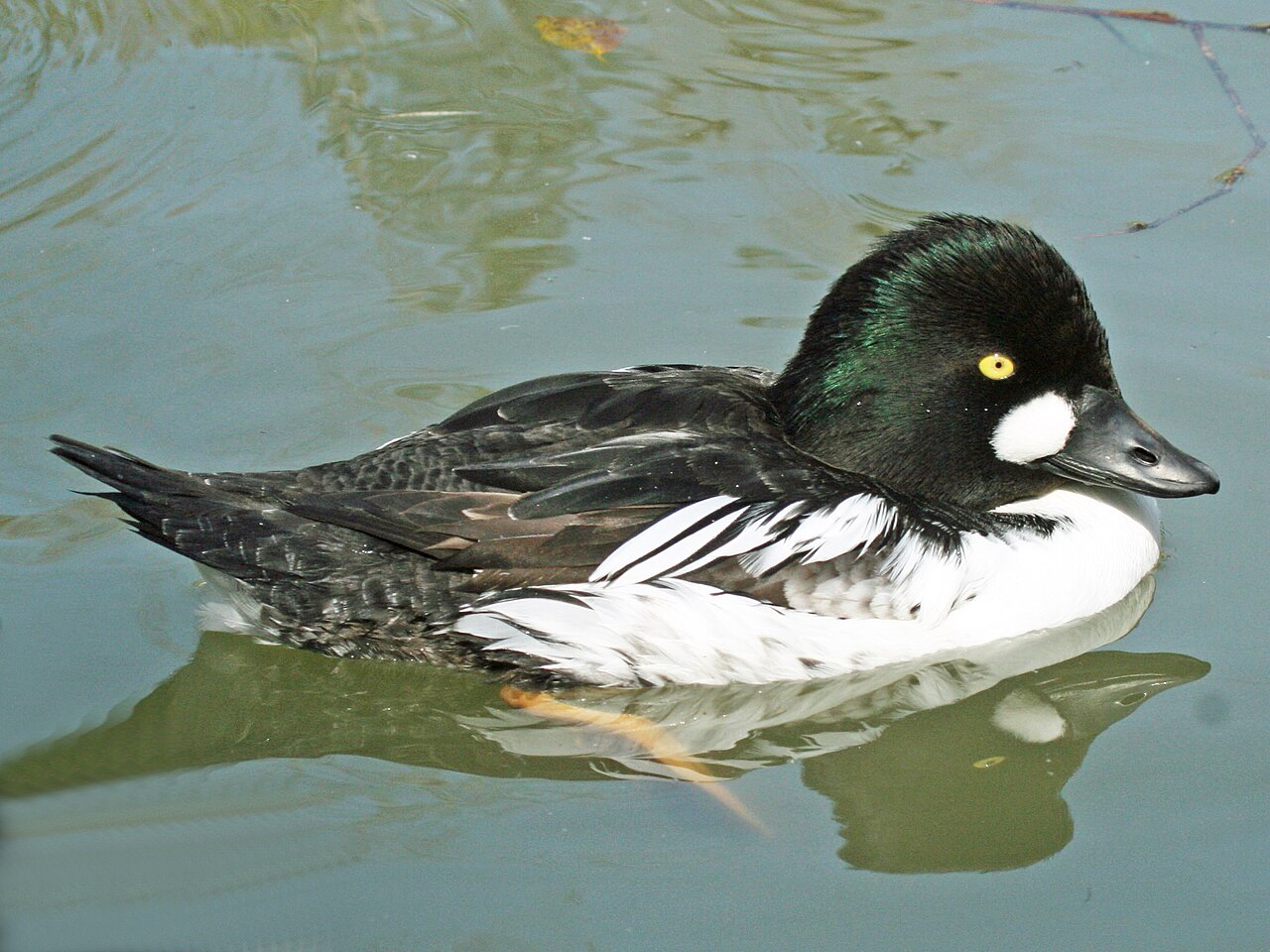
Dick Daniels ( http://theworldbirds.org/ ) · CC BY-SA 3.0
The common goldeneye (Bucephala clangula) is a medium-sized sea duck found across the taiga of North America and Eurasia. It is named for its golden-yellow eyes and is known for its aggressive, territorial behavior and elaborate courtship displays. The species was formally described by Carl Linnaeus in 1758 and is now placed in the genus Bucephala, which also includes the similar Barrow's goldeneye.
Quick Facts
- Genus
- Bucephala
- Species
- clangula
Facts from the source article.
Lore & Background
The common goldeneye was formally described in 1758 by Carl Linnaeus in the tenth edition of his Systema Naturae under the binomial name Anas clangula. Linnaeus specified the type location as Europe but later restricted it to Sweden. The genus name Bucephala, introduced by Spencer Baird in 1858, derives from Ancient Greek boukephalos meaning 'bullheaded,' a reference to the bulbous head shape of the goldeneye. The species name clangula comes from Latin clangere ('to resound'). Two subspecies are recognized: the nominate B. c. clangula, ranging from Scotland and Scandinavia to Sakhalin and Kamchatka, and B. c. americana, found from western Alaska to Labrador and south through the northern United States.
These ducks breed in the taiga, nesting in cavities in large trees, including those made by broken limbs or large woodpeckers such as pileated woodpeckers or black woodpeckers. They are migratory, wintering in protected coastal waters or open inland waters at temperate latitudes. The female incubates the eggs alone for 28 to 32 days, while the male abandons her about one to two weeks into incubation. Young remain in the nest for 24–36 hours and are capable of flight at 55–65 days of age. Brood parasitism is common among goldeneyes, and young may be killed by other goldeneye mothers.
Reader's Guide
The common goldeneye is a significant species in both ecological and human contexts. As a diving duck, it forages underwater, with a diet that shifts seasonally: insects dominate during nesting, while crustaceans are primary during migration and winter. Its predators include hawks, owls, eagles, bears, weasels, mink, raccoons, and even northern flickers and American red squirrels. The species is covered by the Agreement on the Conservation of African-Eurasian Migratory Waterbirds (AEWA). In North America during the 1970s, about 188,300 common goldeneyes were killed annually by duck hunters, representing less than 4% of waterfowl killed in Canada and less than 1% in the US. Breeding and winter habitats have been degraded by clearance and pollution, though the species in North America is known to derive short-term benefits from lake acidification. Its adaptability to nest boxes and its widespread range make it a familiar duck in boreal and temperate regions, and its distinctive appearance and behavior have made it a subject of study and observation.
Did You Know?
- The common goldeneye is named for its golden-yellow eyes.
- Its genus name Bucephala comes from Ancient Greek meaning 'bullheaded,' referring to the goldeneye's head shape.
- The female does all the incubating and is abandoned by the male about 1 to 2 weeks into incubation.
- Brood parasitism is common with other common goldeneyes and occurs less frequently with other duck species.
Taxonomy & the Story Behind the Name
The common goldeneye first entered the scientific record in 1758, when Carl Linnaeus placed it in the tenth edition of his Systema Naturae under the name Anas clangula, designating Europe as its type locality before narrowing that to Sweden three years later. It would not be until 1858 that the American naturalist Spencer Baird carved out a dedicated genus, Bucephala, to house this species and its close relatives. The genus name draws on the Ancient Greek boukephalos, literally "bullheaded," a nod to the exaggerated head shape seen in the bufflehead, while the species epithet clangula comes from the Latin verb for "to resound," likely an allusion to the bird's vocalizations. Today the goldeneye sits alongside the Barrow's goldeneye and the bufflehead within this small three-species genus. Two subspecies are formally recognized: the nominate B. c. clangula, which breeds across subarctic Europe and Asia from Scotland to the Kamchatka Peninsula, and B. c. americana, which ranges from the western Alaskan mainland to Labrador and New Brunswick, extending south through the northern United States.
A Study in Contrasting Plumage
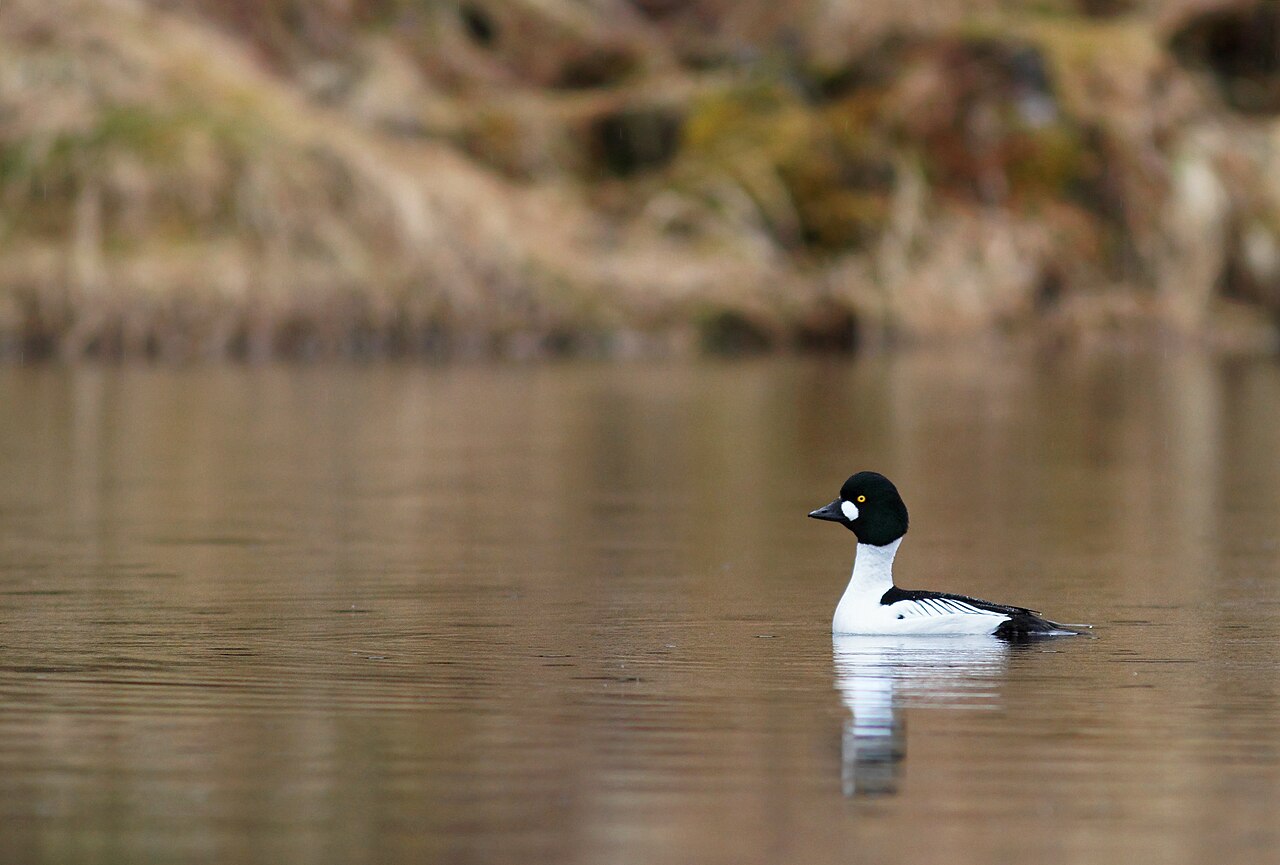
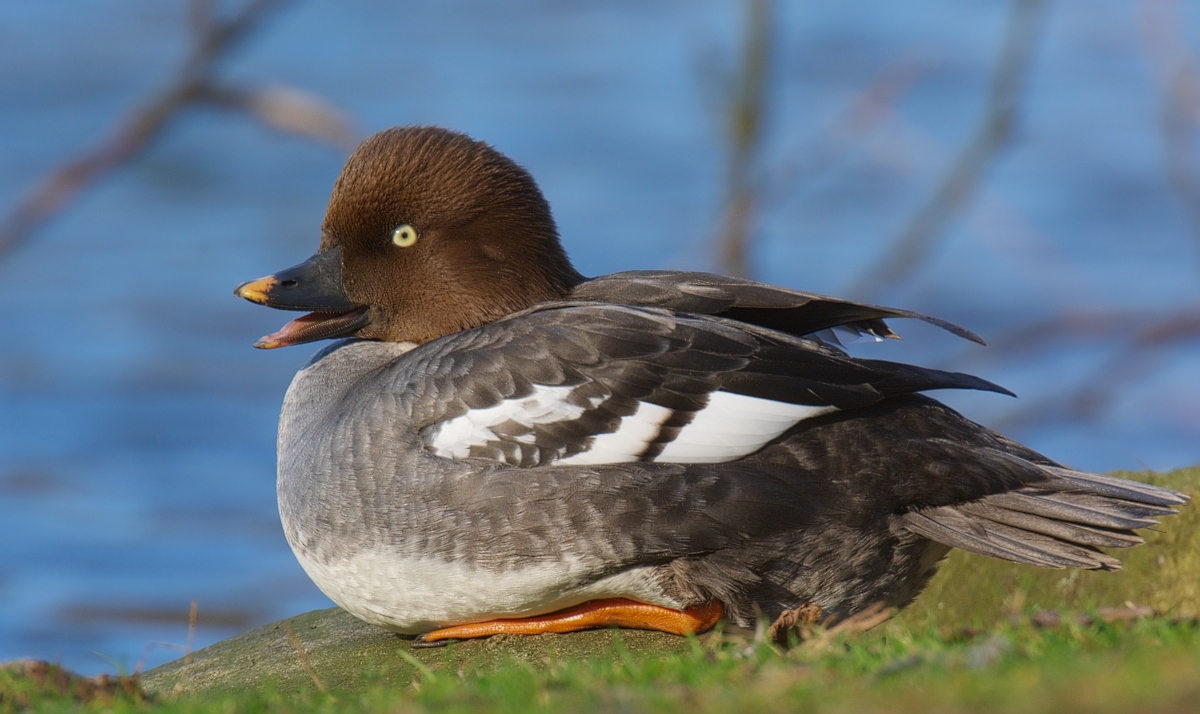
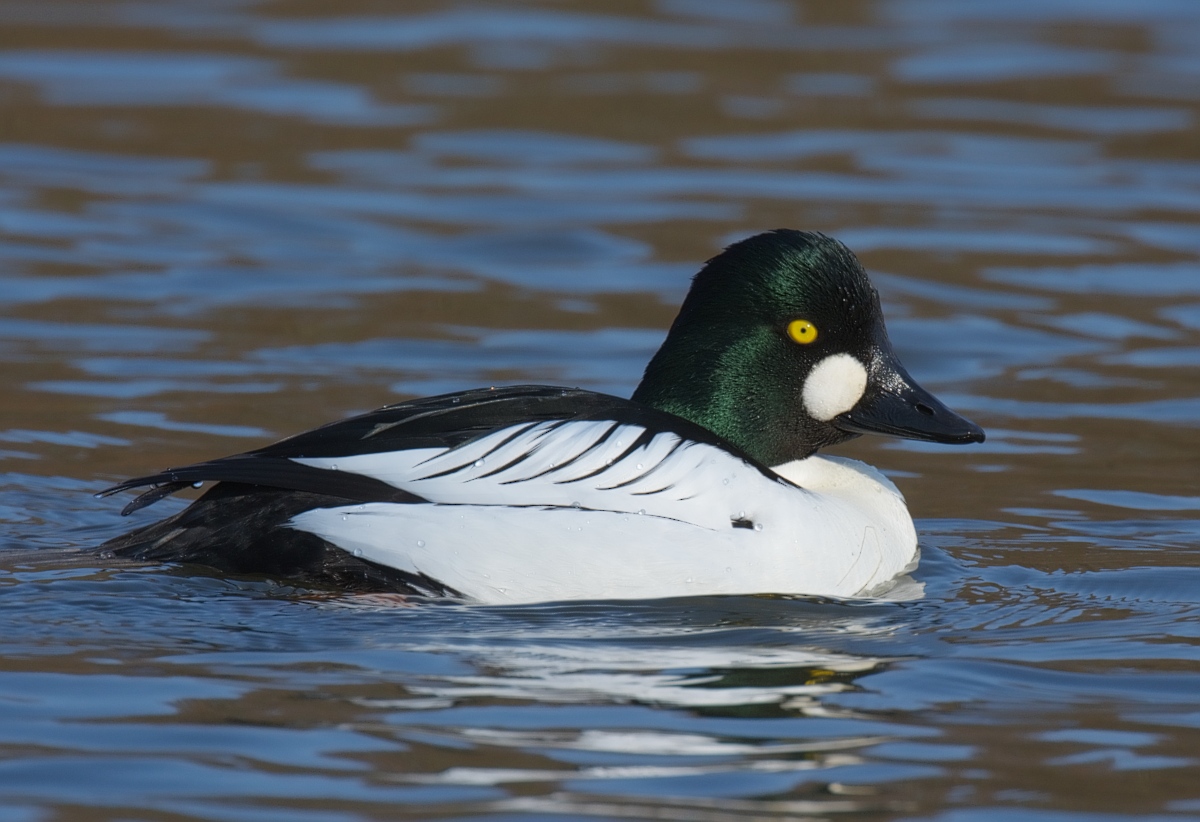
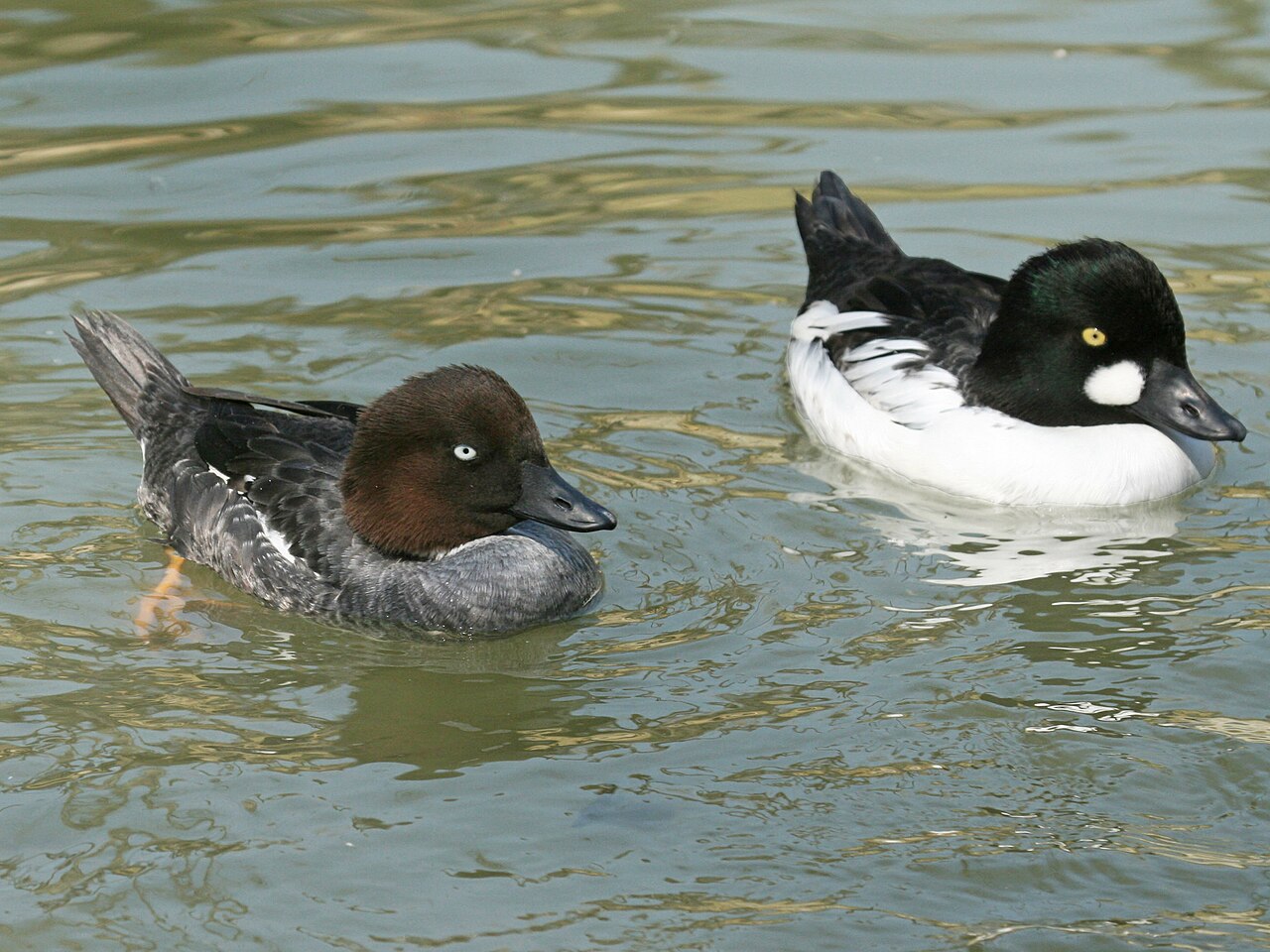
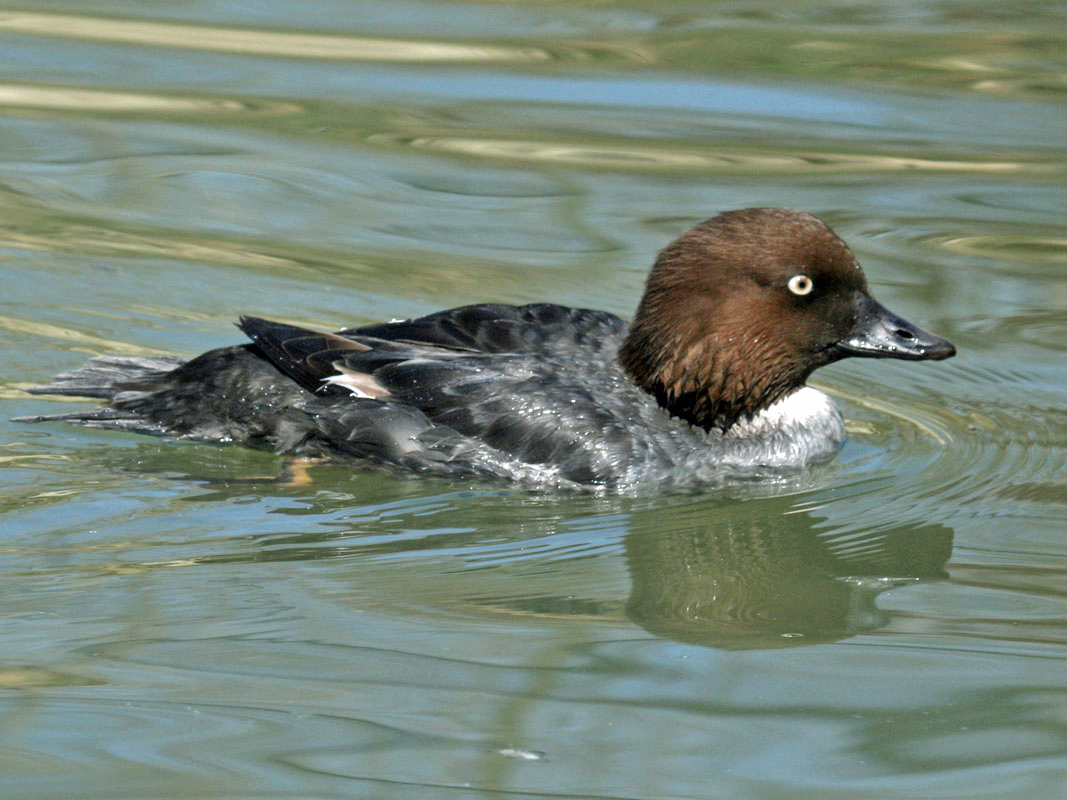
At roughly 45 to 51 centimeters in length, the adult male common goldeneye is a striking silhouette of dark and white, tipped with a greenish sheen across the crown and a bold circular white patch framing each golden-yellow eye. His back is dark, contrasting sharply with the clean white of his neck and underparts, while his legs and feet burn a warm orange-yellow. The female presents a far more subdued palette, with a brown head and a predominantly grey body, though she shares the same vivid golden eyes that give the species its common name. Both sexes span 77 to 83 centimeters wingtip to wingtip, and males tip the scales at around 1,000 grams compared to the female's 800. One notable distinction between the two recognized subspecies is bill morphology: the North American B. c. americana carries a noticeably longer and thicker bill than its Eurasian counterpart, B. c. clangula. Despite these visual differences, both subspecies share the same aggressive, territorial temperament and the elaborate courtship displays that characterize the species.
Nesting in the Taiga's Hollows
The common goldeneye is a cavity nester by nature, favoring holes in large trees created by broken limbs or excavated by pileated and black woodpeckers. Remarkably, females return to the same cavity year after year, and they will readily accept artificial nest boxes as substitutes. The male's involvement ends abruptly: he departs roughly one to two weeks into the 28-to-32-day incubation period, leaving the female to sit alone on a clutch of eggs measuring about 58 to 61 millimeters in length and weighing 61 to 67 grams each. The ducklings hatch and remain in the nest for only 24 to 36 hours before venturing out. What follows is a period of intense social chaos. Brood parasitism is common among goldeneyes, and as the young grow more independent or lose their mothers, broods merge into mixed groups. Tragically, these vulnerable ducklings face predation not only from bears, weasels, mink, raccoons, and raptors, but also from other goldeneye mothers, common loons, and red-necked grebes that may kill them competitively. Full flight is not achieved until 55 to 65 days of age.
Hunted, Harassed, and Held Together by Law
As a migratory sea duck, the common goldeneye is covered by the Agreement on the Conservation of African-Eurasian Migratory Waterbirds, a testament to the cross-border pressures it faces. In the 1970s, North American duck hunters killed approximately 188,300 goldeneyes each year, a figure that represented just under four percent of all waterfowl taken in Canada and less than one percent in the United States. Beyond the hunting season, both breeding and wintering habitats have suffered from land clearance and water pollution, squeezing the lakes, rivers, and coastal waters the species depends on. Yet the picture is not uniformly grim: in North America, the birds have been observed deriving short-term benefits from lake acidification, a counterintuitive advantage in otherwise degraded waters. As a diving forager, the goldeneye subsists on a diet that shifts with the seasons—crustaceans dominate during migration and winter, aquatic insects take the lead while nesting, and molluscs, fish eggs, and aquatic plants fill in locally. This dietary flexibility, combined with its willingness to use nest boxes, may offer a measure of resilience against the ongoing pressures on its range.
Gallery
Frequently Asked Questions
Who is Common goldeneye?
The Common goldeneye (Bucephala clangula) is a medium-sized diving duck that ranges across the boreal forests of North America and Eurasia, instantly recognizable by its striking golden-yellow irises. It was first formally catalogued by Linnaeus in 1758 and shares its genus with the closely related Barrow's goldeneye.
What are Common goldeneye's powers and role?
As a true diving duck, it plunges fully beneath the surface to forage rather than dabbling at the top, and it guards its territory with notably aggressive, confrontational behavior. Males put on elaborate courtship displays to attract mates, making them the showy centerpiece of the breeding season.
Why is Common goldeneye important to holarctic ecosystems?
It anchors the mid-sized sea-duck tier of boreal-forest breeding habitat, linking northern taiga to coastal and open-water wintering sites across two continents. Its presence is also a useful bio-indicator for the health of those northern waterways and their prey base.
How does Common goldeneye compare to Barrow's goldeneye?
The two are the only members of the genus Bucephala and look similar at a glance, but the Common goldeneye is the larger of the pair, with adult males tipping around 1,000 grams versus the smaller Barrow's. Their ranges overlap in parts of western North America, making hybridization and clean taxonomic separation a long-running topic among birders.
More in Holarctic birds 1-24
Spotted an error? Know more?
Reader corrections go straight into our review queue. Suggest an edit · How this site is sourced