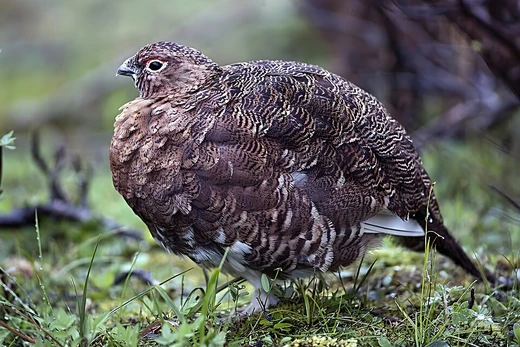
Black-necked grebe
A widespread grebe with distinctive breeding plumage, known for long migrations and a flightless moult period.

Imran Shah · CC BY-SA 2.0
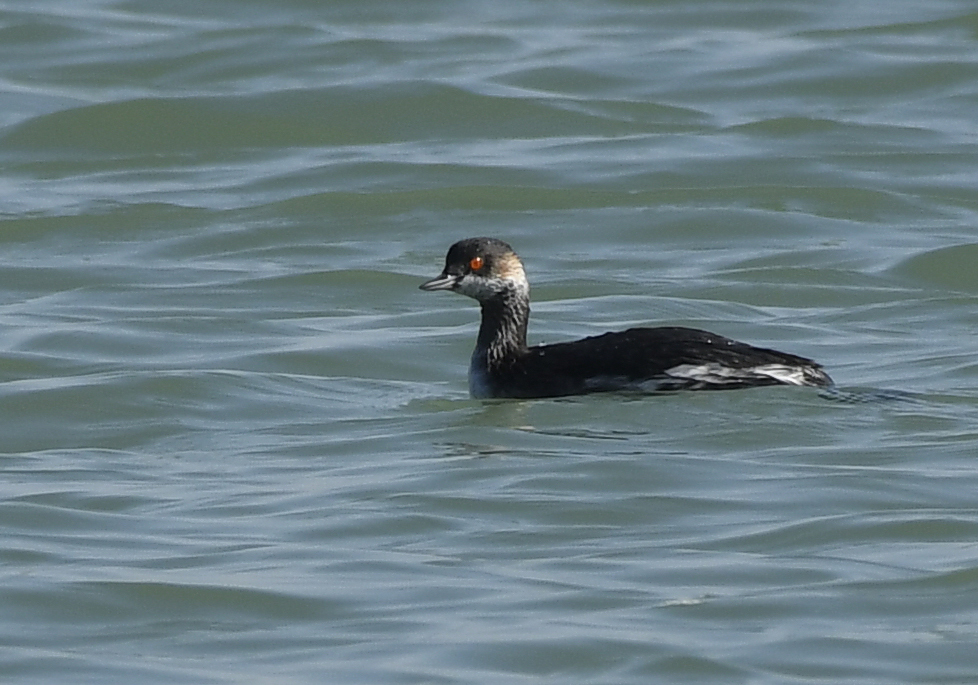
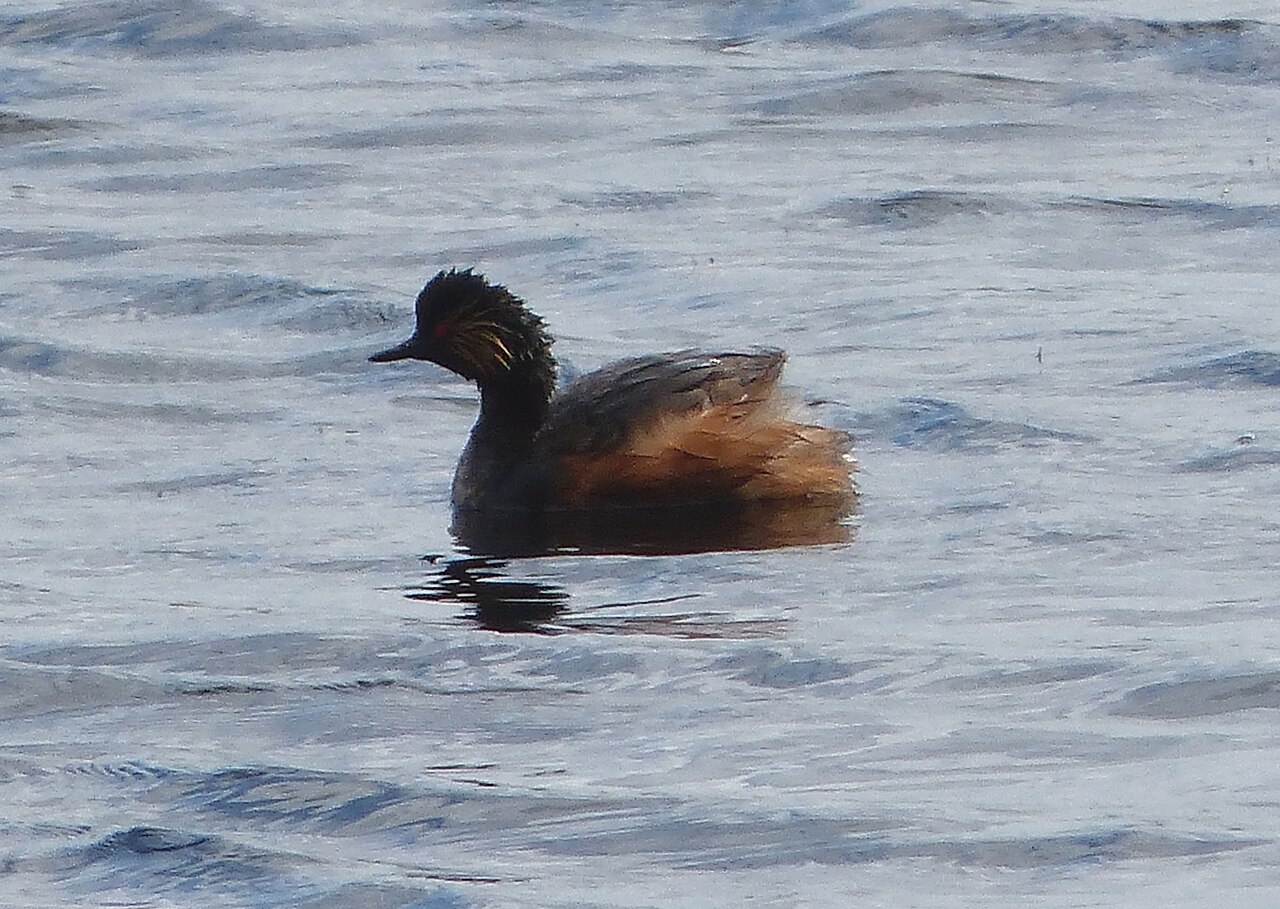
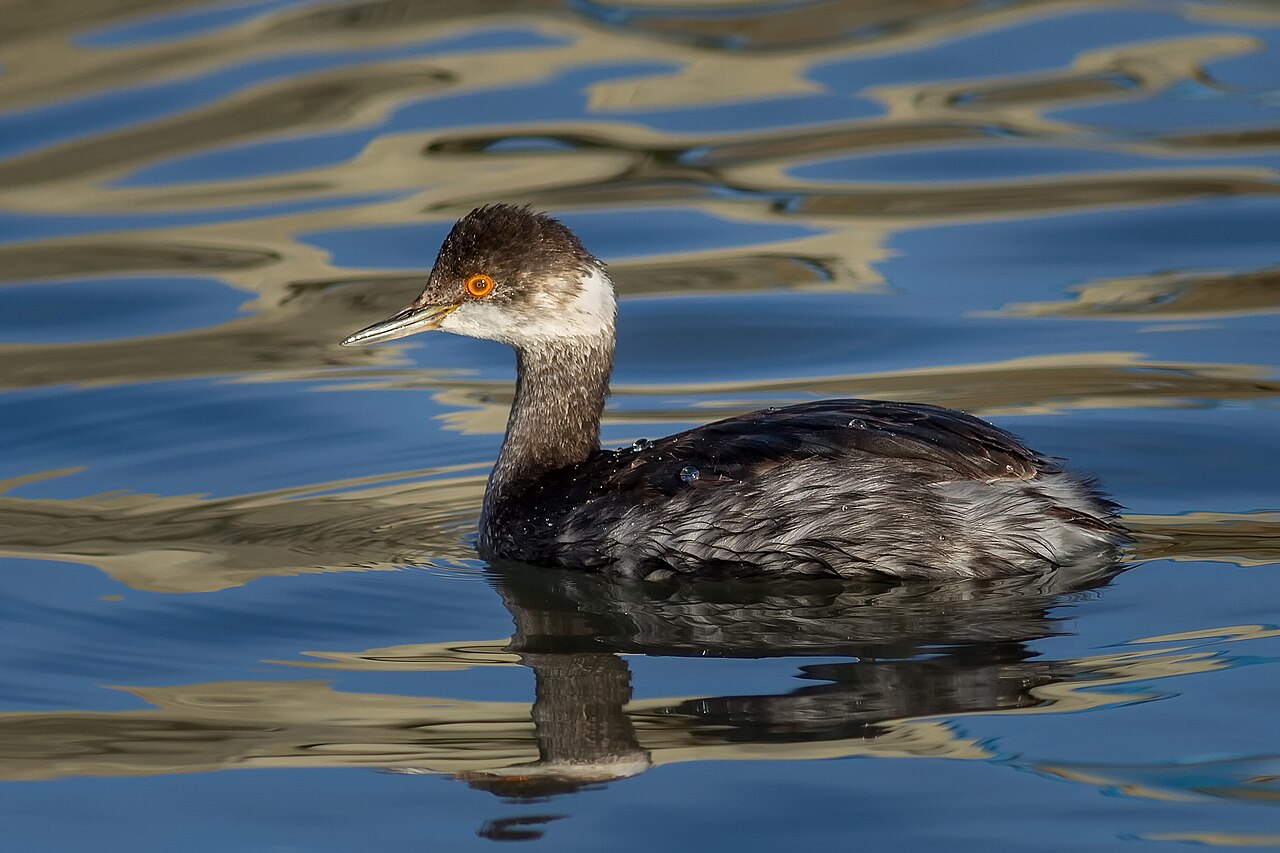
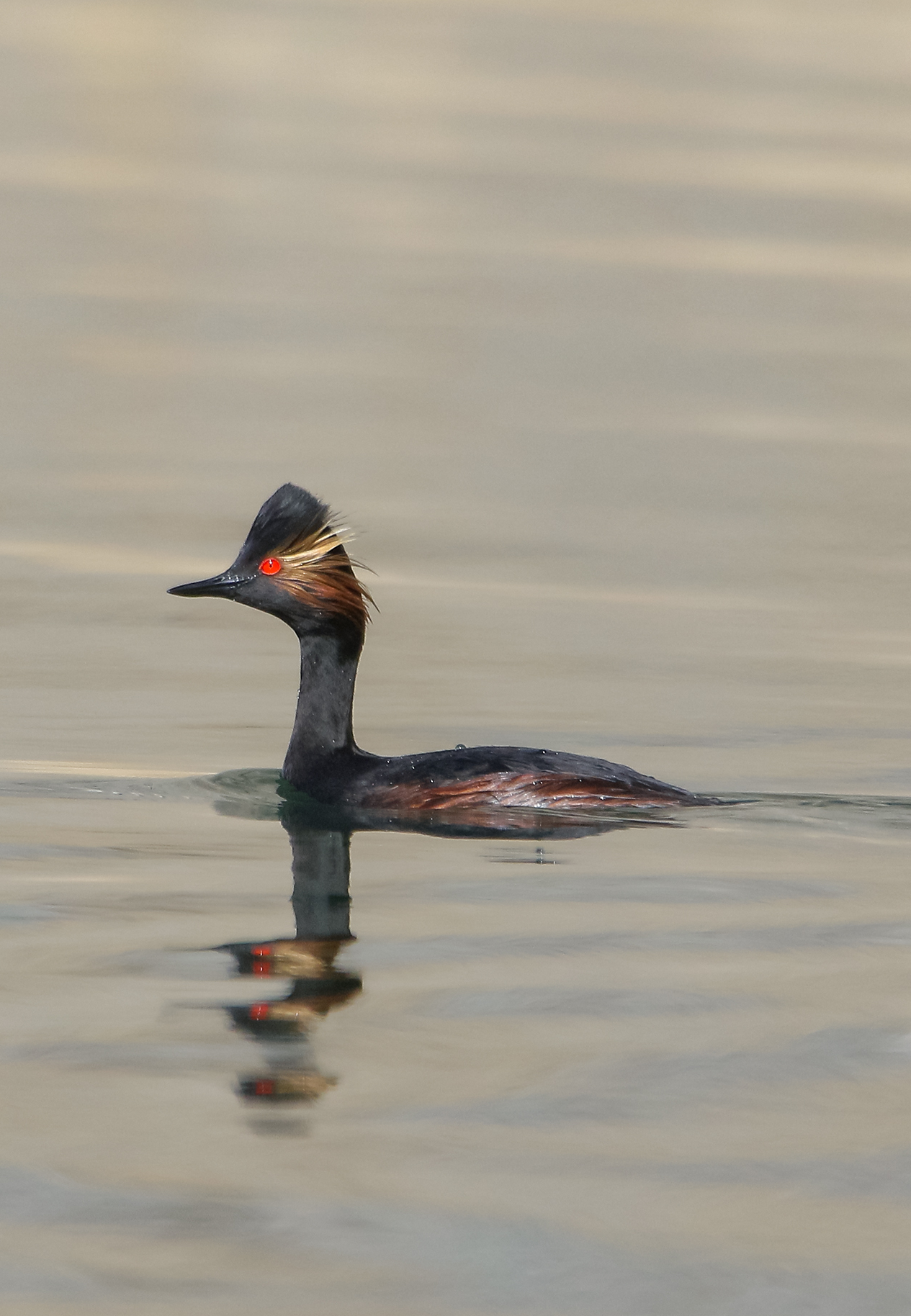
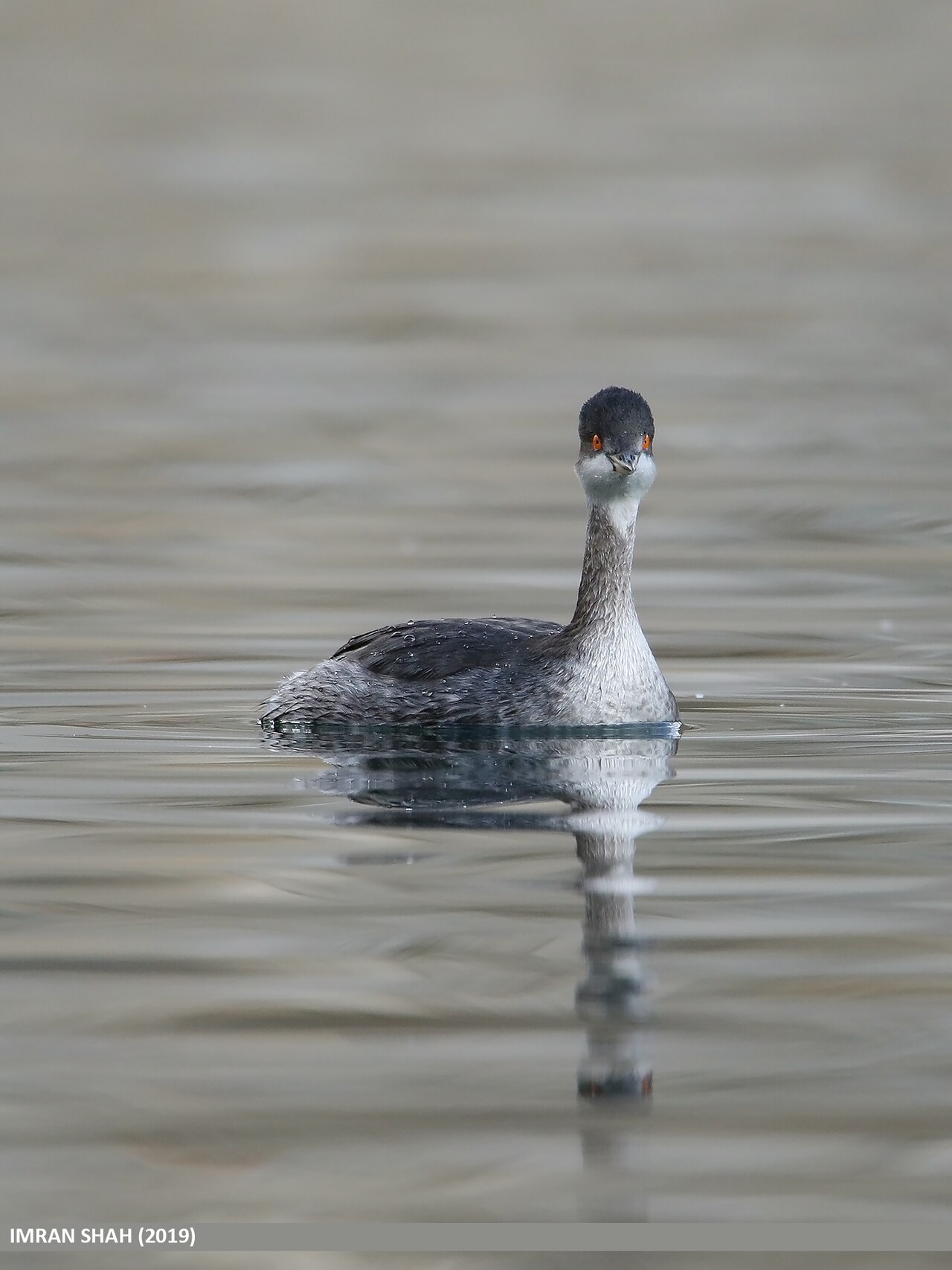
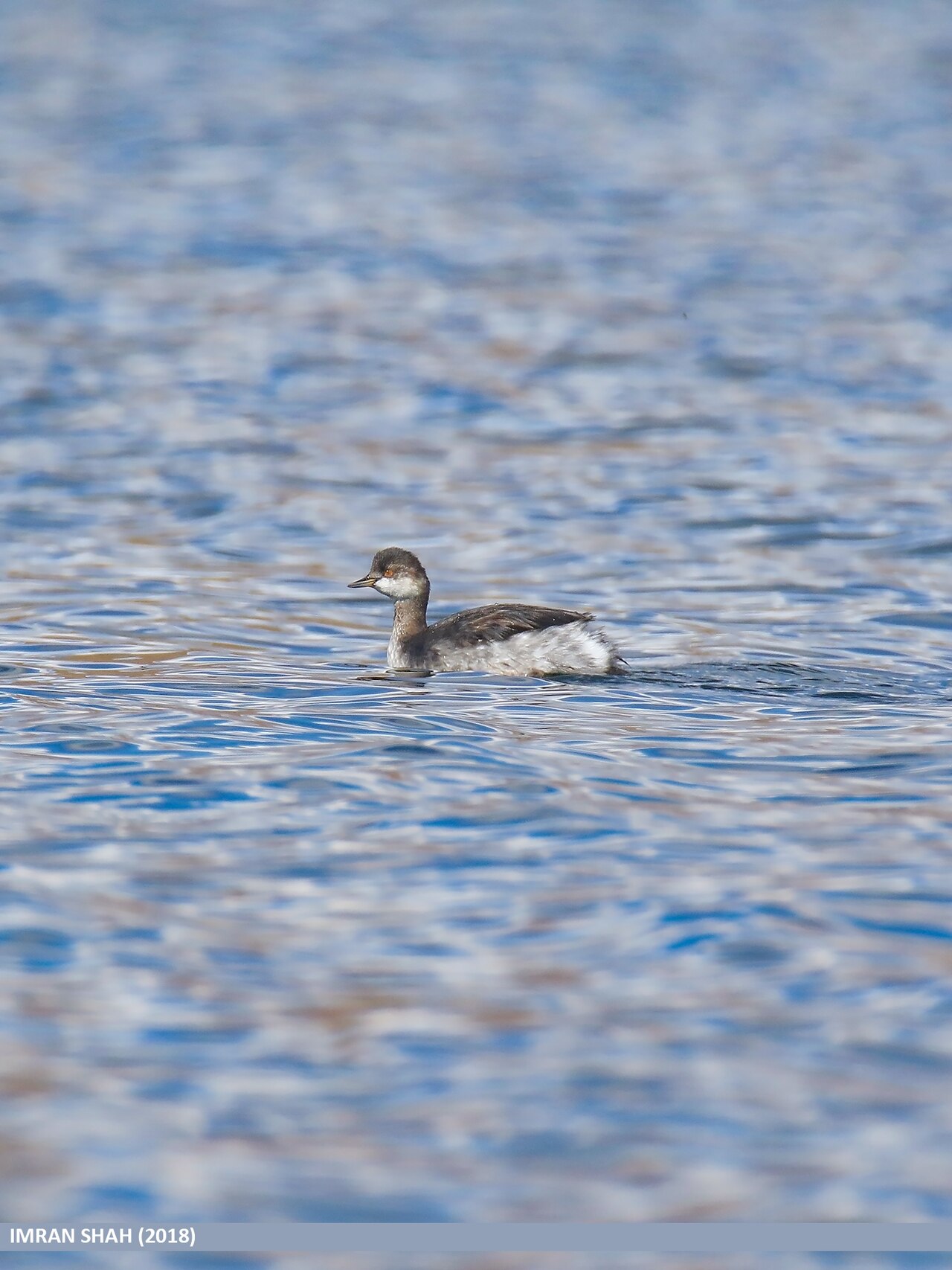
The black-necked grebe or eared grebe (Podiceps nigricollis) is a member of the grebe family of water birds. It was described in 1831 by Christian Ludwig Brehm. Its breeding plumage features distinctive ochre-coloured feathers which extend behind its eye and over its ear coverts. The rest of the upper parts, including the head, neck, and breast, are coloured black to blackish brown. The flanks are tawny rufous to maroon-chestnut, and the abdomen is white. In its non-breeding plumage, this bird has greyish-black upper parts, including the top of the head and a vertical stripe on the back of the neck. The flanks are also greyish-black. The rest of the body is a white or whitish colour. The juvenile has more brown in its darker areas. This species is present in parts of Africa, Eurasia, and the Americas.
Quick Facts
- Taxon
- Podiceps nigricollis
Facts from the source article.
Lore & Background
This species was first described by Carl Ludwig Hablitz in 1783 as Colymbus caspicus, from a bird in Bandar-e Anzali. This was originally thought to be a synonym for the horned grebe, until Erwin Stresemann discovered that the description applied more to the black-necked grebe in 1948. Before this, the earliest description was thought to be by Christian Ludwig Brehm in 1831, who gave this bird its current scientific name of Podiceps nigricollis from a German bird. To resolve this, the International Commission on Zoological Nomenclature suppressed the name Colymbus caspicus. The genus name Dytes is sometimes used for this species and its closest relatives, a placement which was preferred by Robert Ridgway in 1881. There are currently three accepted subspecies. This bird is closely related to the South American silvery grebe and Junin grebe. The extinct Colombian grebe P. andinus is particularly closely related, and is often considered to be a subspecies of P. nigricollis; it is genetically nested within it, with P. n. californicus being more closely related to P. andinus, than it is to P. n. nigricollis. The generic name, Podiceps, comes from two Latin words: , meaning or , and meaning . This is a reference to the attachment point of the bird's legs at the extreme back end of its body. The specific epithet nigricollis is Latin for : means and means . The subspecies epithet californicus comes from "California", while gurneyi comes from the name of British ornithologist John Henry Gurney Sr. "Black-necked grebe" has been designated the official name by the International Ornithological Committee (IOC). Both common names for this species refer to features visible when the bird is in its breeding plumage; in such plumage, it has an all-black neck and a spray of golden plumes on each side of its head. The name "eared grebe" is nearly a century older than the name "black-necked grebe". The latter was first used in 1912 by Ernst Hartert, in an effort to bring the common name of the species in line with its scientific name, and/or to avoid the long history of confusion between the vernacular name "eared" with the scientific name of the horned grebe Podiceps auritus (auritus, Latin, 'eared'). The name "eared grebe" is still used in North America to refer to this bird.
Reader's Guide
The black-necked grebe uses multiple foraging techniques. Insects, which make up the majority of this bird's diet, are caught either on the surface of the water or when they are in flight; this species occasionally practices foliage gleaning. This grebe dives to catch crustaceans, molluscs, tadpoles, and small frogs and fish. When moulting at saline lakes, this bird feeds mostly on brine shrimps (such as Artemia franciscana, and "Artemia parthenogenetica"). The black-necked grebe makes a floating cup nest on an open lake. The nest cup is covered with a disc. This nest is located both in colonies and by itself. During the breeding season, which varies depending on location, this species will lay one (sometimes two) clutch of three to four eggs. The number of eggs is sometimes larger due to conspecific brood parasitism. After a 21-day incubation period, the eggs hatch, and then the nest is deserted. After about 10 days, the parents split up the chicks between themselves. After this, the chicks become independent in about 10 days, and fledge in about three weeks. Although it generally avoids flight, the black-necked grebe travels as far as 6000 km during migration. In addition, it becomes flightless for at least a month after completing a migration to reach an area where it can moult safely. During this moult, the grebe can double in weight. The migration to reach these areas can be dangerous, sometimes with thousands of grebe deaths. In spite of this, it is classified as a least concern species by the International Union for Conservation of Nature (IUCN). It is likely that this is the most numerous grebe in the world. There are potential threats to it, such as oil spills, but these are not likely to present a major risk to the overall population.
Did You Know?
- During moult at saline lakes, this bird can double in weight.
- It is likely the most numerous grebe in the world.
Gallery
Frequently Asked Questions
Who is Black-necked grebe?
The Black-necked grebe (Podiceps nigricollis), often called the eared grebe, is a small water bird in the grebe family that ranges across Africa, Eurasia, and the Americas. Its current scientific name was assigned by Christian Ludwig Brehm in 1831, building on earlier descriptive work going back to the late 1700s.
What are Black-necked grebe's powers/role?
As an expert aquatic hunter, it uses its lobed feet to dart underwater after small fish, crustaceans, and aquatic insects. During breeding season it grows a showy ochre plume sweeping back from the eye and a sleek black neck, making it one of the most visually dramatic grebes on the planet.
Why is Black-necked grebe important?
As the most abundant grebe globally, it helps regulate populations of small fish and invertebrates across three continents, anchoring aquatic food webs. Its widespread presence also makes it a useful indicator of healthy freshwater and coastal ecosystems from Africa to the Americas.
What are Black-necked grebe's key stats?
Adults measure 28–34 cm in length, weigh 215–450 g, and span 56–60 cm (Eurasian subspecies) or 52–55 cm (North American subspecies) across the wings. These compact, streamlined dimensions give it both agile diving ability and the endurance for long-distance migration.
More in Holarctic birds 1-24
Spotted an error? Know more?
Reader corrections go straight into our review queue. Suggest an edit · How this site is sourced