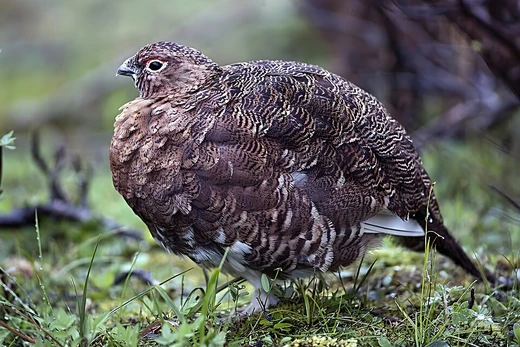
Horned grebe
A small waterbird with distinctive horn-like crest feathers.

The horned grebe, also known as the Slavonian grebe (Podiceps auritus), is a small, vulnerable waterbird. It has two subspecies: one that breeds across Eurasia (P. a. auritus) and another that breeds in North America (P. a. cornutus). The Eurasian form ranges from Iceland to the Russian Far East, while the North American one spans most of Canada and parts of the United States. Breeding has been noted sporadically in Greenland, though it is not a regular or well-documented occurrence. The American name "horned" comes from the orange-yellow crest feathers above and behind the eyes. The English name "Sclavonian" first appeared in George Montagu's 1802 Ornithological Dictionary, derived from Scalovia, an old name for northern Prussia, referencing the species' main European breeding area. The spelling was changed to "Slavonian" by Hartert in 1912 without explanation.
Carl Linnaeus formally described the horned grebe in 1758 in his Systema Naturae, calling it Colymbus auritus. He gave the type locality as Europe and America, later restricted to Vaasa, Finland. It now belongs to the genus Podiceps, introduced by John Latham in 1787. The genus name combines Latin podex ("vent") and pes ("foot"); the specific epithet auritus means "eared" or "long-eared," and the subspecific name cornutus means "horned."
The bird is 31–38 cm long, with a wingspan of 55–74 cm and a weight of 300–570 g. It has a moderately long neck, a flat forehead, and a black-feathered rear crown. Its beak is straight, pointed, and tipped with white. In breeding plumage, it sports bright, erectable "horns," black fan-shaped cheek feathers, and a red-and-black body. The neck, flanks, lores, and upper chest are chestnut brown; the crown and back are black; the belly is dull white. Males are slightly larger and brighter than females but otherwise similar. Non-breeding plumage is black and white: the neck, chest, and cheeks are white, while the back and crown are dull black-grey. A straight line separates the crown from the cheeks behind the eyes, and the "horns" are absent. Juveniles resemble non-breeding adults but are duller white, with a brown-tinged back, a less distinct cheek-crown line, and a paler beak. Chicks are fluffy, with a dull grey back, white belly, and distinct black-and-white striping on the face and neck.
The two subspecies are similar in size but differ subtly in plumage. P. a.
Quick Facts
- Genus
- Podiceps
- Species
- auritus
Facts from the source article.
Lore & Background
The horned grebe was formally described in 1758 by Carl Linnaeus under the name Colymbus auritus. The English name 'Slavonian' was first attested by George Montagu in 1802, derived from Scalovia, an old name for northern Prussia; the spelling was changed to 'Slavonian' by Hartert in 1912. The American name 'horned' refers to the orange-yellow crest feathers above and behind the eyes.
The species breeds primarily in boreal and subarctic regions, preferring shallow freshwater ponds with emergent vegetation. It winters in marine environments such as estuaries and bays. Horned grebes are monogamous and perform four pair-bonding ceremonies: discovery, weed, head-shaking, and triumph. They build nests from plant matter and lay three to eight eggs.
Reader's Guide
The horned grebe is significant as a threatened species whose global population has declined by 30% over the last three decades, with a 79% decline in North America. This decline is attributed to human disturbance, forestry operations, fluctuating water levels, and fish stocking. The species is also notable for its taxonomic history, including the emendation of its common name from 'Sclavonian' to 'Slavonian' without given reason. Its breeding plumage, with erectable 'horns' and chestnut neck, makes it a distinctive waterbird. The horned grebe's adaptation of eating its own feathers to form a stomach filter for fish bones is a unique biological trait shared with other grebes. Its vocalizations are highly variable and used extensively during breeding and territory defense.
Did You Know?
- The horned grebe's stomach contains a matted plug of feathers that filters fish bones during digestion.
- Juvenile chicks often ride on the backs of their swimming parents between the wing and the back.
- The species has two subspecies: P. a. auritus (Eurasian) and P. a. cornutus (North American), which differ subtly in plumage color.
- The English name 'Slavonian' was originally spelled 'Sclavonian' by George Montagu in 1802, then changed without reason in 1912.
More in Holarctic birds 1-24
Spotted an error? Know more?
Reader corrections go straight into our review queue. Suggest an edit · How this site is sourced