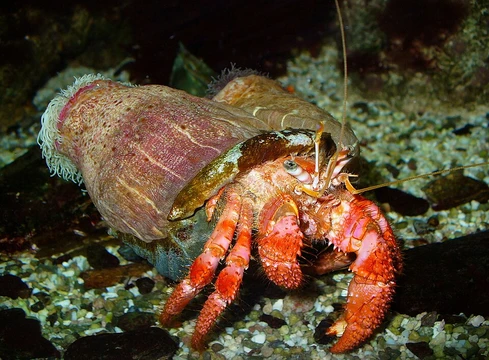
Dardanus deformis
Nocturnal hermit crab that transfers sea anemones between shells.

Dardanus deformis, commonly known as the pale anemone hermit, is a species of nocturnal hermit crab found in the Indo-Pacific. It is notable for its symbiotic relationship with sea anemones, which it transfers from one shell to another when it moves to a new shell.
Quick Facts
- Taxon
- Dardanus deformis
Facts from the source article.
Lore & Background
The species carries Calliactis anemones on the dorsal surface of its shell and Verrillactis paguri on the shell aperture. When the crab moves to a new shell, it transfers both types of anemones to the same positions on the new shell. This behavior was first studied in 1920, though no specific anemones were mentioned at that time. Dardanus deformis is one of at least 24 species known to transfer sea anemones to a new shell. The placement of V. paguri may protect the crab's chelipeds and legs from predators such as fish and octopuses.
Reader's Guide
Dardanus deformis is significant for its specialized symbiotic behavior with sea anemones, a trait shared with at least 23 other hermit crab species. The transfer of both Calliactis and Verrillactis paguri anemones during shell changes demonstrates a complex mutualism that has been studied since 1920. In captivity, the species can be kept with many invertebrates but may attack Caulerpa algae. It thrives in dim light and accepts prepared foods. A 2003 study at Maputo Bay identified rainfall as the main factor controlling its breeding activity, with spawning peaks from August to October. The species' ability to perform anemone transfers in aquariums makes it a subject of interest for observing this behavior in controlled settings.
Did You Know?
- Dardanus deformis is one of at least 24 hermit crab species that transfer sea anemones to a new shell.
- A 2003 study at Maputo Bay found that rainfall is the main factor controlling its breeding activity.
- The species can be kept in an aquarium and will transfer anemones to a new shell even in captivity.
Habitat & Geographic Range
The pale anemone hermit, Dardanus deformis, is a nocturnal hermit crab native to the Indo-Pacific. Rather than occupying open water or high-energy reef crests, this species favors the calmer, sheltered environments of lagoons, where it takes refuge beneath dead coral structures in close proximity to sea anemones. Its vertical habitat spans the low intertidal zone down into subtidal waters, giving it a band of suitable conditions along the shoreline. Documented occurrences place this crab in a wide arc of locations, including the Cocos (Keeling) Islands, the Tasman Sea, and the broader Indo-west Pacific Oceans. The preference for lagoon settings and dead coral rubble suggests a lifestyle built around soft substrates and the structural cues provided by anemone neighbors. As a nocturnal animal, Dardanus deformis is most active after dark, while its daytime shelter beneath coral fragments keeps it concealed from the brighter, more exposed parts of the reef. This combination of a restricted microhabitat and a broad geographic spread across multiple ocean basins makes the species a notable component of Indo-Pacific lagoon communities.
Anemone Symbiosis & Shell Transfer
The most striking behavior of Dardanus deformis is its intimate partnership with two species of sea anemone. Calliactis anemones are carried on the dorsal surface of the crab's borrowed shell, while Verrillactis paguri is positioned at the shell's aperture. When the crab outgrows its current shell and moves into a new one, it carefully transfers both anemone species to the replacement, placing V. paguri in the same aperture position as before and relocating the Calliactis to the dorsal side. This shell-transfer behavior is shared by at least 24 hermit crab species, but the precise placement of V. paguri at the opening is thought to serve a defensive purpose: it may shield the crab's vulnerable chilepeds and legs from predators such as fish and octopuses that might otherwise reach in and feed on them. The behavior was first documented in 1920, though that early study did not identify the specific anemone species involved. The fact that the crab goes to the trouble of repositioning its anemone partners after every shell change underscores how essential this symbiotic arrangement is to its survival.
Breeding Biology & Seasonal Patterns
Reproductive activity in Dardanus deformis follows a clear seasonal rhythm tied to environmental conditions. A 2003 study conducted at Maputo Bay examined the species' breeding season and revealed that spawning peaks occur between August and October, representing the period of greatest reproductive output. During the months from May through July, the researchers observed a noticeable but modest decline in breeding activity, suggesting a transitional phase rather than a complete reproductive pause. The study concluded that rainfall is the primary environmental factor governing the timing and intensity of spawning events. This finding places Dardanus deformis among those marine invertebrates whose reproductive cycles are closely coupled to freshwater input and the associated shifts in salinity, temperature, and nutrient availability that accompany wet and dry seasons. Understanding this rainfall-driven pattern is important for both conservation planning and for aquarists who may wish to observe or support breeding in captivity, as it highlights the species' sensitivity to broader climatic and hydrological cycles in its native range.
Life in Captivity
Dardanus deformis is a species that lends itself well to the home or public aquarium, provided its specific needs are met. It can generally be housed alongside a wide variety of other invertebrates without significant conflict, making it a versatile addition to mixed invertebrate displays. However, aquarists should be aware that this crab has been observed attacking Caulerpa algae, so keeping it in a tank where that particular alga is a desired feature may prove problematic. The species thrives in dim lighting conditions, consistent with its nocturnal nature in the wild, and accepts a range of prepared foods including frozen, flake, and tablet formulations. One of the most rewarding aspects of keeping Dardanus deformis in captivity is the opportunity to observe its anemone-transfer behavior firsthand; when the crab selects a new shell, it will relocate its Calliactis and Verrillactis anemone partners in the same manner it does in the lagoon. This makes the pale anemone hermit not only a visually interesting invertebrate but also a living demonstration of a complex symbiotic relationship.
Frequently Asked Questions
What is Dardanus deformis?
Dardanus deformis is a nocturnal hermit crab species commonly called the pale anemone hermit. It is best known for its unusual habit of carrying a sea anemone along with it when it swaps into a new shell.
Where can you find Dardanus deformis in the wild?
This species ranges across the Indo-Pacific, including the Cocos (Keeling) Islands, the Tasman Sea, and the broader Indo-west Pacific. It typically shelters in low intertidal or subtidal zones, tucking itself beneath dead coral in lagoon settings.
How does Dardanus deformis interact with sea anemones?
Rather than leaving its anemone partner behind during a shell change, the crab physically transfers the anemone into the new shell, maintaining the symbiotic bond. The two anemone genera most commonly seen riding on this species are Calliactis and Verrillactis paguri.
When is Dardanus deformis most active and when does it breed?
It is a strictly nocturnal animal, spending daylight hours hidden and emerging after dark to forage. A 2003 study conducted at Maputo Bay recorded its breeding peak running from August through October.
Why do hermit crab enthusiasts consider Dardanus deformis noteworthy?
Its shell-to-shell anemone transfer is one of the most visually striking examples of mobile symbiosis in the crustacean world, making it a favorite subject for underwater photographers and aquarists. Combined with its restricted lagoon habitat and limited geographic range, it stands out among the many Dardanus species.
More in Hermit Crabs 1-24
Spotted an error? Know more?
Reader corrections go straight into our review queue. Suggest an edit · How this site is sourced