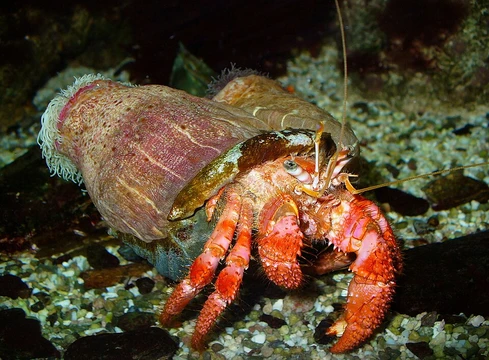
Calcinus guamensis
A small, nocturnal hermit crab from Indo-Pacific reefs.

Calcinus guamensis is a species of hermit crab in the family Diogenidae, first discovered in 1982 by Daniel S. Wooster. It is notable for its distinctive coloration and its role as a scavenger in Indo-Pacific reef ecosystems.
Quick Facts
- Genus
- Calcinus
- Species
- guamensis
Facts from the source article.
Lore & Background
Calcinus guamensis was first collected and described by Daniel S. Wooster in 1982 during a study of the Mariana Islands. The species was named after Guam, where the original specimens were discovered. Wooster's research expanded the known diversity of the genus Calcinus in the Indo-Pacific region.
The crab is small, with a maximum shell width of about 6 mm. Its coloration is mustard brown or olive fading into white, with walking legs dipped in black. Its uneven claws are bluish-green, with the left claw significantly larger than the right, and its body is reddish-brown. The walking legs are banded with alternating light and dark colors, and its beak is triangular and relatively short. When threatened, the crab uses its left claw to block the entrance of its shell, a behavior typical of many Diogenidae hermit crabs.
Calcinus guamensis is nocturnal and forages at night. It exhibits shell-swapping behavior, often competing aggressively with other hermit crabs for better-suited shells. Wooster described this as a very competitive challenge that creates aggressive behavior among individuals seeking optimal shells.
Reader's Guide
Calcinus guamensis plays a vital role as a scavenger in reef ecosystems, feeding on detritus, algae, and small invertebrates. By breaking down organic material, it promotes nutrient cycling and helps prevent algae from overgrowing, contributing to the health and protection of coral reefs. The species inhabits shallow coral reefs and rocky environments in the Indo-Pacific region, including Guam and Hawaii. It is commonly found in deeper water areas (3–20 m) compared to other Calcinus species, and is particularly located in tide pools and surge zones that offer food and protection from predators. Its discovery by Wooster in 1982 added to the known diversity of the genus Calcinus in the region. The species' distinctive coloration and defensive behavior—using its larger left claw to block its shell—are characteristic of its family. Its nocturnal foraging and competitive shell-swapping behavior highlight the ecological pressures faced by hermit crabs in reef environments.
Did You Know?
- Calcinus guamensis was first discovered by Daniel S. Wooster in 1982.
- Its left claw is significantly larger than its right and is used to block the shell entrance when threatened.
Discovery and Taxonomic Placement
Calcinus guamensis entered the scientific record in 1982, when Daniel S. Wooster collected and formally described the species during his research across the Mariana Islands. The crab was named in honor of Guam, the location where the original specimens were gathered. Wooster's work represented a meaningful expansion of what was known about the genus Calcinus in the Indo-Pacific, adding another distinct member to a group already recognized for its characteristic asymmetrical claws and dependence on gastropod shells for shelter. As a member of the Diogenidae family, this species fits within a broader lineage of hermit crabs that share these defining traits. The 1982 description marked a small but important step in cataloging the biodiversity of Pacific reef communities, giving researchers a named reference point for what had previously been an unrecorded inhabitant of those waters.
Physical Form and Defensive Strategy
Standing at a modest maximum shell width of roughly six millimeters, Calcinus guamensis is a compact creature whose visual identity is immediately striking. Its body carries a warm mustard-brown or olive tone that gradually transitions to white, while the walking legs are tipped in black and banded with alternating light and dark segments. The most eye-catching feature is its pair of mismatched claws: the left one is substantially larger and displays a bluish-green hue, standing in sharp contrast to the reddish-brown body. A short, triangular beak completes the facial profile. Beyond aesthetics, the oversized left claw serves a critical defensive purpose. When a predator approaches, the crab wedges this claw across the mouth of its gastropod shell, effectively sealing the entrance. This plugging behavior is a hallmark of the Diogenidae family and gives even a crab of this tiny size a surprisingly effective last line of defense against would-be attackers.
Ecological Role and Nocturnal Lifestyle
In the hidden rhythms of a coral reef, Calcinus guamensis operates as a dedicated nocturnal cleaner. Once darkness falls, the crab emerges from its shell to forage, picking through detritus, grazing on algae, and consuming small invertebrates. This scavenging habit is far more than individual feeding; it drives nutrient cycling and keeps organic debris from accumulating on the reef surface. By removing that material and limiting algal overgrowth, the species contributes directly to the structural health and protection of coral communities. The crab also participates in the well-known shell-swapping dynamic shared by hermit crabs. Wooster noted that obtaining a well-fitting shell is a very competitive challenge, provoking aggressive encounters between individuals. Each crab is essentially racing to secure the best available gastropod shell for its body size, making everyday survival a constant negotiation over shelter.
Range, Depth, and Microhabitat Preferences
Calcinus guamensis occupies a defined niche within the Indo-Pacific's shallow marine environments. Its confirmed range includes Guam, Hawaii, and additional Pacific locations, all characterized by coral reefs and rocky substrates. Unlike some of its Calcinus relatives that favor shallower waters, this species is typically encountered at depths between three and twenty meters, roughly ten to sixty-six feet. Within that depth band, it shows a particular affinity for tide pools and surge zones—microhabitats where wave action stirs up food particles while the rocky terrain provides cover from predators. These dynamic intertidal and subtidal pockets offer the dual benefits of a steady supply of organic material and physical protection, making them ideal territory for a small, shell-dwelling scavenger. The species' preference for these specific microenvironments helps distinguish it ecologically from other members of its genus that may occupy different depth or substrate preferences.
Frequently Asked Questions
What is Calcinus guamensis?
Calcinus guamensis is a tiny nocturnal hermit crab belonging to the genus Calcinus within the family Diogenidae. It is native to coral reef environments across the Indo-Pacific region and is recognized for its striking color patterns.
Who first described Calcinus guamensis?
The species was formally identified and described by marine biologist Daniel S. Wooster back in 1982. Before that discovery, this particular little crab had not yet been catalogued in the scientific literature.
How large does Calcinus guamensis grow?
This is one of the smaller hermit crabs out there, with its shell reaching a maximum width of just about 6 millimeters (roughly a quarter of an inch). Its compact build helps it slip into tight crevices on reef structures.
What depth and habitat does Calcinus guamensis prefer?
You will typically find this species between 3 and 20 meters (about 10 to 66 feet) below the surface on Indo-Pacific reefs. As a nocturnal creature, it tends to be most active after the sun goes down.
What ecological role does Calcinus guamensis play?
In its reef habitat, this little crab functions primarily as a scavenger, picking through organic debris and helping recycle nutrients. Its foraging behavior contributes to keeping Indo-Pacific reef ecosystems balanced and clean.
More in Hermit Crabs 1-24
Spotted an error? Know more?
Reader corrections go straight into our review queue. Suggest an edit · How this site is sourced