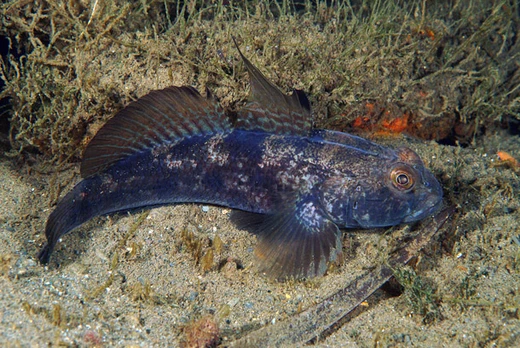
Lythrypnus
Hermaphroditic gobies native to American coasts and islands.

Lythrypnus is a genus of gobies found along the Atlantic and Pacific coasts of the Americas, as well as around Cocos Island and the Galapagos Islands. These fish are hermaphroditic and can switch sex. In the species Lythrypnus dalli, an individual’s size and shape determine whether it can function as both male and female. The genus includes 20 recognized species.
Quick Facts
- Taxon
- Lythrypnus
- Type Species
- Gobius dalli
- Type Species Authority
- C. H. Gilbert 1890
Facts from the source article.
Lore & Background
Lythrypnus is a genus of gobies found along the Atlantic and Pacific coasts of the Americas, with populations also recorded at Cocos Island and the Galapagos Islands. The genus is characterized by its hermaphroditic nature, allowing individuals to change sex. In particular, Lythrypnus dalli is described as being able to have both male and female reproductive function, depending on its size and shape. The genus currently includes 20 recognized species, many described by ichthyologists such as W. A. Bussing, D. W. Greenfield, J. E. Böhlke, and C. R. Robins, among others. Species range from the Mahogany goby (Lythrypnus crocodilus) to the Zebra goby (Lythrypnus zebra), each with distinct common names reflecting their appearance or habitat.
Reader's Guide
The genus Lythrypnus holds significance as a group of gobies that exhibit hermaphroditism and sex change, a notable reproductive strategy among fishes. Its distribution along both Atlantic and Pacific coasts of the Americas, including remote islands like Cocos and the Galapagos, highlights its adaptability to diverse marine environments. The genus comprises 20 recognized species, each documented by various ichthyologists, contributing to the taxonomic understanding of gobies. The ability of Lythrypnus dalli to function reproductively as both male and female depending on size and shape underscores the flexibility of sexual systems in this genus. This characteristic, along with the wide geographic range, makes Lythrypnus a subject of interest for studies on reproductive biology and biogeography. The listing of species with their authors and years provides a historical record of discovery and classification within the genus.
Did You Know?
- Lythrypnus is a hermaphroditic fish that is able to change sex.
- The genus is native to the Atlantic and Pacific coasts of the Americas, including Cocos Island and the Galapagos Islands.
- There are currently 20 recognized species in the genus Lythrypnus.
Frequently Asked Questions
What is Lythrypnus?
Lythrypnus is a genus of small gobies that inhabit the Atlantic and Pacific coastlines of the Americas. It is recognized as containing twenty distinct species, with populations stretching from mainland shores to island groups like the Galapagos and Cocos Island.
How does Lythrypnus reproduce?
Every member of this genus is hermaphroditic, meaning a single fish can serve as both male and female over the course of its life. In the Bluebanded goby (L. dalli), an individual's body size and shape are what determine which reproductive role it assumes at any given time.
Where can you find Lythrypnus gobies?
They are native to the Atlantic and Pacific coasts of the Americas, and their range also extends to island ecosystems such as Cocos Island and the Galapagos archipelago.
How many species are in the Lythrypnus genus?
Twenty species have been formally recognized within the genus, making it a moderately diverse group among gobies.
What makes Lythrypnus dalli stand out?
The Bluebanded goby is the genus's most well-known species, prized by enthusiasts for its striking coloration and its sex-determination system, in which physical size and shape—not a fixed genetic sex—dictate whether the fish functions as male, female, or both.
More in Gobies 1-16
Spotted an error? Know more?
Reader corrections go straight into our review queue. Suggest an edit · How this site is sourced