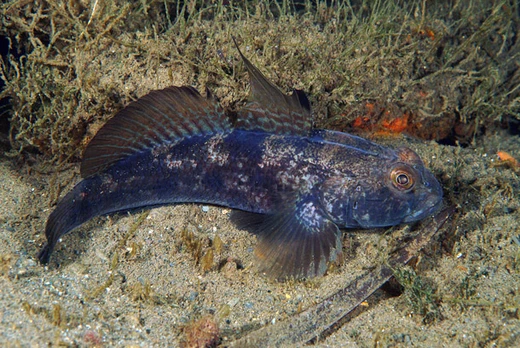
Corcyrogobius
A genus of gobies from the eastern Atlantic and Mediterranean.

Corcyrogobius is a genus of goby fish found in the eastern Atlantic and the Mediterranean. It comprises three recognized species.
The first species in the genus was originally described in 1891 by Croatian zoologist Juraj Kolombatović, who named it *Gobius liechtensteini* based on twelve specimens from the Adriatic island of Korčula. In 1972, British ichthyologist Peter J. Miller determined that four of those original specimens, which Kolombatović had considered juveniles, actually belonged to a different species, *Odondebuenia balearica*. Miller redefined the species using the remaining eight specimens, renaming it *Corcyrogobius liechtensteini*.
In 1988, Miller identified two older goby samples, collected in 1927 off Annobon, Equatorial Guinea, as belonging to the same genus. Matching them with specimens from 1976 near Prampram, Ghana, he described a second species: *Corcyrogobius lubbocki*.
The most recent addition came in 2020, when an expedition to Île de Ngor, Senegal, recovered two specimens of a new species. Genetic analysis placed *Corcyrogobius pulcher* as an outgroup to the more closely related *C. lubbocki* and *C. liechtensteini*.
Quick Facts
- Taxon
- Corcyrogobius
- Type Species
- Gobius liechtensteini
- Type Species Authority
- Kolombatović, 1891
Facts from the source article.
Lore & Background
The first species of Corcyrogobius was described in 1891 by Croatian zoologist Juraj Kolombatović, based on twelve specimens collected off the coast of Korčula. He named it Gobius liechtensteini. In 1972, British ichthyologist Peter J. Miller recognized that four of those original twelve specimens, which Kolombatović had considered juvenile stages, actually belonged to a different species, Odondebuenia balearica. Miller redescribed the remaining eight specimens as Corcyrogobius liechtensteini.
In 1988, Miller discovered that two older gobiid samples collected for the British Museum of Natural History off Annobon, Equatorial Guinea, in 1927 belonged to the same genus. Matching traits with specimens from 1976 in Prampram, Ghana, he described Corcyrogobius lubbocki. In 2020, an expedition to Île de Ngor off Senegal recovered two specimens of another species, Corcyrogobius pulcher, which genetic analysis placed as the outgroup to the more closely related C. lubbocki and C. liechtensteini.
Reader's Guide
The genus Corcyrogobius is notable for its taxonomic history, which began with a misidentification of juvenile specimens. Peter J. Miller's work in 1972 corrected this by reassigning four of Kolombatović's original twelve specimens to a different genus, Odondebuenia balearica, and establishing Corcyrogobius as a distinct genus. Miller later expanded the genus in 1988 by identifying museum samples from 1927 and matching them with more recent collections from Ghana. The most recent addition, Corcyrogobius pulcher, was described in 2020 based on specimens from Senegal and placed phylogenetically as an outgroup to the other two species. The genus thus spans over a century of ichthyological research, from Kolombatović's initial description to modern genetic analysis, and its species are distributed across the eastern Atlantic and Mediterranean, including locations off Croatia, Ghana, Equatorial Guinea, and Senegal.
Did You Know?
- The first species of Corcyrogobius was originally described as Gobius liechtensteini by Juraj Kolombatović in 1891.
- Four of the original twelve specimens were later recognized as belonging to Odondebuenia balearica by Peter J. Miller in 1972.
- Corcyrogobius lubbocki was described from samples collected in 1927 off Annobon, Equatorial Guinea, and 1976 in Prampram, Ghana.
- Corcyrogobius pulcher, described in 2020, was genetically placed as the outgroup to C. lubbocki and C. liechtensteini.
Taxonomic Origins and the Founding Species
The genus Corcyrogobius traces its formal origins to 1891, when Croatian zoologist Juraj Kolombatović examined twelve goby specimens he had gathered along the waters surrounding Korčula, an Adriatic island that is part of modern-day Croatia. At the time, he introduced the animal to science under the name Gobius liechtensteini, honoring the Liechtenstein family. For over eight decades, that single description stood as the sole representative of what would later become a distinct genus. In 1972, British ichthyologist Peter J. Miller revisited Kolombatović's original material and determined that four of the twelve specimens actually belonged to an unrelated species, Odondebuenia balearica. Working with the remaining eight individuals, Miller erected the new genus Corcyrogobius and transferred the species into it, producing the name Corcyrogobius liechtensteini. The etymology of the binomial essentially reads as 'Liechtenstein's goby from Korčula,' preserving both the original dedication and the geographic provenance of the type material.
Expansion Across the West African Coast
The genus Corcyrogobius extends well beyond the Mediterranean into the eastern Atlantic, a fact that became clear in 1988 when Peter J. Miller, the same ichthyologist who had established the genus seventeen years earlier, examined two old gobiid specimens held in the British Museum of Natural History. Those samples had been collected off the coast of Annobon, Equatorial Guinea, back in 1927, and had sat unidentified for decades. By comparing their morphological traits with material gathered in 1976 at Prampram, Ghana, Miller confirmed they represented a second valid species within the genus. He named it Corcyrogobius lubbocki, a reference that translates roughly to 'Lubbock's goby from Korčula,' maintaining the genus's naming convention tied to its type locality. This discovery was significant because it demonstrated that the genus had a trans-Atlantic distribution, linking Mediterranean populations with those on the West African shoreline, and it underscored how museum collections can harbor cryptic biodiversity waiting for a careful eye.
The 2020 Discovery and Phylogenetic Context
The most recent addition to the genus arrived in 2020, when an ichthyological expedition to Île de Ngor, located off the coast of Senegal, recovered two specimens of an unrecognized goby. Kovačić and colleagues subjected these individuals to genetic analysis, which allowed them to place the new taxon within the genus's phylogenetic tree. The resulting species, Corcyrogobius pulcher, carries a name that translates to 'Beautiful goby from Korčula,' continuing the tradition of anchoring all three species names to the original type locality. Phylogenetically, C. pulcher occupies the position of an outgroup relative to the other two members, C. lubbocki and C. liechtensteini, which form a more closely related pair. This arrangement suggests that the Senegalese lineage diverged earlier in the genus's evolutionary history, while the West African and Mediterranean lineages share a more recent common ancestor. The use of molecular data in this case marks a methodological shift from the purely morphological comparisons that had defined earlier descriptions.
Specimen Provenance and the Long Arc of Discovery
From 1891 to 2020, the story of Corcyrogobius is one of specimens collected across a vast stretch of ocean and rediscovered by successive generations of taxonomists. The type material originates from Korčula in the Adriatic, while the second species was identified from material gathered at Annobon in Equatorial Guinea and Prampram in Ghana. The third species was found at Île de Ngor, Senegal. Together, these localities span the eastern Atlantic and the Mediterranean, confirming the genus's broad biogeographic range. Notably, the Annobon specimens had been sitting in the British Museum of Natural History since 1927, unrecognized for sixty-one years until Miller's 1988 examination. Similarly, four of Kolombatović's original twelve Korčula specimens were misidentified as juveniles of the type species for over eighty years before Miller's 1972 revision corrected the record. These episodes illustrate how the history of a small goby genus can be shaped as much by the logistics of museum curation and the pace of taxonomic scrutiny as by the biology of the organisms themselves.
Frequently Asked Questions
What is Corcyrogobius?
Corcyrogobius is a genus of goby fish native to the eastern Atlantic Ocean and the Mediterranean Sea. It currently contains three recognized species.
Where are Corcyrogobius species found?
These gobies inhabit the eastern Atlantic and the Mediterranean basin. The first species was originally collected off the coast of Korčula, an Adriatic island now part of Croatia.
How many species are in the genus Corcyrogobius?
Three species are currently recognized within Corcyrogobius. The earliest of them was first named Gobius liechtensteini back in 1891.
Who first described a Corcyrogobius species?
Croatian zoologist Juraj Kolombatović described the first species in 1891, working from twelve specimens gathered near the Adriatic island of Korčula.
What led to the redefinition of the genus?
British ichthyologist Peter J. Miller showed in 1972 that four of Kolombatović's original specimens actually belonged to a separate species, Odondebuenia balearica. Miller redefined the species using the eight remaining specimens and later revisited the genus again in 1988.
More in Gobies 1-16
Spotted an error? Know more?
Reader corrections go straight into our review queue. Suggest an edit · How this site is sourced