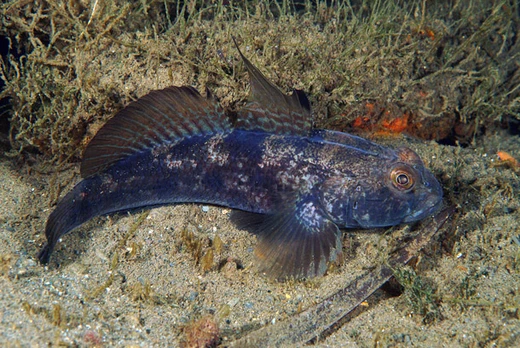
Gobiosoma
A genus of gobies from American waters.

Gobiosoma is a genus of small fish, commonly known as gobies, found in the fresh, brackish, and salt waters of North and South America. Some species that were once classified under this genus have since been reclassified into the genera *Elacatinus* and *Tigrigobius*. The genus currently contains 19 recognized species, though *Gobiosoma pallida* is considered a species inquirenda, meaning its status is uncertain.
Quick Facts
- Taxon
- Gobiosoma
- Type Species
- Gobiosoma molestum, synonym of Gobiosoma bosc
- Type Species Authority
- Girard, 1858
Facts from the source article.
Lore & Background
Gobiosoma is a genus of gobies whose species are found in fresh, brackish, and marine waters across the Americas. Several species once placed in this genus have been reclassified into Elacatinus and Tigrigobius. As of the source, there are 19 recognized species in Gobiosoma, though Gobiosoma pallida is listed as a species inquirenda, indicating uncertainty about its validity. The species list includes names such as Gobiosoma aceras (White-margined goby), Gobiosoma bosc (Naked goby), and Gobiosoma robustum (Code goby), among others, with authorities and years provided for each.
Reader's Guide
The genus Gobiosoma is notable for its distribution across fresh, brackish, and marine waters of the Americas, reflecting ecological adaptability. Its taxonomic history includes the transfer of several former species to the genera Elacatinus and Tigrigobius, indicating ongoing revision within goby classification. The presence of a species inquirenda, Gobiosoma pallida, highlights unresolved taxonomic questions. The 19 recognized species, described by various ichthyologists such as Ginsburg, Eigenmann, and Robins, contribute to the genus's significance as a component of American goby diversity. The species list includes common names like Naked goby and Code goby, which aid in identification. The genus's legacy lies in its representation of goby evolution and biogeography in the Western Hemisphere, with species occupying diverse habitats from estuaries to coastal marine environments.
Did You Know?
- Gobiosoma is native to fresh, brackish and marine waters of the Americas.
- Several species formerly in Gobiosoma have been moved to Elacatinus and Tigrigobius.
- There are currently 19 recognized species in Gobiosoma.
Physical Form and Morphology
The naked goby earns its common name through a striking absence of scales across its entire body, a trait that distinguishes it within the broader goby family. Typically measuring under two inches, this small fish belongs to the genus Gobiosoma and is classified as a true goby. One of its most distinctive anatomical features is the pelvic fin structure: the paired fins are joined by a membrane that forms a disc resembling a sucker, extending to a point positioned between the body's base and the anus. This adaptation likely aids in gripping substrates in its shallow, sediment-rich environment. Coloration varies considerably among individuals, ranging from a light, pale yellow through to a deep, murky brown. Most specimens display between nine and ten vertical bars running along the flanks, though in particularly light or dark individuals these markings may fade to near invisibility, making identification by pattern alone unreliable.
Range and Preferred Habitats
The naked goby occupies a well-defined stretch of the Western Atlantic coastline, spanning from Connecticut southward to Mexican waters. Its ecological niche is tightly bound to brackish environments; it is found almost exclusively in habitats where freshwater and saltwater mingle, particularly estuaries and coastal shallows. A notable seasonal behavior is its tendency to bury itself in bottom sediments during the winter months, effectively disappearing from view in the soft substrate. Geographically, younger individuals are most commonly encountered in estuaries located south of New Jersey, while their presence in estuaries to the north of that state is far more sporadic and less frequent. This distribution pattern suggests that the species may have particular environmental preferences or dispersal limitations that concentrate juvenile populations in the southern portion of its range. The strong association with brackish water indicates a physiological tolerance for fluctuating salinity that is central to its survival strategy.
Reproductive Strategy and Life Cycle
Reproduction in the naked goby occurs over a six-month window from May through November, during which the species follows an oviparous strategy—females deposit eggs rather than giving live birth. The choice of nesting site is remarkably specific: females lay their eggs inside empty oyster shells, effectively using the hard, protective structure of another organism as a nursery. Once the eggs are deposited, the burden of parental care shifts entirely to the male, who guards the clutch until the young are ready to hatch. Following hatching, the larvae enter a free-swimming phase during which they may drift upstream and form schools above oyster reefs before eventually settling into benthic life. The entire lifespan of a naked goby is relatively brief, averaging around four years from birth to death. This compact life cycle, combined with the reliance on oyster shell infrastructure for reproduction, ties the species' reproductive success closely to the health of oyster populations in its habitat.
Feeding Ecology and Energy Profile
As a bottom-dwelling fish with a terminal mouth positioned to forage along the substrate, the naked goby primarily consumes small worms and crustaceans that inhabit the sediment layer of estuaries and coastal flats. Its feeding behavior is not limited to live prey, however; observations have documented the species showing attraction to injured or dead oysters, suggesting a degree of opportunistic scavenging alongside active predation. This dietary flexibility may be particularly advantageous in brackish environments where prey availability can fluctuate seasonally. From an energetic standpoint, the flesh of the naked goby carries a food energy content of approximately 4.714 kilocalories per gram, a figure that reflects its small size and the composition of its tissue. As a consumer of invertebrates and a potential scavenger of oyster material, the naked goby occupies a modest but ecologically meaningful position in the food web of its estuarine and coastal habitats, linking benthic invertebrate communities to higher trophic levels.
Frequently Asked Questions
What is Gobiosoma?
Gobiosoma is a genus of small goby fish native to the Americas, inhabiting fresh, brackish, and saltwater environments across both North and South America.
Where can you find Gobiosoma species?
These gobies range across the waters of the Americas, thriving in freshwater, brackish, and marine habitats throughout North and South America.
How many species belong to Gobiosoma today?
The genus currently holds 19 recognized species, though one of them, Gobiosoma pallida, carries a species inquirenda designation because its taxonomic status remains unresolved.
Why were some former Gobiosoma species moved to other genera?
Taxonomic revisions split out certain former members into the genera Elacatinus and Tigrigobius, leaving the core Gobiosoma group with its present 19 species.
What does species inquirenda mean for Gobiosoma pallida?
The label signals that Gobiosoma pallida's placement and validity as a distinct species are still debated among ichthyologists, so it sits in a limbo within the genus.
More in Gobies 1-16
Spotted an error? Know more?
Reader corrections go straight into our review queue. Suggest an edit · How this site is sourced