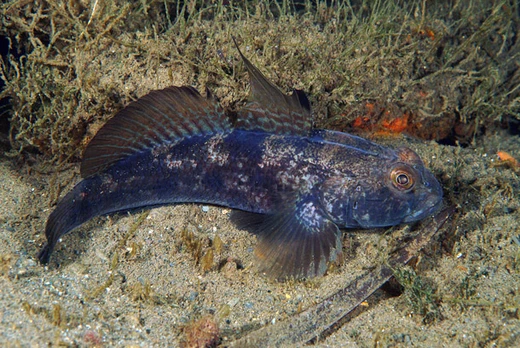
Drombus
A genus of gobies from Indian and western Pacific waters.

Drombus is a genus of goby fish found in the Indian Ocean and western Pacific Ocean, inhabiting freshwater, brackish, and marine environments. The genus contains ten currently recognized species, though some taxonomic disagreements exist in scientific literature. Notable species include the occasional-shrimp goby (Drombus bontii), yellow drombus (Drombus dentifer), Kranji drombus (Drombus globiceps), Hale's drombus (Drombus halei), key goby (Drombus key), white-edge drombus (Drombus lepidothorax), bluemarked drombus (Drombus ocyurus), Drombus palackyi, pinafore goby (Drombus simulus), and brown drombus (Drombus triangularis). Additionally, a fossil species, Drombus thackerae, has been described from otoliths. Two former species, Drombus kranjiensis and Drombus whitleyi, are now considered junior synonyms of Drombus globiceps and Bathygobius fuscus, respectively. Several other species—Drombus clarki, Drombus irrasus, Drombus maculipinnis, Drombus plumatus, and Drombus tutuilae—have been moved to the genus Callogobius. FishBase treats D. bontii as a synonym of Gobius bontii.
Quick Facts
- Taxon
- Drombus
- Type Species
- Drombus palackyi
- Type Species Authority
- D. S. Jordan & Seale, 1905
Facts from the source article.
Reader's Guide
The significance of Drombus lies in its representation of goby diversity across a range of salinities in the Indian Ocean and western Pacific. The genus includes species with common names reflecting physical traits or habitats, such as the Occasional-shrimp goby and Bluemarked drombus. Taxonomic revisions highlight the dynamic nature of goby classification, with some species moved to other genera (e.g., Callogobius) and others synonymized. The inclusion of an otolith-based fossil species, Drombus thackerae, underscores the genus's paleontological relevance. Disputes, such as the treatment of D. bontii as a synonym by FishBase, caution against assuming stability in species lists. Overall, Drombus serves as a case study in the challenges of ichthyological taxonomy and the importance of habitat diversity in goby evolution.
Did You Know?
- Drombus includes 10 currently recognized species.
- The genus is native to fresh, brackish, and marine waters of the Indian Ocean and western Pacific Ocean.
- Drombus thackerae is an otolith-based fossil species described in 2022.
- D. bontii is treated as a synonym of Gobius bontii by FishBase.
Genus Overview & Habitat
Drombus is a genus within the goby family, encompassing small fish that occupy a remarkably broad spectrum of aquatic environments. Rather than being confined to a single water type, members of this genus are found in fresh, brackish, and fully marine settings, a versatility that spans multiple salinity gradients. Their geographic footprint stretches across the Indian Ocean basin and into the waters of the western Pacific, a range that underscores their adaptability to diverse coastal and estuarine ecosystems. The genus as a whole is defined more by its taxonomic boundaries and the breadth of its ten recognized species than by a single ecological specialization. The fact that Drombus thrives in both riverine and oceanic conditions makes it a notable example of how a single goby genus can bridge fundamentally different aquatic worlds within one broad Indo-Pacific region.
The Ten Recognized Species
The genus Drombus currently encompasses ten recognized species, each bearing a common name that hints at its visual character or behavior. These range from the Occasional-shrimp goby (D. bontii) and the Yellow drombus (D. dentifer) to the Pinafore goby (D. simulus) and the Brown drombus (D. triangularis). The species were described over a span of more than 170 years, from Bleeker's 1849 description of D. bontii to the 2022 identification of D. thackerae. Descriptors include Bleeker, Hora, Whitley, Jordan, Seale, Smith, Weber, and the 2022 team of Carolin, Bajpai, Maurya, and Schwarzhans. The common names paint a vivid picture of visual diversity within the group: white edges, blue marks, yellow coloration, and triangular body shapes all find representation. This roster, while modest in number, reflects a genus that taxonomists have been carefully delineating for well over a century and a half.
Taxonomic Flux & Reclassification
The boundaries of Drombus have shifted considerably as ichthyologists refined their understanding of goby relationships. Several species once placed in this genus have since been moved to Callogobius, including D. clarki, D. irrasus, D. maculipinnis, D. plumatus, and D. tutuilae. In another reassignment, Drombus whitleyi is now regarded as a junior synonym of Bathygobius fuscus, while Drombus kranjiensis—originally described under the name Ctenogobius kranjiensis—has been synonymized with D. globiceps. Adding to the complexity, FishBase treats D. bontii not as a valid Drombus but as a synonym of Gobius bontii, a position that highlights ongoing disagreement among reference databases. These taxonomic migrations illustrate how the genus has been pruned and reshaped over time, with species entering and leaving the group as evidence accumulates, leaving the current ten-species roster as a relatively recent and still-evolving consensus.
The Fossil Dimension & Ecological Breadth
Among the ten recognized species, Drombus thackerae stands apart as an otolith-based fossil species, formally described in 2022 by Carolin, Bajpai, Maurya, and Schwarzhans. Its identification from otolith material represents a distinct methodological approach within goby taxonomy and extends the genus's documented history into the geological past. This fossil entry sits alongside living species that occupy fresh, brackish, and marine habitats across the Indian Ocean and western Pacific, creating a genus whose members collectively span a remarkable range of water types. The inclusion of a fossil taxon within the same genus as extant species indicates that the Drombus lineage has maintained recognizable morphological continuity over considerable time. Together, the fossil record and the present-day ecological breadth—from fresh and brackish waters to fully marine settings—paint a picture of a goby group whose members have persisted across multiple aquatic environments in the Indo-Pacific region.
Frequently Asked Questions
What is Drombus?
Drombus is a genus of small goby fish native to the Indian Ocean and western Pacific region. It encompasses ten currently accepted species, though a few taxonomic disagreements still linger in the literature.
Where can you find Drombus species?
These gobies range across the Indian Ocean and the western Pacific. They are adaptable enough to thrive in freshwater, brackish, and fully saltwater environments.
How many Drombus species are recognized?
Ten species are currently accepted within the genus, although some researchers still dispute certain boundaries. The exact count can shift as new studies refine species definitions.
What habitats does Drombus occupy?
Unlike many gobies limited to a single water type, Drombus species span all three major habitat categories: pure freshwater, brackish transitional zones, and open marine settings. This versatility is a defining trait of the genus.
What are some well-known Drombus species?
Fans often point to the occasional-shrimp goby (D. bontii), the yellow drombus (D. dentifer), and the pinafore goby (D. simulus) as standout members. Other recognized names include the Kranji drombus, Hale's drombus, and the white-edge drombus.
More in Gobies 1-16
Spotted an error? Know more?
Reader corrections go straight into our review queue. Suggest an edit · How this site is sourced