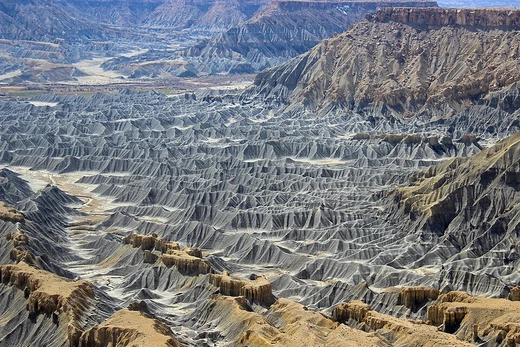
Rift
A linear zone where the lithosphere is pulled apart.

A rift is a linear zone where the lithosphere is being pulled apart, an example of extensional tectonics. Typical features include a central downfaulted depression called a graben or half-graben, with normal faulting and rift-flank uplifts. Rifts are significant because they can lead to continental breakup, formation of oceanic basins, and host important mineral and hydrocarbon deposits.
- Field
- Geology
- Known for
- Extensional tectonics, rift valleys, and continental breakup
- Key features
- Graben, half-graben, normal faulting, rift-flank uplifts
- Associated phenomena
- Volcanism, seafloor spreading, failed rifts (aulacogens)
Lore & Background
Rifts consist of separate segments that together form a linear zone. Individual segments have a half-graben geometry controlled by a single basin-bounding fault. Segment lengths vary depending on the elastic thickness of the lithosphere; areas of thick colder lithosphere, such as the Baikal Rift, have segment lengths over 80 km, while warmer thin lithosphere may have segments less than 30 km. Along the rift axis, the position and polarity of the main bounding fault change from segment to segment. Segment boundaries, known as accommodation zones, accommodate differences in fault displacement and can be simple relay ramps or zones of high structural complexity.
Reader's Guide
Rifts are fundamental to understanding plate tectonics and the formation of new ocean basins. They occur along the central axis of most mid-ocean ridges, where new oceanic crust is created at divergent boundaries. Failed rifts, or aulacogens, result from continental rifting that did not proceed to breakup, often at triple junctions. Rift development progresses from isolated basins in the initiation stage to linked fault systems and significant shoulder uplift in the mature stage. Post-rift subsidence occurs as the mantle cools. Rifts are economically important: they host SedEx mineral deposits and significant oil and gas accumulations, with thirty percent of giant oil and gas fields found in such settings. The sedimentary rocks of continental rifts contain important hydrocarbon reserves, with source rocks developing in lacustrine or restricted marine environments.
Did You Know?
- Typical rift features include a central linear downfaulted depression called a graben or half-graben.
- Failed rifts are known as aulacogens and result from continental rifting that did not lead to breakup.
- Rift segment lengths vary from less than 30 km in warm thin lithosphere to over 80 km in thick cold lithosphere.
- Thirty percent of giant oil and gas fields are found in continental rift settings.
More in Geomorphology 1-24
Spotted an error? Know more?
Reader corrections go straight into our review queue. Suggest an edit · How this site is sourced