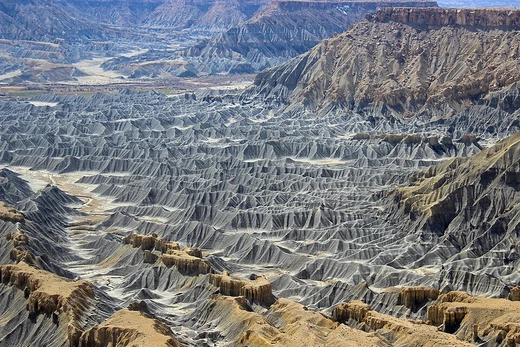
Fault block
Fault blocks: the building blocks of mountains and valleys.

Omri Matania, Lior Bachar, Eric Bechhoefer, Jacob Bortman · CC BY 4.0
Fault blocks are very large blocks of rock, sometimes hundreds of kilometres in extent, created by tectonic and localized stresses in Earth's crust. Large areas of bedrock are broken up into blocks by faults. Blocks are characterized by relatively uniform lithology.
- Motion
- Primarily vertical (dip-slip along normal faults), producing dramatic landforms
Lore & Background
The largest of these fault blocks are called crustal blocks. Large crustal blocks broken off from tectonic plates are called terranes. Those terranes which are the full thickness of the lithosphere are called microplates. Continent-sized blocks are called variously microcontinents, continental ribbons, H-blocks, extensional allochthons and outer highs.
Reader's Guide
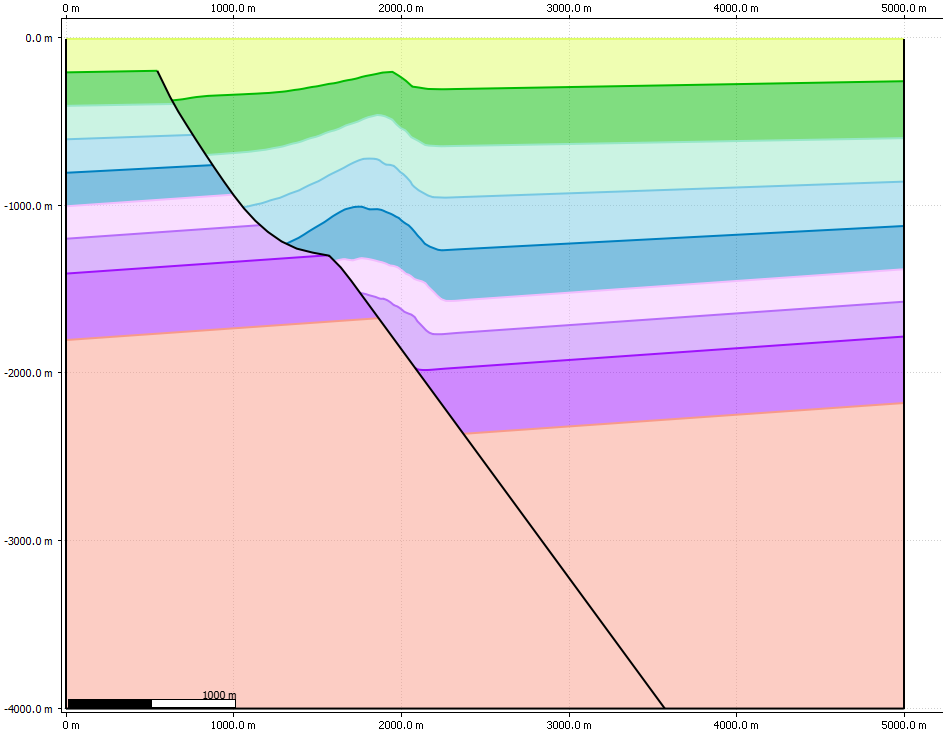
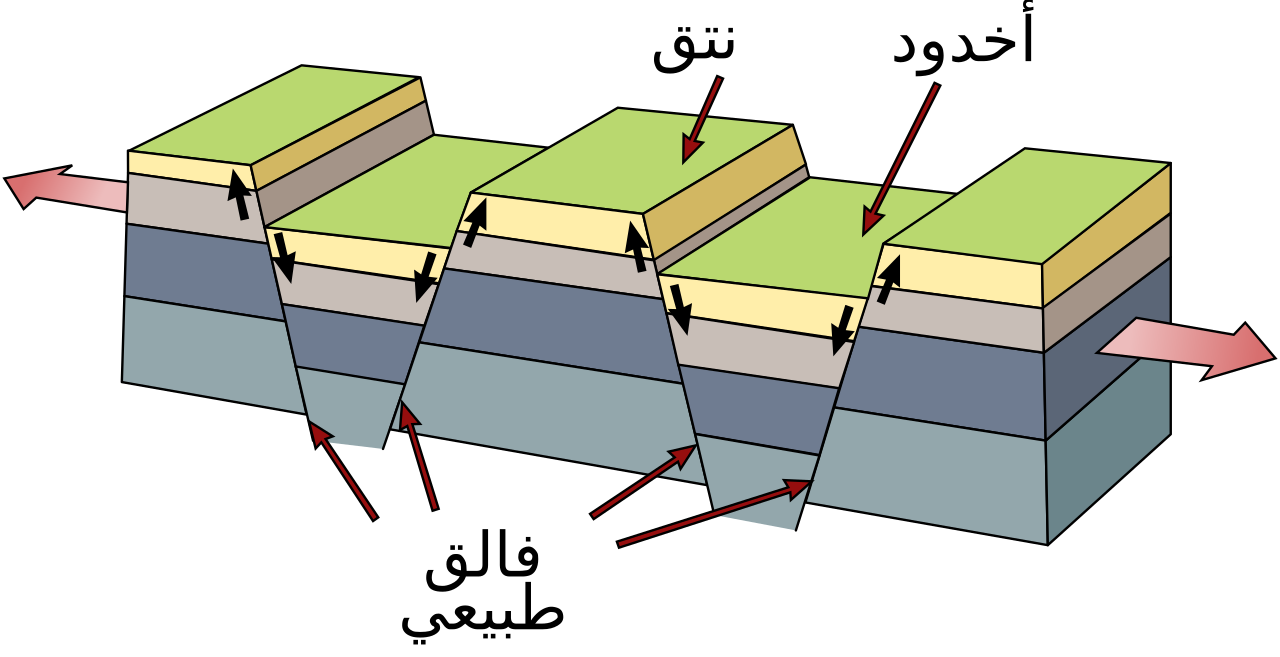
Because most stresses relate to the tectonic activity of moving plates, most motion between blocks is horizontal, that is parallel to the Earth's crust by strike-slip faults. However vertical movement of blocks produces much more dramatic results. Landforms (mountains, hills, ridges, lakes, valleys, etc.) are sometimes formed when the faults have a large vertical displacement. Adjacent raised blocks (horsts) and down-dropped blocks (grabens) can form high escarpments. Often the movement of these blocks is accompanied by tilting, due to compaction or stretching of the crust at that point.
Did You Know?
- Fault-block mountains often result from rifting, an indicator of extensional tectonics.
- There are two main types of block mountains: uplifted blocks between two faults and tilted blocks mainly controlled by one fault.
- Lifted type block mountains have two steep sides exposing both sides scarps, leading to horst and graben terrain.
- Tilted type block mountains have one gently sloping side and one steep side with an exposed scarp.
Classification and Naming Hierarchy
Fault blocks represent some of the largest discrete units of bedrock on Earth, with individual blocks occasionally spanning hundreds of kilometres across. They originate when tectonic forces and more localized stresses fracture the crust, splitting broad regions of relatively uniform lithology into distinct segments separated by faults. Geologists organize these blocks into a clear naming hierarchy based on scale and origin. The very largest units are termed crustal blocks. When such a block detaches entirely from a tectonic plate, it becomes a terrane. If that terrane encompasses the full thickness of the lithosphere, it is elevated in status to a microplate. At the grandest scale, continent-sized fragments carry a remarkable variety of names in the literature: microcontinents, continental ribbons, H-blocks, extensional allochthons, and outer highs. This layered nomenclature reflects both the physical size of the fragment and the tectonic context in which it was separated, giving researchers a precise vocabulary for describing pieces of Earth's crust that range from regional blocks to entire continental slivers.
Tectonic Mechanics and Block Movement
The driving forces behind fault-block formation are overwhelmingly tied to the movement of tectonic plates, which means the majority of relative motion between adjacent blocks occurs horizontally along strike-slip faults. This lateral sliding, while geologically significant, tends to produce less visually striking surface features. Far more dramatic consequences arise when blocks shift vertically. Substantial vertical displacement along fault planes can generate mountains, hills, ridges, lakes, and valleys. When one block is raised while its neighbour is dropped, the result is a pair of high escarpments: the uplifted unit is called a horst, and the sunken unit a graben. The motion is rarely purely vertical or purely horizontal in practice. Tilting frequently accompanies the displacement, a consequence of the crust being compacted on one side or stretched on the other at the fault zone. This combination of vertical offset and rotational tilting gives fault-block terrain its characteristic asymmetry, with one face of a ridge rising steeply while the opposite face descends more gradually.
Two Architectural Types of Block Mountains
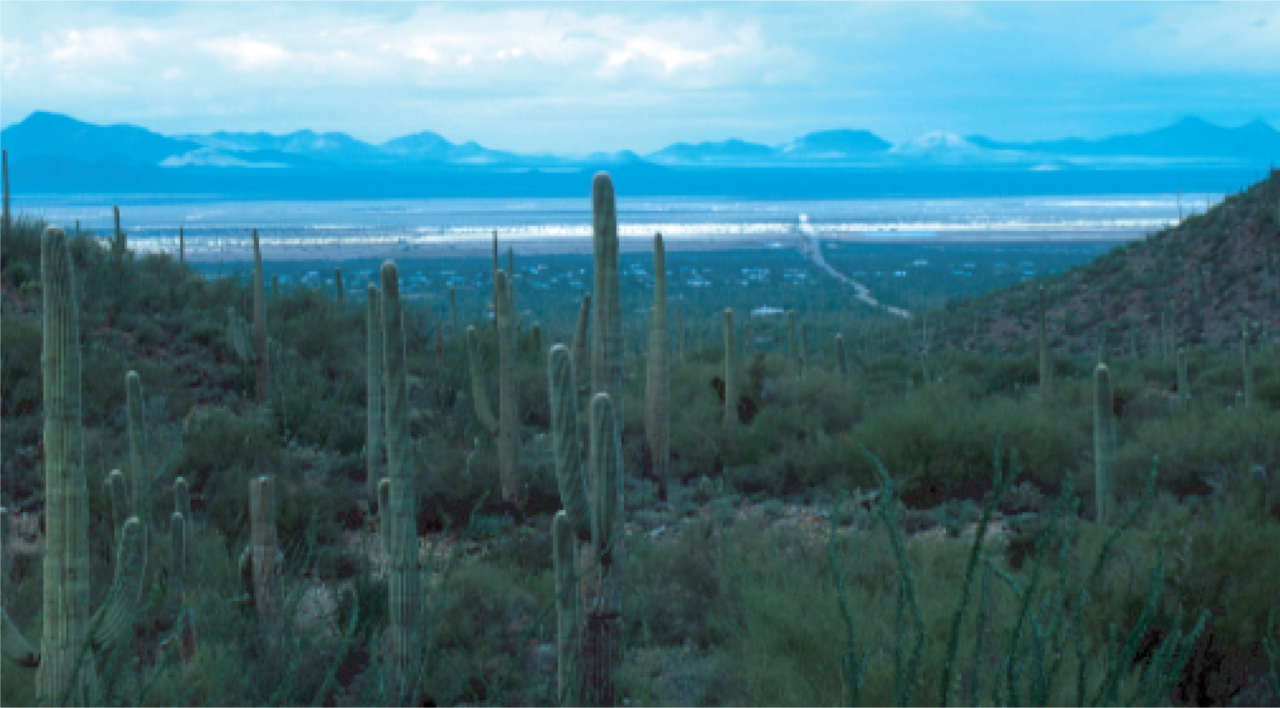
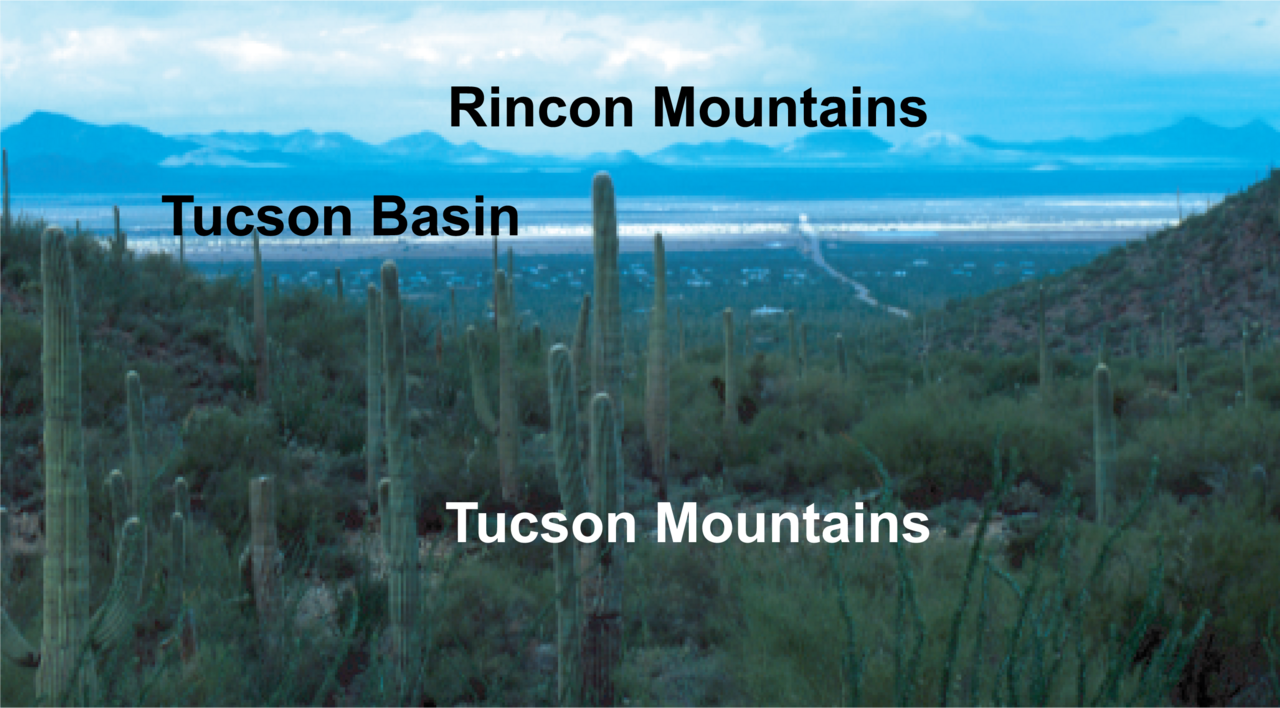
Fault-block mountains are most commonly the product of rifting, a process that signals extensional tectonics at work. They can appear as modest local features or as components of vast rift-valley systems stretching across continents. Geologists distinguish two principal architectural types. The first, the lifted type, involves a block sandwiched between two faults, both of which have moved to raise the central segment. This produces a mountain with two steep scarps, one on each side, creating the classic horst-and-graben landscape. The second, the tilted type, is governed mainly by a single fault. Here the block rotates so that one face becomes a gentle, long slope while the opposite face remains a steep, exposed scarp. This tilted geometry is the dominant pattern across the Basin and Range region of the western United States, where countless parallel ridges display their characteristic one-sided profile. Both types share the same fundamental origin—crustal extension and faulting—but their differing fault configurations produce distinctly different surface expressions that are readily recognizable in the field.
Global Landscapes Shaped by Fault Blocks
The geological principles of fault-block tectonics are visible on every inhabited continent. In East Africa, the great Rift zone exemplifies how extensional forces can carve an extensive system of rift valleys and block mountains across an entire region. A far smaller illustration is Death Valley in California, where a modest graben sits between uplifted horsts. Europe offers a textbook example in the Upper Rhine valley, a deep graben flanked by the Vosges mountains of France on one side and the Black Forest of Germany on the other. In southeastern Europe, the Rila-Rhodope Massif in Bulgaria displays a complex arrangement of horsts, including the linear Belasitsa, the domed Rila, and the massive anticline of Pirin, all set between the graben valleys of the Struma and Mesta rivers. In India, the Narmada River basin forms a graben trapped between the Vindhya and Satpura horsts. Together these examples demonstrate that fault-block topography, from modest valleys to continent-scale rifts, is a universal expression of Earth's restless crust.
Gallery
Frequently Asked Questions
What is a fault block in geomorphology?
A fault block is a massive slab of bedrock, sometimes stretching hundreds of kilometers, that gets isolated when tectonic or local stresses crack the crust along faults. Each block typically shares a uniform rock composition and is bounded by fault planes on one or more sides.
How does a fault block actually form?
It forms when accumulated stress within the crust exceeds the rock's strength, causing it to fracture along a fault plane. The block on one side of that plane then shifts relative to the other side, carving out a distinct, bounded mass of rock.
What type of motion is a fault block most associated with?
The dominant movement is vertical, driven by dip-slip along normal faults where one block drops relative to its neighbor. This up-and-down displacement is what sculpts the dramatic topography fans associate with fault-block terrain.
What happens when a fault block detaches entirely from its parent plate?
Once a large crustal block separates from a tectonic plate it becomes a terrane, and if the detached piece carries the full thickness of the lithosphere it is reclassified as a microplate. Continent-scale examples carry additional names such as microcontinents, continental ribbons, extensional allochthons, or outer highs.
What landforms does a fault block create on the surface?
The vertical offset between adjacent blocks produces steep, tilted mountain ranges on the uplifted side and elongated valleys or basins on the down-dropped side. Together these features give fault-block regions their characteristic jagged, step-like profile.
More in Geomorphology 1-24
Spotted an error? Know more?
Reader corrections go straight into our review queue. Suggest an edit · How this site is sourced