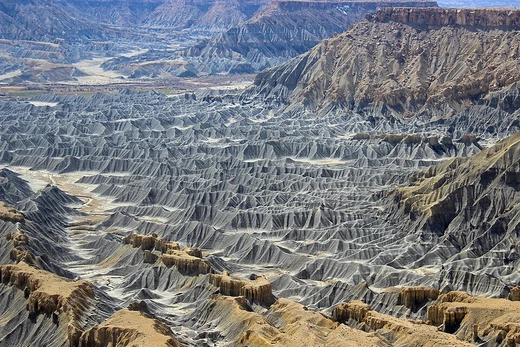
Oxbow lake
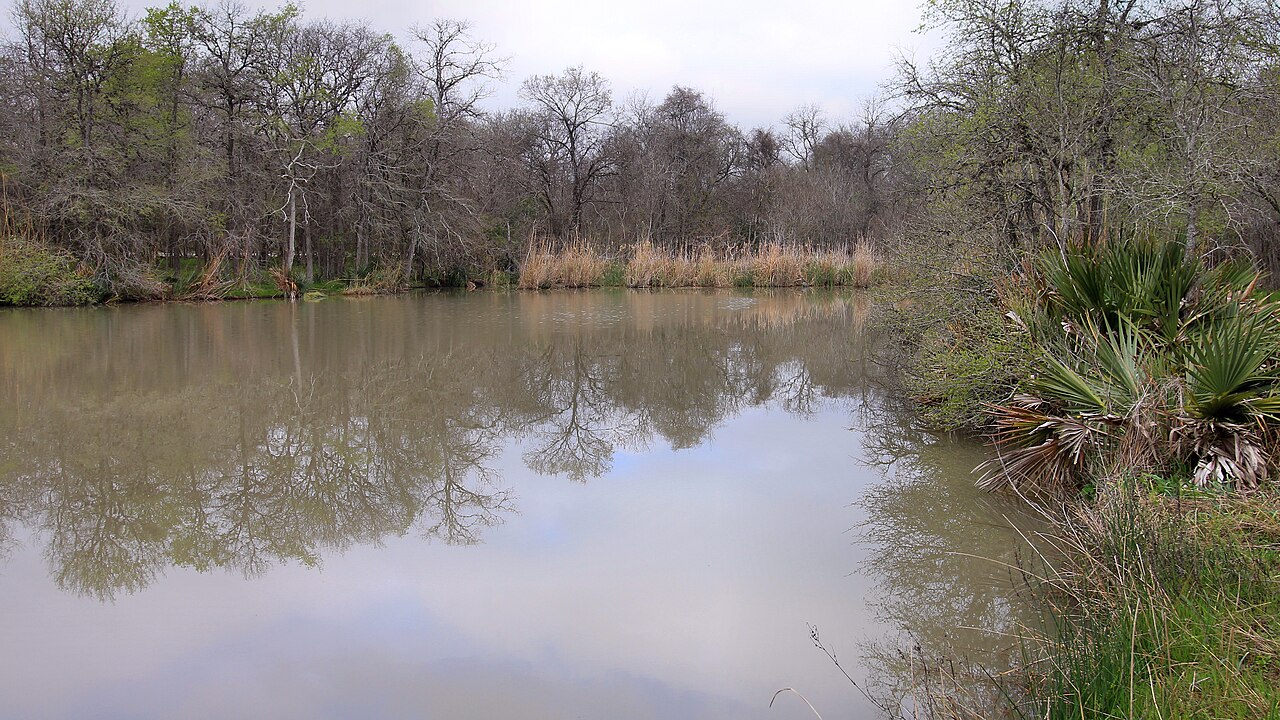
U-shaped lake formed from a cut-off river meander.

Christine Johnstone · CC BY-SA 2.0
An oxbow lake is a U-shaped body of still water that forms when a river cuts off one of its own wide bends, leaving a separate pool behind. The term "oxbow" itself describes a U-shaped curve in a stream or river, whether or not it has been isolated. The name comes from the curved part of a harness used to yoke oxen to a cart or plow. In South Texas, oxbows left by the Rio Grande are known as resacas, while in Australia they are called billabongs.
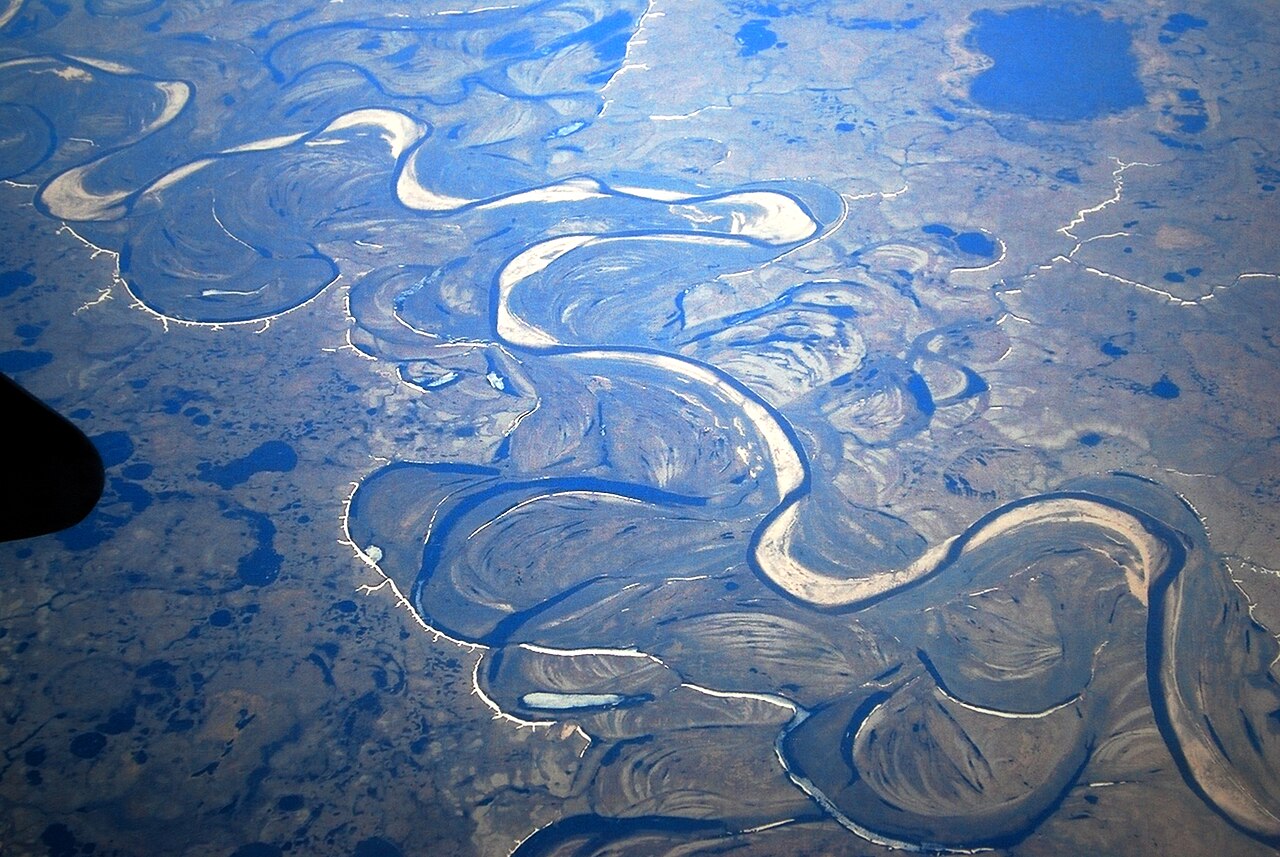
These lakes develop when a meandering river erodes through the narrow neck of one of its loops. Over time, meanders grow more curved, and the river eventually takes a shorter, straighter path, bypassing the bend. The abandoned loop then gets sealed off by silt deposits at both ends, creating a lake with no flowing current. Without a current, the lake bed slowly fills with silt, turning into a bog or swamp before eventually drying up completely.
On low-lying plains, especially near a river’s final course to the sea or a lake, rivers meander widely. At a bend, sediment builds up on the convex bank (the inside curve), while erosion and undercutting occur on the concave bank (the outside curve). Over time, these processes make the meander more pronounced, bringing the two concave banks closer together. Eventually, the narrow neck of land between them is cut through—either by lateral erosion or by flood currents—creating a new, straighter channel and leaving an abandoned loop called a cutoff. Once the cutoff is sealed off by sediment, an oxbow lake is formed. This process can take anywhere from a few years to several decades, and sometimes it stops entirely.
The movement of eroded material from the concave bank to the convex bank is driven by secondary flow across the riverbed near a bend. This is clearly seen in the formation of point bars. A simple demonstration uses a circular bowl: partly fill it with water, sprinkle in dense particles like sand or rice, and stir the water in a circle. Instead of being flung outward, the particles gather in a neat pile at the center. This happens because the primary flow is circular, but the secondary flow in the boundary layer near the bowl’s floor moves inward. Similarly, in a river, the water surface is slightly higher on the outside of a bend, creating a pressure gradient that pushes water toward the convex bank.
- Type
- Geological feature
- Formation process
- Meander cutoff through erosion and deposition
- Also known as
- Resacas (South Texas), Billabongs (Australia)
- Typical environment
- Low-lying plains, final course of rivers
- Ecological role
- Wetland ecosystem, habitat for water tupelo, bald cypress, giant river otter
Lore & Background
An oxbow lake forms when a meandering river erodes through the neck of one of its meanders. This takes place because meanders tend to grow and become more curved over time. The river then follows a shorter course that bypasses the meander. The entrances to the abandoned meander eventually silt up, forming an oxbow lake. Oxbow lakes are stillwater lakes, with no current flowing through them, which causes the lake bed to gradually accumulate silt, becoming a bog or swamp and then evaporating completely. When a river reaches a low-lying plain, often in its final course to the sea or a lake, it meanders widely. In the vicinity of a river bend, deposition occurs on the convex bank, while both lateral erosion and undercutting occur on the cut bank or concave bank. Continuous deposition on the convex bank and erosion of the concave bank cause the formation of a very pronounced meander with two concave banks getting closer. The narrow neck of land between the two neighboring concave banks is finally cut through, either by lateral erosion of the two concave banks or by the strong currents of a flood. When this happens a new, straighter river channel develops—and an abandoned meander loop, called a cutoff, forms. When deposition finally seals off the cutoff from the river channel, an oxbow lake forms. This process can occur over a time from a few years to several decades, and may sometimes become essentially static. The gathering of erosion products near the concave bank and the transporting of them to the convex bank is the work of the secondary flow across the floor of the river in the vicinity of a river bend. The effect of the secondary flow can be demonstrated using a circular bowl partly filled with water and dense particles; the secondary flow sweeps particles toward the center, analogous to point bar formation. River flood plains that contain rivers with a highly sinuous platform are populated by longer oxbow lakes than those with low sinuosity.
Reader's Guide
Oxbow lakes serve as important wetland ecosystems. In the United States, oxbow lakes serve as the primary habitat for water tupelo and the iconic bald cypress. The numerous oxbow lakes of the Amazon River are a favorable habitat for the giant river otter. Oxbow lakes may also be suitable locations for aquaculture. They contribute to the health of a river ecosystem by trapping sediments and agricultural runoff, thereby removing them from the main river flow. However, this is destructive of the oxbow lake ecosystem itself. Oxbow lakes are also vulnerable to heavy metal contamination from industrial sources. Oxbow lakes may be formed when a river channel is straightened artificially to improve navigation or for flood alleviation, as occurred on the upper Rhine in Germany in the nineteenth century. An example of an entirely artificial waterway with oxbows is the Oxford Canal in England, where the northern part was straightened between 1829 and 1834, creating a number of oxbow-shaped sections isolated from the new course. Notable examples include Bole and Burton Round in West Burton, England; Bayou Brevelle in the United States; Carter Lake, formed after severe flooding in 1877; Cuckmere Haven in England; Halfmoon Lake in Eau Claire, United States; Kanwar Lake Bird Sanctuary in India; The Oxbow on the Connecticut River; many oxbow lakes alongside the Mississippi River and its tributaries, including Lake Chicot (the largest in North America) and Reelfoot Lake formed after the 1811–12 New Madrid earthquakes; the upper reaches of New Zealand's Taieri River; Vynthala Lake in India; and West Lake (Hồ Tây) in Vietnam. A possible oxbow lake has been postulated on Saturn's moon Titan.
Did You Know?
- In South Texas, oxbows left by the Rio Grande are called resacas; in Australia, they are called billabongs.
- The largest oxbow lake in North America is Lake Chicot, originally part of the Mississippi River.
- Oxbow lakes can form over a period from a few years to several decades.
- The secondary flow that helps form oxbow lakes can be demonstrated using a circular bowl of water and dense particles.
The Geology of Meander Cutoff
An oxbow lake begins its life as a river meander, a sweeping curve that grows progressively tighter over time. On the outer concave bank, the current carves and undercuts the soil, while on the inner convex bank, sediment steadily deposits. This asymmetry is driven by a secondary flow along the riverbed: because the water surface sits slightly higher on the outside of a bend, a lateral pressure gradient pushes the boundary layer across the floor toward the convex bank, sweeping loose sand and gravel into the characteristic point bars. As two neighboring concave banks draw ever closer, the narrow neck of land between them becomes vulnerable. Either persistent lateral erosion or the violent surge of a flood finally punches through, and the river abandons its old loop in favor of a shorter, straighter channel. The entrances to the abandoned meander gradually silt shut, leaving behind a stillwater pool with no through-current. Over time, that quiet lake bed fills with sediment, transitions into bog or swamp, and may ultimately evaporate entirely. The entire sequence can unfold over a few years or stretch across several decades, and rivers with high sinuosity tend to produce longer oxbow lakes than their low-sinuosity counterparts.
Ecology and Environmental Function
Oxbow lakes function as vital wetland ecosystems that support distinctive flora and fauna. In the United States, they serve as the principal home for water tupelo and the iconic bald cypress, while the numerous oxbow lakes scattered along the Amazon River provide a welcoming environment for the giant river otter. Beyond their role as wildlife refuges, these stillwater bodies can also serve as suitable sites for aquaculture operations. Ecologically, oxbow lakes act as natural filters within a river system. They capture suspended sediments and agricultural runoff, stripping these materials from the main river's current and contributing to the overall health of the surrounding aquatic environment. However, this very function is paradoxically destructive to the oxbow lake ecosystem itself, as the accumulating silt gradually fills the basin. Additionally, these stillwater bodies face external threats from industrial operations, exposing them to the risk of heavy metal contamination that can compromise the delicate biological communities they support. Their lack of through-current, while essential to their identity, means they lack the self-flushing capacity of a flowing river, leaving them particularly exposed to pollutants that accumulate over time.
Human Engineering and Artificial Oxbows
Not all oxbow lakes are products of natural erosion. When engineers straighten a river channel to improve navigation or alleviate flooding, the abandoned meander loops can become artificial oxbow lakes. A notable historical example occurred on the upper Rhine in Germany during the nineteenth century, where channel straightening projects created such features along the formerly winding waterway. Perhaps the most striking example of an entirely artificial waterway producing oxbows is the Oxford Canal in England. When originally constructed, the canal followed a very meandering course that tracked the natural contours of the land. Between 1829 and 1834, however, the northern section was straightened, reducing its total length from approximately 146 kilometers to about 125 kilometers. This engineering intervention left behind a number of oxbow-shaped sections that became isolated from the new, shorter course. These man-made cutoffs demonstrate that the same geometric principles governing natural meander abandonment, deposition sealing off the old channel and the river taking a more direct path, can be replicated through deliberate human intervention, producing landscapes indistinguishable from their natural counterparts.
Cultural Naming and Notable Examples
The term oxbow itself draws from the U-shaped harness component used to yoke oxen for pulling a plough or cart, a fitting shape for the curved water bodies it describes. Different regions have developed their own local names for these features: in South Texas, the oxbows left behind by the Rio Grande are known as resacas, while in Australia the equivalent formations carry the name billabong. Around the world, numerous oxbow lakes have become well-known landmarks. In Nottinghamshire, England, Bole and Burton Round represent a pair of former lakes sitting in close proximity. The Cuckmere Haven in Sussex features a widely meandering river dotted with oxbow lakes so characteristic that they appear frequently in physical geography textbooks. In the United States, Carter Lake formed after severe flooding in 1877 forced the Missouri River to shift roughly two kilometers to the southeast, while Bayou Brevelle in Natchitoches Parish was created when the Red River of the South altered its course under the influence of the Great Raft. Halfmoon Lake in downtown Eau Claire resulted from a shift in the Chippewa River's course.
Gallery
Frequently Asked Questions
What is an oxbow lake?
An oxbow lake is a U-shaped pool of still water left behind after a meandering river abandons one of its own wide bends. The name 'oxbow' evokes the curved yoke used to harness oxen to a cart or plow, matching the shape of the isolated loop.
How does an oxbow lake form?
Over time a meandering river's bends grow progressively tighter until the current erodes through the narrow neck connecting two loops. Once the river breaks through and shortcuts its course, the old bend is severed and fills with still water, becoming an oxbow lake.
What are oxbow lakes called in other regions?
In South Texas, oxbows left behind by the Rio Grande are locally known as resacas. In Australia, the same geological feature is commonly referred to as a billabong.
What ecological role do oxbow lakes play?
Oxbow lakes serve as wetland ecosystems that shelter a range of aquatic and semi-aquatic species. They provide habitat for trees such as water tupelo and bald cypress, as well as animals like the giant river otter.
Where are oxbow lakes most commonly found?
They typically develop in low-lying plains where rivers are in their final, mature course. These flat, sediment-rich environments favor the slow, wide meandering that eventually leads to cutoff events.
More in Geomorphology 1-24
Spotted an error? Know more?
Reader corrections go straight into our review queue. Suggest an edit · How this site is sourced