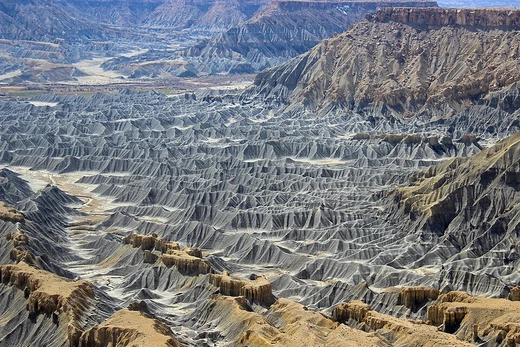
Mass wasting
Gravity-driven downslope movement of rock and soil.

Daderot · CC0
Mass wasting, or mass movement, describes how rock and soil travel downhill solely due to gravity. Unlike other forms of erosion, the material in mass wasting isn't carried by water, wind, or ice. This process happens on both land and underwater slopes, and has been spotted on Earth, Mars, Venus, Jupiter's moon Io, and many other places in the Solar System.
There are several types of mass wasting, each with unique traits and timescales ranging from seconds to centuries. Creep is a slow, long-term movement where small shifts in soil or rock gradually head downslope, guided by gravity. Steeper slopes speed up creep, which can cause trees and shrubs to curve as they try to stay upright, and may even trigger landslides if roots lose their grip. Cycles of freezing and thawing, or hot and cold temperatures, can push surface soil downhill, forming small steps called terracettes. Landslides are often preceded by creep and soil sloughing—loose soil that falls and piles up at the base of steep sections.
Solifluction is a type of creep found in arctic or alpine climates. It happens when soil, saturated with moisture, thaws in summer and creeps downhill on moderate, mostly bare slopes underlain by permafrost. This process affects entire slopes, not just channels, and can create terrace-like landforms or stone rivers.
Landslides, also called landslips, are relatively fast movements of large masses of earth and rock down a hill or mountainside. They can be classified by how much water is involved. In a narrow sense, landslides involve rapid movement of mostly dry debris on moderate to steep slopes. As water content increases, they become debris avalanches, then earthflows, then mudflows. With even more water, the flow becomes a sheetflood, which is sheet erosion, not mass wasting.
Mass wasting can be deadly and destructive when rapid, like landslides. Slower forms, such as soil creep, challenge civil engineering by deforming roads, structures, and breaking pipelines. Mitigation methods include stabilizing slopes, building walls or catchment dams to contain rockfalls or debris flows, planting trees (afforestation), or improving drainage in source areas.
On Earth, submarine mass wasting is common along glaciated coasts where retreating glaciers release large amounts of sediment.
- Field
- Geology, Geomorphology
- Known for
- Gravity-driven downslope movement of rock and soil without entrainment in a moving medium
- Types
- Creep, solifluction, rockfalls, debris flows, landslides
- Timescales
- Seconds to hundreds of years
- Observed on
- Earth, Mars, Venus, Io, and other Solar System bodies
Lore & Background
Mass wasting encompasses a range of processes from slow soil creep to rapid landslides. Soil creep is a slow, long-term movement that can cause trees and shrubs to curve and can deform roadways and structures. Solifluction is a form of creep characteristic of arctic or alpine climates, occurring in saturated soil over permafrost during summer thaws. Landslides are relatively rapid movements of large masses of earth and rock, which can be further classified by water content into debris avalanches, earthflows, and mudflows.
Reader's Guide
Mass wasting is a significant geological process that shapes landscapes and poses hazards to human infrastructure and life. Rapid events like landslides can be deadly and destructive, as seen in the Oso disaster of March 2014, which caused 43 fatalities in Oso, Washington. More gradual mass wasting, such as soil creep, challenges civil engineering by deforming roads, buildings, and pipelines. Mitigation methods include slope stabilization, construction of walls and catchment dams, afforestation, and improved drainage. Mass wasting also occurs on other planets and moons, including Mars, Venus, and Io, where it is associated with volatile loss and volcanic terrain. Understanding mass wasting is crucial for hazard assessment, land-use planning, and interpreting planetary geology.
Did You Know?
- Mass wasting differs from stream erosion in that debris is not entrained in a moving medium like water, wind, or ice.
- Submarine mass wasting is particularly common along glaciated coastlines where glaciers are retreating.
- The Oso disaster of March 2014 was a landslide that caused 43 fatalities in Oso, Washington.
- Mass wasting has been observed on Mars, Venus, Jupiter's moon Io, and many other Solar System bodies.
Defining the Phenomenon
Mass wasting, sometimes called mass movement, describes the gravitational descent of rock and soil along a slope. What sets it apart from other erosion processes is the absence of a transporting medium—water, wind, or ice does not carry the debris. Water often assists the process, but in insufficient quantities to qualify as a carrier. This creates a blurry boundary: a mudflow counts as mass wasting, while a very muddy stream falls under stream erosion, yet no sharp line separates the two. Geologists broadly divide mass movements into creeps and landslides based on how the material travels downslope, with subsidence occasionally grouped in as a third category involving minimal horizontal displacement. The timescales span an extraordinary range, from events lasting mere seconds to processes unfolding over centuries. The phenomenon is not limited to Earth's dry surface; it operates on submarine slopes as well, making it one of the most universally active geomorphic forces known.
From Slow Creep to Sudden Collapse
The spectrum of mass wasting stretches from imperceptibly slow to catastrophically fast. At the gentlest end, soil creep represents a long-term, multi-directional shuffling of particles that gravity steadily biases downslope. The steeper the incline, the more rapid the creep becomes. Over time, this process bends trees and shrubs as they struggle to stay upright, and it can loosen root systems enough to trigger full-scale landslides. Freezing and thawing cycles, or repeated heating and cooling, inch surface soil downhill to form terracettes. In arctic and alpine zones, a specialized variant called solifluction operates on moderate, vegetation-free slopes underlain by permafrost, where summer thawing releases saturated soil to flow downhill, producing lobed deposits or stone rivers. At the opposite extreme, a landslide hurries a large mass of earth and rock down a hillside in a matter of minutes. As water content increases through the sequence, the event transitions from a relatively dry rock avalanche into a debris avalanche, then an earthflow, and finally a mudflow.
A Solar System Widespread Process
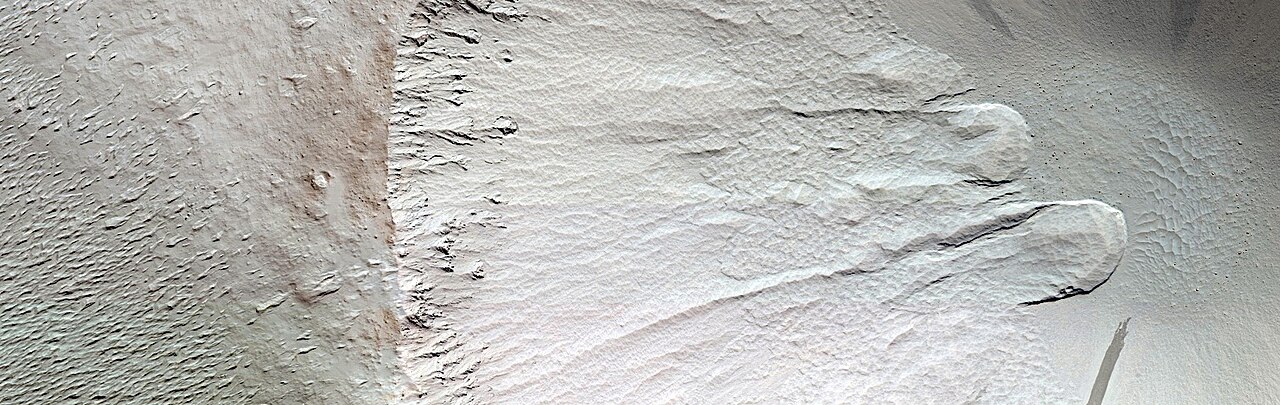
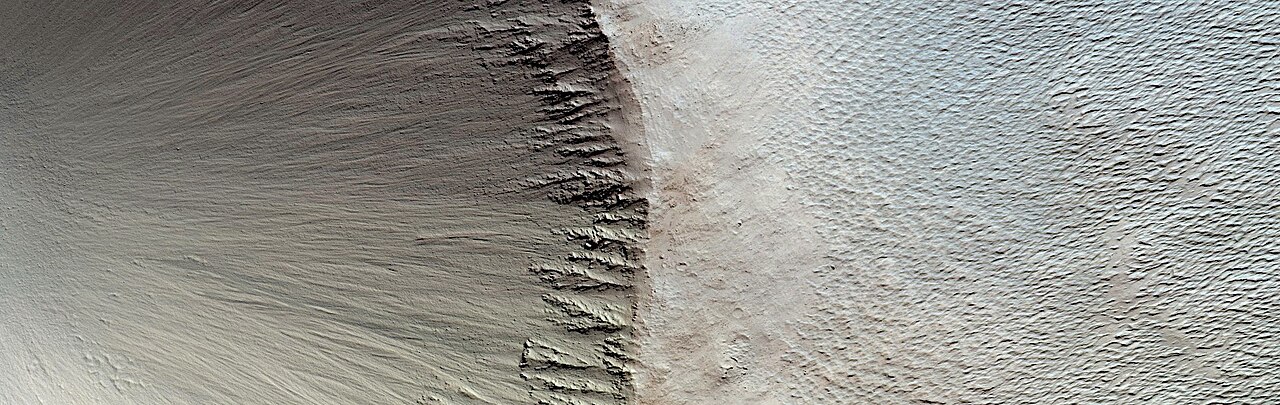
Mass wasting is far from an Earth-exclusive story. On our own planet, it operates on both land and beneath the ocean surface, with submarine slides being especially common along coastlines where retreating glaciers release enormous sediment loads. These underwater events can hurl vast quantities of material hundreds of kilometers in a matter of hours. Beyond Earth, the process appears wherever volatile materials escape from a regolith. Mars exhibits mass wasting in its equatorial regions, where wind erosion steepens slopes of soft, sulfate-rich sediments. Venus shows the phenomenon tied to the rugged terrain of its tesserae regions. Jupiter's moon Io displays extensive mass wasting on its volcanic mountains, while Triton and possibly Europa and Ganymede also bear evidence of gravitational slope failure. The sheer breadth of locations—spanning rocky planets, gas-giant moons, and icy bodies—underscores that mass wasting is a fundamental consequence of gravity acting on unconsolidated material wherever such material exists in a planetary environment.
Engineering Challenges and Human Defense
The human cost of mass wasting is severe. Rapid events like landslides can kill and devastate communities, while the slow, insidious process of soil creep quietly deforms roadways, bends structures, and ruptures buried pipelines—posing persistent headaches for civil engineers. The geological triggers are diverse: unconsolidated or weak rock, thinly bedded strata, faults that compromise structural integrity, steep topography, and climatic extremes all create passive vulnerability. Against these forces, engineers deploy a toolkit of defenses. Slope stabilization, retaining walls, and catchment dams are built to intercept rockfall or channel debris flows. Planting trees and vegetation, known as afforestation, helps bind soil, while improved drainage in source areas reduces the water saturation that accelerates movement. The deposits left behind tell their own story: talus slopes at cliff bases, poorly sorted landslide debris showing stretched clay lumps called boudinage, and long narrow debris-flow tracks with natural levees that often form the upper slopes of alluvial fans.
Gallery
Frequently Asked Questions
Who is Mass wasting?
Mass wasting (also called mass movement) is the geomorphological process in which rock, soil, and debris migrate downslope under the pull of gravity alone, without being carried by water, wind, or ice. It operates on both terrestrial and submarine slopes.
What are Mass wasting's powers and role?
Its toolkit spans creep, solifluction, rockfalls, debris flows, and full-scale landslides, each differing in speed, material, and mechanism. Individual events can unfold in mere seconds or creep forward over hundreds of years.
Why is Mass wasting important to the field?
It is one of the primary agents reshaping hillslopes, building valley fills, and triggering hazards such as buried infrastructure or naturally dammed lakes. Understanding it is essential for hazard prediction and for reconstructing past environmental conditions on Earth and other planetary bodies.
Where can fans spot Mass wasting in action?
Beyond Earth, clear evidence of gravity-driven slope failure has been identified on Mars, Venus, and Jupiter's volcanic moon Io, making it a truly Solar System-wide phenomenon. On Earth it is visible everywhere from alpine scree slopes to deep-sea canyon walls.
More in Geomorphology 1-24
Spotted an error? Know more?
Reader corrections go straight into our review queue. Suggest an edit · How this site is sourced