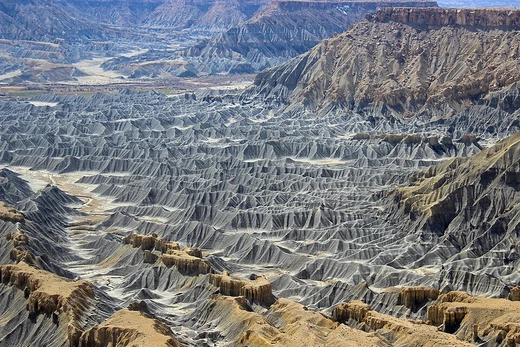
Hummock
Small mounds formed by landslides, frost, or peat in varied landscapes.

TheFurther21 · CC BY-SA 3.0
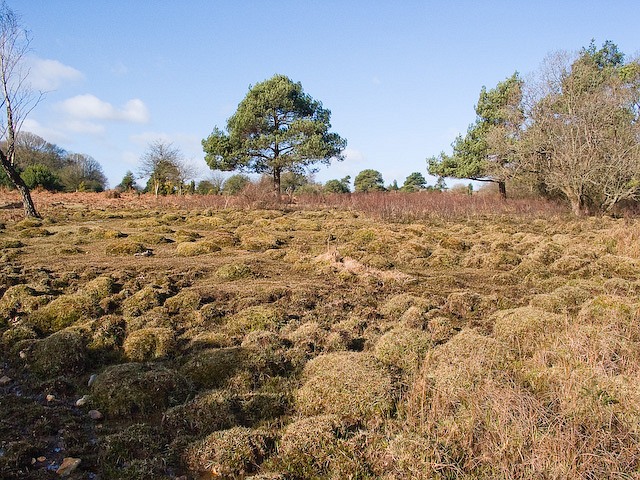
A hummock is a small knoll or mound above ground, typically less than 15 meters in height, often appearing in groups or fields. In geology, hummocks form through various processes, including large landslide avalanches in volcanic areas, cryogenic activity in cold climates, and organic accumulation in bogs and swamps. Their study is significant for understanding landscape evolution, environmental change, and geological hazards.
- Field
- Geology, Geomorphology
- Known for
- Small knolls or mounds formed by landslides, cryogenic processes, or organic accumulation
- Types
- Ice hummock, bog hummock, swamp hummock, cryogenic earth hummock, debris avalanche hummock
Lore & Background
Hummocks are diverse in origin and morphology. Large landslide avalanches, typical in volcanic areas, produce hummocks through extension faulting, with smaller ones at the front and larger ones at the back. As the landslide mass spreads, hummocks may break up or merge. Ice hummocks arise from slow, unequal pressure in packed ice fields. Bog hummocks are low ridges of drier peat moss in raised bogs, alternating with wet depressions called flarks. Swamp hummocks begin as fallen trunks or branches covered with moss, rising above the swamp floor, with low areas between them called hollows.
Reader's Guide
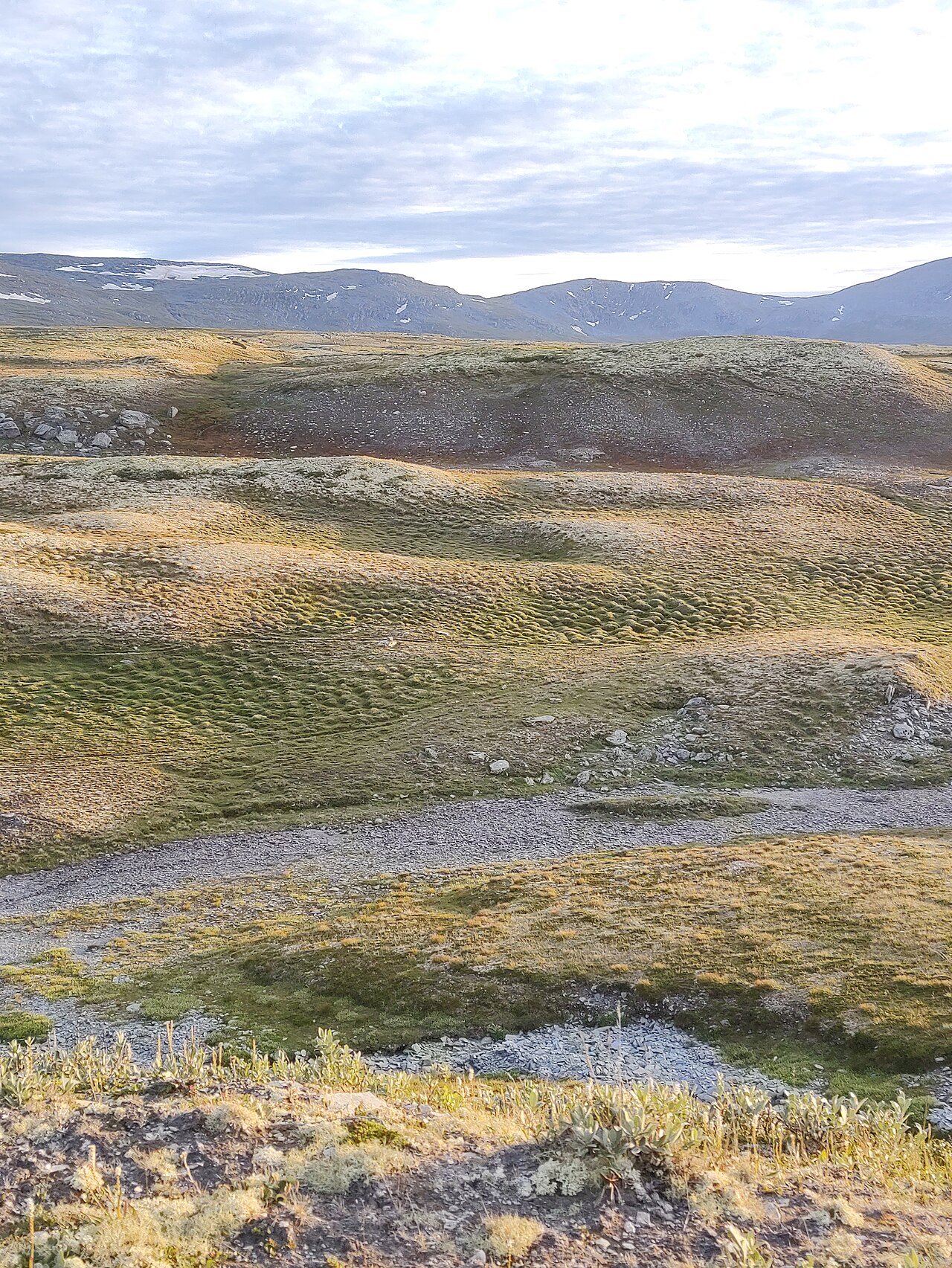
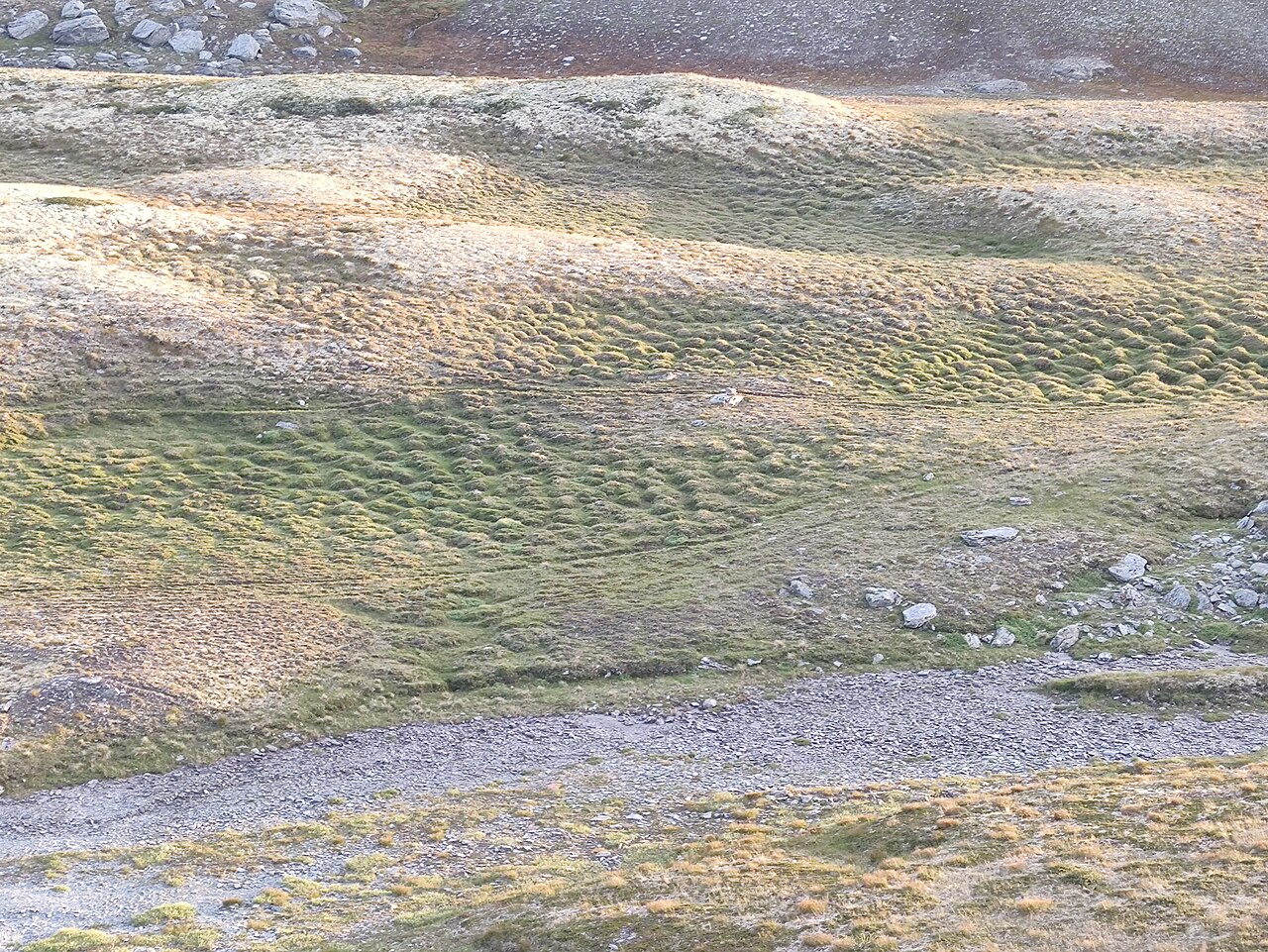
Cryogenic earth hummocks appear in permafrost and seasonally frozen ground regions, forming in fine-grained soils with light to moderate vegetation. Their genesis is complex and may involve multiple forces; they are considered polygenetic. Recent research focuses on their role as environmental indicators, as they can form and disintegrate rapidly within a human lifetime, making them ideal for monitoring medium-range environmental change. The most widely accepted explanation for cryogenic hummocks is differential frost heave, where uneven freezing during winter forces soil upward into mounds. However, evidence for this hypothesis remains limited. Debris avalanche hummocks, created by sudden collapses of rock from volcanic flanks, retain their internal stratigraphy and are identifiable by their difference from the surrounding landscape. Their volume and height depend on proximity to the source region. The study of hummocks helps geologists understand landslide dynamics, permafrost processes, and climate-related landscape changes.
Did You Know?
- Large landslide avalanches in volcanic areas are responsible for formation of hummocks, with smaller ones at the front and larger ones in the back.
- Cryogenic earth hummocks can both form and disintegrate rapidly, well within a human lifetime.
- Debris avalanche blocks keep their internal stratigraphy, sliding down completely intact and identifiable from the surrounding landscape.
- Bog hummocks alternate with shallow wet depressions called flarks in certain types of raised bogs.
Volcanic Origins and Debris Avalanche Formation
In geology, a hummock refers to a small knoll or mound rising above the surrounding terrain, typically standing no more than fifteen meters tall. These features rarely appear in isolation; instead, they cluster together in fields or groups. Their most dramatic origin lies in volcanic landscapes, where massive debris avalanches—sudden, gravity-driven collapses of saturated rock from a mountain's flanks—tear chunks of the slope free and hurl them downslope. As the turbulent mass spreads, extension faulting splits it into individual blocks. Those nearest the source tend to be the largest, while smaller fragments accumulate toward the leading edge. Over time, the hummocks may fragment further or coalesce into broader structures. The blocks retain their original internal stratigraphy, making them visually distinct from the fine-grained matrix that fills the spaces between them. In places like Mount Shasta, California, later volcanic activity has buried the original amphitheater, leaving only the hummocky terrain as evidence of the ancient collapse.
Cryogenic Earth Hummocks and the Mystery of Their Formation
In cold-climate regions, hummocks take on a different character entirely. Known as earth hummocks in North America, þúfur in Iceland and Greenland, and pounut in Fennoscandia, these mounds develop in fine-grained soils where permafrost or seasonal freezing operates beneath light vegetation. Their genesis remains one of geology's more stubborn puzzles. Geologists acknowledge that hummocks are often polygenetic, shaped by a combination of forces that have yet to be fully unraveled. The most widely cited explanation is differential frost heave: uneven winter freezing exerts pressure on trapped unfrozen soil, forcing it upward between the frost front and the underlying permafrost layer. Other mechanisms include frost push-and-pull that lifts clasts to the surface, and cellular circulation, where warmer, less-dense material at depth rises while denser material sinks. In Taiga and Boreal forests, oscillating hummocks rise and collapse with the freeze-thaw cycle of internal ice lenses, a process that can be triggered even by a forest fire.
Wetland Hummocks: Bogs, Swamps, and Their Micro-Landscapes
Far from volcanic slopes or permafrost plains, hummocks also define the internal architecture of wetlands. In raised bogs of various types—plateau bogs, kermi, palsas, and string bogs—low ridges of drier peat moss form the hummock component, alternating with shallow, waterlogged depressions known as flarks. This hummock-and-flark pattern gives the bog surface its characteristic undulating texture. Swamp hummocks follow a different developmental path: they typically begin as a fallen trunk or branch that becomes colonized by moss, gradually building a mound that rises above the surrounding swamp floor. The low-lying pockets between these mounds are called hollows. In the Southeastern United States, a closely related term, "hammock," is used for similar elevated patches of drier ground within wetter surroundings. These wetland hummocks, though modest in height, play a crucial role in partitioning water flow and creating the mosaic of microhabitats that sustain bog and swamp ecosystems.
Morphological Diversity and Environmental Significance
One of the defining challenges of studying hummocks is their sheer morphological and sedimentological diversity, which resists easy generalization. An extremely irregular surface may simply be described as hummocky, a term that spans volcanic debris fields, ice-field bosses, cryogenic mounds, and wetland ridges alike. Ice hummocks, for instance, are rounded knolls of ice that rise above the general level of an ice-field, produced by slow, uneven pressure within the packed ice body and by variations in structure and temperature. In cryogenic settings, excavating a hummock typically reveals a disturbed soil profile with irregular streaks of organic matter, evidence of past fluidity. This cryoturbation often extends to a depth roughly matching the hummock's height. Because cryogenic hummocks can form and disintegrate rapidly—well within a human lifetime—recent research has turned to them as sensitive indicators of medium-range environmental change, offering a natural barometer for monitoring shifts in cold-climate ecosystems.
Gallery
Frequently Asked Questions
What is a hummock in geomorphology?
A hummock is a small above-ground mound or knoll, generally under 15 meters in height, that tends to occur in clusters or spread across a field rather than standing alone.
What are the main types of hummocks?
The recognized varieties include ice hummocks, bog hummocks, swamp hummocks, cryogenic earth hummocks, and debris avalanche hummocks, each linked to a distinct forming mechanism.
How do hummocks form?
They develop through several pathways: massive landslide avalanches in volcanic terrain, frost-driven cryogenic activity in cold regions, and the slow buildup of organic matter in wetland settings like bogs and swamps.
Why are hummocks important to study?
They serve as natural records that help researchers reconstruct landscape evolution, track past environmental shifts, and evaluate geological hazards such as volcanic debris flows.
Where are hummocks most commonly found?
They typically appear in groups or fields across diverse landscapes, ranging from volcanic slopes and cold-climate permafrost zones to peat-rich wetlands.
More in Geomorphology 1-24
Spotted an error? Know more?
Reader corrections go straight into our review queue. Suggest an edit · How this site is sourced