Christmas ham
A ham served for Christmas dinner in many cultures.

A Christmas ham, sometimes called a Yule ham, is a ham commonly served at Christmas dinner or during Yule in Northern Europe and English-speaking countries. How it is prepared varies widely by region and era. The practice of eating ham is believed to have originated from a Germanic pagan custom in which a wild boar was sacrificed to the Norse god Freyr during harvest festivals.
In Nordic traditions, the centerpiece of the cold cuts on a traditional Swedish Christmas smörgåsbord (known as a "julbord") is a large Christmas ham. This ham is cured, then boiled or baked, and coated with a mixture of egg, breadcrumbs, and mustard before being browned in the oven.
In American traditions, as of 2019, people buy about as much ham as turkey during the holiday season. Ham began appearing as a Christmas dish around 1900, and its popularity grew significantly starting in the 1960s. Armour & Company promoted the holiday ham in 1916 as part of its marketing for a new type of industrially quick-cured, less salty ham. The baked Christmas ham with a clove-studded, diamond-hatched sugar glaze became popular in the 20th century, introduced in the 1930s. Glazed hams had been common long before, but until the 1880s, they were usually glazed with stock rather than sugar and were not associated with Christmas. The sugar-glazed ham has become a staple of Southern cooking. Regional variations exist, such as stuffed ham in southern Maryland, particularly St. Mary’s County, where a corned ham is traditionally stuffed with greens like kale and cabbage—a practice at least 200 years old. Similar stuffed hams are also sometimes made in Kentucky.
In Australian traditions, ham is a traditional dish on most Christmas tables. It is cooked and served in various ways, with many families adding special ingredients, making it an important part of the Christmas meal. Since Christmas falls at the start of summer in Australia, many people now serve cold turkey and ham, seafood, and salads instead of a hot roast dinner. Leftover Christmas ham is often frozen to make soup and other dishes after summer ends.
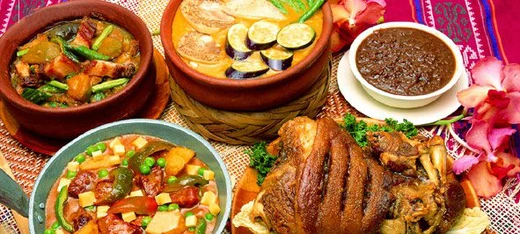
In Filipino traditions, and among diaspora groups like Filipino-Americans, a ham called hamón (from the Spanish *jamón*) is prepared for Christmas. It is sometimes soaked in kumquat and lime juice.
- Type
- Holiday dish
- Region
- Northern Europe, Anglosphere, Australia, Philippines
- Associated with
- Christmas dinner, Yule
- Earliest mention in america
- Around 1900
- Popularity growth in us
- Around 1960
- Pagan origin
- Germanic ritual sacrifice of wild boar to Freyr
Lore & Background
The Christmas ham tradition is thought to have evolved from the Germanic pagan ritual of sacrificing a wild boar, known as a sonargöltr, to the Norse god Freyr during harvest festivals. In Nordic traditions, the centerpiece of the cold cuts section of a traditional Swedish Christmas smörgåsbord is a large Christmas ham, which is a cured ham boiled or baked, then coated with a mixture of egg, breadcrumbs and mustard, and browned in the oven.
In American traditions, ham began being mentioned as a Christmas dish around 1900 and started growing in popularity around 1960. The holiday ham was promoted by Armour & Company in 1916 as part of its marketing for its novel industrially quick-cured and less salty hams. The baked Christmas ham with a clove-studded, diamond-hatched sugar glaze became popular in the 20th century and was introduced in the 1930s. Glazed hams had long been popular before that, but until the 1880s they were usually glazed with stock, not sugar, and were not associated with Christmas.
In Australia, ham is a traditional dish on most tables on Christmas Day, often served cold with seafood and salads due to the summer season. In the Philippines, a ham called hamón is prepared for Christmas celebrations, sometimes soaked in kumquat and lime juice.
Reader's Guide
The Christmas ham holds significance as a festive dish that bridges ancient pagan rituals and modern holiday celebrations. Its origins in Germanic sacrifices to Freyr highlight how pre-Christian traditions influenced contemporary Christmas customs. In the United States, the ham's rise to prominence was driven by industrial marketing, particularly Armour & Company's promotion of quick-cured hams starting in 1916, and the introduction of sugar-glazed hams in the 1930s. This made ham a major holiday protein, with Americans purchasing about as much ham as turkey around the holiday season as of 2019. The dish also reflects regional diversity: in southern Maryland, stuffed ham with greens has been traditional for at least 200 years, while in the Philippines, hamón incorporates local flavors like kumquat. In Australia, the ham adapts to summer Christmas by being served cold. The Christmas ham thus illustrates how a single food item can carry deep historical roots, commercial influence, and cultural variation across the globe.
More in Filipino cuisine 1-24
Spotted an error? Know more?
Reader corrections go straight into our review queue. Suggest an edit · How this site is sourced