Arroz a la cubana
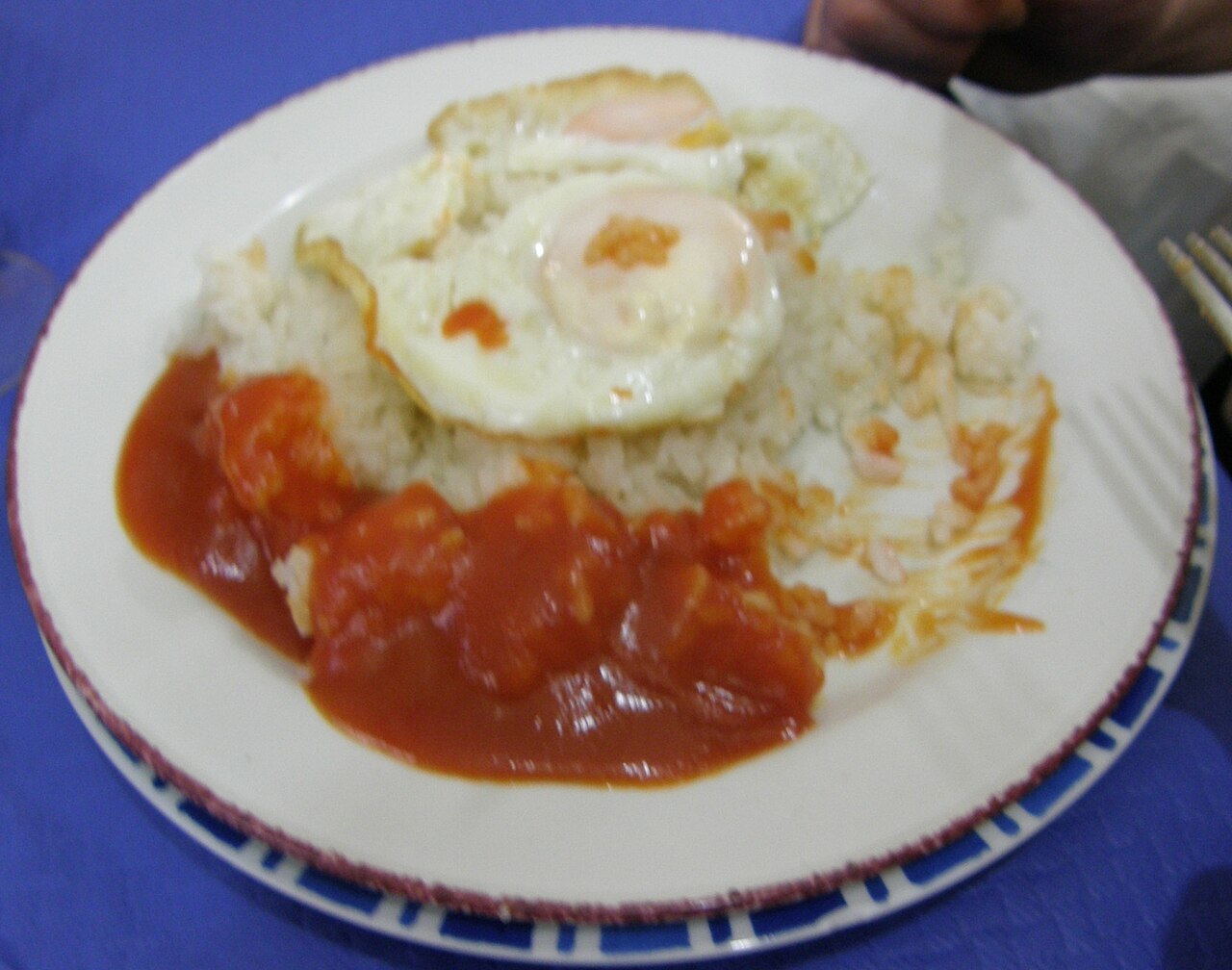
A rice dish popular in Spain, Philippines, and Latin America.

User:Coentor · CC BY-SA 3.0
Arroz a la cubana, also known as arroz cubano, is a rice dish popular in Spain, the Philippines, and parts of Latin America. Despite its name, the dish does not exist in Cuban cuisine and its origins are not definitively known, possibly originating from a Spanish misinterpretation of common Cuban meals during the colonial period.
Quick Facts
- Country
- Unknown, possibly Spain
- Course
- Main course
- Served
- Hot
- Main Ingredient
- Rice, fried egg, tomato sauce
Facts from the source article.
Lore & Background
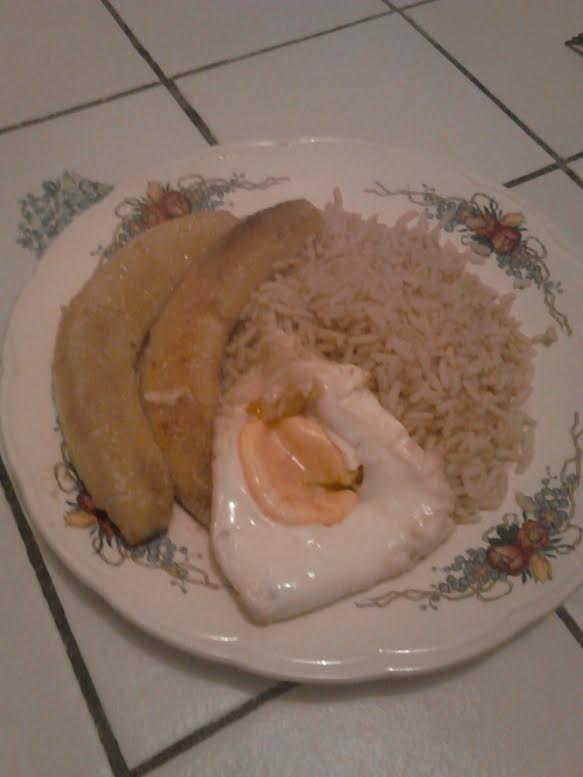
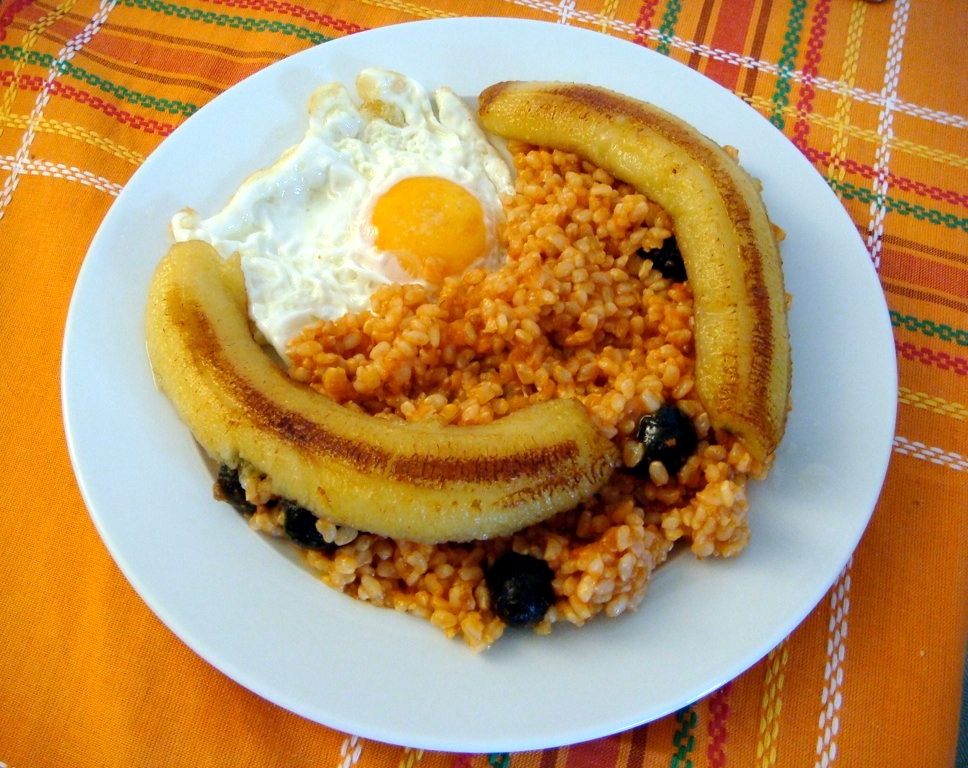
In Spain, a typical serving consists of white rice (sometimes shaped into small mounds using a glass), tomato sauce, and a fried egg. The most traditional recipe includes a fried plantain, though sausages and bacon are also common. Diners typically cut and mix all ingredients before eating, allowing the egg yolk to melt and combine everything.
Reader's Guide
In the Philippines, arroz a la cubana has been eaten since Spanish colonial times. It includes white rice, fried egg, and ripe fried cardava or saba banana sliced length-wise. Unlike Spanish and Latin American versions, it always includes ground meat (usually beef) in tomato sauce, cooked picadillo-style with minced potatoes, carrots, raisins, peas, onions, garlic, and other ingredients in a tomato-based sauce seasoned with patis (fish sauce), soy sauce, and sometimes chilis. A regional variant from Calamba, Laguna, called arroz de Calamba, is served with strips of smoked fish (tinapa). In Peru, the dish commonly consists of white rice, fried plantain, a fried hot-dog wiener, and a fried egg over the rice. The dish's significance lies in its widespread popularity across multiple regions despite its uncertain origins and absence from Cuban cuisine.
Did You Know?
- Despite its name, arroz a la cubana does not exist in Cuban cuisine.
- In Peru, the dish includes a fried hot-dog wiener.
A Name Without a Home
Perhaps the most striking aspect of arroz a la cubana is that it is, by all accounts, not Cuban at all. The dish, whose name translates simply to 'Cuban-style rice,' holds no recognized place in the culinary tradition of the island itself. Its true origins remain uncertain, with no definitive historical record pinning down where or when it first appeared. One plausible theory suggests that Spanish colonists, observing everyday Cuban meals in which rice was paired with stews and a fried egg, misread the combination as a single named dish and carried the label back to the Iberian Peninsula. Over time, that misattribution took root. Today the plate is a staple across Spain, the Philippines, and various corners of Latin America, yet its namesake cuisine has never claimed it. The core identity of the dish rests on white rice and a fried egg, while fried plantain or other cooking bananas and a tomato-based sauce appear so consistently that many consider them essential rather than optional. A dish with a borrowed name, arroz a la cubana endures as a testament to how colonial-era misunderstandings can permanently reshape a recipe's identity.
The Spanish Plate
In Spain, arroz a la cubana occupies a familiar spot on the everyday menu, and its presentation carries a certain visual charm. The base is a generous portion of white rice, which diners or cooks sometimes press into neat little mounds using nothing more than a drinking glass, giving the plate a tidy, sculpted appearance. Laid alongside or atop the rice are a spoonful of tomate frito and a single fried egg, its yolk still runny and ready to break. The most traditional accompaniment is a piece of fried plantain, known locally as plátano, though many households and restaurants have expanded the recipe to include slices of sausage or strips of bacon, adding a savory, smoky dimension. What distinguishes the Spanish way of eating this dish is the ritual of mixing: rather than consuming each component separately, diners are expected to cut everything together with fork and knife, allowing the golden yolk to flood the rice and sauce and bind the whole plate into a single, cohesive bite. This deliberate blending transforms a simple assembly of parts into something more unified and satisfying.
The Philippine Reimagining
The Philippine version of arroz a la cubana, present on tables since the era of Spanish colonial rule, shares the foundational trio of white rice, fried egg, and a ripe fried banana—typically cardava or saba, sliced lengthwise—but then diverges dramatically from its Iberian and Latin American cousins. Where the Spanish plate relies on tomate frito as its sauce element, the Filipino interpretation always incorporates ground meat, called giniling and most often beef, simmered in a rich tomato-based sauce. This meat component is prepared in the picadillo tradition, studded with minced potatoes, diced carrots, plump raisins, peas, onions, and garlic, then seasoned with patis (fish sauce), soy sauce, and occasionally chilies for a layered, umami-forward depth. The result is a heartier, more complex plate that feels almost like a complete meal in itself. In the town of Calamba in Laguna province, a regional spin known as arroz de Calamba replaces the ground meat with strips of smoked fish called tinapa, offering a distinctly local twist on the same colonial-era framework.
The Peruvian Twist
In Peru, arroz a la cubana takes on a notably different character, trading the tomato-sauce-and-meat approach of the Philippines and the plantain-and-sausage tradition of Spain for a simpler, more protein-forward assembly. The Peruvian plate centers on white rice as its base, topped with a fried plantain, a fried egg, and—most distinctively—a fried hot-dog wiener. This inclusion of a processed sausage gives the dish a casual, almost diner-like quality that sets it apart from the more rustic or picadillo-heavy versions found elsewhere. The combination of the sweet, caramelized plantain, the richness of the fried egg, and the salty snap of the wiener creates a straightforward, satisfying contrast of textures and flavors. While the Peruvian interpretation may seem the least elaborate of the regional variants, it preserves the dish's essential identity: a humble plate of rice elevated by a fried egg and a few bold accompaniments, adapted to local tastes and available ingredients without losing the spirit of the original colonial-era concept.
Gallery


Frequently Asked Questions
What is Arroz a la cubana?
Arroz a la cubana (also called arroz cubano) is a simple rice-and-fried-egg dish that has become a household staple across Spain, the Philippines, and parts of Latin America.
What are Arroz a la cubana's defining ingredients?
The dish is built on two core elements—cooked rice and a fried egg—though many recipes also layer in fried plantain or other cooking bananas and a tomato-based sauce (tomate frito).
Where does Arroz a la cubana actually come from?
Despite its name, the dish is not part of Cuban cuisine at all; its true origin remains uncertain, though it may have emerged when Spanish colonists mislabeled everyday Cuban meals.
Why is Arroz a la cubana important to Filipino food culture?
It serves as a quick, affordable, and satisfying meal that anchors everyday Filipino dining, illustrating how colonial-era food exchanges produced dishes that now feel entirely local.
More in Filipino cuisine 1-24
Spotted an error? Know more?
Reader corrections go straight into our review queue. Suggest an edit · How this site is sourced