Asín tibuok
Rare Filipino sea salt made by filtering seawater through ash.

Wikimedia Commons · CC BY-SA 4.0
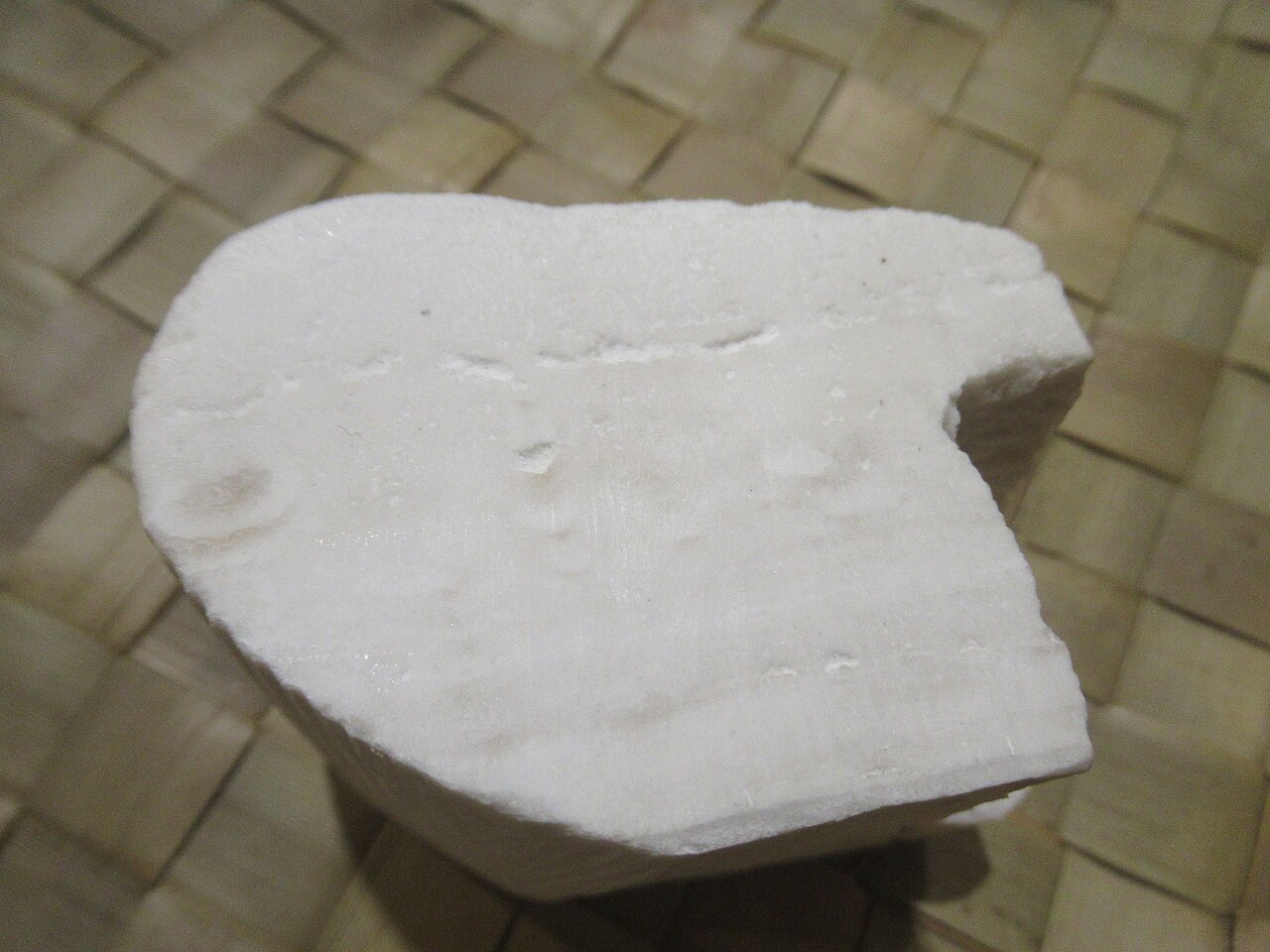
Asín tibuók is a rare Filipino artisanal sea salt produced by the Boholano people of the central Philippine islands. It is made by filtering seawater through the ashes of burned coconut husks, a traditional method that yields a finely textured salt with a sharp, slightly alkaline taste and smoky, fruity undertones. The salt is listed in the Ark of Taste international catalogue of endangered heritage foods by the Slow Food organization, and its tradition is nearly extinct due to the difficulty of production, the 1995 salt iodization law, and competition from modern imported salts.
Quick Facts
- Country
- Philippines
- Region
- Visayas
- National Cuisine
- Philippine cuisine
Facts from the source article.
Lore & Background
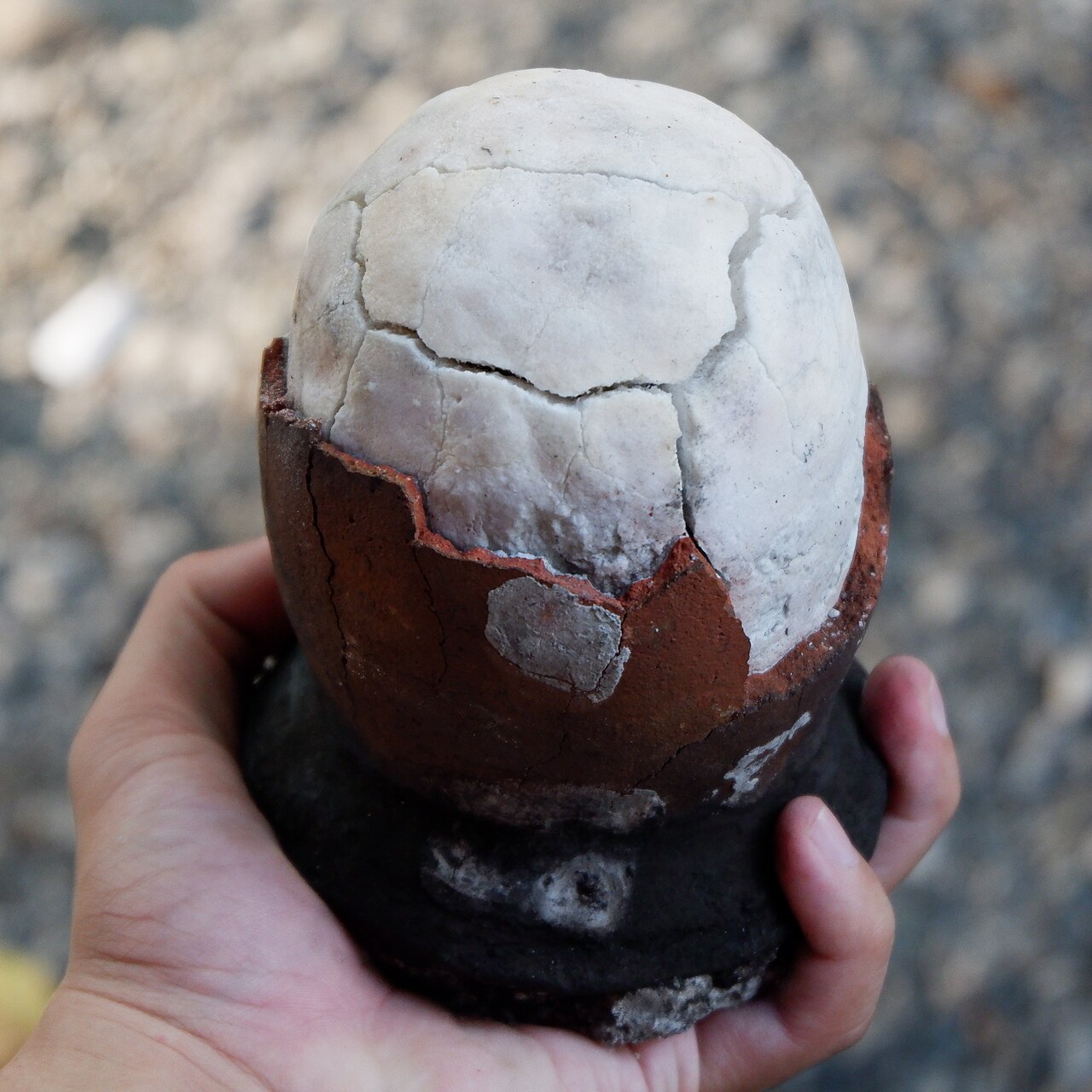
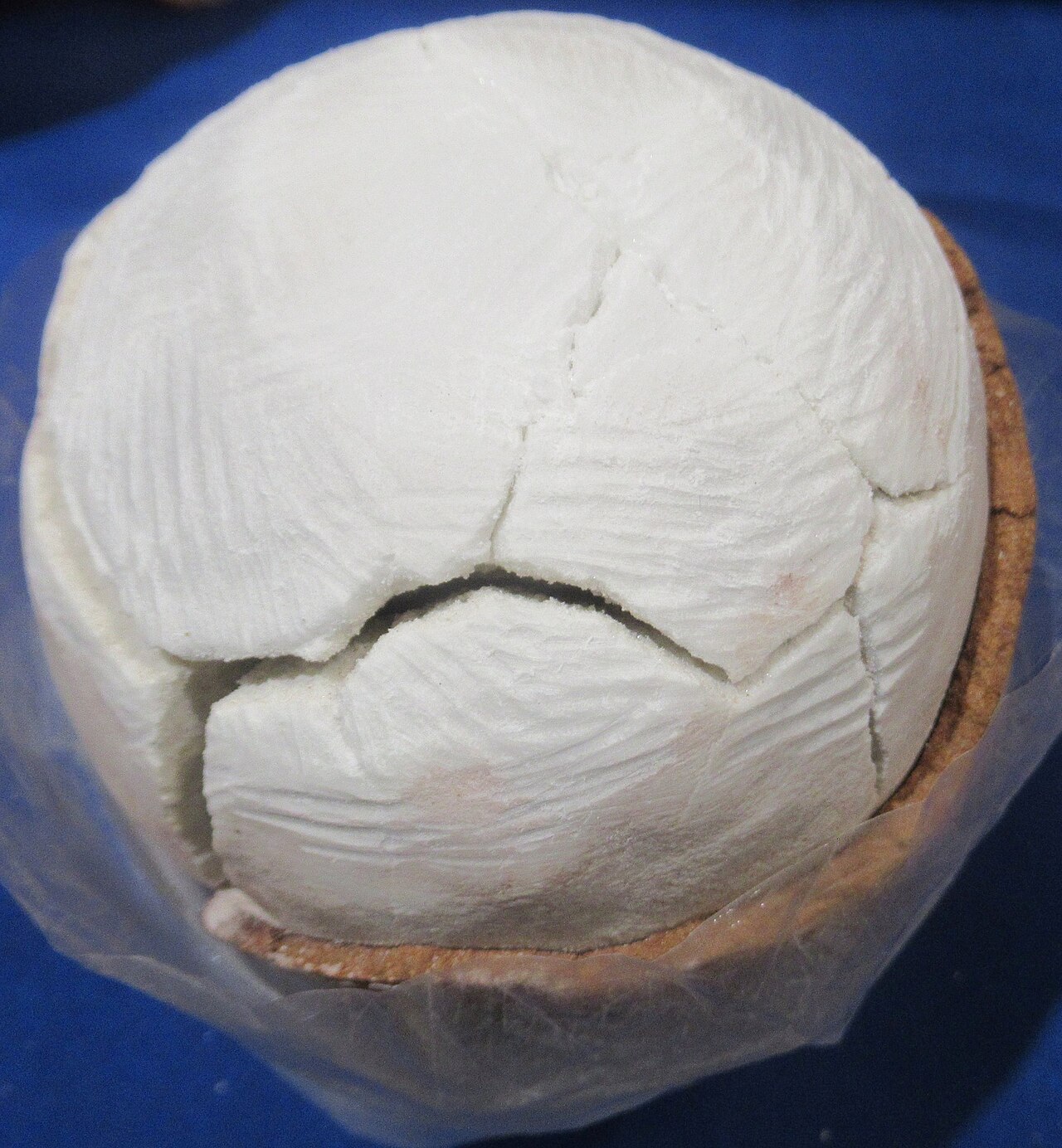
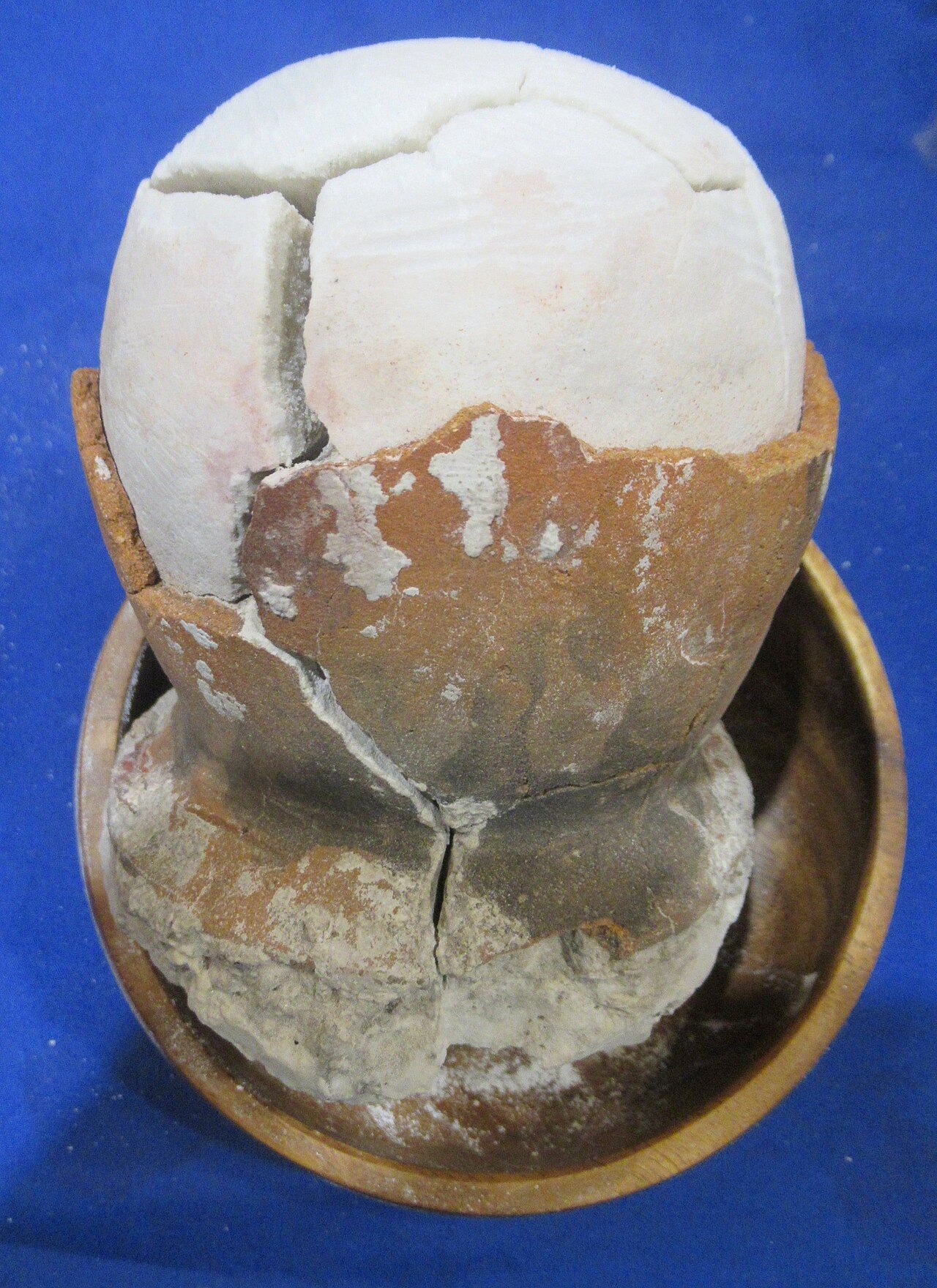
Asín tibuók is made by soaking coconut husks for at least three months in pits filled with seawater, then drying and burning them to ash. The ash is placed in a funnel-shaped bamboo filter, and seawater is poured through to leach out salt, producing a brine called tasik. The brine is boiled in clay pots hung in a furnace until the pots crack, revealing a solidified salt mass that cools before being sold with the broken pots, giving it the nickname 'dinosaur egg' in international markets.
A related salt, túltul or dúkdok, is made by the Ilonggo people of Guimaras and Capiz using driftwood and plant matter ash, with the brine boiled with coconut milk (gatâ). Both salts are finely textured with small granules and are consumed by grating a light dusting over food, traditionally over plain hot rice with oil or used in sinangag (fried rice).
The tradition is nearly extinct, preserved only by a few families in Bohol, Capiz, and Guimaras. Salt-makers cannot compete with cheap imported salt, and the 1995 ASIN law (Republic Act No. 8172) forced many to abandon the craft. Asín tibuók is sold to tourists and gourmet restaurants, with demand frequently exceeding supply.
Reader's Guide
Asín tibuók represents a unique Visayan culinary heritage that is on the verge of disappearing. Its production method—filtering seawater through ash and boiling in clay pots—differs sharply from modern salt-making and yields a distinctive flavor profile not found in drying-bed or industrial salts. The salt's inclusion in the Ark of Taste catalogue and its 2025 UNESCO recognition as Intangible Cultural Heritage in Need of Urgent Safeguarding highlight its global cultural significance. However, the craft faces severe challenges: the labor-intensive process can only be done six months a year, the 1995 iodization law added regulatory burdens, and cheap imports undercut prices. Only a handful of families continue the tradition, often selling to niche markets. The salt's rarity and high demand underscore the tension between preservation and economic viability. Asín tibuók is more than a condiment; it is a living link to pre-industrial Philippine foodways, and its survival depends on sustained interest from consumers and cultural institutions.
Did You Know?
- Asín tibuók literally means 'unbroken salt' or 'whole salt' in Cebuano.
- The salt is nicknamed 'dinosaur egg' because it is sold in broken clay pots that resemble eggs.
- Production can only be done from December to May due to rainy season changes in seawater salinity.
The Ash-Filtering Craft
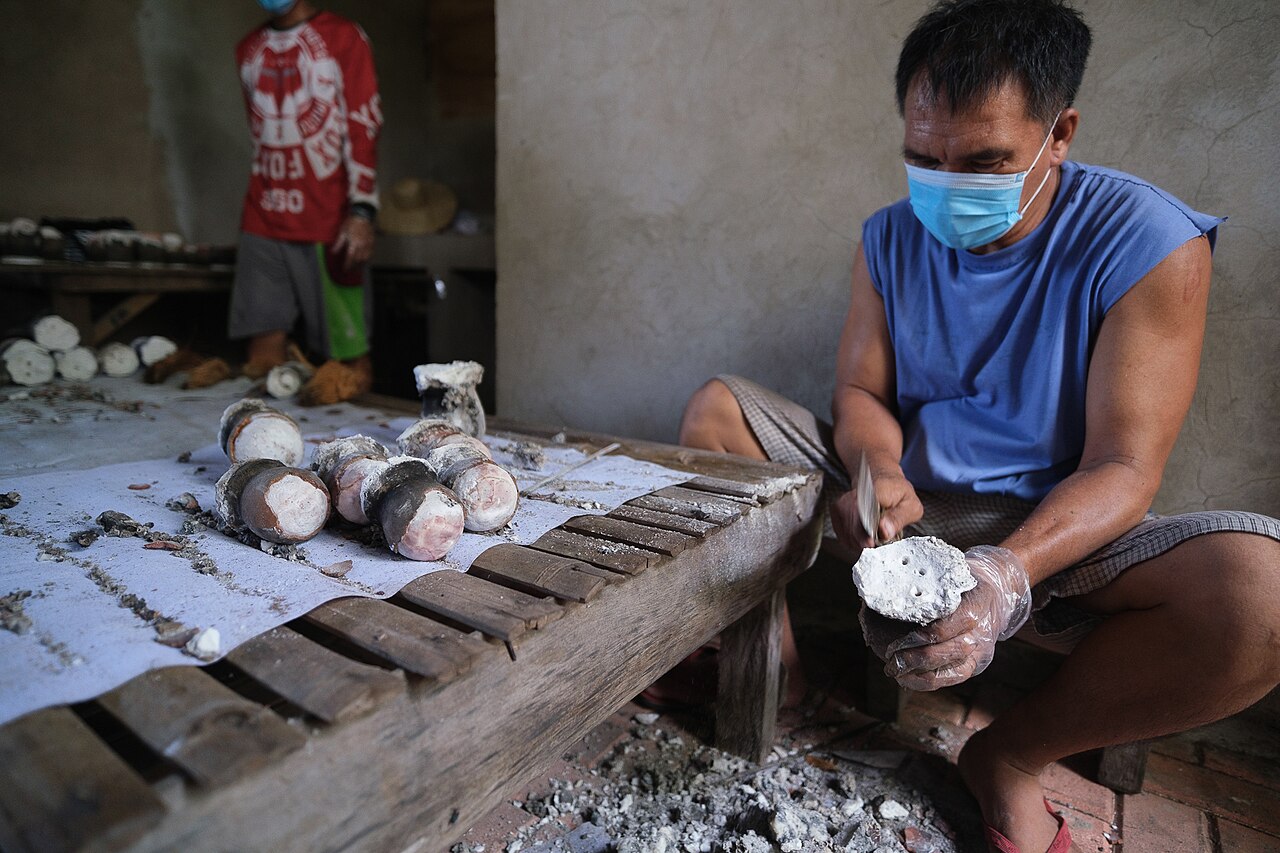
The making of asín tibuók is a slow, labor-intensive process bound to a narrow seasonal window. From December through May, when seawater salinity is stable, Boholano artisans begin by submerging coconut husks in tidal pits for at least three months. Once retrieved, the husks are chopped, sun-dried, and then burned down to pure ash over roughly a week. That ash—called gasang—is packed into funnel-shaped bamboo devices, through which fresh seawater is poured to leach out dissolved minerals. The resulting brine, known as tasik, drips into hollowed coconut trunks positioned below. The tasik is then transferred into clay pots suspended inside a dedicated furnace. For hours the pots simmer, and as liquid evaporates, more brine is ladled in. The process ends dramatically: the clay vessel cracks open, releasing a still-scorching mass of solidified salt that must cool for hours before it can be touched. The finished product is sold nestled inside its broken domed pot, a shape that has earned it the international nickname "the dinosaur egg."
Flavor & the Finishing Table
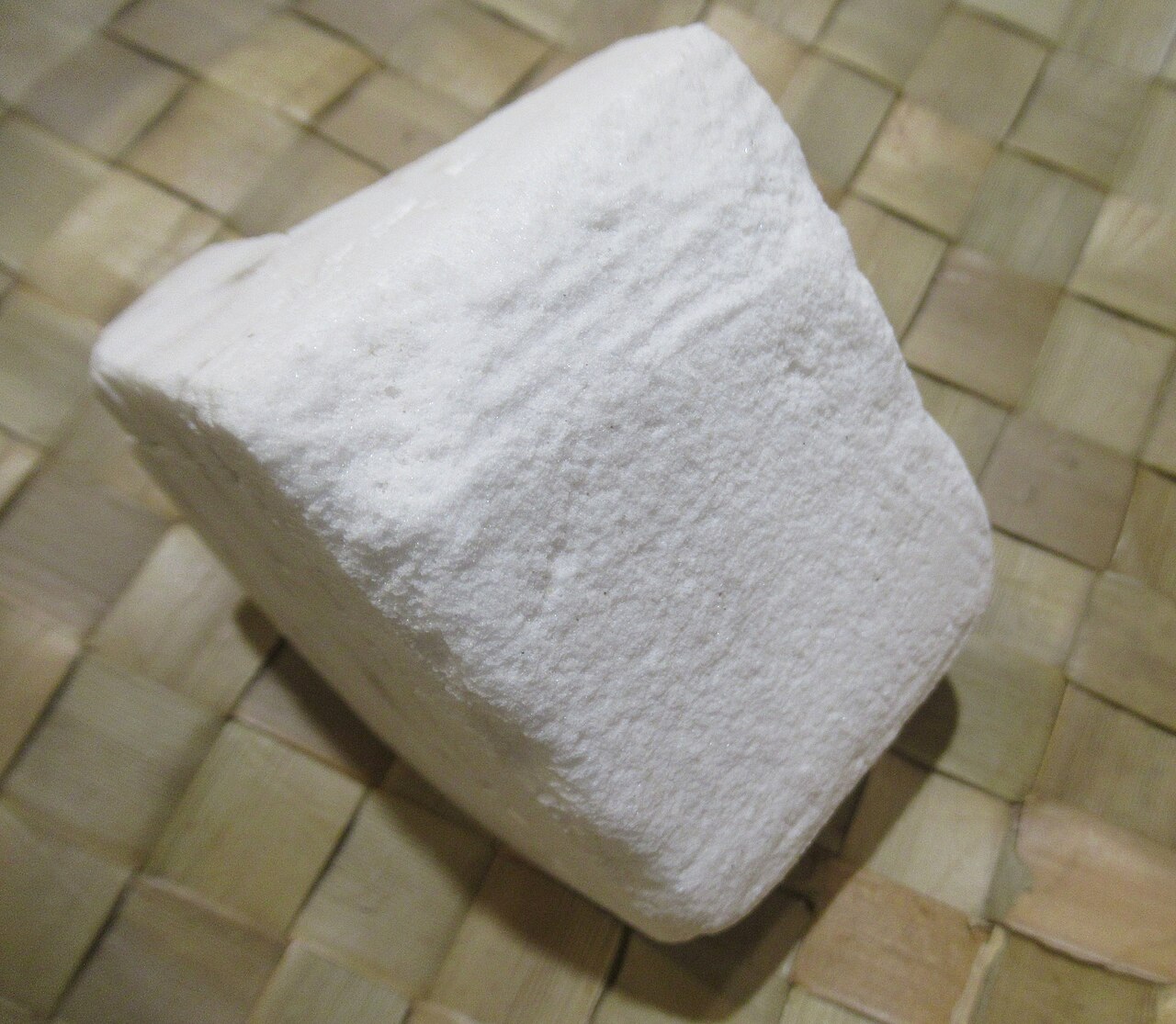
Where industrially produced salts tend toward a flat, uniform salinity, asín tibuók carries a distinctly layered palate. Its taste is sharp and faintly alkaline, underlaid with smoky and fruity notes that come from the ash-leaching process. The granules are characteristically fine, giving the salt a delicate, almost powdery texture that dissolves quickly on the tongue. In the kitchen, it functions primarily as a finishing salt. The traditional Boholano way is to grate a light dusting over plain steaming rice that has been drizzled with a few drops of oil, then eat it as is. It also seasons sinangag, the local fried rice, and small chunks can be broken off and dropped into stews or ground down for everyday use. Its Ilonggo cousin, túltul, offers a different profile—an innate savory depth—because coconut milk is folded into the brine before boiling. Both salts, however, share that fine, small-granule character and that role as a final, expressive touch rather than a background seasoning.
Names Across the Visayan Islands
The identity of these artisanal salts is encoded in their local names, each reflecting the community that produces them. In Bohol, the Cebuano term asín tibuók translates to "unbroken salt" or "whole salt," a phrase that evokes the intact, solid mass that emerges from the cracked clay pot. Across the water in Guimaras, the Ilonggo-speaking community calls the analogous product túltul, a word meaning "lump," while in the neighboring province of Capiz it is known as dúkdok, meaning "pounded" or "pulverized." These naming differences mirror subtle variations in technique. The Ilonggo versions incorporate coconut milk into the brine before boiling and are formed in molds over an outdoor stove, yielding brick-like lumps called bareta. The Boholano method, by contrast, relies on the clay pot cracking to release the salt. Together, the three names anchor a shared Visayan heritage of ash-filtered sea salt that stretches across central Philippine islands, distinguishing these products from the flat, industrially dried salts found in most modern kitchens.
A Craft on the Brink
Once a respected livelihood, salt-making among the Visayan coastal communities has dwindled to a handful of families in Bohol, Capiz, and Guimaras. The traditional process demands months of preparation and weeks of burning and boiling, making it economically difficult to sustain. The 1995 passage of Republic Act No. 8172, which mandated nationwide salt iodization, added regulatory pressure that pushed many asinderos out of the trade entirely. Cheap imported salts have further squeezed artisanal producers who cannot match industrial pricing. Today, demand for asín tibuók and túltul regularly outstrips the small supply, and production remains constrained by the availability of raw materials like coconut husks. The salts find their market primarily among tourists and Filipino-cuisine gourmet restaurants, where their rarity commands a premium. Recognition has followed: Slow Food's Ark of Taste lists asín tibuók as an endangered heritage food, the Philippine intellectual property office registered the Alburquerque, Bohol variety as a Geographical Indication in October 2025, and in December 2025 UNESCO inscribed it as Intangible Cultural Heritage in Need of Urgent Safeguarding.
Gallery
Frequently Asked Questions
What is Asín tibuok?
Asín tibuok is a rare, artisanal sea salt traditionally crafted by the Boholano people of the central Philippine islands. It is one of the few heritage Filipino salts still recognized on the international stage.
How is Asín tibuok actually made?
The salt is produced by filtering seawater through the ash of burned coconut husks, a slow and labor-intensive traditional method. This ash-filtration step is what gives the finished product its fine texture and distinctive character.
What does Asín tibuok taste like?
It delivers a sharp, slightly alkaline bite layered with smoky and fruity undertones. Those smoky, fruity notes come directly from the coconut-husk ash used in the filtration process.
Is Asín tibuok considered endangered?
Yes. Slow Food has included it in its Ark of Taste catalogue of endangered heritage foods, flagging the tradition as being on the verge of disappearing.
Why did Asín tibuok nearly go extinct?
Three pressures converged: the physically demanding production method, the 1995 Philippine law mandating iodized salt, and a flood of cheaper imported salts that undercut its market. Together, these factors have made the Boholano practice nearly impossible to sustain.
More in Filipino cuisine 1-24
Spotted an error? Know more?
Reader corrections go straight into our review queue. Suggest an edit · How this site is sourced